

A New Way to Get Free Energy with Silent Wind Turbine Revolution
As the world searches for clean and renewable energy sources, most people rely on solar panels to power their homes. Traditional silicon PV solar panels have been the most popular choice for…

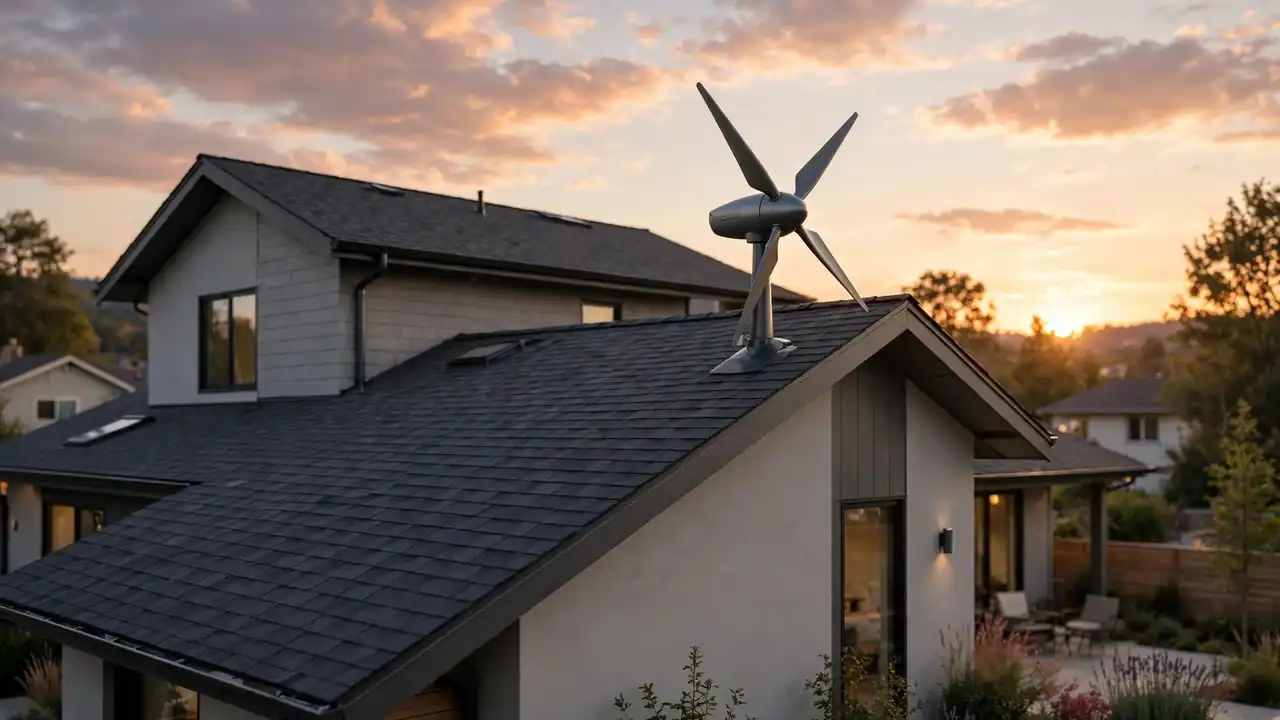
Every few months, someone shows me a video of a magical device that promises free electricity forever. The excitement is real, and I understand it. Electricity bills in Pakistan keep climbing, and the idea of a silent machine on your roof making power from thin air is deeply appealing.
At SunTech Mall, we work with renewable energy every day. We sell solar inverters, batteries, and components to people across Pakistan who want energy independence. So when customers ask me about small wind turbines, I give them the honest answer, not the sales pitch.
Here is the fear behind the excitement: you spend serious money on a wind turbine, install it with high hopes, and then it barely produces enough to charge your phone. The wind at your rooftop is weaker and more turbulent than you expected. The “free energy” dream quietly dies.
In this guide, I will give you the truth about small silent wind turbines for homes, using the well-known LIAM F1 design from the Netherlands as our real example. You will learn how these turbines actually work, what power they really produce, what they cost, and whether one makes sense for a Pakistani home. No hype, no fairy tales.
Let us start with what “free energy” really means, because the phrase causes most of the confusion.
A Quick Note Before You Trust This Guide
This article will not tell you that a wind turbine replaces your electricity connection or your solar panels. If that is what you wanted to hear, I would rather lose you as a reader than mislead you. What I will give you is the real physics, the real numbers, and the real conditions under which a small wind turbine earns its place.
In This Guide: What You Will Be Able to Do
- Understand what “free energy” from wind actually means in honest terms
- Learn how the LIAM F1 silent wind turbine works and what makes it different
- Know the real power output to expect at different wind speeds
- Judge whether your location in Pakistan has enough wind
- Compare small wind turbines fairly against solar panels
- Avoid the most common and expensive mistakes buyers make
- Decide with clear eyes whether a turbine suits your home
What “Free Energy” Really Means
Let me be straight with you from the start. The wind itself is free. Nobody bills you for moving air. But a wind turbine is not free, installation is not free, and maintenance is not free. When people say “free energy,” they mean energy with no fuel cost, which is true for wind and solar alike.
A wind turbine converts moving air into electricity. The blades catch the wind, the rotor spins a generator, and the generator produces electric power. No fuel is burned. Once installed, the “fuel” costs nothing. That is the honest meaning of free energy here.
But the machine must be bought, installed, and maintained. A quality small turbine costs real money. It needs a proper mounting structure, wiring, and often a charge controller and batteries or a grid-tie inverter. Anyone who tells you the energy is “totally free” is skipping the part where you pay for the hardware.
Output depends entirely on wind speed. This is the part most videos skip. Wind power follows a brutal rule of physics: double the wind speed, and you get eight times the power. Halve the wind speed, and you get one-eighth. A turbine that shines in a windy coastal town may barely turn in a sheltered city courtyard.
With that honesty established, let us look at the most famous small silent turbine design.
The LIAM F1: What Makes This Turbine Different
The LIAM F1 UWT was developed by a Dutch company called The Archimedes. It has attracted worldwide attention because it solves the two problems that kept small turbines off city rooftops: noise and looks.
Its spiral design is inspired by the Archimedes screw. Instead of the classic three long blades, the LIAM F1 uses helical, spiral-shaped blades wrapped around a compact rotor. This shape catches wind from many directions and turns smoothly. The design allows it to self-align with changing wind direction without complex yaw mechanisms.
It is genuinely quiet. The turbine operates below 45 decibels, roughly the level of a quiet library. Conventional small turbines can be much noisier, which is why neighbours and housing societies object to them. Low noise is the LIAM F1’s biggest practical advantage for residential use.
It is compact and light. With a diameter of about 1.5 meters and a weight under 100 kilograms, it fits on rooftops, in gardens, and on small towers where a conventional turbine would be impossible. Multiple sizes exist, including a smaller 0.75-meter version.
It starts turning in light winds. The design begins producing power at wind speeds around 2 to 3.8 meters per second, depending on the version. This matters because city winds are often weak and gusty.
Note: Some articles claim this turbine converts an extremely high percentage of wind energy into electricity. Treat extraordinary efficiency claims with scepticism. The laws of physics cap all wind turbines at about 59 percent (the Betz limit), and real small turbines achieve far less. Focus on the published annual energy figures instead.
Real Power Output: The Numbers That Matter
Forget marketing. Here are the honest figures reported for this turbine family.
At 5 meters per second average wind, expect around 1,500 kWh per year. This is the most commonly cited figure for the 1.5-meter version. To put it in perspective, a typical Pakistani urban household using fans, lights, a fridge, and a TV might consume 300 to 500 kWh per month. So the turbine could cover a meaningful fraction, but not all, of such a home’s needs.
At lower wind speeds, output drops sharply. Remember the cubic rule. At 3 meters per second, the same turbine produces only a small fraction of its 5 m/s output. This is why location assessment is everything.
Newer versions list around 550 watts rated electrical output. Specifications have evolved across the product family, so always check the datasheet of the exact model you are considering rather than relying on old articles.
One turbine will not run your air conditioner. I say this bluntly because disappointment is expensive. Small turbines are excellent for supplementing your power, charging batteries, and cutting bills. They are not a one-device replacement for a grid connection in most homes.
Does Pakistan Have Enough Wind?
This is the question that decides everything, and the answer depends on where you live.
Coastal Sindh and parts of Balochistan have Pakistan’s best wind. The Gharo-Jhimpir corridor in Sindh hosts Pakistan’s commercial wind farms for a reason: consistent, strong winds. If you live near the coast, small wind deserves serious consideration.
Inland cities are much weaker. Lahore, Islamabad, Multan, and Peshawar have modest average wind speeds, often 2 to 4 meters per second at rooftop height, with strong seasonal variation. A turbine here will produce something, but far less than the headline figures.
Rooftop wind is turbulent. Buildings, trees, and walls chop the wind into gusts and eddies. Turbines produce less in turbulence than in smooth airflow. Mounting the turbine as high as practical above surrounding obstacles helps enormously.
Measure before you buy. This is my strongest advice. A simple anemometer on your roof for a few weeks, or local wind data if available, tells you more than any brochure. If your average wind is under 3 meters per second, put your money into solar panels first.
Wind Turbine vs Solar Panels: An Honest Comparison
Since we work with solar daily at SunTech Mall, here is the fair comparison our customers deserve.
Solar wins on predictability in Pakistan. Pakistan gets abundant sunshine most of the year. A solar panel’s output is easy to estimate and very consistent day to day. Wind is far more variable.
Wind can produce at night and in cloudy weather. This is the turbine’s genuine advantage. When the sun is gone but the wind blows, the turbine keeps working. That is why the two technologies complement each other beautifully.
Solar is simpler to install and maintain. Panels have no moving parts. A turbine has bearings, a rotor, and a mounting structure that must withstand storms. Maintenance is a real ongoing consideration.
The smart answer is often both. A hybrid setup, solar panels plus a small turbine feeding the same battery bank through a hybrid inverter, gives you day and night coverage. Our solar equipment collection covers the inverter and battery side of such systems.
For a deeper look at choosing inverters for renewable setups, read our power component guides in the blog.
What a Small Turbine Costs: Honest Framing
I will not invent prices, because they vary by model, importer, and year. Instead, here is how to think about cost honestly.
Budget for the full system, not just the turbine. You need the mounting structure, wiring, a charge controller or inverter interface, and possibly batteries. The turbine unit itself is only part of the total.
Compare cost per expected kWh, not sticker price. A cheaper turbine in a low-wind location can cost more per unit of electricity than a pricier turbine in a windy spot. Your wind resource decides the economics.
Check the current prices on SunTech Mall for the inverters, charge controllers, and batteries that complete a small wind or hybrid system. We keep our listings updated so you can plan with real numbers.
Common Mistakes Buyers Make
Mistake 1: Believing “free energy” means zero cost. The wind is free; the system is not. Calculate payback honestly.
Mistake 2: Installing too low. A turbine tucked behind a parapet wall in turbulent air will disappoint. Height and clear exposure matter more than anything.
Mistake 3: Ignoring local regulations. Housing societies and municipal bodies may have rules about rooftop structures. Check before you buy.
Mistake 4: Expecting it to replace solar. In most of Pakistan, solar gives you more energy per rupee. Wind is the complement, not the replacement.
Mistake 5: Buying no-name copies. The market has imitations of famous designs with poor bearings and exaggerated claims. A turbine that fails in the first storm is the most expensive kind.
Keep learning: our black vs blue panel guide helps you pick the solar half of a hybrid setup, the installation walkthrough covers project planning, and why hybrids suit Pakistan explains the inverter choice. Component guides: MOSFET selection.
See also: IRFB4115 MOSFET, UF5M diode, top 2 inverters, home.
Frequently Asked Questions
Is wind energy really free?
The wind itself costs nothing, so there is no fuel bill. But the turbine, installation, and maintenance all cost money. “Free” honestly means “no fuel cost,” not “zero cost.”
How much electricity can a 1.5-meter turbine produce?
Published figures for the LIAM F1 family suggest around 1,500 kWh per year at an average wind speed of 5 meters per second. At lower wind speeds, output falls sharply. Always check the datasheet of the exact model.
Are silent wind turbines really silent?
The LIAM F1 operates below 45 decibels, which is genuinely quiet, similar to a library. It is far quieter than conventional small turbines, though “silent” in marketing means “very quiet,” not literally zero sound.
Can a wind turbine work together with solar panels?
Yes, and this is often the best setup. Solar covers the day, wind can contribute at night and during cloudy, stormy weather. Both can charge the same battery bank through suitable controllers and a hybrid inverter.
What wind speed do I need?
The turbine starts producing at roughly 2 to 3.8 meters per second, but meaningful output needs higher averages. If your site averages under 3 meters per second, solar panels are almost certainly the better investment.
Do I need permission to install a rooftop turbine?
Rules vary by city and housing society. Structural safety matters too, since the mounting must handle storm winds. Check local regulations and get the structure properly engineered.
Where can I get the inverter and batteries for a wind setup in Pakistan?
SunTech Mall stocks hybrid inverters, charge controllers, and batteries suited to renewable systems. Contact us at info@suntechmall.com or +92 306 2244820 and tell us your planned setup so we can advise correctly.
Final Thoughts
Small silent wind turbines are real, clever machines. The spiral designs pioneered in the Netherlands genuinely solved the noise problem that kept turbines off rooftops. In the right location, with honest expectations, a turbine can meaningfully cut your electricity costs and work beautifully alongside solar panels.
But “free energy” is a phrase that needs its honest definition. The wind is free. The machine is not. The output depends on your wind, your height, and your installation quality. Go in with clear eyes, measure your wind, and you will not be disappointed.
Congratulations on doing the research before spending. Most buyers do it the other way around. If you decide a hybrid wind-solar setup is right for you, SunTech Mall can supply the inverters, controllers, and batteries to make it work. Reach us at info@suntechmall.com or browse our renewable energy collection.