


Why a Hybrid Solar Inverter Is the Best Choice for Pakistan
A hybrid solar inverter is the best choice for Pakistan's energy needs, offering a reliable solution to frequent power outages and rising electricity costs. These inverters seamlessly switch between solar, battery, and…

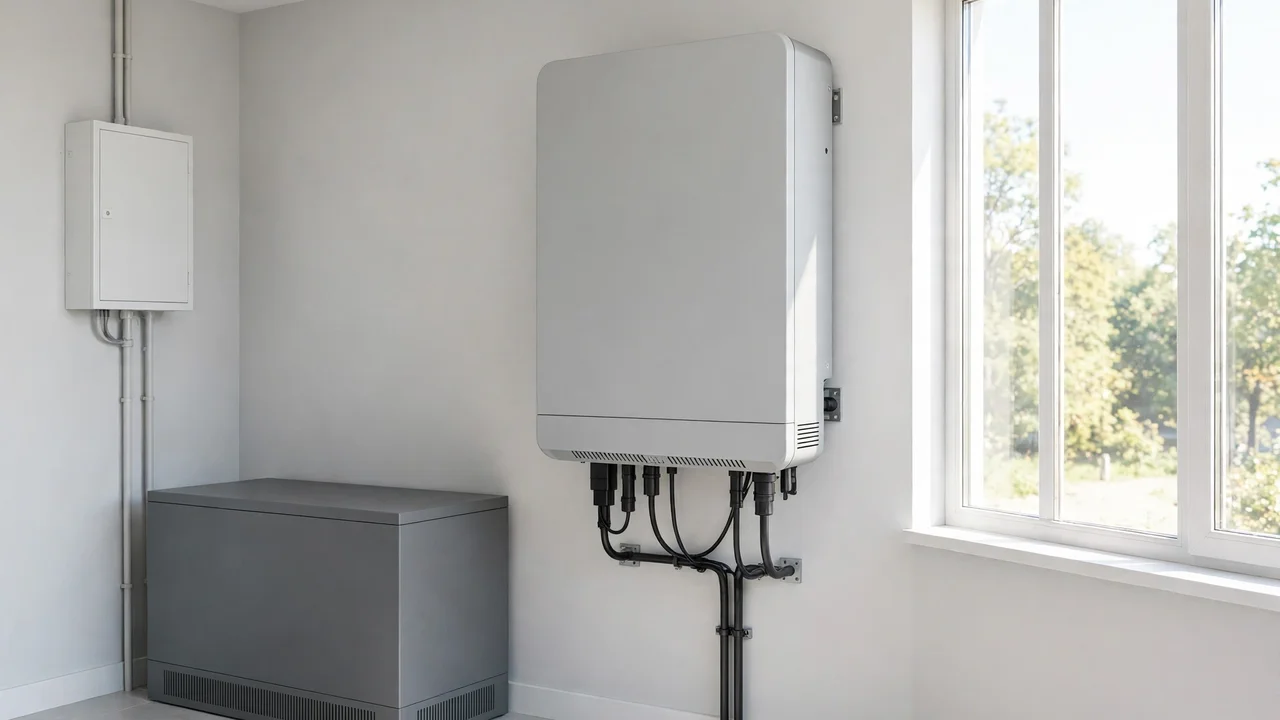
Dek: A hybrid solar inverter keeps your lights on during load shedding and cuts your bills when the grid is on — here is how to pick the right one for your home.
Key takeaways
- A hybrid inverter does three jobs in one box: it turns solar power into home power, charges batteries, and manages the grid.
- An on-grid inverter stops when the grid fails, so it cannot help you during load shedding.
- An off-grid inverter cannot export extra solar power, so it wastes savings in grid-connected homes.
- For most Pakistani homes, a hybrid is the best fit. Check the live price on the website before you buy.
What makes Pakistan’s power problem special?
Ask a Pakistani homeowner what they want from solar. The answer is almost always the same.
They want light when the grid is gone. And they want lower bills when the grid is here.
That is a hard pair of wishes. For years, you had to pick one or the other.
An on-grid system cut bills, but it went dark during load shedding. An off-grid system kept lights on, but it could not sell extra power back to the grid.
A hybrid inverter solves both problems in one box. That is why it has become the default choice for Pakistani homes.
What does a hybrid inverter actually do?
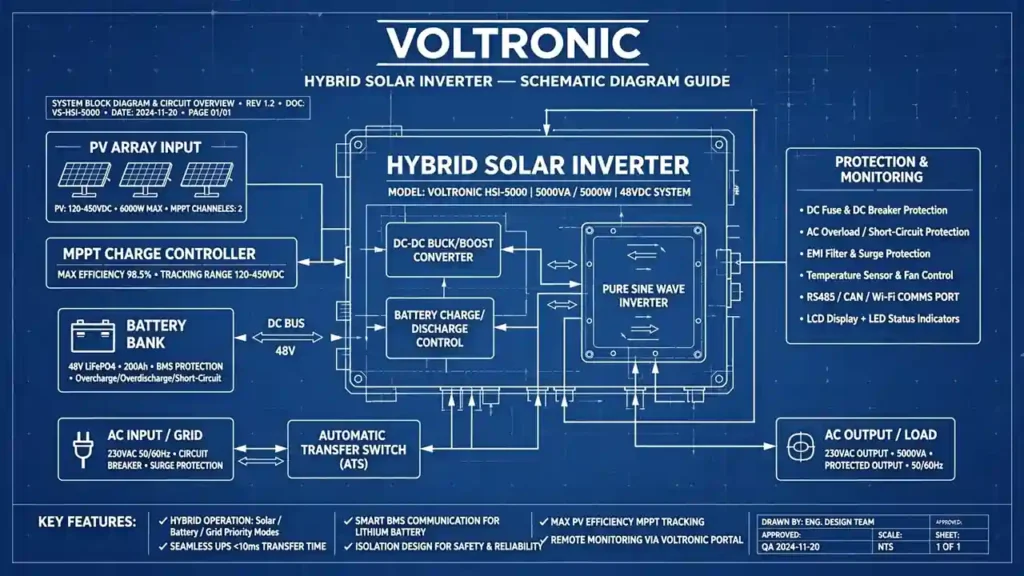
A hybrid inverter is three machines in one box, run by smart software.
First, it works as a solar inverter. It turns the DC power from your panels into AC power for your home. It uses MPPT tracking to get the most energy from your panels. MPPT stands for Maximum Power Point Tracking. In plain words, it keeps finding the sweet spot where your panels give the most power.
Second, it works as a battery charger and inverter. It stores extra solar power in batteries. When the grid fails, it turns battery power back into home power. Good models switch in about 10 to 20 milliseconds, so your computer and TV do not restart. That speed is shown in typical hybrid inverter manuals, for example a 48V hybrid model listing 10 ms for computers and 20 ms for home appliances (source).
Third, it works as a grid manager. It decides where power should go, moment by moment. Solar to home. Solar to battery. Solar to the grid. Battery to home. Good models let you set a priority, such as keeping batteries full first.
One box. One install. One app to check. That is the whole appeal.
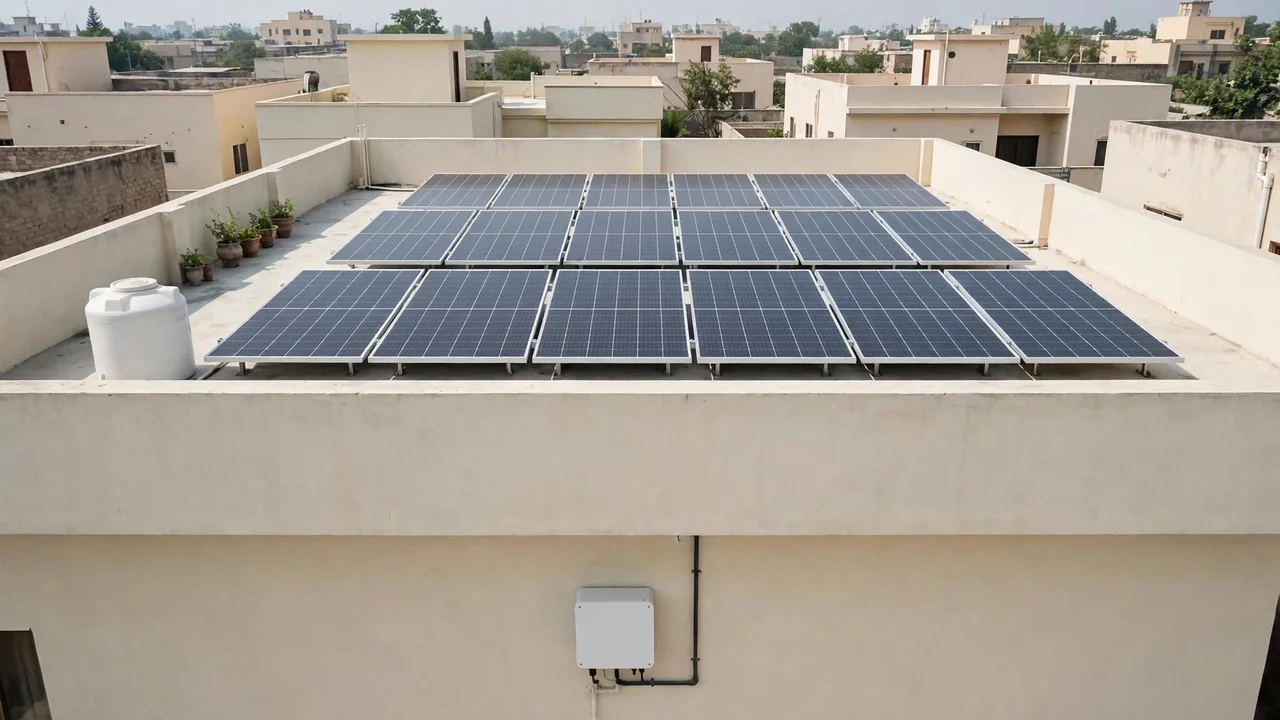
Hybrid vs on-grid: what happens during load shedding?
An on-grid inverter is simpler. It turns solar power into home power and feeds extra power to the grid.
In a country with a rock-solid grid, that is fine. Pakistan is not that country.
By design and safety rules, on-grid inverters shut down when the grid fails. Your panels sit in bright sun, but your fans stand still.
That is the test that matters most here. If a system dies during load shedding, it fails its main job for a Pakistani family.
Hybrids used to cost far more than on-grid units. That gap has shrunk. For most home buyers, the backup power is now worth it. Saving a little on an on-grid unit can cost you the very benefit you bought solar for.
Hybrid vs off-grid: what happens to extra sunshine?
An off-grid inverter runs your home from solar and batteries alone. It has no grid link.
That is the right choice for a remote home with no grid access at all.
But in a grid-connected home, it wastes a chance. On days when your batteries are full and the sun is strong, an off-grid system has nowhere to send the extra power. A hybrid can export it for net metering credit, where the scheme is available in your area. Net metering rules differ by area, so confirm them with your local distribution company before you count on credits.
Off-grid also means total self-reliance. Every watt must come from your panels and batteries. That means you must size everything for cloudy stretches. A hybrid lets the grid act as your backup, so you can size for normal days instead of worst cases.
| Feature | Hybrid | On-grid | Off-grid |
|---|---|---|---|
| Works during load shedding | Yes, with batteries | No | Yes |
| Exports extra solar power | Yes | Yes | No |
| Needs batteries for full benefit | Yes | No | Yes |
| Best for | Most grid-connected homes | Areas with a very stable grid | Remote homes with no grid |
What should you check before you buy?
Pure sine wave output. This is non-negotiable. It is the clean power that modern electronics and motors need. Check it on the datasheet.
MPPT, ideally dual. Dual MPPT lets you face panel strings in different directions. That helps on roofs that are not simple rectangles.
Battery voltage. Many modern home hybrids use a 48-volt battery bank. That is the modern standard for home systems. Smaller models may use 24 volts, so match the inverter to the battery you plan to use.
Lithium battery communication. If you plan to use LiFePO4 batteries now or later, the inverter should talk to the battery’s BMS. BMS stands for Battery Management System. It keeps charging safe and healthy.
Transfer time. Under 20 milliseconds keeps sensitive electronics running through a grid failure. Ask for this number on the datasheet.
Service in your city. This decides your real experience. A great inverter with no local service is a gamble. Ask who will fix it, and how fast.
A monitoring app. You should see production, use, and battery level on your phone. What you can see, you can manage.
For the parts inside these machines, see our chopper transformer guide and our solar inverter parts guide.
How do you size a hybrid system?
You do not need an engineering degree. You need honest numbers.
Step 1: List what runs at the same time. Not everything you own. Just a normal evening: fans, lights, fridge, TV, router. Add the watts.
Step 2: Add your biggest motor’s surge. A water pump or AC draws a big spike when it starts. Typical hybrid manuals list surge power at twice the rated power for a few seconds (source). Your inverter’s surge rating must cover that spike.
Step 3: Leave headroom. Size so your normal peak is about 80 percent of the inverter’s rating. The machine runs cooler and lasts longer.
Step 4: Match panels and batteries to the inverter. Check the inverter’s maximum PV input and MPPT voltage range before you pick panels. Check its battery voltage before you pick storage. All three must agree.
If you are comparing models, our guide on how to pick the best hybrid inverter walks through the same checks model by model. And our Inverex vs Fronus comparison shows how two popular brands differ in service and value.
Mistakes that waste money
Buying on price alone. The cheapest hybrid often has the weakest service network. The real cost includes the repair you need in year three.
Forgetting batteries. An inverter without enough batteries is a car without fuel. Budget storage with the inverter, not after it.
Oversizing wildly “to be safe.” A huge inverter running at 20 percent load wastes money and runs poorly. Size honestly.
Skipping the datasheet. If a seller cannot show you the datasheet, walk away. Real products have documents.
Bonus tip: Ask your installer to show you the monitoring app working on a past install. Real production data from a real home tells you more than any brochure.
Pair it with the right panels and batteries
The inverter is the biggest decision, but it does not stand alone.
If your roof is tight, high-efficiency black panels squeeze more energy from each square metre. Our black vs blue panel guide compares them honestly.
Size batteries for your real outage pattern. How long does load shedding usually last in your area? Which appliances must keep running? That answer should size your battery bank, not a rule of thumb.
Plan in order: bills first, roof second, sizing third, equipment fourth, installer fifth. Skipping a step is how expensive mistakes happen.
Grid voltage swings can also hurt inverters, so read our guide on grid voltage fluctuation before you install.
Frequently asked questions
Can a hybrid inverter run my whole house?
Yes, if it is sized right. Add up your simultaneous loads, allow for motor surges, and leave headroom. Many homes manage with 5 to 10 kilowatts, but do the math for your own appliances.
Do I need batteries with a hybrid inverter?
For the full benefit in Pakistan, yes. Without batteries, you lose the backup power that makes hybrids valuable here. Some models can run without batteries in grid-tied mode, but that wastes their main advantage.
Does a hybrid support net metering?
Hybrid inverters can export surplus solar power, and net metering is how that export earns credit where the scheme applies. The application goes through your local distribution company, and rules differ by area.
How long do hybrid inverters last?
Good units often carry multi-year warranties and can serve for many years with proper install and ventilation. Heat is the main enemy, so install in a cool, ventilated spot. Check the exact warranty on the model you pick, and check the live price on the website.
Can I start small and expand later?
Often yes. Many hybrids allow panel additions within their MPPT limits, and some allow parallel operation. Check the datasheet for parallel capability and maximum PV input before you buy, if growth matters to you.
Verdict: is a hybrid right for you?
Pakistan asked solar equipment for two things. Keep my lights on when the grid fails. Cut my bills when it does not.
The on-grid inverter answered only the second. The off-grid inverter answered only the first. The hybrid answered both.
That is why it is the best choice for most Pakistani homes — not through marketing, but through fit. If you have no grid at all, off-grid may still win. For everyone else on the grid, start with a hybrid, size it honestly, and check the datasheet before you pay.
Need help sizing? Chat with SunTech Mall on WhatsApp or browse the models in our Veyron II guide to see how one popular model is sized in practice. Check the live price on the website before you decide.
5 Comments
for Countess Louise of Savoy
Fine news for all us
[…] For the deeper reasoning, read our guide on why hybrids suit Pakistan. […]
[…] and proper batteries decide how well your solar investment actually serves you. Read our guide on why hybrids suit Pakistan and our guide on how to pick a hybrid […]
[…] why hybrid inverters suit Pakistan · solar plant installation guide · SunTech Mall […]