
Inverex Veyron II Premium 4KW: A Plain-Words Guide for Your Home
The rising demand for solar energy in Pakistan has made choosing the right inverter more important than ever. If you're seeking an energy-efficient, durable, and feature-rich solar solution, the Inverex Veyron II…

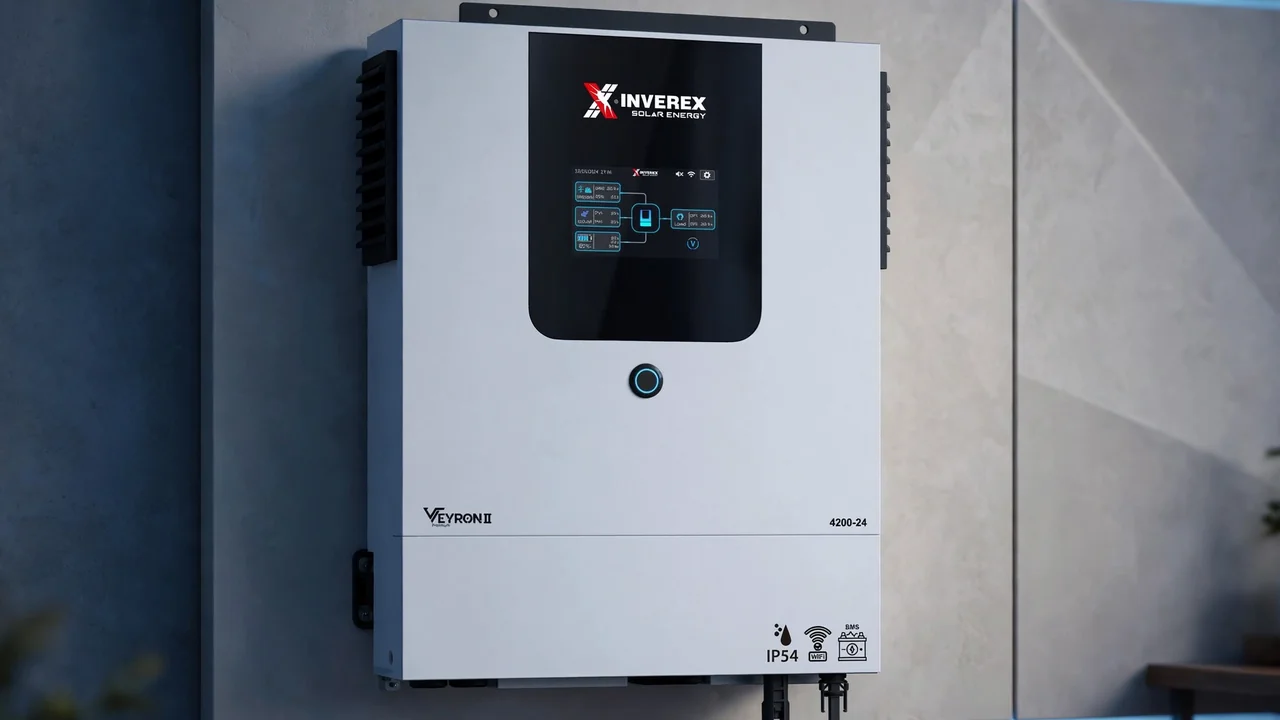
The Inverex Veyron II Premium 4KW is a hybrid solar inverter that delivers 4000 watts of continuous power from a 24-volt battery bank, with a built-in MPPT solar charger that accepts 120 to 450 volts DC from your panels and charges at up to 120 amps. In plain words: it turns panel power into home power, keeps your essentials running when the grid fails, and charges your batteries from the sun. Whether it fits your home depends on your loads, not on the brand name.
Is 4KW enough for your home?
Start with what you run at the same time, not with what you own. A 4KW inverter can usually handle a typical Pakistani home: fans, lights, a fridge, a Wi-Fi router, phone chargers, and a washing machine used on its own. It will struggle if you run two air conditioners plus a water heater at once on a cloudy evening.
Do this quick check before you buy:
- List every appliance you want on during load shedding.
- Read the watts on each label and add them up.
- If the total sits well under 4000 watts, a 4KW unit fits.
- If the total sits near or above 4000 watts, you need a bigger system or strict load discipline. No inverter fixes an undersized system.
Buying too small is the most common regret in solar. Buying far too big wastes money you could have spent on batteries or panels.
What the spec numbers mean in plain words
| Spec (from the model's spec summary) | What it means for you |
|---|---|
| Rated power: 4000 VA / 4000 W | The power it can deliver non-stop. This is your budget. |
| Battery voltage: 24 V DC | You need a 24-volt bank, usually two 12 V batteries in series or one 24 V lithium unit. |
| MPPT range: 120–450 V DC | The panel voltage window it works in. A wide window fits many panel layouts. |
| Max PV array power: 5000 W | The most panel power it is built to take in. |
| Max solar charge current: 120 A | How fast it can push solar power into your batteries on a sunny day. |
| Max PV input current: 27 A | The most current it can draw from the panel strings. Your installer must respect this. |
| Input voltage: 230 V AC | Standard home mains voltage in Pakistan. |
| Floating charge voltage: 27 V DC | The gentle voltage it holds a full 24 V bank at so it stays topped up. |
MPPT stands for Maximum Power Point Tracking. Panels do not give their best power at one fixed setting — the best point shifts with sun, cloud, and heat. The MPPT circuit keeps adjusting so it pulls close to the best power available at each moment. Without it, a chunk of your panels' output goes to waste every day, even on sunny days.
How hybrid blending works when the grid fails
"Hybrid" means the inverter blends three sources: solar panels, batteries, and the grid. It switches between them on its own. Sun strong? Your home runs on solar. A cloud passes? The battery fills the gap. Grid back? The inverter uses it to help or recharge.
Pure sine wave output matters here. It is clean power, close to grid quality, safe for LED TVs, laptops, fans, and fridges. Cheap inverters that make rough, blocky power can slowly stress sensitive electronics. If a seller cannot tell you the output wave type, that is a warning sign.
One honest limit: hybrid is not magic. If your batteries are empty, the sun is gone, and the grid is off, the inverter has nothing to blend. That is why battery size and load control matter as much as the inverter itself.
Which batteries pair with it?
The Veyron II Premium 4KW uses a 24-volt bank. You have two main paths:
- Lead-acid (two 12 V batteries in series). Lower cost up front. Needs water top-ups for flooded types, ventilation, and care about depth of discharge. The inverter's equalization function helps keep lead-acid cells balanced, so one weak cell does not drag the whole bank down early.
- Lithium-ion (a 24 V unit, or a supported lithium bank). Costs more up front, lasts far longer under daily cycling, and needs almost no maintenance. Before you connect lithium, confirm the inverter's charging profile matches your battery's datasheet. Wrong charge voltages shorten any battery's life, lithium included.
Never mix old and new batteries in one bank, and never mix lead-acid with lithium in the same bank. Even a smart inverter cannot fix a mismatched bank.
Wi-Fi monitoring and the LCD screen
This model has built-in Wi-Fi for remote monitoring. The companion app shows panel output, battery level, and home usage on your phone. That sounds like a luxury until a battery starts failing: a weak battery shows up in the app days before it dies outright. Early warning is cheap. A dead bank is not.
Not everyone wants an app. The LCD screen on the unit shows solar input, battery state, and load at a glance. For elders in the house who will never install an app, the screen is the everyday control panel. Learn to read it before you need it in a blackout.
Installation mistakes that kill good inverters
A good inverter in a bad spot fails early, and the brand gets blamed for an installer's fault. Avoid these:
- Heat and damp. Put it on a shaded, dry, ventilated wall. A hot, damp corner shortens the life of every electronic part inside.
- Thin wires and wrong breakers. Size wires and breakers for a 4KW system. Thin wires heat up and waste power. Wrong breakers are a fire risk.
- No earthing. Proper earthing protects your family and your equipment. If an installer says earthing is optional, find another installer.
- Shade-blind panel layout. Panels in shade produce very little, no matter how good the inverter is. Plan shade-free roof space for roughly 8 to 10 panels to use the full 4KW, with the exact count set by each panel's wattage.
Hire a certified solar technician for the install and keep the receipt. Warranty claims get much harder without proof of a proper install.
Who should skip this inverter?
Honesty cuts both ways. Skip the 4KW if:
- You run multiple air conditioners at once and will not change that habit.
- Your simultaneous loads regularly cross 4000 watts.
- You plan a much larger system next year and would rather buy once at a bigger size.
- The seller cannot confirm the exact model, the warranty terms in writing, and that the unit is genuine.
A bigger home is not a failure of this inverter. It is a sign you need a bigger model, and saying so now beats buying twice.
Buyer checklist before you pay
- Add up your simultaneous loads in watts. Confirm they fit under 4000 W.
- Confirm the battery plan: 24 V bank, correct type, correct charge profile.
- Check the panel plan fits the 120–450 V MPPT window and the 27 A PV input limit.
- Ask for the warranty in writing: length, who honors it, and where.
- Ask for the spec sheet for the exact 4KW model, not a 6KW sheet from the same family.
- Buy from an authorised dealer so the warranty is real.
Frequently asked questions
Is 4KW enough for a normal Pakistani home?
For most homes, yes: fans, lights, one or two fridges, a router, chargers, and a washing machine used on its own. Two or more air conditioners running together usually need a bigger system.
What batteries does it need?
A 24 V DC bank, in lead-acid or lithium-ion. Two 12 V batteries in series make 24 V, or use a single 24 V lithium unit that the inverter supports.
What does the MPPT range 120–450 V mean?
It is the panel voltage window the charger works in. Your installer's panel string design must land inside that window. A wide window gives the installer more layout options on your roof.
How many panels do I need?
Roughly 8 to 10 panels to use the full 4KW, depending on each panel's wattage and your shade-free roof space. Your installer should size this from your panels' datasheets, not from a guess.
Does the Wi-Fi app replace the screen?
No. The app is for remote checks and history. The LCD screen is the quick, walk-past check. Use both: the app for trends, the screen for "is everything okay right now?"
Where can I buy a genuine unit?
From an authorised dealer, with the warranty in writing. Check current stock and the live listing at SunTech Mall's shop and read our solar inverter buying guide before you pay anyone.
The next step
You now know what 4KW means, what the MPPT numbers do, which batteries fit, and where installs go wrong. List your simultaneous loads, confirm the 24 V battery plan, and check the live listing at SunTech Mall's shop. A careful hour now beats years of regret later.
Spec source: model spec summary for Veyron II Premium 4000W-24V (Manuals.plus conversion of the spec sheet), cross-checked against the family listings for the 6KW model, which share the 120 A charger and 120–450 V window but differ in power and battery voltage. Always confirm against the sheet that ships with your exact unit.
Related Products & Categories
Related Technical Guides
 Category:
General
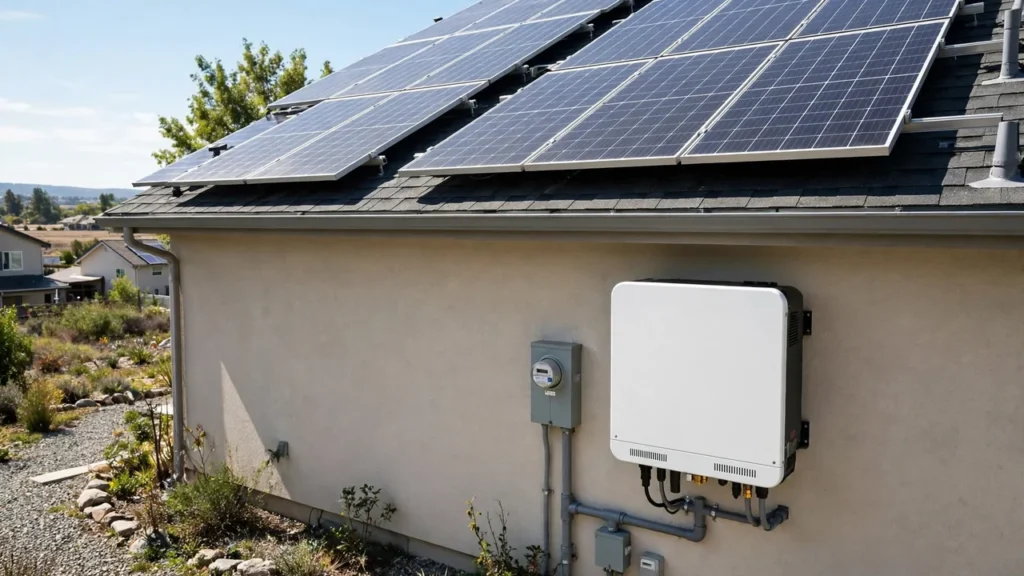
What Is a Day Solar Inverter 2026: Run Your Daytime Load on Sunlight Without a Battery
Last summer, a shopkeeper in Peshawar told me he wanted solar power. He did not want batteries. He only wanted his shop…
 Category:
General
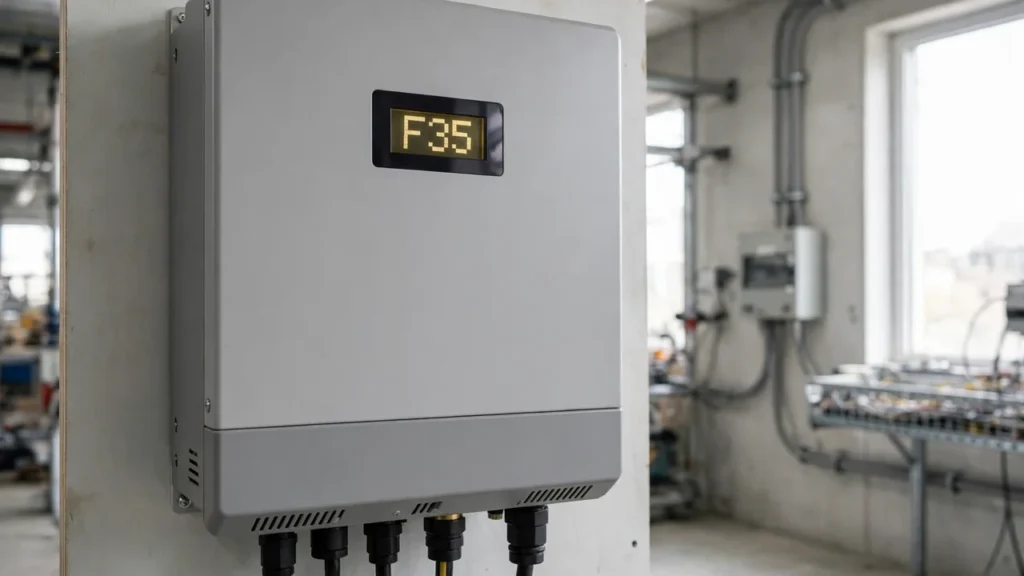
Inverex Nitrox Fault Codes 2026: Technician’s Complete Decode List for F01 to F64
Inverex Nitrox Fault Codes 2026: Technician’s Complete Decode List for F01 to F64 One evening, a shop owner called me. His Inverex…
 Category:
General
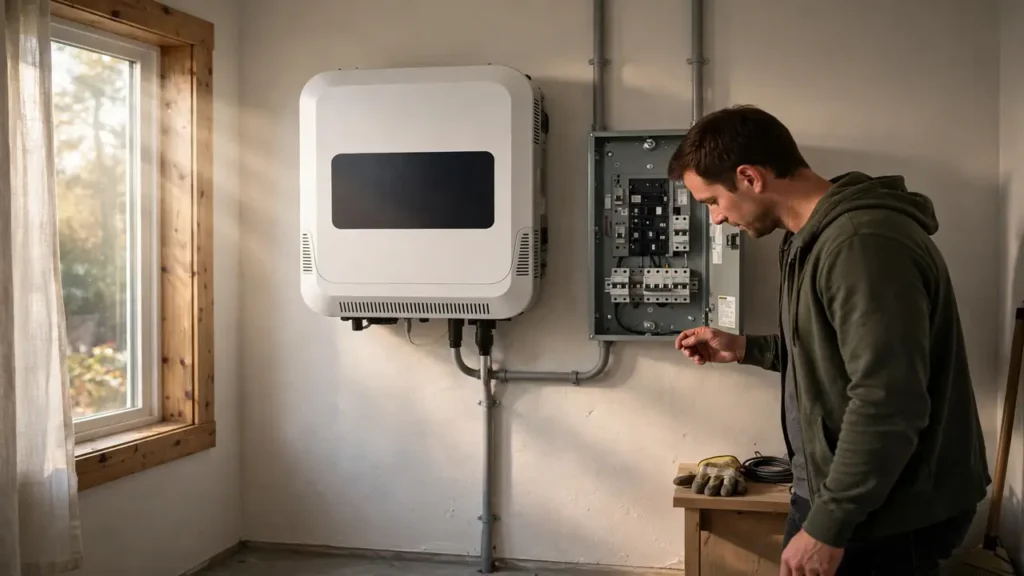
Solar Inverter Not Turning On 2026: 9 Reasons and the Step-by-Step Check a Technician Uses
Solar Inverter Not Turning On 2026: 9 Reasons and the Step-by-Step Check It was a sunny morning. The power in the house…
3 Comments
[…] and spare parts availability. Their weakness is often a higher price for similar specs. See our Veyron II guide for one popular model in […]
[…] inverter covers it with even more room, and leaves space to add a second air conditioner later. The Inverex Veyron II Premium 4KW guide describes exactly such a machine: 4,000 watts of continuous power from a 24-volt battery bank, with […]
[…] 125 amps, and a 4,000-watt inverter on a 24-volt battery, such as the Veyron II Premium 4KW in our Inverex Veyron II Premium 4KW guide, draws about 167 […]