Japan’s Foldable Solar Cell: What the 26.5% Record Really Means for You
For years, solar panels have been the gold standard for clean, renewable energy, but their efficiency has always been limited. That is, until now. A revolutionary new invention from Japan is shaking…

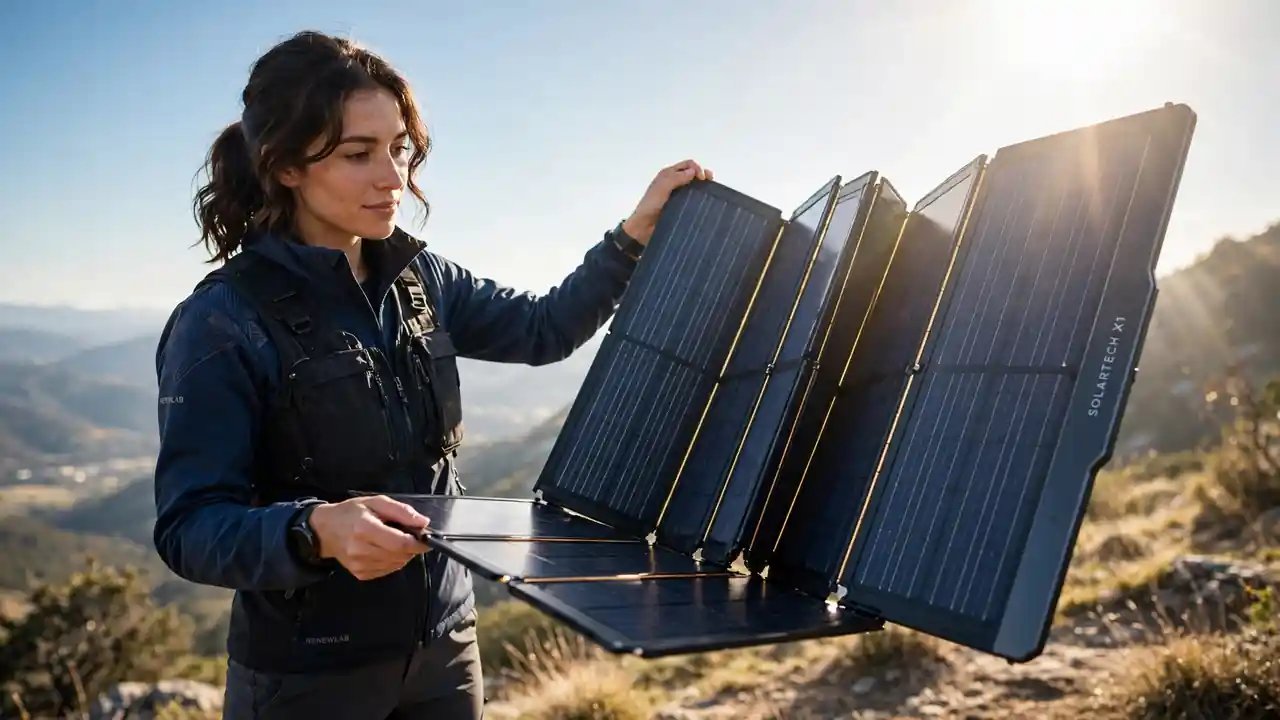
No, you cannot buy Japan's record foldable solar cell yet. It is a lab result, not a shop product. Researchers at Tokyo City University built a bendable perovskite-silicon tandem cell that hit 26.5% efficiency in April 2025, the highest ever recorded for a flexible cell of this type. That result is real, and it is exciting. It does not mean your rooftop panels are out of date.
What did the researchers actually build?
They stacked two solar cells on top of each other. The bottom cell is a flexible thin-film silicon heterojunction cell. The top cell is a semi-transparent inverted perovskite cell. Each layer catches a different part of sunlight, so together they catch more than one layer alone.
Think of it like two nets with different mesh sizes, one above the other. The first net catches some fish. The second net catches fish that slipped through the first. A single cell is one net. A tandem cell is two nets working as one unit.
The numbers, as reported by pv magazine in April 2025, are: 26.5% power conversion efficiency, an open-circuit voltage of 1.83 V, a short-circuit current density of 17.9 mA/cm², and a fill factor of 81%. The bottom flexible silicon cell alone passed 21% efficiency. The perovskite top cell pushed the pair to 26.5%.
Why does the word "flexible" matter so much?
Normal silicon wafers are stiff and brittle. Bend one and it snaps. That is why normal panels are flat, heavy boards that need a strong frame and a flat roof.
The Tokyo City University team made silicon bend by making it very thin. They used potassium hydroxide (KOH) etching, a wet chemical process, to thin the silicon wafer to about 60 micrometres. At that thickness, silicon can bend instead of breaking. They textured the surface to trap more light, and they built the perovskite top cell with a low-temperature process so the heat would not damage the thin silicon below.
The word "record" needs care here. This is a record for flexible perovskite-silicon tandem cells. Rigid tandem cells in labs have gone higher. The new part is the mix: high efficiency and bendability in one cell. That mix had not been reached at this level before.
Where could a bendable solar cell be used?
A cell you can bend opens up surfaces that flat panels cannot use well:
- Building walls and curved roofs. Solar cells could become part of a facade, an awning, or a curved surface, instead of a board bolted on top.
- Vehicles. A light, bendable cell could sit on a car roof or a bus panel and trickle-charge a battery through the day.
- Portable power. Foldable mats for camping, field work, and emergency relief become far more useful when the cell is both light and efficient.
- Weight-sensitive jobs. In satellites, every gram costs money to launch. Light cells matter there more than almost anywhere else.
These are the uses the researchers and reporters point to. They are possible uses, not products on sale. There is a wide gap between "this surface could work" and "you can order this panel."
Why can you not buy one yet?
Three problems stand between a lab cell and a product in a shop. Every honest article about this record should name them.
Durability. Perovskite materials are sensitive to moisture, heat, and UV light. Those are exactly what an outdoor panel faces every day. A cell tested under controlled lab light is not the same as a panel on a hot rooftop for 25 years. Long outdoor proof takes years of testing by its very nature. You cannot speed up a 10-year weather test into 10 weeks.
Scale. The lab cell was a small square, about 5 centimetres across. Making millions of square metres with the same quality, at a sane cost, is a different job from making one small cell. Many good lab ideas stall at this step.
Materials. Most high-efficiency perovskites contain lead. That raises fair questions about the environment and recycling when you scale up to millions of panels. Lead-free versions exist, but they currently perform worse. That trade-off still needs work.
None of this makes the breakthrough fake. It makes it early. A lab record is the starting gun, not the finish line.
Should you wait for this, or buy panels now?
Ask yourself one plain question: what do you lose by waiting?
Today's commercial panels are mature, warrantied products. They turn roughly a fifth of sunlight into electricity, they last for decades, and they start saving you money from the month they go up. Every month you wait for a future cell is a month of savings you never get back.
Flexible tandem cells, when they arrive, will most likely open new uses first — curved surfaces, portable power, building parts — rather than instantly replacing flat rooftop panels. Your flat roof does not need a bendable cell. It needs a good panel, fitted well, right now.
A simple way to decide:
- If your roof is flat and open, buy proven panels now and stop waiting for lab news.
- If your only surface is curved, shaded, or oddly shaped, talk to an installer about what fits today, and keep following flexible-cell news for later.
- If someone tells you a foldable 26.5% panel is already for sale, ask for the maker, the model, and the datasheet. If they cannot show all three, walk away.
Lab cell vs today's rooftop panel
| Point | Japan's lab cell (2025) | A normal rooftop panel today |
|---|---|---|
| Efficiency | 26.5% in the lab | Roughly a fifth of sunlight, varies by model |
| Bendable? | Yes, thin silicon plus perovskite top cell | No, rigid board in a frame |
| On sale to the public? | No | Yes, from established brands |
| Outdoor track record | Not yet proven over decades | Decades of real roofs behind it |
| Best job right now | Research and future surfaces | Powering a home today |
Questions to ask before you delay a solar purchase
- How much am I spending on grid power each month while I wait?
- Is my roof flat and open, or does it truly need a flexible cell?
- Can the seller show a datasheet, a warranty in writing, and a real model name?
- Am I waiting for a product, or for a headline?
- What would change my mind — a shop listing, or another news story?
Frequently asked questions
Did Japan really build a foldable solar cell with 26.5% efficiency?
Yes. Researchers at Tokyo City University built a bendable perovskite-silicon tandem cell that reached 26.5% efficiency under standard test light, as reported by pv magazine in April 2025. It is lab research, not a product you can buy.
What is a perovskite solar cell?
Perovskites are a family of crystal-structured materials that absorb light very well and are cheap to make. They are one of the most studied new solar materials of the last decade. Their weak point is durability outdoors, which is why teams pair them with sturdy silicon.
What does "tandem" mean?
Tandem means stacked. Two cells sit on top of each other, each tuned to a different part of sunlight. Together they convert more of the light that hits them than either cell could alone.
Can I buy flexible solar panels today?
Flexible panels exist today, but they are usually lower-efficiency thin-film types for RVs, boats, and portable use. They are not the 26.5% perovskite-silicon tandem cell from this research. Do not let a seller blur that line.
Will this make current panels worthless?
Very unlikely in the near term. Panels you buy today will keep working for their full lifespan. New technology tends to open new uses first, and replace old installs only slowly, over many years.
How long until perovskite panels reach shops?
No honest date exists. It depends on solving durability and factory-scale production. Japan's reported national target of 20 gigawatts of perovskite capacity by 2040 points to a decade-scale rollout, not a next-year product. Treat any nearer promise with doubt.
The next step
If you want power now, start with what is proven. Read our guide to the best solar panel brands in Pakistan and our solar inverter buying guide, then check current stock at SunTech Mall's shop. Follow the flexible-cell story with interest — but buy your rooftop system on facts that exist today, not on a lab result that still needs years of proof.
Sources: pv magazine (25 April 2025), Perovskite-Info (26 April 2025), Interesting Engineering, and the paper "High-Efficiency Perovskite/Silicon Tandem Solar Cells with Flexibility" in Solar RRL, as cited by those reports.