Best 5 Solar Panel Brands in Pakistan (2025) – Energy Efficient!
In 2025, Pakistan’s energy demands are soaring, and with rising electricity bills and frequent power outages, many households and businesses are turning to solar energy. If you're considering making the switch, knowing…

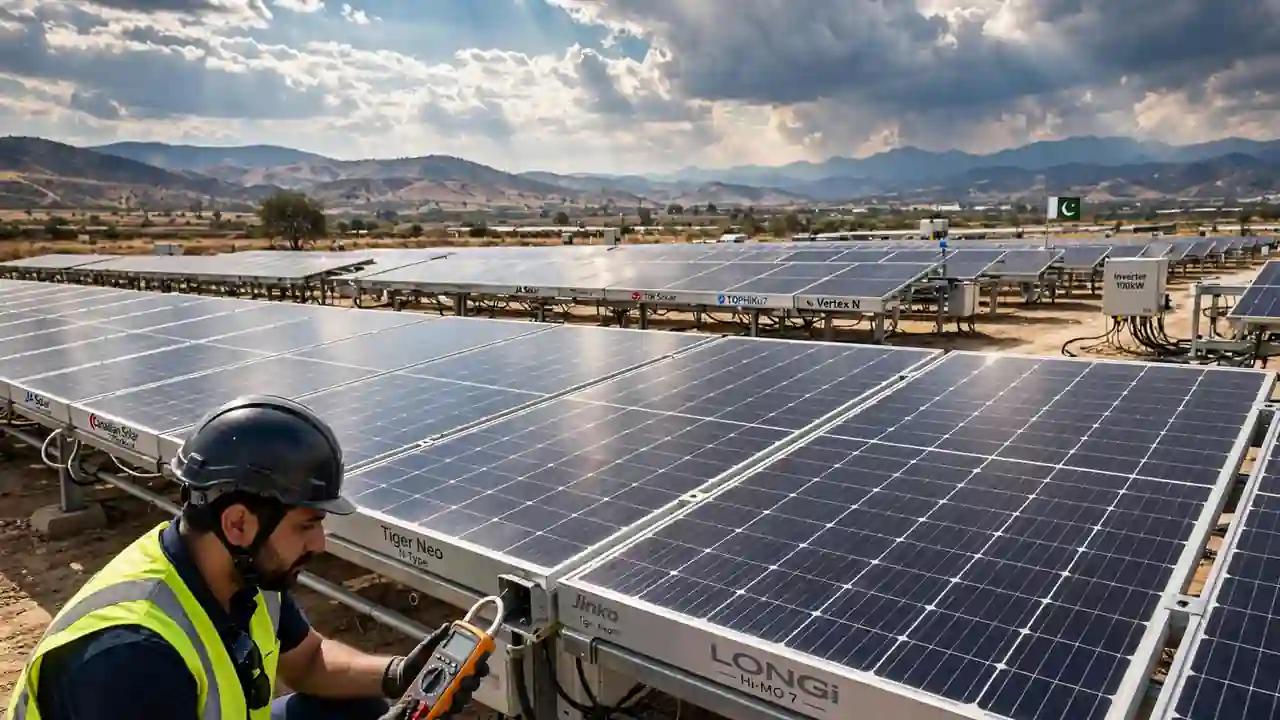
Introduction: Choosing Panels Without Getting Burned
Walk through any solar market in Pakistan and you will hear five names repeated like a mantra: Longi, Jinko, JA Solar, Trina, and Canadian Solar. Every dealer claims theirs is the best. Every price list looks different. And somewhere in the noise, you — the buyer — have to make a decision worth hundreds of thousands of rupees.
My personal stake: at SunTech Mall, I talk to homeowners and installers every week who bought panels elsewhere and now suspect they got relabeled or lower-grade stock. Pakistan’s solar boom has attracted serious brands and serious fakes in equal measure. Helping you tell the difference is literally my job.
Your fear is the right one: what if I pay for a premium brand and get a counterfeit? What if I pick the wrong brand for Pakistan’s brutal summer heat? What if prices drop right after I buy? My exact promise: this guide introduces the five brands that dominate Pakistan’s market, explains in plain language what actually matters when choosing (beyond the marketing), shows you how to avoid fakes, and tells you honestly what no brand comparison can tell you — because prices and models change constantly.
Let us cut through the noise together.
Trust nudge: Yes, we sell solar panels, and yes, I would love your business. But notice what this guide will not do: it will not give you a fake “price table” with made-up per-watt rates, and it will not crown a single “winner” — because the honest truth is that all five of these brands make excellent panels, and the right choice depends on your roof, your budget, and your installer. Anyone who tells you one brand crushes the others is selling you something. I am going to earn your trust instead.
In This Guide: What You Will Be Able to Do
- Name the five major solar panel brands in Pakistan and what each is known for
- Understand the specs that actually matter: efficiency, temperature coefficient, and warranties — in plain language
- Judge whether a panel suits Pakistan’s heat, dust, and load-shedding reality
- Spot counterfeit or mislabeled panels before you pay for them
- Ask your dealer and installer the right questions — and know a good answer when you hear one
Why These 5 Brands Dominate Pakistan
Before the names, the reason. Pakistan gets abundant sunshine year-round, electricity tariffs keep rising, and load-shedding made backup power a necessity rather than a luxury. That combination created one of the world’s most active rooftop solar markets — and global manufacturers noticed.
The five brands below earned their position the hard way: through years of installations performing in Pakistani conditions, through dealer networks that actually stock spare support, and through warranties that mean something. They are all monocrystalline panel makers (the dark, uniform-looking cells that outperform older polycrystalline types), and all offer modern technologies like half-cut cells, multi-busbar designs, and increasingly N-type cells and bifacial options.
Note on prices and specs: Panel prices in Pakistan move constantly with the dollar rate, import policy, and demand — any article printing exact per-watt prices is out of date within weeks. Likewise, specific wattages and efficiency figures change with every new model series. This guide describes each brand’s strengths qualitatively; for current models and live prices, check SunTech Mall’s live listings or contact us directly.
1. Longi Solar — The Efficiency Leader
Longi Solar is the world’s largest manufacturer of monocrystalline silicon wafers, and that vertical integration shows in their panels. In Pakistan, Longi’s Hi-MO series became the benchmark installers compare everything else against.
What Longi is known for: consistently high efficiency, strong performance in high temperatures, and excellent build quality. Their N-type cell technology (which uses a different silicon doping that resists a degradation effect called LID) holds up particularly well over decades. If your roof space is limited and you want maximum power per square foot, Longi is usually on the shortlist.
Best suited for: homeowners with limited roof space who want top-tier output, and anyone prioritizing long-term performance over the lowest upfront price.
2. Jinko Solar — The Global Heavyweight
Jinko Solar is one of the largest solar manufacturers on the planet, and their Tiger series panels are a common sight on Pakistani rooftops — residential and commercial alike. Jinko was among the pioneers pushing bifacial panels (which capture reflected light from the rear side too) into the mainstream.
What Jinko is known for: massive production scale (which keeps quality consistent), strong bifacial options for ground-mounted or elevated installations, and a genuinely global warranty and support footprint. Their panels are a safe, well-understood choice that almost every installer in Pakistan knows how to work with.
Best suited for: buyers who want a proven global brand with wide installer familiarity, and commercial or elevated installations that can benefit from bifacial gain.
3. JA Solar — The Value Champion
JA Solar built its reputation on delivering solid performance at friendlier prices than the top-tier names. In Pakistan’s price-sensitive market, that positioning made them enormously popular with medium-budget households.
What JA Solar is known for: excellent price-to-performance ratio, half-cut cell designs that handle partial shading gracefully, and good low-light performance for cloudy days. Their newer N-type bifacial models closed much of the gap with pricier competitors.
Best suited for: budget-conscious buyers who refuse to compromise much on quality — the classic “smart money” pick for residential systems.
4. Trina Solar — The Powerhouse for Big Systems
Trina Solar‘s Vertex series pushed panel wattages higher than the industry thought practical, using larger wafers and multi-busbar cell designs. In Pakistan, Trina found a strong following in larger residential and commercial installations.
What Trina is known for: very high wattage per panel (fewer panels needed for the same system size), robust construction, and good behavior in hot, dusty conditions like those in Sindh and Balochistan. Their low temperature coefficient means output drops less as panels heat up — a real advantage in Pakistani summers.
Best suited for: larger homes and commercial projects where fewer, bigger panels simplify installation and wiring.
5. Canadian Solar — The Balanced All-Rounder
Canadian Solar (headquartered in Canada, manufacturing at global scale) carved out a reputation for dependable, no-drama panels. They were early movers in both PERC and newer TOPCon cell technologies.
What Canadian Solar is known for: balanced price and performance, low long-term degradation rates, and solid warranty terms. They rarely top any single spec chart, but they rarely disappoint either — the reliable all-rounder of the group.
Best suited for: buyers who want proven reliability and strong warranty backing without paying a premium for the absolute cutting edge.
What Actually Matters When Choosing (Beyond the Brand Name)
Here is the uncomfortable truth brand debates ignore: for reputable Tier-1 manufacturers, the differences between brands matter less than getting a genuine panel, installed correctly. Focus on these:
Temperature coefficient. Panels lose output as they heat up — and Pakistani rooftops get brutally hot. A lower (better) temperature coefficient means your panel produces closer to its rated power on a 45°C afternoon. Ask for this number on the datasheet; it matters more than the headline wattage.
Warranties — two of them. Panels carry a product warranty (typically 10–15 years against defects) and a performance warranty (typically 25–30 years guaranteeing gradual output). Both should come from the manufacturer, in writing, with a verifiable serial number — not just the dealer’s word.
Cell technology. N-type and TOPCon cells generally outperform older P-type PERC in efficiency and degradation. Bifacial panels add rear-side gain where installation allows. None of this requires you to become an engineer — just ask your installer which cell type is in the quoted panel and why.
Your installer’s competence. I cannot stress this enough: a perfectly good panel installed with bad wiring, wrong tilt angle, or heavy shading will underperform a mid-range panel installed properly. Vet your installer as hard as you vet your panels.
Bonus Tip: Always ask for the panel datasheet before paying. A genuine Tier-1 panel has a detailed manufacturer datasheet with electrical specs, temperature coefficients, and warranty terms. If the dealer cannot produce one, walk away.
How to Avoid Fake and Relabeled Panels
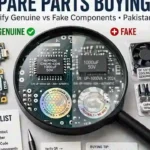
Pakistan’s solar boom attracted counterfeits — panels with premium brand labels on inferior cells, or lower-wattage panels relabeled as higher wattage. I have seen the aftermath, and it is expensive. Protect yourself:
- Verify serial numbers with the manufacturer where possible. Genuine panels have traceable serials.
- Inspect the labeling. Blurry printing, misspellings, or labels that peel off easily are red flags.
- Compare the datasheet. The panel’s physical specs (dimensions, weight, cell count) should match the official datasheet exactly.
- Buy from established suppliers with a physical presence and real after-sales support — not a random social media listing with no address.
- Be suspicious of impossible prices. If a “premium” panel costs far below market, you are not getting a deal — you are getting a lesson.
At SunTech Mall, we source through proper channels and stand behind what we sell. Browse our shop, and if you are comparing options, our team will walk you through datasheets honestly — email info@suntechmall.com or WhatsApp +92 306 2244820.
Panels Are Half the System: Do Not Forget the Inverter
A quick but crucial reminder: panels generate DC power, and your home runs on AC. The inverter bridges that gap, and a bad inverter will bottleneck even the finest panels. Size it correctly, choose pure sine wave output, and consider hybrid models if you want battery backup. Our solar inverter buying guide covers this in depth.
And if you enjoy following where solar technology is heading, read our verified story on Japan’s foldable solar cell breakthrough — a glimpse of the future, honestly explained.
Frequently Asked Questions
Which solar panel brand is best in Pakistan?
There is no single winner. Longi, Jinko, JA Solar, Trina, and Canadian Solar all make excellent Tier-1 panels. The best choice depends on your roof space, budget, heat conditions, and installer recommendation. Prioritize genuine stock and proper installation over brand debates.
How do I know if a solar panel is genuine or fake?
Check for verifiable serial numbers, crisp manufacturer labeling, a matching official datasheet, and realistic pricing. Buy from established suppliers with a physical presence. If the dealer cannot show you a datasheet, do not buy.
Do solar panels work well in Pakistan’s summer heat?
Yes, but heat reduces output — which is why the temperature coefficient on the datasheet matters. Quality Tier-1 panels are designed for hot climates, and proper installation (with airflow under the panels) helps significantly.
What is the difference between monocrystalline and polycrystalline panels?
Monocrystalline panels (uniform dark cells) are more efficient and dominate the current market. Polycrystalline (bluish, speckled) is older technology — cheaper per watt historically, but largely replaced by mono in new installations.
What does bifacial mean?
Bifacial panels capture sunlight from both the front and the rear side (using reflected light from the ground or roof). They produce extra energy in elevated or ground-mounted installations with reflective surfaces beneath.
How long do solar panels last?
Tier-1 panels typically carry 25–30 year performance warranties, degrading gradually (roughly half a percent per year for modern types). With decent installation, they keep producing for decades.
Should I wait for new solar technology before buying?
For standard rooftop needs, no — today’s panels are mature, warrantied, and saving owners money right now. Future tech like perovskite tandems is exciting but years from commercial rooftops. Our foldable solar cell article explains the timeline honestly.
Where can I buy genuine solar panels in Pakistan?
From reputable suppliers with real warranties and support. Check SunTech Mall’s shop for current stock, or contact us at info@suntechmall.com / +92 306 2244820 for guidance on panels, inverters, and complete systems.
Final Thoughts
Choosing solar panels in Pakistan does not have to be a gamble. You now know the five brands that earned their place, the specs that truly matter in our heat, how to spot fakes, and why your installer matters as much as your panels. That is more real knowledge than most buyers ever get.
Congratulations — you are now equipped to ask sharp questions and recognize honest answers. That is how you protect a major investment.
When you are ready, SunTech Mall is here with genuine panels, honest datasheets, and real technical guidance. Visit suntechmall.com, explore our blog for more solar guides, email info@suntechmall.com, or call/WhatsApp +92 306 2244820. Let us build your solar future on panels you can trust.