

Discover the Best Solar Inverter for Home in 2025 – Expert Tips
Choosing the best solar inverter for home in 2025 can be overwhelming with the wide range of options available. Whether you live in a large house powered fully by solar panels or…

Introduction: The Brain of Your Solar System
Solar panels get all the glory, but here is what I tell every customer: the inverter is the brain of your solar system. Panels just make raw DC electricity; the inverter converts it into the AC power your home actually uses, manages your batteries, and decides what happens when the grid fails. Choose wrong and even the finest panels in Pakistan will disappoint you.
My personal stake: at SunTech Mall, I have watched families spend serious money on beautiful panel arrays, then pair them with an undersized or mismatched inverter — and call us months later wondering why their AC trips the system or their batteries die early. The inverter decision is where solar systems are won or lost, and most buyers make it with the least information.
Your fear is justified: inverters are expensive, the terminology is confusing (hybrid? off-grid? MPPT? pure sine wave?), and a wrong choice is not a small mistake — it is a mistake bolted to your wall for a decade. My exact promise: by the end of this guide, you will understand the three inverter types in plain language, know how to size one for your home, recognize the features that actually matter, and avoid the traps that catch most first-time buyers.
Let us make you the most informed buyer your installer meets this year.
Trust nudge: I sell inverters, so take this with the skepticism it deserves — then judge me by the content. This guide will not tell you “buy brand X, it is the best.” It will teach you how inverters work, because an educated customer is the only customer I want. If that education leads you to our shop, wonderful. If it leads you to ask sharper questions somewhere else, that is still a win in my book.
In This Guide: What You Will Be Able to Do
- Explain what a solar inverter does — simply enough to teach someone else
- Choose between hybrid, off-grid, and on-grid inverters for Pakistani conditions
- Size an inverter correctly for your home’s actual load (no more, no less)
- Understand MPPT, pure sine wave output, and surge capacity — and why they matter
- Spot the warning signs of a bad deal: no-name brands, missing certifications, vague specs
What a Solar Inverter Actually Does
The first time someone explained an inverter to me, they used a perfect analogy: your solar panels produce electricity in one “language” (DC — direct current), but your home appliances speak another (AC — alternating current). The inverter is the translator, working thousands of times per second.
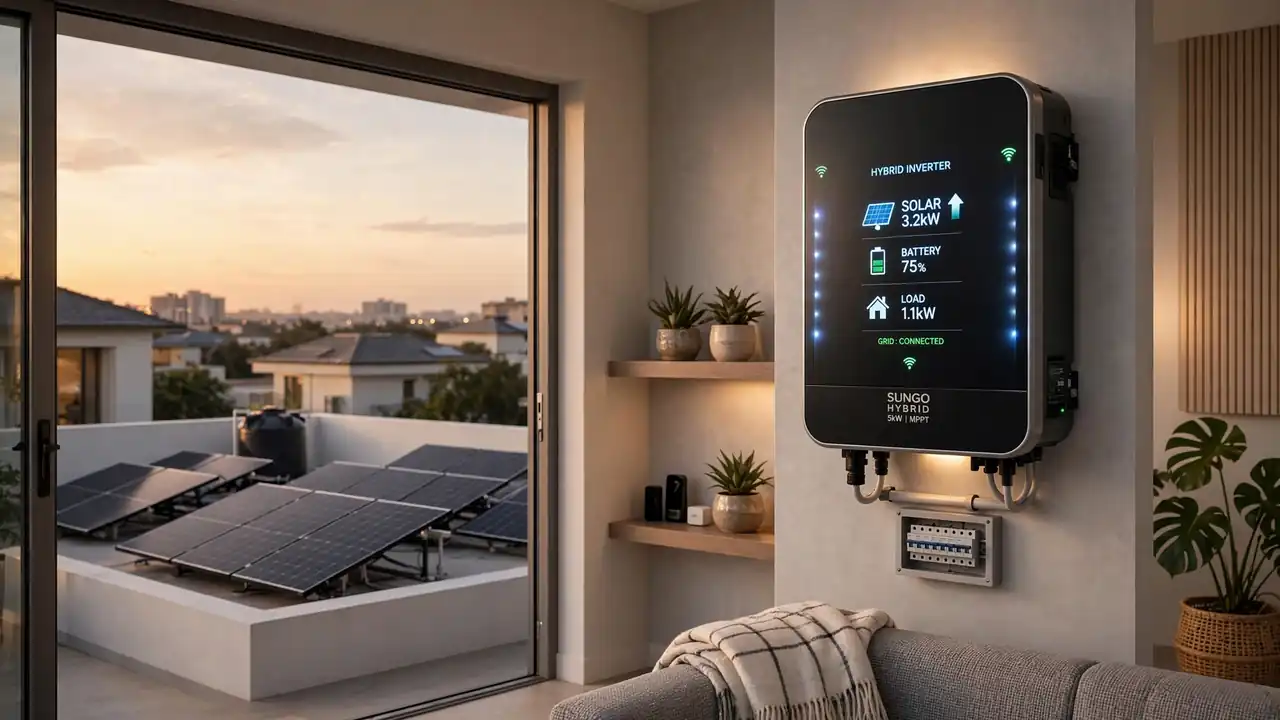
But modern inverters do far more than translate. A good hybrid inverter — the most popular type in Pakistan — juggles four things at once: solar input from your panels, battery charging and discharging, grid interaction, and your home’s load. When the sun shines, it powers your home and charges batteries. When clouds pass, it blends in battery or grid power seamlessly. When the grid fails, it switches to backup so fast your Wi-Fi router never notices.
Bonus Tip: Think of your inverter as a 10–15 year commitment. Panels are relatively interchangeable; the inverter defines your system’s capabilities — whether you can add batteries later, whether it handles your AC’s startup surge, whether you can monitor it from your phone. Choose it like you are choosing a business partner, not a commodity.
The 3 Types of Inverters: Which One Fits Your Home?
This is the single most important decision, so let us make it simple:
1. On-grid (grid-tied) inverters. These connect your solar system to the utility grid and have no battery backup. They are the cheapest option and work brilliantly where the grid is stable — because any extra solar power can flow back to the grid. The catch, and it is a big one for Pakistan: when the grid goes down, an on-grid inverter shuts off too (a safety feature called anti-islanding). No sun-plus-grid means no power during load-shedding. For most Pakistani homes, that is a dealbreaker.
2. Off-grid inverters. These work with batteries and have no grid connection at all — total independence. They suit remote areas, farms, and tube wells far from grid lines. The catch: you must size your panels and batteries to cover your worst days, which gets expensive, and there is no grid to fall back on.
3. Hybrid inverters. The best of both worlds — and the reason they dominate Pakistan’s residential market. A hybrid inverter connects to solar panels, batteries, and the grid. It prioritizes solar, stores excess in batteries, and uses the grid as backup. During load-shedding, your home keeps running on solar plus battery. This flexibility is exactly why most Pakistani households choose hybrid.
Note: If a dealer offers you an on-grid inverter for a home in an area with daily load-shedding, that is a red flag about their advice — not about the product. Match the type to your reality.
Sizing: The Math Most Buyers Get Wrong
I have seen two expensive mistakes repeated endlessly: buying an inverter far bigger than needed (“for future expansion” that never comes), and buying one too small that overheats and shuts down every summer afternoon. Here is how to get it right.
Step 1: List your loads. Write down every appliance you want to run on solar — fans, lights, fridge, TV, water pump, AC — with their wattage (check the nameplate or manual). Be honest about what runs simultaneously; you do not need to power everything at once.
Step 2: Add them up, then add headroom. Sum the watts of appliances that run together, then add roughly 20–25% margin. That margin covers measurement errors and small future additions.
Step 3: Respect surge capacity. Motors (fridge compressors, water pumps, ACs) draw a brief surge at startup — often several times their running wattage. Your inverter must handle the surge, not just the steady load. This is where cheap inverters die: they advertise a big number but cannot survive a fridge compressor kicking in.
Step 4: Match your panels. Your inverter’s solar input (voltage range and max PV wattage) must suit your panel array. This is where MPPT (Maximum Power Point Tracking) matters — MPPT charge controllers continuously find the panels’ sweet spot, extracting significantly more energy than older PWM types, especially in variable weather. For any serious home system, MPPT is non-negotiable.
Bonus Tip: Get your sizing double-checked by someone who does not profit from selling you a bigger unit. At SunTech Mall, we will sanity-check your load list honestly — email info@suntechmall.com or WhatsApp +92 306 2244820.
Features That Actually Matter (and Marketing That Does Not)
Inverter brochures are full of buzzwords. Here is what genuinely affects your daily life:
Pure sine wave output. This is non-negotiable for modern homes. Pure sine wave power is clean and smooth like grid electricity; modified sine wave (the cheap alternative) can overheat motors, buzz in audio equipment, and damage sensitive electronics. Every inverter you consider for home use should be pure sine wave — confirm it in writing, not just verbally.
Battery compatibility. Even if you start without batteries, choose a hybrid inverter that supports them. Battery prices fall over time; the ability to add backup later is worth a lot. Check which battery types and voltages it supports.
Monitoring. Wi-Fi or app-based monitoring lets you see generation, consumption, and battery status from your phone. It is not a luxury — it is how you notice a problem (a dead panel string, a failing battery) months before it becomes a crisis.
Efficiency. Good inverters convert DC to AC at 95%+ efficiency. A few percent sounds small, but over a decade of daily operation, it is real money and real energy.
Certifications and protection. Look for recognized safety certifications and built-in protections: overload, short-circuit, over-temperature, and reverse polarity protection. An inverter without these is a liability bolted to your wall.
What does not matter much: flashy displays, exaggerated “peak” wattage claims, and brand-new model hype. Reliability data from installed units beats launch marketing every time.
Brands You Will Meet in Pakistan
Pakistan’s inverter market has well-established local names alongside international ones. Inverex and Fronus are the two giants of the residential hybrid segment — their models are everywhere, spare parts and service networks exist nationwide, and most installers know them inside out. Crown and Homage are long-standing Pakistani electronics brands with strong UPS and inverter lineups and deep local service roots.
My honest take: for residential solar in Pakistan, local service network beats spec-sheet supremacy. An inverter is a 10+ year appliance — when it needs service in year six, you want a brand with technicians in your city, not a slightly-better spec sheet from a brand nobody services locally. Ask dealers specifically: who services this in my city, and what is the warranty claim process?
Note: Avoid no-name inverters with vague specifications, missing certifications, or no local service presence — no matter how attractive the price. An inverter failure can take your batteries and appliances down with it. This is the worst place in your system to economize blindly.
Pair your inverter choice with the right panels — see our guide to the best solar panel brands in Pakistan — and if you are curious about where the technology is heading, read our verified story on Japan’s foldable solar cell breakthrough.
Installation and Care: Protecting Your Investment
The best inverter in the world will underperform if installed badly. Non-negotiables:
- Professional installation. High-voltage DC wiring is unforgiving. Use a qualified installer — this is not a DIY first project.
- Ventilation. Inverters generate heat. Mount in a cool, shaded, ventilated spot — never in a sealed box under direct sun.
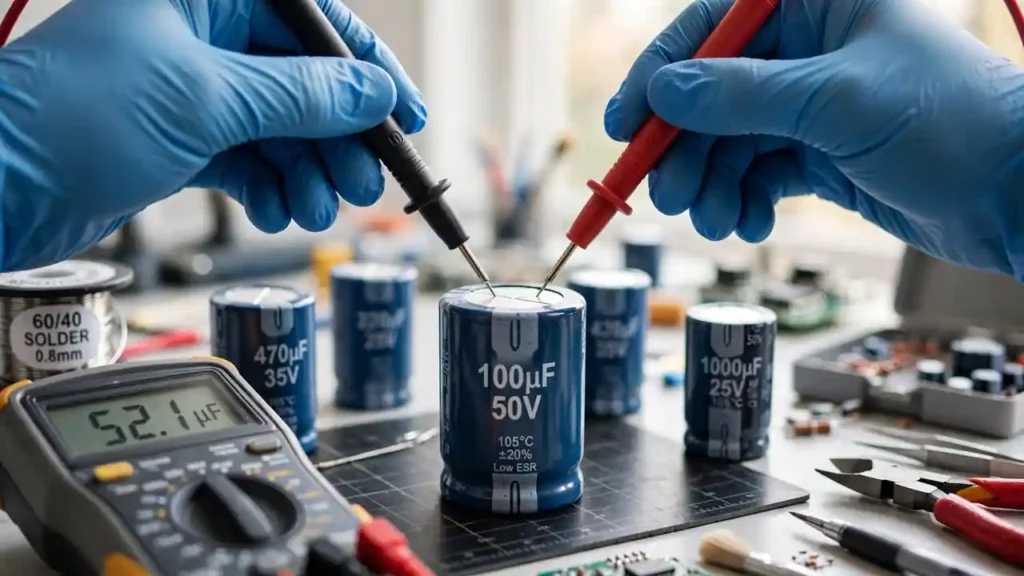
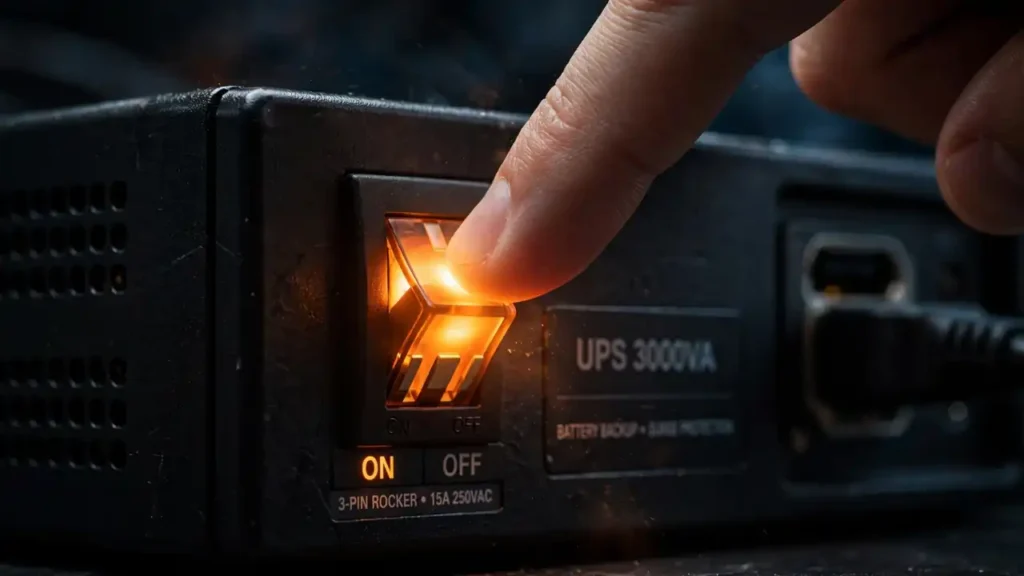
- Correct wiring. Proper wire gauges, tight terminals, correct polarity. Loose DC connections cause arcing and fires. The small components matter too — see our rocker switch guide and capacitor guide for the parts inside these systems.
- Regular checks. Dust the vents, check monitoring data monthly, and investigate any new error codes promptly instead of ignoring them.
- Battery care. If you have batteries, the inverter’s charging settings must match the battery chemistry. Wrong settings silently kill batteries.
Frequently Asked Questions
Can a solar inverter run an air conditioner?
Yes — if it is sized for it. An AC needs a pure sine wave inverter with enough continuous wattage and surge capacity for the compressor’s startup draw. Inverter-type (DC inverter) ACs are much easier on solar systems than old non-inverter models because they avoid huge startup surges.
What is the difference between a solar inverter and a regular UPS inverter?
A solar (hybrid) inverter is designed to work with solar panels — it has MPPT solar inputs and manages panels, batteries, and grid together. A regular UPS inverter only handles battery backup from the grid, with no solar input. For a solar home, you want the solar hybrid type.
How long do solar inverters last?
Typically 10–15 years with proper installation and ventilation. Premium units can last longer. They do not last as long as panels (25+ years), so budget for one inverter replacement during your panels’ lifetime.
What size inverter do I need for my home?
Add up the wattage of appliances you run simultaneously, add 20–25% headroom, and make sure the surge rating covers motor startups (fridge, pump, AC). When in doubt, have a professional verify your load calculation before buying.
Is MPPT really better than PWM?
Yes, substantially — MPPT controllers continuously track the panels’ optimal operating point and extract notably more energy, especially in cloudy or variable conditions. For any home system above a tiny setup, MPPT is the right choice.
Can I add batteries to my inverter later?
Only if you bought a hybrid inverter with battery support. On-grid inverters cannot take batteries at all. This is why we recommend hybrid inverters even for buyers who start without batteries — it keeps your options open.
Why does my inverter shut down on hot afternoons?
Usually overheating (poor ventilation or undersizing) or the load exceeding capacity when everything runs at once. Check installation airflow first, then verify your load against the inverter’s rating. Persistent shutdowns need professional diagnosis.
Where can I buy a genuine solar inverter in Pakistan?
From suppliers with real warranty handling and local service links. Browse SunTech Mall’s shop and our solar inverter collection, or talk to us at info@suntechmall.com / +92 306 2244820 before you decide.
Final Thoughts
Your inverter is the brain, the translator, and the guardian of your solar system — and now you understand it better than most buyers ever will. You know the three types, how to size correctly, why pure sine wave and MPPT are non-negotiable, and why local service matters more than marketing.
Congratulations — that knowledge will protect a major investment and years of electricity bills. Few purchases reward homework like a well-chosen inverter does.
When you are ready to choose, SunTech Mall offers genuine inverters, honest sizing help, and real after-sales support. Visit suntechmall.com, explore solar inverters and our blog, email info@suntechmall.com, or call/WhatsApp +92 306 2244820. Power your home with confidence.