


Solar Inverter Spare Parts in Pakistan – Easy Repair Guide
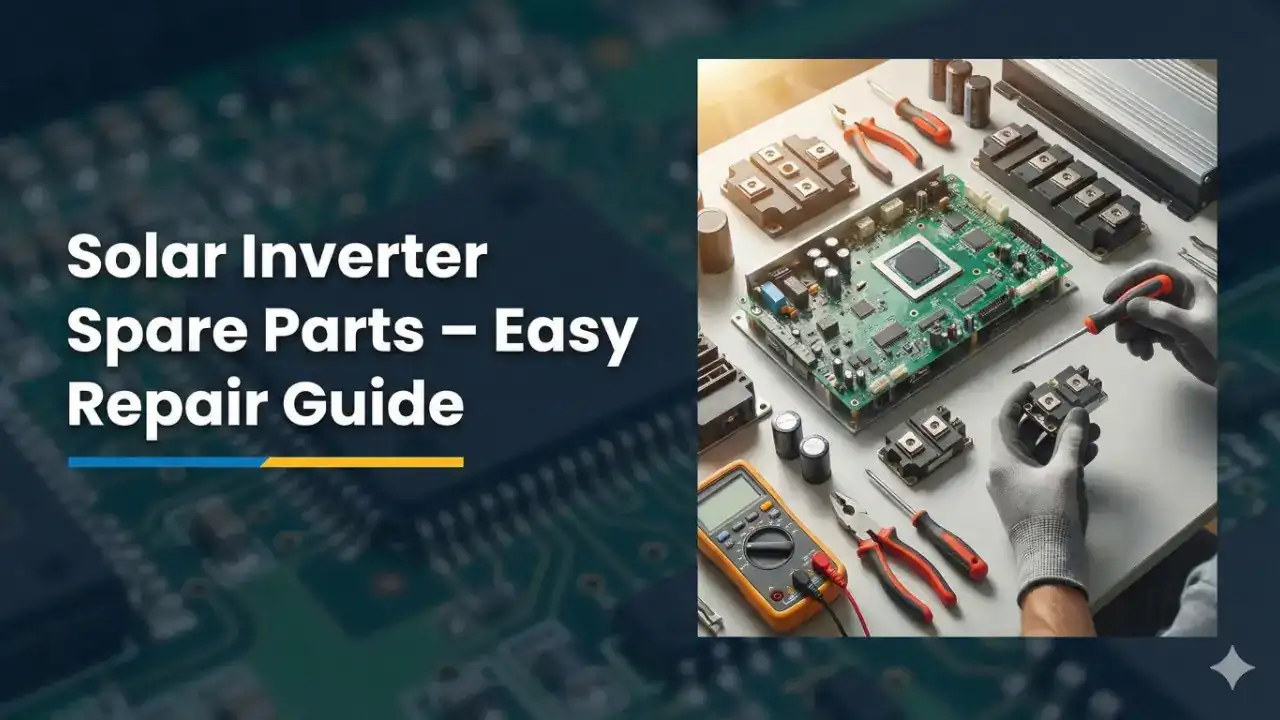
Solar inverter spare parts in Pakistan explained in simple words. Learn about repair parts for local, Chinese, and UPS solar inverters.

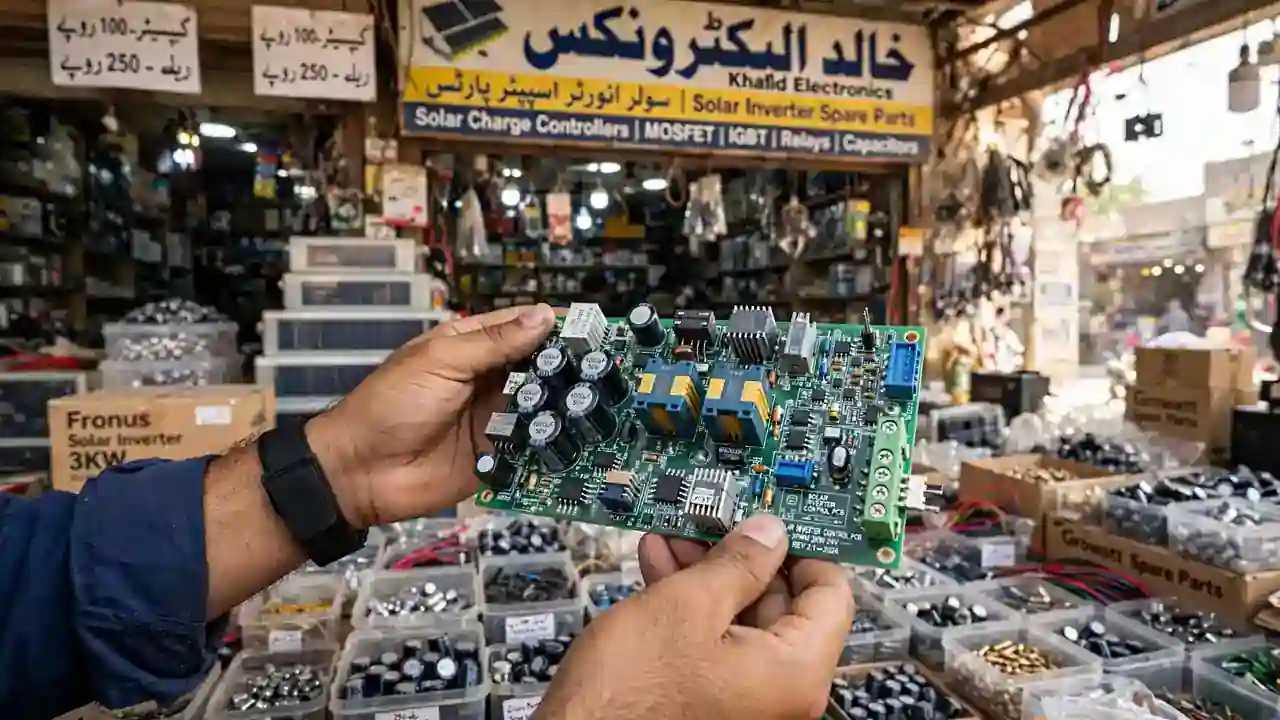
Your solar inverter stops working. A new one costs a fortune — but the technician says only a small part inside is damaged. Should you repair it or replace the whole unit?
For most inverter failures in Pakistan, repair is the smart answer. Inverters fail one component at a time: a MOSFET, a capacitor, a fuse, a fan. Replace that single part and the inverter runs again — for a fraction of a new unit’s cost. The catch? You need to know which part failed, what it does, and where to get a genuine replacement.
This guide explains solar inverter spare parts in the simplest possible words. No engineering background needed. You will learn the main parts inside an inverter, what each one does, how repairs work, what affects repair cost, and where to buy original parts in Pakistan.
Whether you are a homeowner deciding on a repair, a shopkeeper keeping systems running, or a beginner learning the trade — by the end, inverter parts will make sense.
Let us start with the basics: what these parts actually are.
Note: This guide keeps things simple on purpose. Prices vary by part, brand, and market — so instead of numbers that go stale, you will learn what drives cost and how to avoid overpaying.
What You Will Learn in This Guide
- What solar inverter spare parts are
- Why inverters need repair in Pakistan
- The common spare parts — explained simply
- Why repairing beats replacing
- What affects repair cost
- How to choose the right spare part
- Tools every repair beginner needs
- Common mistakes beginners make
- How to keep your inverter running longer
- Where to buy spare parts in Pakistan
What Are Solar Inverter Spare Parts?
Inside every inverter are dozens of small electronic parts, each with a job. Some control power flow. Some manage charging. Some keep the unit cool. Some protect against faults.
When one part fails, the inverter may stop working entirely — even though everything else inside is fine. Replacing that single failed part brings the whole unit back to life. That is the entire idea behind spare parts: fix the broken piece, not the whole machine.
Think of it like a car: a flat tire does not mean you need a new car. You replace the tire. Inverter repair works the same way.
Why Solar Inverters Need Repair in Pakistan
Pakistani conditions are tough on electronics. Summer temperatures cross 40°C. Dust gets everywhere. Inverters run many hours daily through load shedding. Voltage fluctuates. Under this combined stress, components age faster than they would in milder climates.
The parts that work hardest fail first: power switches handling heavy current, capacitors smoothing high-voltage rails, fans spinning in dusty air. This is normal wear — not a sign of a bad inverter. Every inverter, from every brand, needs component replacement eventually.
Repair makes obvious sense here: why discard a unit whose transformer, chassis, and control sections are perfectly good, just because a Rs.-worth handful of components failed? A targeted repair restores years of service at a small fraction of replacement cost.
Common Spare Parts — Explained Simply
Power parts (MOSFETs and IGBTs)
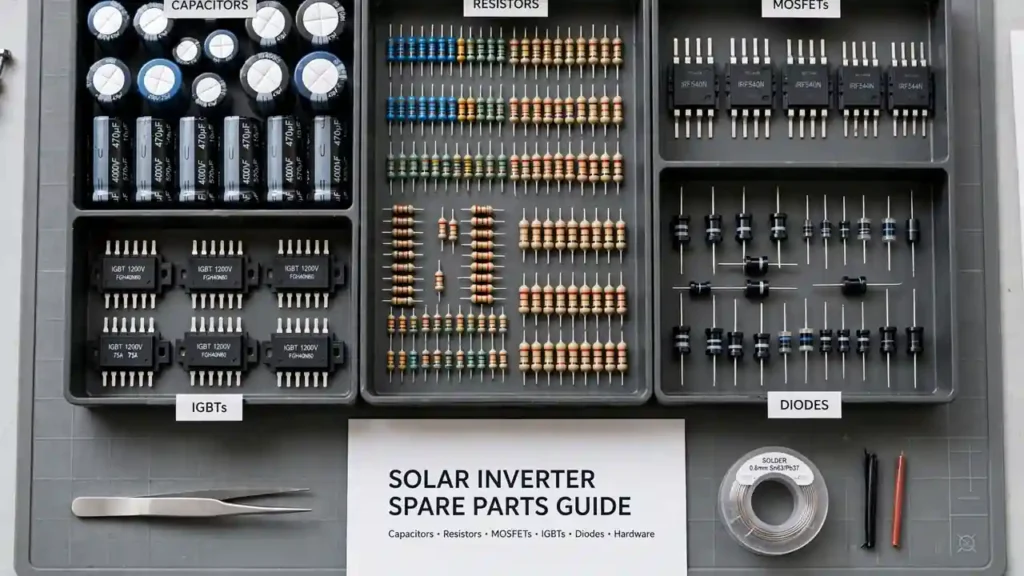
These are the muscle. They switch electricity thousands of times per second to convert DC into AC. If they fail, the inverter may not turn on at all, or it may shut down under load. They are the most commonly replaced power components — and the most important to match correctly. Our MOSFET selection guide explains how in plain words.
Control card (the brain)
The control card tells the inverter what to do and when: when to charge, when to switch to battery, how to handle faults. If it is damaged, the inverter may show strange errors, behave erratically, or refuse to start. Card replacement must match the exact inverter model.
Capacitors (the smoothers)
Capacitors stabilize voltage inside the inverter, especially on the high-voltage DC bus. Heat dries them out over time. A weak capacitor causes instability, humming, or shutdowns — often without any visible damage. They are cheap parts whose failure mimics expensive problems, so technicians check them early.
Transformer
The transformer adjusts voltage levels safely between circuit sections. It is rugged and rarely fails — but when it does (from severe overload or lightning), symptoms include dim output, no output, or burning smell. Transformer replacement must match voltage, power, and winding specifications exactly.
Cooling fan
The fan keeps everything cool. Without it, heat builds until power parts fail — sometimes within hours on a hot day. A noisy, slow, or stopped fan is one of the cheapest and most urgent repairs you can make. Match voltage, size, and connector. SunTech Mall stocks replacement fans in common specifications.
Fuses and protection parts
Fuses sacrifice themselves during shorts and surges, protecting expensive components. A blown fuse is doing its job — but never replace one without finding why it blew, or the next one blows too.
Why Repairing Beats Replacing
Cost. Most failures involve affordable components — MOSFETs, capacitors, fuses, fans. Replacing them costs a small fraction of a new inverter.
Speed. A repair with parts on hand finishes the same day. Sourcing and installing a whole new unit takes far longer.
Less waste. Fixing electronics keeps heavy equipment out of landfills. Many “dead” inverters have only one or two faulty parts.
Known quantity. Your existing inverter is already installed, wired, and configured. A repair preserves all of that; a replacement restarts it.
Repair stops making sense only when multiple major sections are damaged, the PCB is extensively burned, or parts are unavailable for a very old model. A honest technician will tell you which side of that line you are on. For deeper component knowledge, see our most-used spare parts guide.
What Affects Repair Cost?
Instead of fixed prices (which change constantly), understand what drives cost:
Which part failed. A fuse or fan is inexpensive; a control card or transformer costs significantly more. Power devices sit in the middle.
How many parts failed. A single MOSFET is one thing; a cascade that took the driver, resistors, and PCB traces is another. Early diagnosis keeps the list short — our MOSFET burn guide shows how damage spreads when repairs are delayed.
Genuine vs. generic. Original parts cost more upfront but last; counterfeits fail again, doubling the total. The cheapest part is rarely the cheapest repair.
Labor and diagnosis. Simple swaps are quick; hunting an intermittent fault takes skill and time. Good diagnosis is worth paying for — it prevents repeat visits.
Rule of thumb: get the diagnosis first, then the part. Random part replacement is the most expensive “cheap” repair there is.
How to Choose the Right Spare Part
Before buying anything, identify the failed part precisely:
- Read the part number printed on the old component — photograph it clearly.
- Note the package and size — a part that does not fit is useless regardless of specs.
- Match electrical ratings — voltage, current, and other specs must meet or exceed the original.
- Confirm compatibility with your exact inverter model — ask the supplier if unsure.
- Compare side by side before soldering: pins, size, markings.
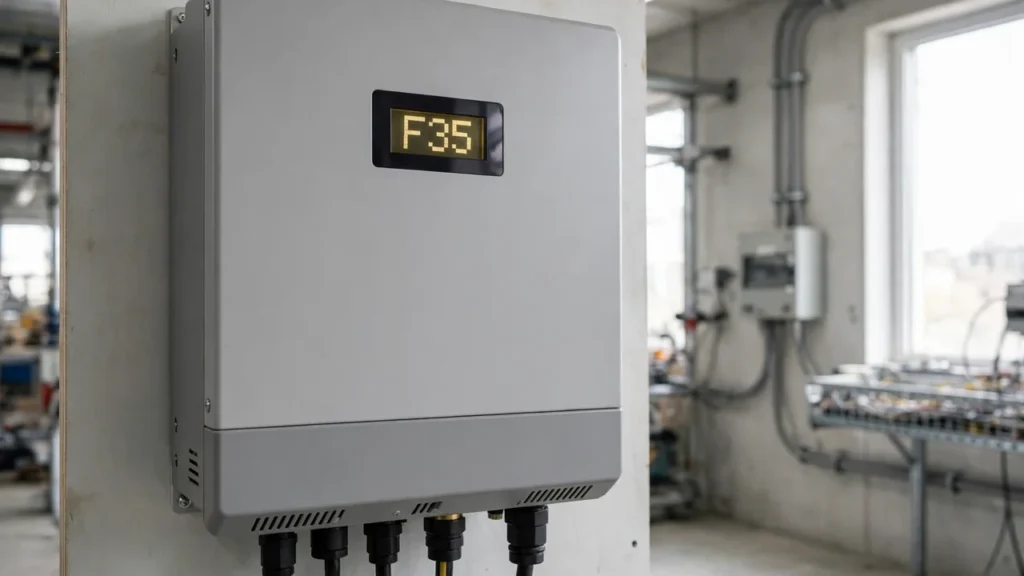
Using the wrong part can cause more damage than the original fault. When in doubt, ask a technician or a knowledgeable supplier before ordering. Error codes can also point you to the right section before you buy.
Bonus Tip: Photograph every part before removing it — markings, orientation, and position. These photos are your map for reassembly and your proof of specs when ordering.
Tools Every Repair Beginner Needs
You do not need expensive equipment to start. The essentials:
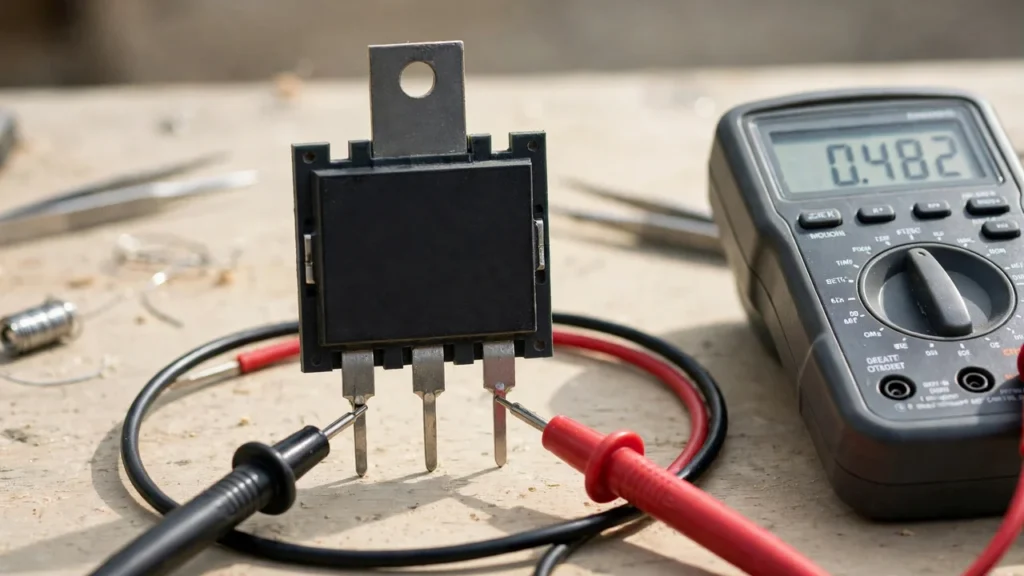
Digital multimeter — the single most important tool. Tests continuity, voltage, diodes, and component health. A basic meter handles 90% of diagnostic work.
Soldering station — adjustable temperature, fine tip. Clean joints, no overheated pads. A solder sucker or wick for removal.
Hand tools — screwdrivers, pliers, wire cutters, tweezers. Most mechanical work needs nothing more.
As you grow: a hot air rework station for surface-mount parts, an ESR meter for capacitor testing, a DC power supply for bench testing, and a magnifying lamp for small components. Good lighting alone prevents countless mistakes.
Common Mistakes Beginners Make
Skipping safety. Disconnect ALL power sources before opening an inverter — PV, battery, and AC. Capacitors hold dangerous charge even when unplugged. This rule has no exceptions.
Overheating while soldering. Excessive heat lifts PCB traces and damages nearby parts. Use the right temperature and work quickly.
Replacing without diagnosing. Random part swaps waste money and often miss the real fault. Test systematically: start at power input, work through each section.
Mixing old and new batteries. Weak batteries drag down the charging circuit and can trigger faults that look like inverter problems.
Ignoring the root cause. A replaced MOSFET on a dead fan circuit will burn again. Always ask why the part failed.
How to Keep Your Inverter Running Longer
Install it right. Cool, ventilated, shaded location. Clear space around the unit. Away from direct sun and rain.
Clean regularly. Dust blocks cooling and causes overheating. Clear vents and fans every few months — more often in dusty areas.
Respect the load. Overloading is a leading cause of component failure. Know your inverter’s rating and stay comfortably below it.
Wire correctly. Proper wire gauge, tight connections. Loose or undersized wires cause voltage drops and heating.
Service annually. A technician’s yearly inspection catches weakening capacitors, tired fans, and loose connections before they fail.
Where to Buy Solar Inverter Spare Parts in Pakistan
Spare parts are available in local electronics markets and online. Markets let you inspect parts physically; online buying saves travel time and offers wider selection with clear specifications.
For guaranteed genuine parts, buy from specialized suppliers. SunTech Mall provides original spare parts for solar and UPS inverters used in Pakistan — MOSFETs, IGBTs, capacitors, fans, control cards, and more — with delivery across the country. When a repair is urgent, the right part ordered online beats a day lost in market hunting.
For repair tips and updates, follow SunTech Mall’s blog and social channels.
Frequently Asked Questions
Is it worth repairing an old inverter?
If the transformer and control board are intact, usually yes. Replacing power devices and capacitors can add years of life. If multiple major sections are damaged, compare honest repair cost against a new unit.
How long does a typical repair take?
Fuse or capacitor swaps take under an hour. Complex fault diagnosis takes longer. Having the right parts on hand is what makes most professional repairs same-day jobs.
Can I upgrade my inverter during repair?
Minor upgrades — better fans, higher-rated capacitors — are fine. Avoid redesigning circuits unless you fully understand them. Stick to original specifications for reliability.
Where can I learn inverter repair?
Practice on dead units under an experienced technician’s guidance, study repair guides, and build your tool collection gradually. For genuine parts as you learn, SunTech Mall delivers across Pakistan.
How do I know which part is faulty?
Start with symptoms and error codes, then test systematically with a multimeter from power input through each section. When unsure, a technician’s diagnosis costs far less than guessing wrong.
Are UPS and solar inverter parts interchangeable?
Sometimes. Many Pakistani solar inverters share designs with UPS systems, so some parts cross over. But always verify part numbers and specifications — “looks similar” is not “compatible.”
Final Thoughts: Repair Smart, Not Expensive
Inverter repair is simple when the right part meets the right diagnosis. Understand the basic components, respect safety, diagnose before replacing, and buy genuine. Those four habits turn a dead inverter into years of additional service — at a fraction of replacement cost.
Start today: open your inverter’s manual, learn its rated load, and check its ventilation. The best repair is the one prevention makes unnecessary.
Questions about a part or a repair? Ask in the comments — and share this guide with anyone facing the repair-or-replace decision.
Need genuine parts? Visit the SunTech Mall shop — original solar inverter and UPS spare parts with nationwide delivery across Pakistan. Also explore our solar inverters and electronic parts collections.
2 Comments
[…] Solar Inverter Spare Parts in Pakistan – Easy Repair Guide […]
[…] is the early one. Every week you wait doesn’t just delay the fix — it multiplies it. Our inverter spare parts guide explains what each of these components does in plain […]