

Most Used Solar Inverter Spare Parts in Pakistan – 2026 Update
Learn about most used solar inverter spare parts in Pakistan in 2026. Find which solar parts fail most and where to buy original spare parts safely.

Your inverter shuts down on a normal load. The technician opens it, points at a small black component, and says you need a replacement. You have never heard of this part. Is it expensive? Is it available? Could a wrong part damage the inverter further?
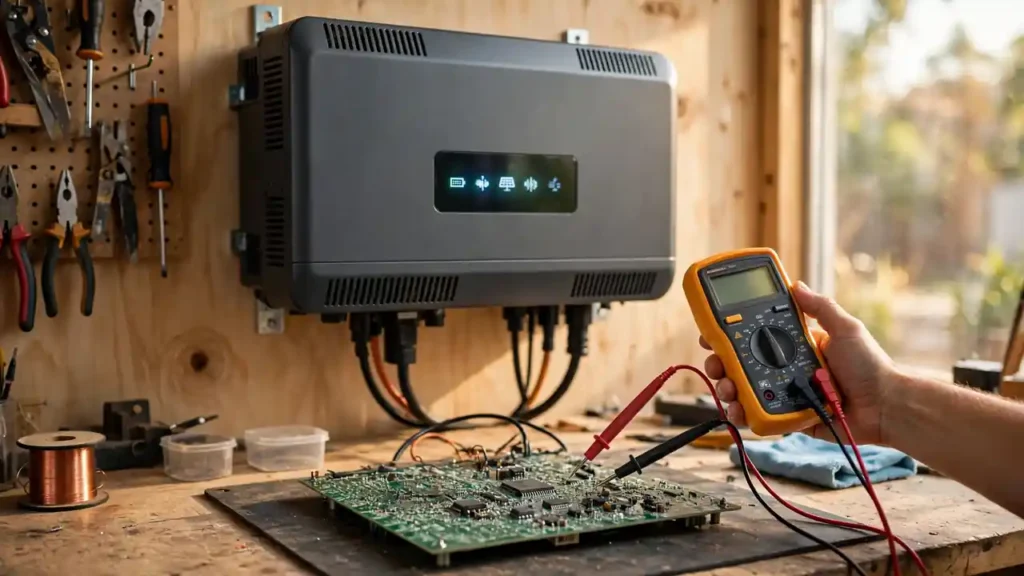
If you repair, sell, or depend on solar inverters in Pakistan, these questions come up constantly. Inverters run for long hours in heat and dust, and certain components wear out far more often than others. Knowing which parts fail most — and how to buy genuine ones — saves money, prevents repeat repairs, and keeps systems running.
This guide covers the spare parts technicians reach for most in 2026: what each part does, why it fails, how to spot genuine versus fake, and where to source originals in Pakistan. No engineering degree needed — everything is explained in plain words.
By the end, you will recognize the parts inside your inverter, understand why each one matters, and know exactly how to buy the right replacement the first time.
Let us start with why demand for these parts keeps growing.
Note: Part descriptions here reflect standard power-electronics practice. No invented prices or statistics — just the components, failure modes, and buying guidance that working technicians use daily.
What You Will Learn in This Guide
- Why spare parts demand keeps rising in Pakistan
- The 8 most-used spare parts — and what each does
- Why these parts fail
- How to identify genuine vs. fake parts
- Common buying mistakes that waste money
- Practical buying tips for Pakistan
- How to make inverter parts last longer
- Where to buy original parts in Pakistan
Why Solar Inverter Spare Parts Demand Is Increasing
Solar adoption in Pakistan keeps climbing. High electricity bills and load shedding push more homes, shops, and offices toward solar every year — and every new installation is a future source of repair work.
Inverters work hard: long daily hours, summer heat, dusty air, voltage fluctuations, and heavy household loads. Under these conditions, electronic components age faster than their datasheet lifetimes suggest. Heat is the great accelerator — it dries out capacitors, stresses solder joints, and pushes power devices toward their limits.
The result is steady, growing demand for replacement components. Repair shops that once handled occasional jobs now keep regular stock. For technicians, knowing which parts move fastest is not trivia — it is inventory planning that decides whether an urgent repair finishes today or next week.
The 8 Most-Used Solar Inverter Spare Parts in 2026
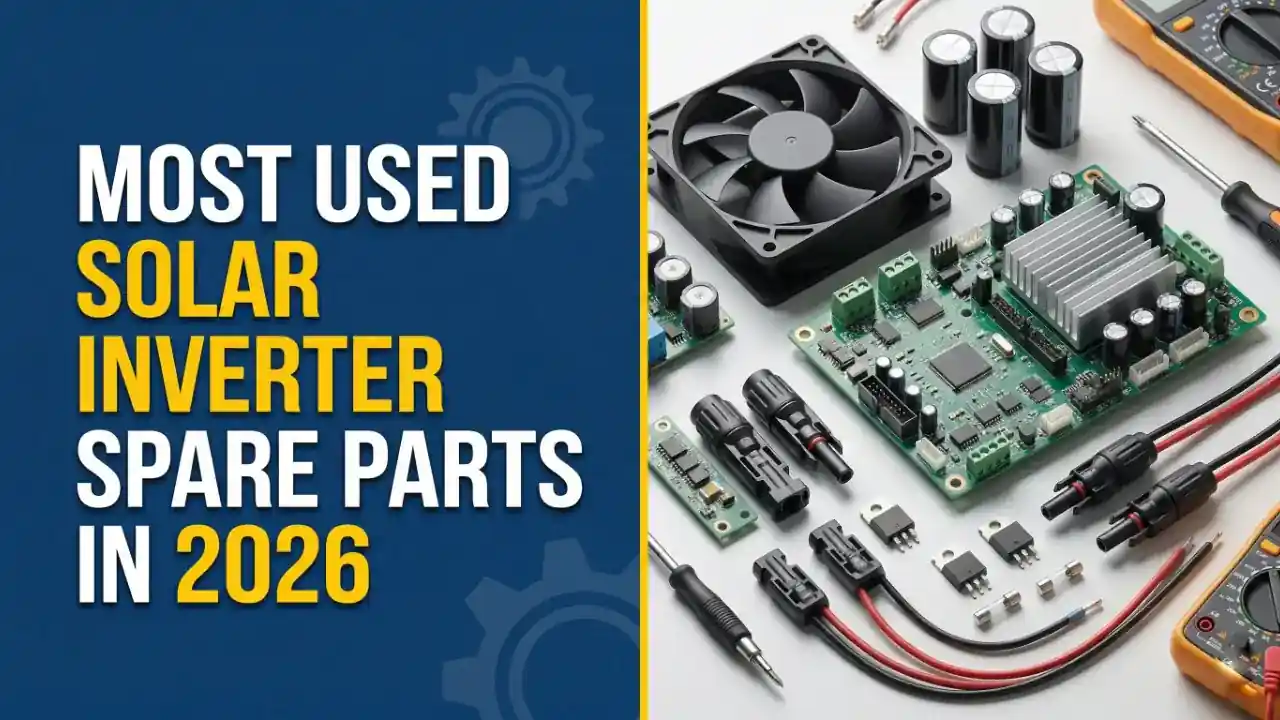
1. MOSFETs — the hardworking switches
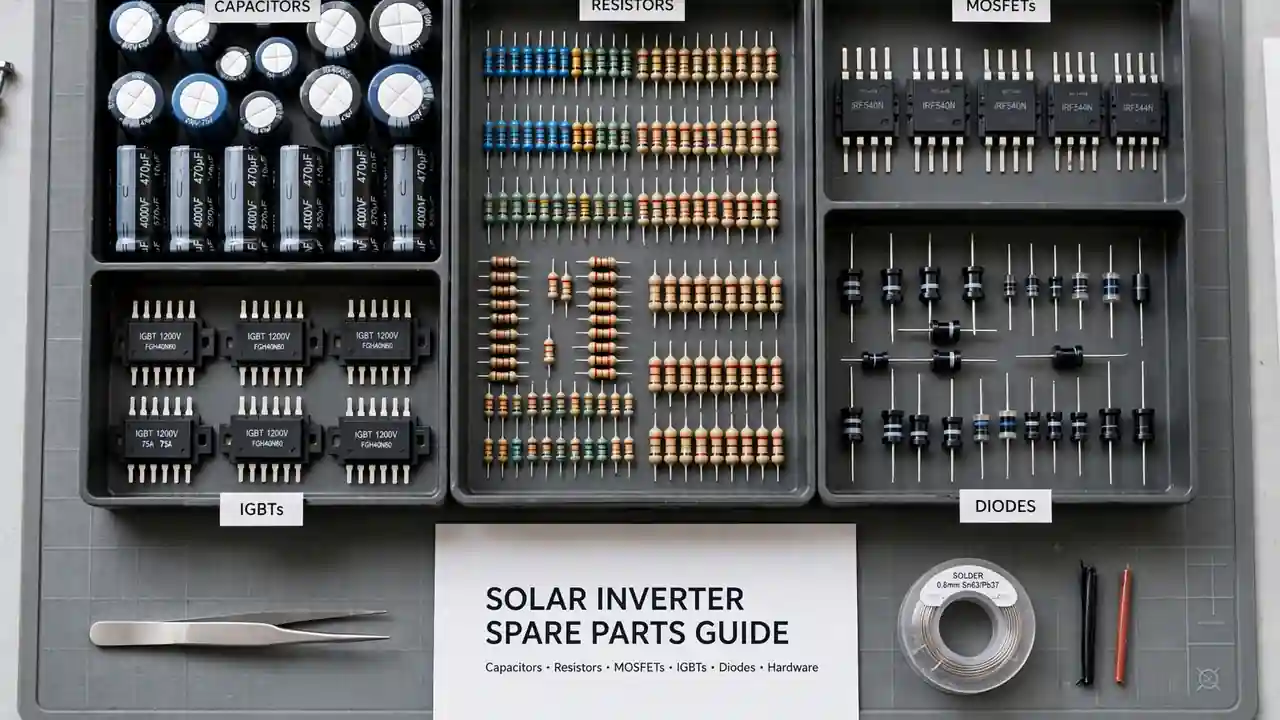
MOSFETs are high-speed electronic switches at the heart of DC-DC conversion and inverter output stages, flipping tens of thousands of times per second. They fail from overheating, overcurrent, voltage spikes, and counterfeit replacements. Because they usually fail shorted, one bad MOSFET can destroy drivers and neighboring parts — making correct selection critical. Our MOSFET selection guide covers the five specifications that matter, and our MOSFET burn guide explains the failure chain.
2. IGBTs — the heavy lifters
IGBTs (insulated-gate bipolar transistors) handle higher voltages and power levels than MOSFETs, common in larger inverter output stages. They combine easy gate drive with rugged current handling. Like MOSFETs, they die from heat, overload, and spikes — and they demand exact part-number matching, since switching characteristics vary between types.
3. Electrolytic capacitors — the smoothers
Capacitors smooth and stabilize DC rails, especially the high-voltage DC bus. Heat, age, and ripple current degrade them gradually — a capacitor can be faulty with no visible swelling. Technicians check capacitance, ESR (equivalent series resistance), and physical condition. DC bus capacitors are among the most replaced parts in older inverters.
4. Gate driver ICs — the conductors
Driver ICs translate control signals into the precise gate pulses that switch MOSFETs and IGBTs. When a power device shorts, the surge frequently kills its driver too. A new MOSFET on a dead driver burns immediately — which is why experienced technicians always test drivers before fitting power devices.
5. Cooling fans — the protectors
Brushless DC fans provide the forced airflow that keeps everything else alive. Bearings wear, dust chokes blades, and a stalled fan can kill power devices within hours on a hot day. Fans are wear items: noisy, slow, or stopped means replace now. Match voltage, current, size, connector, wire count, and airflow direction — SunTech Mall stocks multiple fan specifications.
6. Fuses and breakers — the sacrificial guards
DC fuses, AC fuses, and thermal fuses sacrifice themselves to protect expensive parts during shorts and surges. They are cheap, they fail often by design, and every repair shop should stock common ratings. Never bypass a blown fuse without finding why it blew.
7. Current sensors and NTC thermistors — the watchers
Current sensors feed the controller real-time current data; NTC thermistors monitor temperature and limit inrush current. A drifting sensor makes the controller “see” wrong values, triggering false protection faults. These small parts cause disproportionate confusion when they fail.
8. Control/system cards — the brains
When faults trace to communication, DSP/MCU control, sensing, or firmware sections rather than power devices, the system card is the suspect. Card-level replacement is common for complex faults where component-level repair is uneconomical. Compatibility with the exact inverter model is essential.
Why These Parts Fail
Three forces do most of the damage. Heat — from ambient temperature, overload, blocked cooling, or failed fans — accelerates every aging process in electronics. Electrical stress — voltage spikes, surges, and overcurrent — punches through ratings, especially when parts run without safety margin. Time — electrolytic capacitors dry out, fan bearings wear, and solder joints fatigue under thermal cycling.
Low-quality replacements fail faster on all three fronts: thinner margins, poorer materials, shorter life. A genuine part in a clean, cool, properly loaded inverter can last years. A counterfeit in a hot, overloaded one can last weeks. The part, the environment, and the installation all matter.
Bonus Tip: When a part fails, ask why before replacing it. A MOSFET killed by a dead fan will die again if you only swap the MOSFET. Root-cause thinking separates one-visit repairs from callbacks.
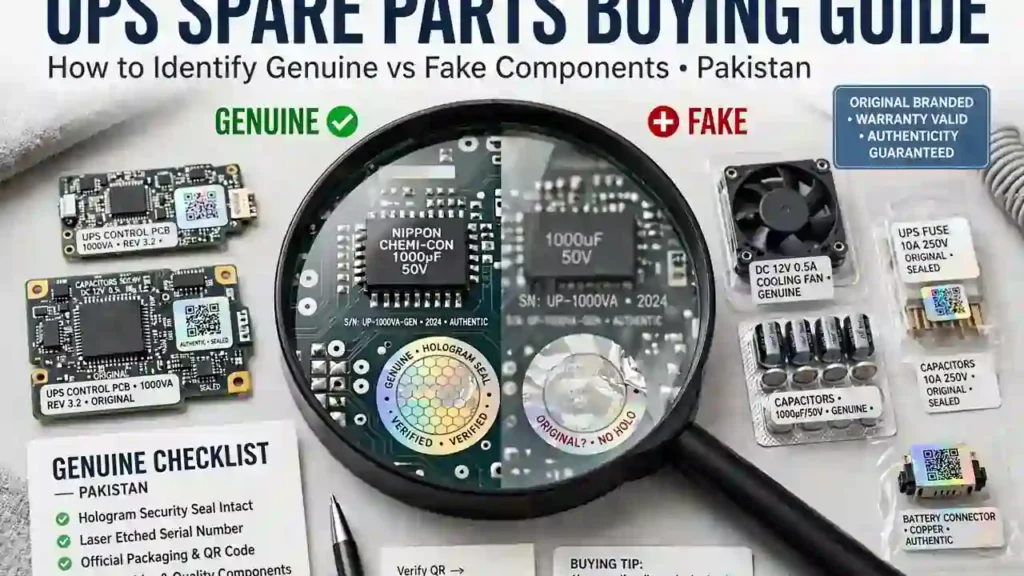
How to Identify Genuine vs. Fake Parts
Fake power components are common in open markets. Here is how technicians spot them:
Markings. Genuine IGBTs and MOSFETs carry clean laser etching — correct part number, brand logo, batch code. Fakes often show blurry printing, wrong fonts, missing logos, or inconsistent depth.
Finish and weight. The metal back plate of a genuine power device is smooth and evenly finished; fakes can feel rough or uneven. Originals have a solid heft from quality internal materials — suspiciously light parts deserve skepticism.
Electrical testing. A component tester comparing measured parameters against the datasheet catches most counterfeits. Our MOSFET guide details the two-minute multimeter check.
The seller test. Trusted suppliers answer technical questions, specify brand and origin, and stand behind what they sell. If a seller cannot tell you where a part comes from, buy elsewhere. And if the price is dramatically below market, it is not a bargain — it is a warning.
Common Buying Mistakes That Waste Money
Choosing by price alone. Inverters handle high voltage and heavy loads. A cheap IGBT or MOSFET can burn within days and damage surrounding sections, multiplying the final cost.
Not matching the part number exactly. Different inverter models use different ratings. A slightly wrong part causes repeat failures that look like bad luck but are really bad matching.
Ignoring date codes on capacitors. Old-stock electrolytics may have dried out on the shelf. Fresh stock matters — buy from sellers who turn inventory, not from dusty back shelves.
Buying critical parts from general shops. Sellers who specialize in electrical and solar components understand inverter parts and keep compatible stock. General electronics shops often cannot advise on compatibility.
Skipping the comparison. Always compare the new part side-by-side with the old one before fitting: pin layout, size, markings. Five minutes of comparison prevents hours of rework.
Practical Buying Tips for Pakistan
Document before you buy. Note the exact part numbers of faulty components — or better, photograph the part and its markings clearly. This lets the supplier confirm compatibility before shipping, saving return hassle.
Keep fast-moving stock. If you repair regularly, keep small quantities of fuses, common capacitors, driver ICs, and popular MOSFETs. Urgent repairs should never wait on delivery.
Compare specifications, not just numbers. For semiconductors, check voltage, current, package, and pinout — “higher amps” alone does not make a part suitable. For capacitors, check capacitance, voltage, ripple current, ESR, temperature rating, and physical size.
Test after fitting — safely. After replacement, power the inverter on a small load first before connecting the full household. This protects both the new part and the inverter if something is still wrong.
Buy online from specialists. Online buying saves market trips and gives access to wider stock with clear specifications. Trusted sellers provide original parts with safe packaging — important when components travel across Pakistan. See our easy repair guide for component basics.
How to Make Inverter Parts Last Longer
Control heat. Install in shade with ventilation, away from direct sun and rain. Clean fans and heatsinks every few months — blocked airflow overheats IGBTs, MOSFETs, and capacitors alike. Replace dead fans immediately.
Protect electrically. Proper DC fuses and breakers between panels, battery, and inverter absorb shorts and surges before they reach expensive parts.
Avoid continuous full load. Headroom reduces stress on every internal component. An inverter cruising at 70% lasts far longer than one pinned at 100%.
Inspect annually. A technician’s yearly check catches weakening capacitors, tired fans, and loose connections before they become failures.
Note: Heat and dust are the two biggest enemies of inverter parts in Pakistan. Most “mysterious” failures trace back to one of these two — both preventable with basic maintenance.
Where to Buy Original Spare Parts in Pakistan
Buy from specialized suppliers who stock genuine inverter components and deliver across Pakistan. The right supplier answers technical questions, confirms compatibility from your photos or part numbers, and ships original parts in protective packaging.
SunTech Mall serves Pakistan’s repair shops, technicians, and solar users with original, tested spare parts — MOSFETs, IGBTs, capacitors, fans, driver ICs, and system cards — with nationwide delivery. When a repair cannot wait for a market trip, ordering the exact part online keeps the job moving.
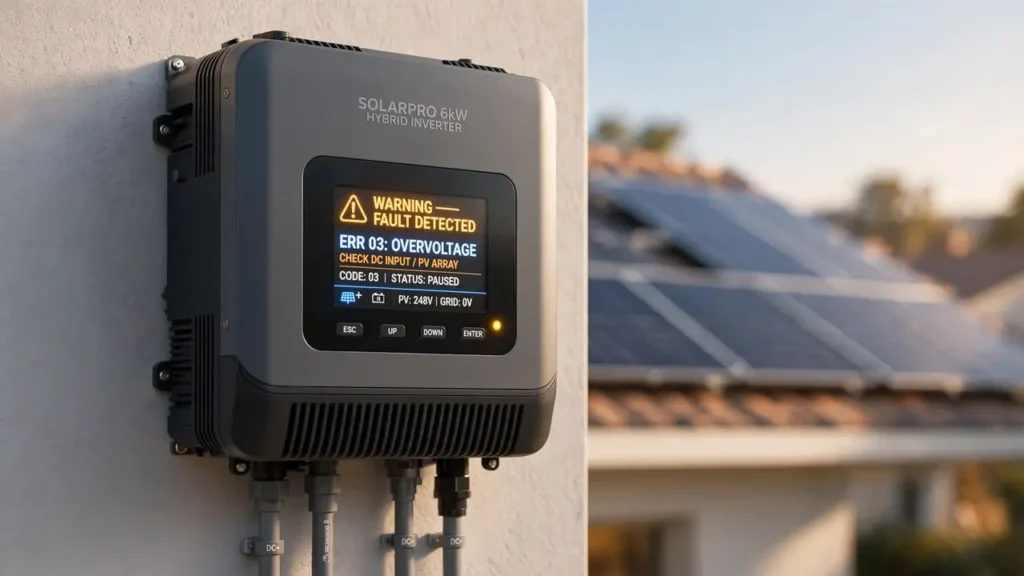
For related troubleshooting, see our error code guide and MOSFET burn prevention guide.
Frequently Asked Questions
Which spare part fails most often in solar inverters?
Power devices — IGBTs and MOSFETs — fail most, usually from overheating, overloading, or voltage spikes. DC bus capacitors come next, weakening with heat and age. Fuses and fans also need regular replacement. Test before ordering; a technician can confirm which part actually failed.
Can I use a part with a higher rating than the original?
Often yes, if pin layout and package match and a technician approves. Higher voltage or current ratings can improve reliability. Never use a lower rating than the original — it will fail quickly and may damage the inverter.
How do I know if my inverter needs repair or replacement?
Error codes, shutdowns on normal load, or visible burnt parts point to repair. If the main control board is damaged beyond economical repair, or parts are unavailable for a very old model, replacement may cost less. A trusted technician can advise after inspection.
Are online spare parts genuine?
From specialized suppliers, yes. Buy from sellers who specify brands, answer technical questions, and guarantee their parts. Avoid sellers who cannot identify a part’s origin.
How can I avoid buying fake MOSFETs or IGBTs?
Check laser markings for clarity and correctness, compare weight and finish, test electrically against the datasheet, and buy from reputable suppliers. Dramatically low prices are the clearest warning sign.
What should I keep in stock as a repair shop?
Fast-moving essentials: common fuses, popular MOSFETs and IGBTs, driver ICs, DC bus capacitors, cooling fans, and gate resistors. Stocking these turns urgent jobs into same-day completions.
Where can I buy original solar inverter spare parts in Pakistan?
SunTech Mall offers original, tested solar inverter spare parts with nationwide delivery — the right part without crowded-market guesswork.
Final Thoughts: The Right Part, The First Time
Every day a solar system sits dead waiting for the wrong part — or a repeat repair — is a day of lost power and lost money. The technicians who thrive are not the ones with the cheapest parts; they are the ones who diagnose correctly, buy genuine, and fit the right component the first time.
Learn the eight parts in this guide. Learn their failure modes. Build relationships with suppliers who know components, not just prices. That knowledge compounds: faster diagnoses, fewer callbacks, customers who recommend you.
What is the part you replace most often? Share it in the comments — and share this guide with anyone still buying components on price alone.
Need genuine parts today? Browse the SunTech Mall shop — original MOSFETs, IGBTs, capacitors, fans, and system cards with delivery across Pakistan.