



How to Find Genuine UPS Spare Parts Near You in Pakistan
Looking for genuine UPS spare parts in Pakistan? Learn how to check original UPS spare parts and where to buy trusted UPS repair parts safely.

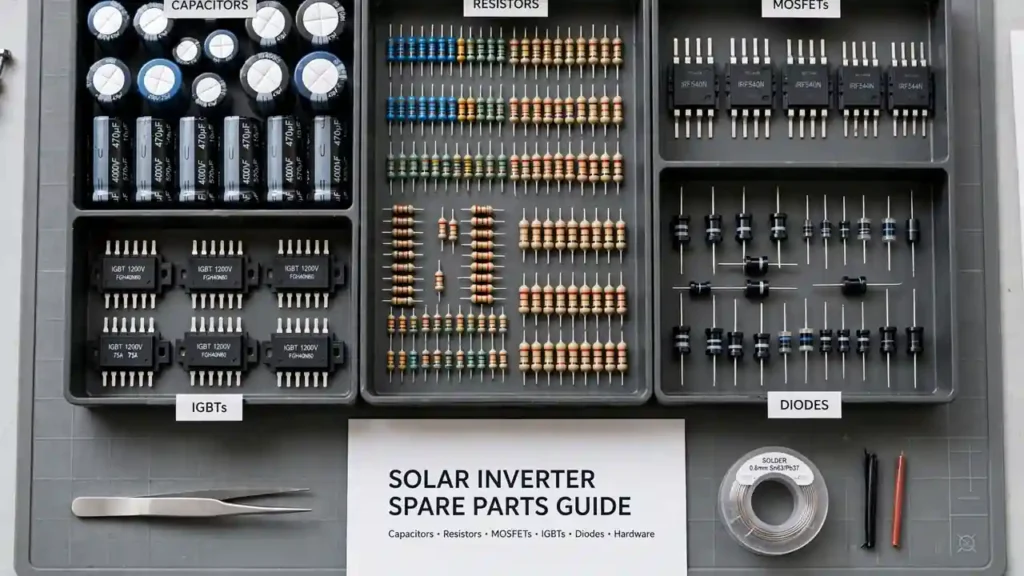
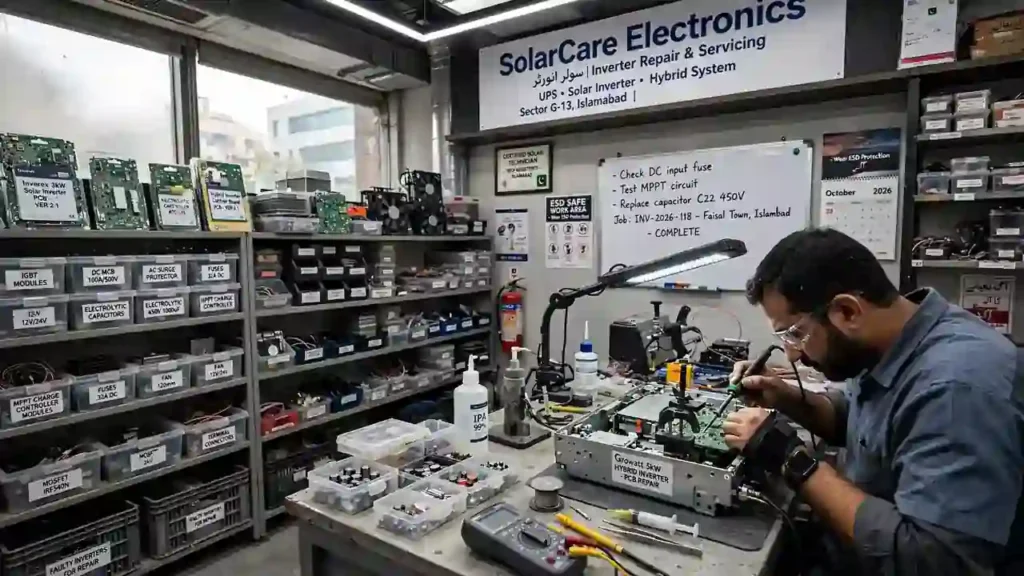
I have spent years around UPS repair benches in Pakistan, watching technicians open dead UPS units and pull out the same failed parts again and again. MOSFETs burned. Capacitors swollen. Charging ICs dead. Most of these failures were not bad luck. They were bad parts.
At SunTech Mall, we supply original UPS and solar inverter components to technicians across Pakistan. We have seen the difference a genuine part makes. A good MOSFET can run for years. A fake one can burn your board in weeks.
Here is the fear that keeps buyers awake: you pay for a part, install it, and it destroys the circuit it was supposed to fix. Your money is gone. And the UPS is worse than before.
In this guide, I will show you exactly how to find genuine UPS spare parts in Pakistan. You will learn how to spot fakes with your eyes, test them with a multimeter, know where to buy them, and keep them working longer.
Let’s start with the part most people get wrong: knowing which part you actually need.
A Quick Note Before You Trust This Guide
You might think this article exists to sell you parts. That is fair to suspect, so let me kill that objection now. Even if you never buy from SunTech Mall, the checking methods here will save you money in any market. Use these methods at Hall Road, College Road, your local shop, or online.
In This Guide: What You Will Be Able to Do
- Identify the exact spare part your UPS needs, so you never buy the wrong one
- Spot fake parts in under a minute using only your eyes and your hands
- Test MOSFETs, capacitors, and fuses with a basic multimeter before you pay
- Know where Pakistanis actually buy genuine UPS parts, in markets and online
- Compare prices without falling for the “too cheap” trap
- Order spare parts online safely, with proper packing and returns
- Make your new parts last years instead of months with simple maintenance
Identify Your Exact Part First, or Everything Else Fails
I once watched a shop owner buy six MOSFETs, drive across the city, and come back the same evening. Wrong package size. The pins did not fit the board. He had guessed the part from memory instead of reading it.
UPS models differ from each other. A part that fits one UPS may not work in another. So your first job is to know exactly what you need.
Open the UPS and read the part. The model number is printed on the component itself. Write it down exactly, every letter and number. For example, a MOSFET might read “IRF3205” on its body.
Write down your UPS brand and model too. Some UPS brands change circuits between versions. Knowing “Homage 1000VA, 2022 model” helps a good seller confirm compatibility.
Take the old part with you. This is the simplest trick in this guide. When the shopkeeper holds your old part next to the new one, mistakes become almost impossible. Size, pins, and markings can all be compared in seconds.
Once you know your exact part, you are ready to check whether what the seller offers is genuine.
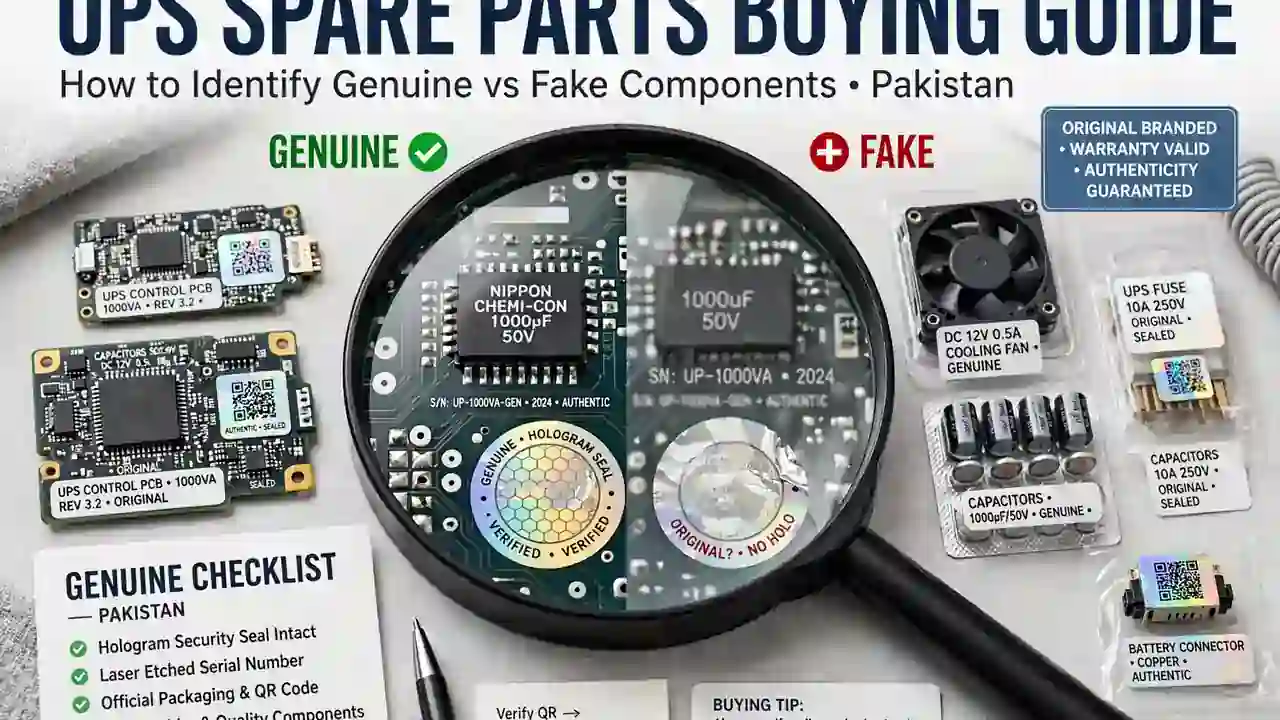
Spot Fake Parts With Your Eyes in 60 Seconds
A technician friend of mine holds every part up to the light before he even asks the price. He learned this after a batch of fake capacitors cost him three repeat visits to the same customer. Your eyes are your first and fastest testing tool.
Check the printing. Genuine parts use laser marking. The text is sharp, evenly deep, and hard to scratch off. Fake parts often use cheap ink printing. The letters look blurry, sit at slightly wrong positions, or rub off when you scratch them with a fingernail.
Check the body and edges. Real components have smooth, well-molded bodies. Many counterfeit parts are sanded down and re-marked. Sanded parts often have unnaturally sharp edges and a surface that looks shinier or rougher than normal. Refurbished parts pulled from old scrap boards show scuff marks, bent leads, and solder residue on the pins.
Check the pins. Original parts have clean, evenly tinned legs. Fake parts may have dull, uneven, or slightly bent pins. Hold the part next to your old one and compare the pin thickness and spacing. Even a small difference means poor contact and heating later.
Check the packaging. Genuine parts usually come in clean, sealed packing with proper labels. Loose parts in a torn plastic bag with no labels are a warning sign, though honest shops do sell loose parts too. Combine this check with the others.
Bonus Tip: Try the acetone test only on a part you are willing to lose. A tiny drop of nail polish remover on the marking will wipe ink-printed fakes clean. Real laser marking survives it. Do not try this on a part you plan to keep, because acetone can damage some components.
These visual checks catch most fakes. But for extra confidence, a multimeter takes you one step further.
Test the Part With a Multimeter Before You Pay
I keep a small multimeter in my bag whenever I visit an electronics market. Sellers of genuine parts never object to a quick test. Sellers who object tell you everything you need to know.
Test MOSFETs for shorts. Set your multimeter to continuity or diode mode. Check between the drain and source terminals. A dead short there means the MOSFET is already damaged. Compare your reading with a known good part if you have one. A simple short test catches the worst failures.
Test capacitors. If your meter has a capacitance mode, check that the reading matches the value printed on the part. A capacitor marked 1000uF that reads 200uF is dead or fake. Also look at the top. A bulging or leaking top means the part is finished.
Test fuses and relays. A fuse should show near-zero resistance. A relay coil should show resistance close to its rating. These quick tests catch dead-on-arrival parts before they reach your board.
For ICs, full testing at the shop is not practical. There, you rely on visual inspection, the seller’s reputation, and a replacement promise.
Where Pakistanis Actually Buy Genuine UPS Parts
Every technician I know buys from one of two places: physical electronics markets or trusted online stores. Each has its place, and smart buyers use both.
Physical Electronics Markets
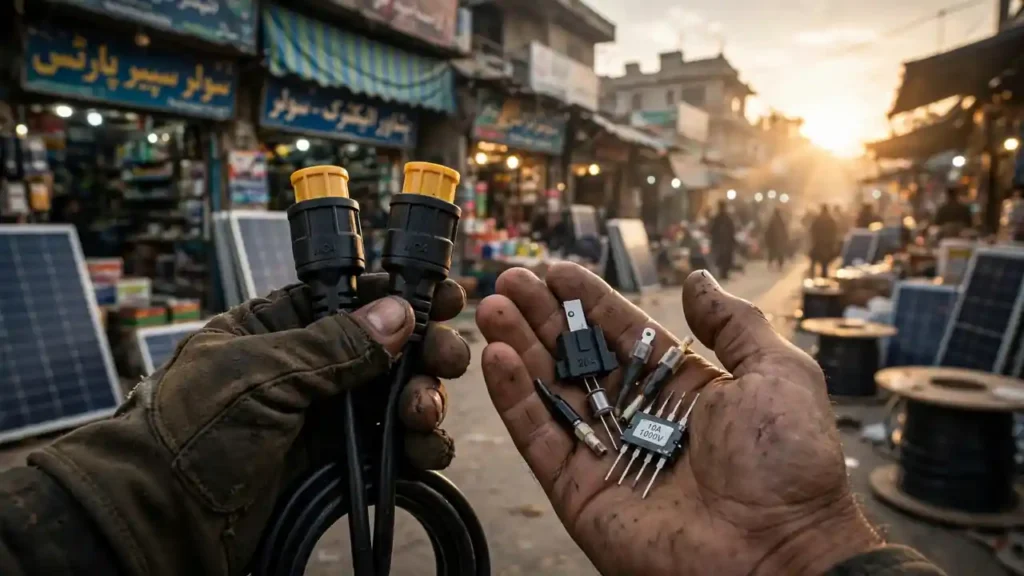
Lahore’s Hall Road is one of the largest electronics markets in Pakistan. It has shops for everything from a single resistor to complete UPS units, and many UPS products are assembled there. If you are near Lahore, it is worth a visit.
In Rawalpindi and Islamabad, the electronics shops around College Road and Raja Bazar serve the twin cities. Blue Area in Islamabad also has electronics dealers. Smaller cities usually have their own repair-parts shops, but the variety is limited compared to the big markets.
The big advantage of a market is that you can inspect parts physically, compare with your old part, and take the part home the same day. The risk is that big markets mix genuine and copy parts freely, so use the checks from this guide on every purchase.
Trusted Online Stores
Online buying has become popular because it saves travel time and gives you more variety.
You can visit the SunTech Mall shop to see a wide range of genuine UPS spare parts with clear product details and prices. We stock tested electronic parts and electrical and solar components, and we deliver across Pakistan with safe packing.
Whether you buy from us or someone else, buy from a seller who specializes in power products. A seller who focuses on charger, battery, and inverter components understands these parts better than a general shop, and usually offers a replacement if a part turns out faulty.
Note: Never share your bank details or pay in advance to an unknown seller on social media. Use established stores with a proper website, clear contact details, and a return policy.
Once you know where to buy, the next skill is comparing prices without getting fooled.
Compare Prices Without Falling for the “Too Cheap” Trap
A customer once proudly showed me MOSFETs bought at half the market price. He saved a little money. Two weeks later, the fakes shorted and took the driver IC with them. His “saving” cost him a full board repair.
Genuine parts cost more than copies. That is normal. A genuine power MOSFET often costs two or more times what a copy sells for. You are paying for the real silicon inside, proper testing, and consistent quality.
Compare prices between two or three trusted sellers. Genuine parts have fairly stable market prices. If one seller’s price is far below the others, that is a warning sign, not a bargain.
Buy small parts together. When you order fuses, connectors, and thermal paste along with your main part, you save on delivery cost. For repair shops, keeping a small stock of fast-moving parts also avoids expensive emergency purchases.
Keep your receipt. A proper receipt with the shop name, part details, and date protects you if the part fails early. Always ask about the replacement policy before paying, not after a problem appears.
Buying right is only half the job.
Make Your New Parts Last for Years, Not Months
Here is something sellers rarely tell you: most genuine parts do not die of old age. They die of heat, dust, and overloading. Fix these three things and your parts will last far longer.
Give the UPS air and clean the dust. Heat is the biggest enemy of electronic parts. Keep the UPS in a place with good airflow, away from direct sunlight and closed corners. Clean dust from the vents and fans every few months. Dust acts like a blanket that traps heat inside.
Do not overload. Every UPS has a maximum load rating. Keep your connected load below about 80% of that rating. Overloading stresses MOSFETs, transformers, and batteries, and it is the fastest way to burn new parts.
Care for the battery. Weak batteries force the UPS circuit to work harder. If your UPS uses a flooded lead-acid battery, top up with distilled water only. Typical sealed lead-acid batteries last about 3 to 5 years, and heat above 25°C shortens that life sharply. Keep batteries cool and charged.
For city-specific buying guides, see our articles on repair components in Islamabad, UPS parts in Mardan, and inverter parts in Peshawar.
Frequently Asked Questions
How do I know which spare part my UPS needs?
Open the UPS and read the model number printed on the damaged part. Also note your UPS brand and model. A technician can test the circuit to confirm which component failed. Always replace with a part that matches the original part number exactly.
Are genuine UPS spare parts expensive?
They cost more than copies, but they last much longer and protect your UPS and battery. A cheap fake that destroys your board costs far more than the genuine part would have. In the long run, genuine parts save money.
Can I repair my UPS myself at home?
Simple tasks like cleaning dust and checking battery terminals are safe at home. Circuit-level repair involves high voltage and should be done by a trained technician. Wrong repair can damage the UPS or cause electric shock.
Where can I buy genuine UPS spare parts online in Pakistan?
Buy from established online stores that specialize in UPS and solar parts, show clear product details, and deliver across Pakistan. SunTech Mall is one such trusted source with genuine, tested spare parts and nationwide delivery.
How can I tell if a part is fake before buying?
Check the printing quality, body finishing, pin condition, and packaging. Genuine parts have sharp laser marking, clean pins, and solid finishing. Very low prices compared to the market are a strong warning sign of fakes.
Should I take the old part to the market?
Yes, always. Taking the damaged part lets the seller match the size, pin layout, and model number exactly. This one habit prevents most wrong purchases.
How long do UPS spare parts normally last?
With good ventilation, no overloading, and regular dust cleaning, quality parts last for years. Batteries typically need replacement every 3 to 5 years depending on heat and usage. Heat and dust are the main life-shorteners.
Final Thoughts
Finding genuine UPS spare parts in Pakistan is not about luck. It is about method. Read the part number. Check the markings with your eyes. Test with your multimeter. Buy from sellers who specialize in power products. And protect your investment with airflow, cleaning, and sensible loading.
Congratulations on taking the time to learn this properly. Most people just buy the cheapest part and hope. You are already ahead of them.
If you want a shortcut, let us be your trusted source. SunTech Mall stocks genuine, tested UPS spare parts with delivery across Pakistan. Browse the SunTech Mall shop, or reach us at info@suntechmall.com or +92 306 2244820. You can also read our guide to choosing a reliable electronics component store. We would be glad to help you find the exact part your UPS needs.
3 Comments
[…] How to Find Genuine UPS Spare Parts Near You in PakistanMay 5, 2026 […]
[…] How to Find Genuine UPS Spare Parts Near You in PakistanMay 5, 2026 […]
[…] How to Find Genuine UPS Spare Parts Near You in PakistanMay 5, 2026 […]