
Grid Voltage Fluctuation Is Damaging Solar Inverters in Pakistan – Users Often Miss the Real Cause
Experts say grid voltage fluctuation is silently damaging solar inverters in Pakistan and increasing repair costs.

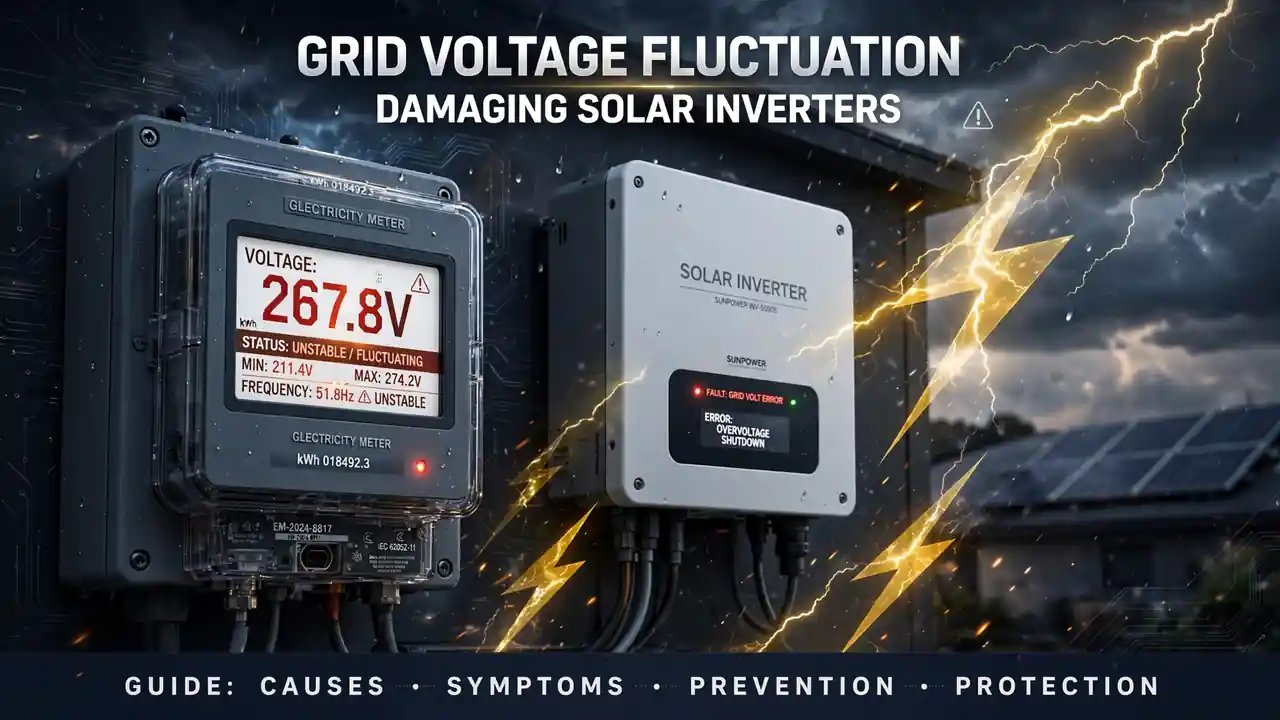
Load shedding ends. The lights flicker back on. Your solar inverter clicks, tries to connect to the grid — and dies. No warning, no gradual decline. One moment of unstable power, and the control board is gone. The technician shakes his head: “Voltage spike ne mara hai.”
I write repair guides for SunTech Mall, where we supply spare parts to inverter repair shops across Pakistan. Technicians describe voltage fluctuation as the invisible killer — it leaves no dust, makes no noise, and gives almost no warning. Yet it silently damages more inverters than most owners realize, especially in areas with frequent load shedding and aging power lines.
Here is the fear you should take seriously: your inverter can be perfect, your installation flawless, and one bad spike after load shedding can still destroy it. This guide explains what grid voltage fluctuation is, how it harms your inverter, the warning signs, and how to protect yourself — in simple words anyone can understand.
Let us start with what fluctuation actually means.
Note: This guide is about understanding and protection. Internal repairs involve high voltage — always use a trained technician for anything inside the case.
What You Will Learn in This Guide
- What grid voltage fluctuation means in plain words
- Why hybrid and on-grid inverters are most exposed
- How voltage spikes silently kill sensitive parts
- Why low voltage is just as dangerous as high voltage
- Warning signs most users miss
- How small damage grows into expensive repairs
- Protection devices that actually work
- Common mistakes that leave inverters defenseless
What Grid Voltage Fluctuation Means
Your home expects steady electricity — the voltage should stay within a narrow, safe range. Grid voltage fluctuation means it does not. Instead of steady power, the voltage swings up and down: weak at one moment, dangerously strong the next.
In Pakistan, this happens constantly. Load shedding itself is a trigger — when power returns, it often surges. Old transformers, overloaded lines, and loose grid connections add more instability. In some areas, voltage swings are a daily event, not an exception.
Your inverter sits at the receiving end of all of this. Every swing passes through its input stage, stressing components designed for stable power.
Why Solar Inverters Get Hurt
Hybrid and on-grid inverters work hand-in-hand with grid power. They synchronize with it, draw from it, and feed into it. This close relationship is their vulnerability.
When grid voltage swings, the inverter tries to adapt — adjusting, compensating, switching modes. This constant adjustment is extra work the inverter was not designed to do continuously. Internal parts heat up, switching components stress, and protection circuits wear down.
Off-grid inverters that rarely connect to the grid are less exposed. But most Pakistani solar users have hybrid systems tied to the grid — which means most are in the danger zone.
Bonus Tip: If your area has daily load shedding, your inverter faces voltage stress daily. Protection devices are not optional extras there — they are as essential as the inverter itself.
Voltage Spikes: The Silent Killers
A voltage spike is a sudden, brief jump in voltage — far above normal, lasting a fraction of a second. That fraction is enough.
Spikes strike hardest when power returns after load shedding. The grid reconnects, voltage surges momentarily, and every connected inverter takes the hit. Sensitive parts — control card chips, gate driver ICs, MOSFET gates — can be damaged by a single strong spike.
The cruel part: spike damage is often invisible. No burn marks, no smell. The inverter may even keep working for weeks while weakened components deteriorate, then fail “suddenly” from an ordinary day’s operation. Owners blame the inverter. The real killer struck weeks earlier.
This is also why proper grounding matters so much — grounding gives spikes a safe path away from your electronics.
Low Voltage: The Other Hidden Danger
Everyone fears high voltage. Few fear low voltage. They should.
When grid voltage drops too low, the inverter pulls more current to deliver the same power. More current means more heat — in wires, in MOSFETs, in every current-carrying part. Chronic low voltage slowly cooks the inverter from the inside.
Low voltage also forces the inverter to work outside its comfortable range. Efficiency drops, components stress, and lifespan shortens. In areas with constant undervoltage, inverters age visibly faster — more repairs, earlier failures, higher costs.
A stabilizer can help in chronically low-voltage areas by keeping output steady. It adds cost, but far less than replacing a damaged inverter.
Warning Signs Most Users Miss
Voltage damage whispers before it shouts. Learn to hear it.
Frequent grid disconnections. The inverter connects to the grid, drops off, reconnects, drops again. This cycling means the grid voltage keeps leaving the safe range.
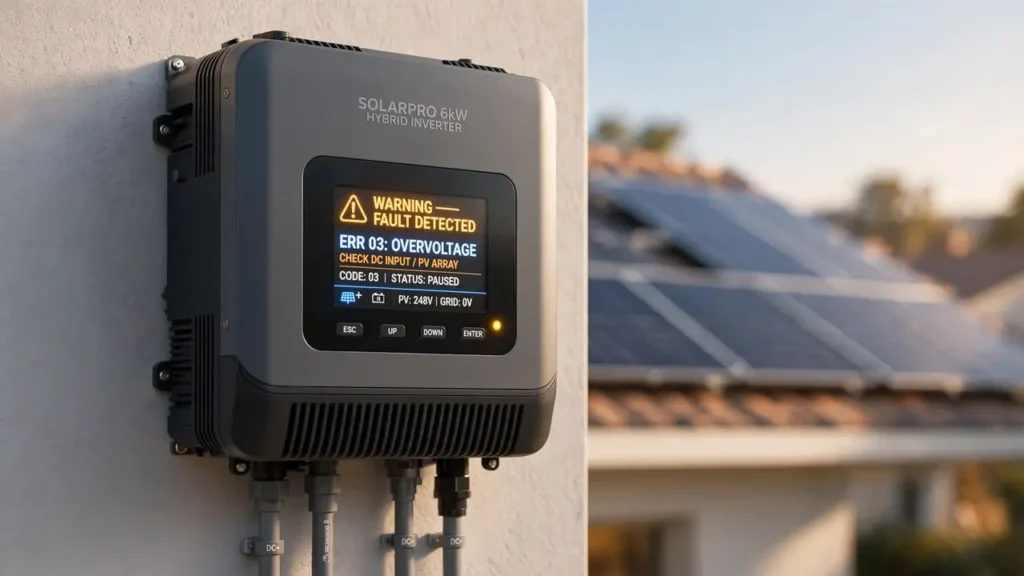
Error codes related to grid. Overvoltage, undervoltage, grid fault, frequency errors — these are the inverter telling you the grid is misbehaving. Do not just reset and forget.
Unusual heat. If the inverter runs hotter than it used to without any load change, voltage stress may be forcing extra current through it.
Failure after load shedding returns. If problems consistently appear right after power restoration, spikes are the prime suspect.
Each of these is your inverter asking for protection. Answer it before the damage compounds.
Note: Keep a simple log — date, time, and what happened — whenever the inverter behaves strangely around load shedding. Patterns in this log help technicians diagnose voltage issues much faster.
How Small Damage Becomes a Big Bill
Voltage fluctuation damage follows a predictable escalation. Understanding it shows why early protection is so valuable.
Stage 1: Spikes and swings stress small components — protection circuits, sensing parts, minor chips. The inverter still works. Nothing seems wrong.
Stage 2: Repeated stress weakens the power section. MOSFETs degrade, capacitors suffer from the extra heat. Performance drops slightly. Occasional errors appear.
Stage 3: A major spike or accumulated damage kills the control board. Now the inverter is dead, the repair is complex, and the bill is large. Full board repair or replacement may be needed.
A protection device installed at Stage 0 costs a fraction of a Stage 3 repair. That is the entire economics of voltage protection in one sentence.
Protection Devices That Actually Work
The good news: voltage damage is highly preventable. These devices form your defense.
Voltage protector. This device watches incoming voltage continuously. When voltage goes outside safe limits — too high or too low — it disconnects your inverter automatically. When voltage stabilizes, it reconnects. One device, automatic protection, no attention needed.
Surge protection device (SPD). An SPD absorbs sudden spikes before they reach your inverter. This is your main defense against the violent surges that follow load shedding restoration. For complete safety, use an SPD together with a voltage protector.
Proper grounding. Surge protectors need somewhere to send the surge energy — that somewhere is the earth. Without proper grounding, SPDs cannot do their job. Grounding is the foundation every other protection builds on.
Correctly sized breakers and cables. Undersized wiring worsens every voltage problem by adding resistance and heat. Make sure your breakers and cables match your system — explore the solar electrical protection range for properly rated components.
Bonus Tip: Install protection from day one — not after the first damage. Protection devices guard against future events; they cannot undo damage already done. The best time to protect was at installation. The second-best time is today.
What This Costs Homes and Businesses
For homes, voltage damage means sudden inverter death — often right when load shedding makes backup power essential. The repair bill arrives together with the inconvenience, and the solar savings for that year evaporate.
For businesses, unprotected inverters are a recurring risk. Each major voltage event is a dice roll. Shops and offices in fluctuation-prone areas increasingly treat protection devices as standard equipment — because one prevented board failure pays for protection many times over.
Remember: manufacturer warranties usually exclude voltage fluctuation damage, treating it as an external factor. Your protection is your warranty.
Common Mistakes That Leave Inverters Defenseless
No protection at all. The biggest mistake — connecting a hybrid inverter directly to an unstable grid with zero protection devices. This is gambling with expensive equipment.
Wrong protection ratings. A protector rated too low trips constantly and gets bypassed in frustration. One rated too high never trips when needed. Always match protection ratings to your inverter’s capacity and your grid’s behavior.
Protection without grounding. Installing an SPD but skipping grounding is like buying a lock and leaving the door open. The surge energy must go somewhere safe.
Ignoring the warning signs. Frequent disconnections and grid error codes are the inverter begging for help. Resetting errors without investigating lets damage accumulate silently.
Cheap protection devices. A low-quality protector with slow response or false ratings may fail exactly when needed. Protection is the wrong place to economize — buy reliable, branded devices.
Frequently Asked Questions
Can voltage fluctuation damage a brand new inverter?
Yes. Spikes do not care about age. One strong surge after load shedding can damage a new unit’s control board or power section. Install protection from day one.
How do I know voltage fluctuation damaged my inverter?
Signs include burnt smell, frequent grid-related error codes, refusal to connect to grid, visible burn marks on the board, and failures that follow load shedding restoration. A technician can confirm with component testing.
Are protection devices expensive?
No. A quality voltage protector and SPD together cost far less than one control board repair. Think of protection as insurance — a small fixed cost against a large unpredictable one.
Does warranty cover voltage fluctuation damage?
Usually not. Most manufacturers treat unstable grid power as an external factor outside their control. Warranty covers manufacturing defects, not grid damage — which makes your own protection even more important.
Will a stabilizer alone protect my inverter?
A stabilizer helps with chronic low or high voltage but reacts too slowly for sharp spikes. For complete protection, combine a stabilizer (if needed) with a fast SPD and a voltage protector.
My area has voltage issues daily. What is the minimum protection?
At minimum: a correctly rated voltage protector plus an SPD, both properly installed with solid grounding. This combination handles the vast majority of fluctuation and spike scenarios.
Where can I buy protection devices and spare parts in Pakistan?
SunTech Mall offers protection devices, breakers, cables, and original inverter spare parts with nationwide delivery. Visit the SunTech Mall shop or browse electrical and solar components.
Final Thoughts
Grid voltage fluctuation is the threat you cannot see, hear, or predict — but you can absolutely defend against. Every day your unprotected inverter rides Pakistan’s unstable grid is a day of silent risk.
The defense is simple and affordable: a voltage protector, a surge device, proper grounding, and correctly sized wiring. Install them once, and they stand guard every hour of every day — through every load shedding cycle, every storm, every grid hiccup.
Your solar investment deserves that shield. Protect it today, and sleep easy tonight. For quality protection devices and original spare parts delivered anywhere in Pakistan, SunTech Mall is here to help.