

Solar Inverter Capacitor Failure in Pakistan – Heat Is the Main Reason
Technicians warn that inverter capacitor problems are increasing in Pakistan, leading to shutdowns and high repair costs.

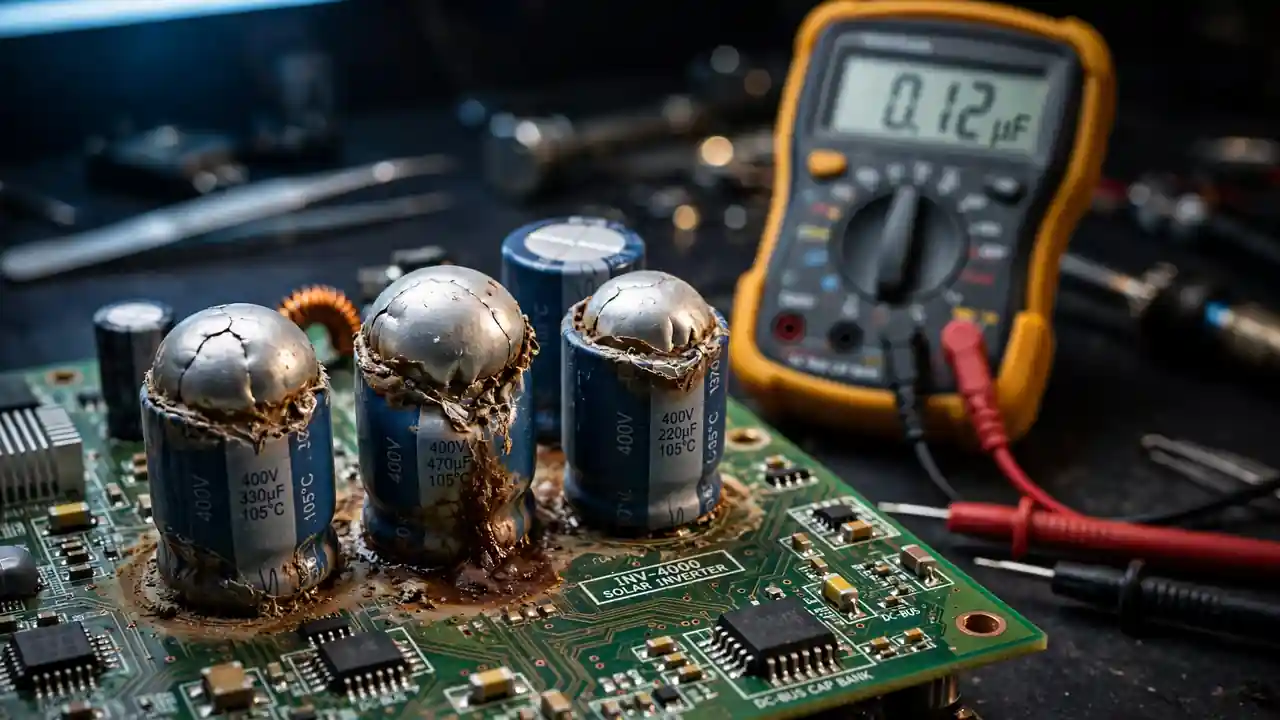
Your inverter was working fine yesterday. Today it restarts again and again, or shuts down in the middle of the afternoon. You call a technician, he opens the case, and points at a small cylinder that looks slightly swollen. “Capacitor kharab hai,” he says. And just like that, your backup power is gone.
I write repair guides for SunTech Mall, where we supply spare parts to inverter repair shops across Pakistan. Technicians tell us the same thing every summer: capacitor failure is one of the most common reasons inverters land on their workbenches. It is a small part, a cheap fix — but only if you catch it early.
Here is what scares most inverter owners: a tiny part you have never heard of can kill your whole system, and the repair bill grows every week you ignore the warning signs. This guide explains exactly what capacitors do, why heat destroys them, how to spot failure early, and how to prevent it — in simple words anyone can understand.
Let us start with what this small part actually does.
Note: This guide is about understanding and prevention. Internal inverter repair involves high voltage — always let a trained technician do the actual replacement.
What You Will Learn in This Guide
- What a capacitor does inside your inverter (in plain words)
- Why heat is the number one killer of capacitors in Pakistan
- How dust and poor maintenance speed up the damage
- Why cheap replacement capacitors fail again so fast
- The early warning signs most users ignore
- How a small problem becomes an expensive repair
- Simple steps to protect your inverter’s capacitors
- How to choose capacitors that survive Pakistani summers
What a Capacitor Actually Does
Think of electricity inside your inverter like water flowing through a pipe in violent bursts. A capacitor is a small tank that collects those bursts and releases a smooth, steady flow.
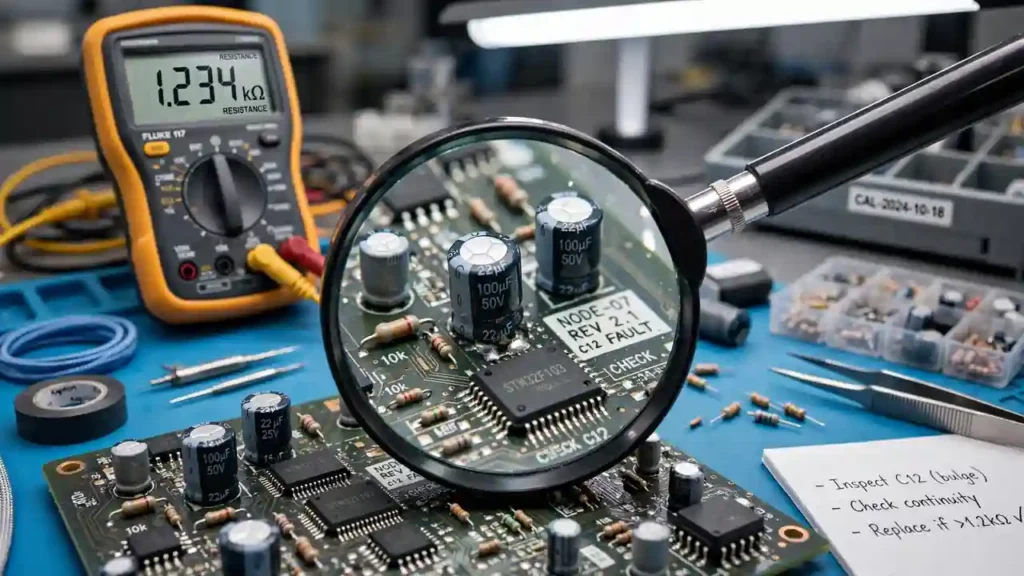
Technically, a capacitor stores small amounts of electrical energy and releases it exactly when needed. Inside an inverter, capacitors smooth out voltage ripples, filter electrical noise, and keep the power section working steadily. Without them, the output would be unstable and the inverter would shut down constantly.
The big cylindrical parts near the MOSFETs are electrolytic capacitors — they do the heaviest smoothing work. Smaller capacitors scattered across the control board handle filtering and timing. Every one of them matters.
Why Heat Destroys Capacitors
Here is the uncomfortable truth: heat is the number one enemy of capacitors, and Pakistan’s summers are brutal on them.
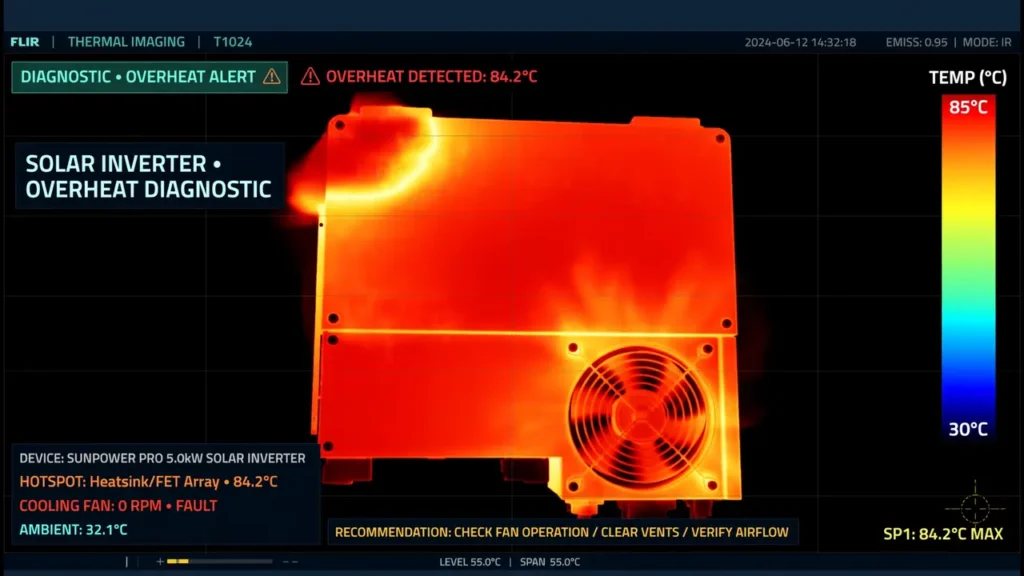
Electrolytic capacitors contain a liquid electrolyte inside. Prolonged heat slowly dries out this liquid. As it dries, the capacitor loses its ability to store energy. It gets weaker month by month until it cannot do its job at all. This is not a sudden failure — it is a slow death accelerated by every hot day.
Inverters in Pakistan often run for long hours in rooms that reach extreme temperatures. If the inverter sits in a closed space, near a kitchen, or in direct sunlight, internal temperatures climb even higher. Poor ventilation traps this heat exactly where the capacitors sit.
This is why capacitor problems spike every summer — and why the same inverter that survived winter starts acting up in June.
Bonus Tip: Feel your inverter’s case on a hot afternoon. If it is uncomfortably hot to touch, the inside is hotter still — and your capacitors are aging faster than they should. Moving the inverter to a cooler, airy spot is the single cheapest life-extending step you can take.
How Dust Makes Everything Worse
Dust is heat’s best friend. It settles on vents, fan blades, and heatsinks, forming a blanket that traps hot air inside the inverter.
Technicians who open failed inverters in Pakistan routinely find thick layers of dust coating the internals. This dust does two things: it blocks the airflow that should carry heat away, and it insulates components so heat cannot escape. The result is the same — capacitors cooking in their own heat.
Areas near roads, construction sites, and workshops are worst affected. If your inverter sits in such a place, dust buildup happens faster than you expect. Regular cleaning is not optional there — it is essential maintenance.
Why Cheap Capacitors Fail Again So Fast
Many inverters in Pakistan have been repaired before with cheap, low-quality capacitors. They look fine. They work for a few weeks. Then they fail — sometimes taking other parts with them.
Cheap capacitors use lower-grade electrolyte that dries out faster under heat. Their actual ratings often fall short of what is printed on them. In a hot inverter running long hours, a cheap capacitor does not stand a chance.
Worse, when a cheap capacitor fails, it can leak or burst, damaging nearby components. A “cheap fix” then becomes an expensive board repair. This is the most frustrating pattern technicians see: the same inverter returning with the same problem because the last repair used substandard parts.
Quality capacitors from reliable manufacturers use better electrolyte, tighter tolerances, and higher temperature ratings. They cost a little more but survive where cheap ones die. Browse quality inverter capacitors built for real-world heat.
Note: When replacing capacitors, match capacitance (uF), voltage rating (V), and temperature rating. Never use a lower voltage rating than the original. A higher temperature rating (105°C instead of 85°C) is always worth it in Pakistan.
Early Warning Signs Most Users Ignore
Capacitor failure rarely happens without warning. The inverter tries to tell you — most users just do not recognize the language.
The inverter restarts on its own. This is the classic sign. Weak capacitors cannot smooth power properly, so the control card resets. If restarts happen more often on hot days, capacitors are the prime suspect.
Output feels weak or unstable. Lights flicker, fans run slower than usual, or the inverter struggles under loads it handled easily before.
A faint buzzing or humming sound. Healthy inverters run quietly. New buzzing often means capacitors are no longer filtering properly.
The case runs hotter than before. Failing capacitors make the power section work harder, generating extra heat — which further damages the capacitors. It is a vicious circle.
If you notice any of these, call a technician early. A capacitor replaced in time is a small, cheap repair.
How a Small Problem Becomes an Expensive Repair
This is the part that hurts. A capacitor costs little. Ignoring it costs a lot.
When weak capacitors are left in place, voltage ripples grow. These ripples stress the MOSFETs — the power switches that handle all the heavy current. MOSFETs running on unstable power overheat and burn. Learn why MOSFETs burn to understand this chain reaction.
Once MOSFETs fail shorted, they can damage the control card and other sections. What started as a simple capacitor replacement becomes a full board repair or even board replacement. The repair bill multiplies, and downtime stretches from hours to days.
Technicians put it bluntly: the cheapest repair is the one you do early. Every week of delay risks the next component in line.
What This Means for Homes and Businesses
For home users, capacitor failure means sudden loss of backup power — often during load shedding when you need it most. Daily routines break down, and the high repair bill wipes out the savings solar was supposed to deliver.
For shops and offices, the stakes are higher. Work stops, customers get frustrated, and every hour of downtime costs money. Business owners who depend on solar power cannot afford surprise failures — which is why preventive maintenance is a business decision, not just a technical one.
Simple Steps to Protect Your Capacitors
You do not need to be a technician to add years to your capacitors’ life. These steps cost almost nothing.
Give the inverter air. Install it in an open, ventilated spot — never in a closed cabinet or tight corner. Leave clear space on all sides so heat can escape. Read about installation mistakes that cause damage to get placement right.
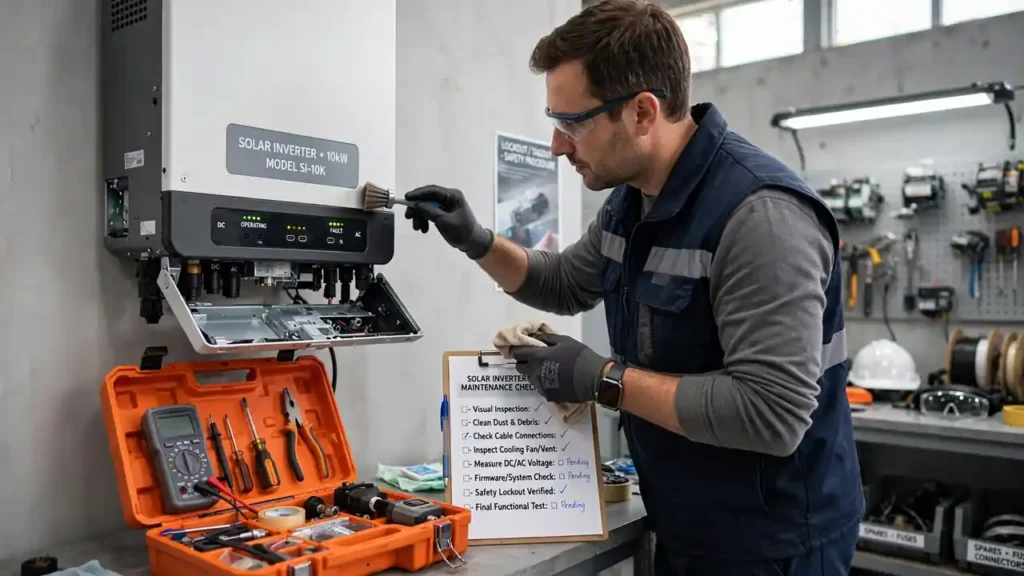
Clean dust regularly. Wipe vents and surrounding areas every few months. In dusty locations, do it monthly. Make sure the cooling fan spins freely — learn about overheating linked to fan failure.
Do not overload. Running the inverter constantly near maximum load generates extra heat. Keep some headroom, especially in summer.
Act on warning signs. Random restarts, new sounds, extra heat — these are your inverter asking for help. A technician visit now is far cheaper than a board repair later.
Insist on quality parts. When replacement is needed, make sure your technician uses original, branded capacitors — not the cheapest option. One quality repair beats three cheap ones.
Bonus Tip: Schedule a professional inspection every year before summer. A technician can spot swelling capacitors, dust buildup, and weak fans in minutes — catching problems while they are still cheap to fix.
Choosing Capacitors That Survive Pakistani Summers
Not all capacitors are equal. Here is what to look for — or what to ask your technician to use.
Temperature rating: Choose 105°C rated capacitors over 85°C ones. The higher rating means the electrolyte withstands more heat before degrading. In Pakistan, this single choice makes the biggest difference.
Right voltage rating: Never go below the original voltage rating. Going one step higher (for example 50V instead of 35V) adds safety margin against voltage spikes.
Reputable brands: Established manufacturers test their parts honestly. Unknown brands often exaggerate ratings. SunTech Mall stocks quality electrolytic capacitors and a full capacitor range that technicians trust.
Fresh stock: Electrolytic capacitors age even sitting on a shelf. Buy from suppliers with fast turnover, not from shops where parts gather dust for years.
Frequently Asked Questions
How long do inverter capacitors normally last?
It depends on heat, quality, and usage. In cool conditions with quality parts, they can last many years. In hot, dusty environments with heavy use, they degrade much faster. Regular maintenance and good ventilation are the biggest factors you control.
Can I see capacitor failure without opening the inverter?
You cannot see inside, but you can hear and feel the symptoms: random restarts, buzzing sounds, weak output, and extra heat. A technician needs to open the unit to visually confirm swollen or leaking capacitors.
Is it safe to keep using an inverter with weak capacitors?
No. Weak capacitors stress MOSFETs and other parts, turning a small repair into a big one. Continued use risks cascading damage. Get it checked as soon as symptoms appear.
Why do capacitors fail faster in summer?
Heat dries out the liquid electrolyte inside electrolytic capacitors. Higher ambient temperatures plus longer running hours in summer accelerate this drying dramatically. Poor ventilation and dust make it worse.
Can a capacitor be repaired, or must it be replaced?
Capacitors cannot be repaired — they must be replaced. The good news is that replacement is quick and inexpensive when done early, before other parts get damaged.
Will warranty cover capacitor failure?
It depends on the cause and the manufacturer’s terms. Failures from manufacturing defects may be covered, but damage from poor ventilation, dust neglect, or previous cheap repairs usually is not. Check your warranty terms.
Where can I buy quality capacitors in Pakistan?
SunTech Mall offers original, branded capacitors with proper temperature and voltage ratings, delivered nationwide. Visit the SunTech Mall shop or browse inverter capacitors directly.
Final Thoughts
A capacitor is a small part with a big job — and heat is quietly working against it every single day. The good news is that this is one of the most preventable failures in your entire solar system.
Keep your inverter cool, keep it clean, watch for the warning signs, and insist on quality parts when replacement time comes. These simple habits cost almost nothing, yet they protect you from the repair bills that catch so many inverter owners by surprise.
Your solar system was an investment in peace of mind. A little care keeps it that way. And when you need parts that survive Pakistani summers, SunTech Mall is here — original components, honest advice, delivered anywhere in Pakistan.