
Why Does My Inverter Tick and Never Start?
If you're installing or upgrading a solar inverter system in Mardan, one of the key components you’ll need is a 400V 47uF aluminum electrolytic capacitor. This small but powerful component plays a…

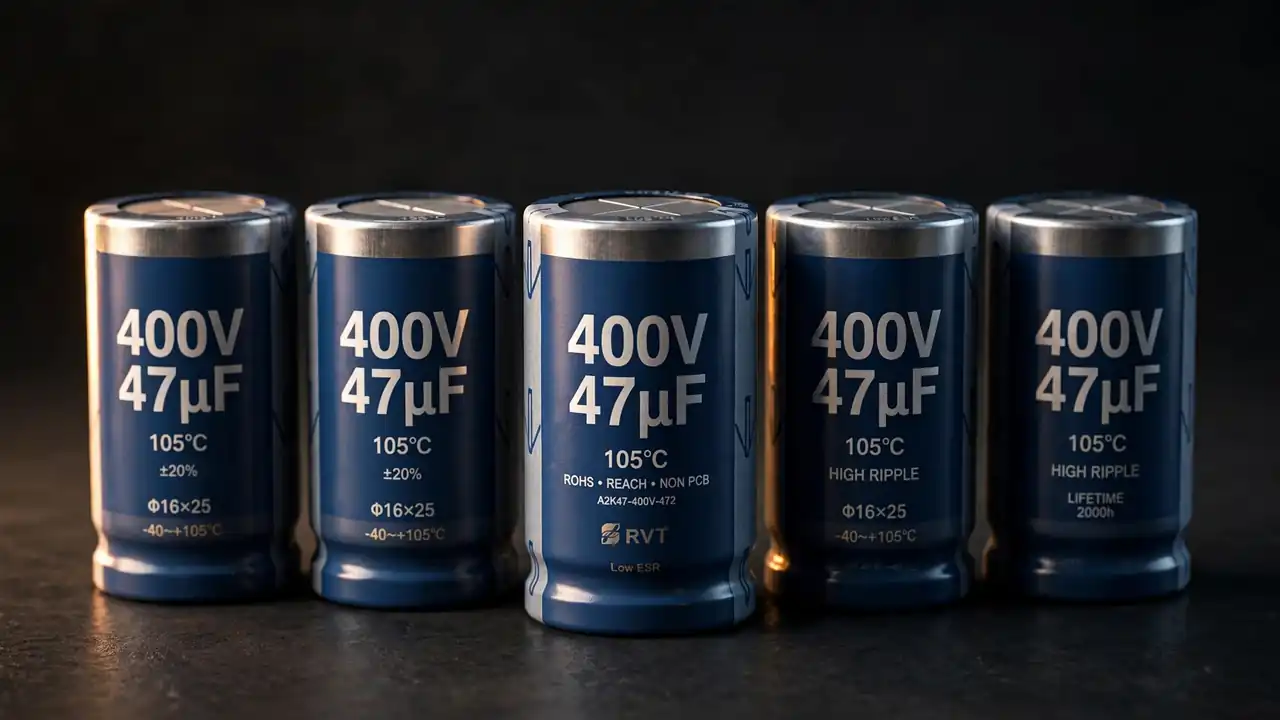
A worn 400V 47uF capacitor is a common cause of the classic inverter tick and never start problem. The tick is the control chip trying to wake up, failing for lack of stored charge, and trying again. This guide explains what the part does, how to test it safely, and how to pick a replacement that lasts.
Safety comes first, and it is not optional on a 400V part. Disconnect mains, solar, and battery before you open the unit. Discharge the capacitor through a resistor, then confirm zero volts with your meter before you touch any terminal. Never short a high-voltage capacitor with a screwdriver. A proper discharge resistor costs little, and the screwdriver trick can damage the part, the tool, and you.
What does 400V 47uF mean?
The sleeve gives you the working limits. 47uF is the capacitance, a mid-range value: large enough for real filtering and startup energy, small enough to fit a dense board. 400V is the highest DC voltage rating. Never fit a part with a lower rating, and never run this part above 400V. A common workshop rule keeps the steady working voltage about 20 percent below the rating, which points to around 320V for a 400V part. Treat that as a margin habit, not as a printed spec, and check the series datasheet for the part you hold.
It is a polarized aluminum electrolytic capacitor. The stripe marks the negative side. Fit it backwards and it will fail, sometimes with force. Tolerance is commonly plus or minus 20 percent, so a new 47uF part can read from about 37.6uF to 56.4uF and still sit inside its marked range. Temperature rating matters too. For inverter and UPS service, ask for a 105°C part. Enclosed power units run hot, and an 85°C part ages fast in that heat.
Where does a 47uF capacitor work?
Its main job is filtering the auxiliary supply. The high-voltage rail that feeds the control electronics needs smoothing, and 47uF provides it in a compact size. When this capacitor dries out, the control rail gets noisy. The unit then throws odd fault codes, shows display glitches, or shuts down for no clear reason, while the main power stage still tests fine.
Its second job is startup. In an inverter tick and never start, many controllers need a small reservoir of charge to begin running. The 47uF charges through a startup resistor, the controller wakes, and then the auxiliary winding takes over and keeps it alive. If the capacitor has dried to a fraction of its value, the controller gets enough charge to start, not enough to keep running, and the cycle repeats. That repeat cycle is the tick you hear from the transformer.
It can also appear in power factor correction output filtering, where several smaller capacitors share the bus job instead of one large can, and in discharge timing, where it works with a resistor to set how fast a rail falls after power-off. In startup and timing jobs, the exact value matters more than in plain filtering. A part that has dried to 25uF may still smooth a rail, yet fail to start the supply.
How does failure show itself in an inverter tick and never start?
The signature fault in an inverter tick and never start is hiccup-mode startup: repeated ticking attempts that never finish. If you hear that tick, put the startup capacitor high on your suspect list before you replace control chips or power transistors. A second pattern is erratic control behaviour. Random fault codes, display errors, and unexplained shutdowns point at the auxiliary rail when the power stage tests good.
A third pattern is heat and load sensitivity. The unit works on the bench in the morning and fails in a hot room in the afternoon, or works with no load and fails under load. Electrolyte dries faster with heat, so a tired capacitor often fails warm first. Visual signs still count: a domed top, a weeping seal, or a stained sleeve condemns the part at once. But many failed 47uF parts look normal. Drying inside the can leaves no mark outside, so a meter test is essential. Look, then test. Never test by look alone.
How do you test it in five minutes?
For an inverter tick and never start, discharge first, every time, and confirm zero volts. Then work through these steps:
- Inspect the can in good light. Check for a flat top, a clean base seal, and sharp markings. Photograph anything odd for your records.
- Lift one lead, or remove the part, before you trust a capacitance reading. Parallel parts on the board can hide a dead capacitor.
- Measure capacitance and let the reading settle. Expect about 37.6uF to 56.4uF for a part inside tolerance. Below 37.6uF shows real drying. Near zero, or a fixed low resistance reading, points to a shorted or dead part.
- Watch the resistance sweep on ohms mode. The reading should climb toward infinity as the part charges from the meter. A 47uF part charges in a couple of seconds, so the climb is brief but visible. No climb, or a reading stuck low, means failure.
- If you have an ESR meter, compare the result with the series datasheet or a known-good part of the same series. A rising ESR warns you before capacitance falls out of range, and it explains rail noise that a capacitance meter alone cannot.
| Test | Good result | Replace the part |
|---|---|---|
| Visual check | Flat top, clean seal, sharp print | Dome, leak, stain, or swollen sleeve |
| Capacitance | About 37.6uF to 56.4uF | Below 37.6uF, or near zero |
| Resistance sweep | Reading climbs toward infinity | Stuck low, or no climb at all |
| ESR, if you can test it | Close to datasheet or a known-good sample | Clearly higher than a known-good sample |
Keep one known-good sample of common values in your shop. Side-by-side readings make ageing obvious in a way that a single number sometimes does not.
How do you replace it safely?
Isolate everything first, discharge, and confirm zero volts. Take a photo of the original orientation before you desolder it. Match the specs in this order: voltage 400V or higher, capacitance 47uF, temperature 105°C, and a can size that fits the footprint. In plain filtering jobs, a nearby value such as 33uF to 68uF can work. In startup or timing jobs, stay close to 47uF, because the value sets the startup timing with its charging resistor.
Polarity discipline matters most on this part. The stripe goes to the negative pad. Check your photo and the board marking before the iron touches the joint. Solder clean joints with enough heat to wet the pads fully. A dry joint on a startup capacitor mimics the original fault, which is the worst possible outcome of a repair.
After fitting, run a loaded test. Look for a clean start with no ticking, steady running, and a new capacitor that stays cool after fifteen minutes under load. If an inverter tick and never start pattern returns, stop and re-check the startup resistor and the controller supply path before you fit another capacitor.
What habits make capacitors last longer?
Ventilation is the cheapest life extender for an inverter tick and never start. Inverters packed into closed cabinets cook their capacitors, so keep intake and exhaust paths clear and the cooling fan free. Dust acts as a blanket. It traps heat right where capacitors sit, so a soft brush and compressed air during a service visit buy real life, above all around heat sinks where dust gathers fastest.
Watch the fan as well. A slow or seized fan raises the temperature of every part in the box. If the fan sounds rough or moves little air, fix it before it takes the capacitors down with it. For equipment you maintain often, an annual ESR sweep of the high-voltage electrolytics catches ageing before failure. Replace a part when ESR rises clearly or capacitance nears the tolerance edge, not before it shows signs, and not after it has already failed and stressed other parts.
Frequently Asked Questions
Can I use 68uF instead of 47uF? In filtering spots, usually yes. In startup or timing spots of an inverter tick and never start, the larger value changes the timing, so it may still work but the start behaviour can shift. Match the original in timing-sensitive spots.
Why do these fail in units that are rarely used? Electrolyte dries with time and heat, even when the unit sits idle. A UPS in a hot storeroom ages its capacitors almost as fast as one in daily use, and that ageing is a common cause of an inverter tick and never start. Shelf life is real for electrolytics.
Is it worth replacing all electrolytics in an old unit? For a unit over five years old that is already open for repair, many technicians replace the small high-voltage electrolytics as a preventive step. The parts cost is small next to a second service visit.
Can a bad 47uF damage other parts? Indirectly, yes. A failed auxiliary-rail capacitor can make the control circuit misbehave, which can drive power transistors badly. Fix supply rails first, before you chase the power stage.
How do I discharge it without a power resistor? A mains-rated incandescent bulb across the terminals works as a discharge load, and it glows briefly then fades. A proper resistor is still the correct tool, and it costs little. Never short the terminals with a screwdriver.
Does the physical size of the replacement matter? Indirectly. A larger can with the same ratings often handles ripple current better and lasts longer, because it holds more electrolyte and sheds heat better. If a larger 47uF 400V part fits, it is often the better choice.
Next step
If you have an inverter tick and never start, test the startup and auxiliary capacitors before you replace expensive boards. For the smaller startup value, read the 400V 33uF capacitor guide, and for the larger filtering value, see the 400V 82uF capacitor guide. When you order, ask for the exact voltage, capacitance, temperature rating, and series, and test the new part on arrival before you fit it.
Related Technical Guides
 Category:
General
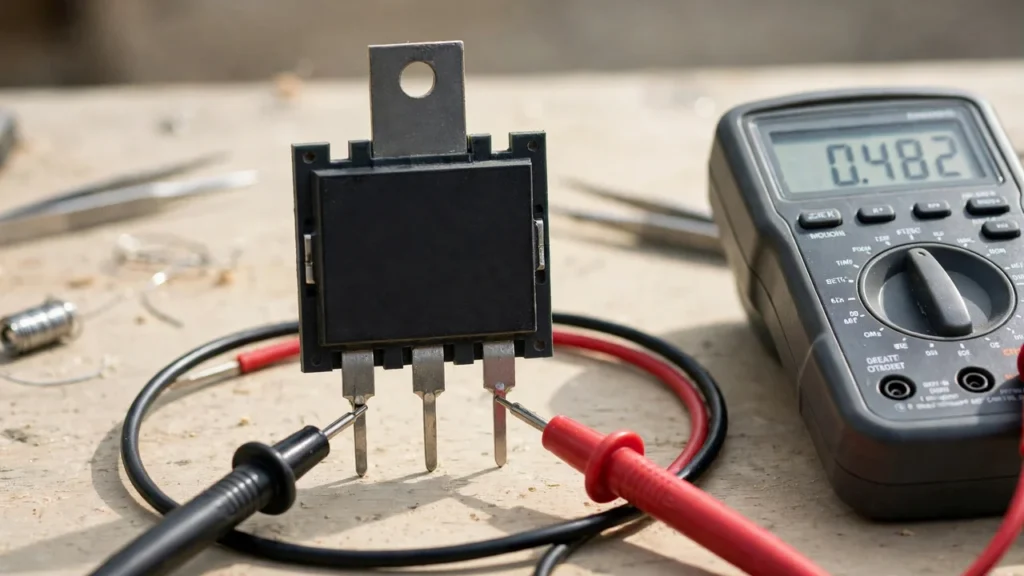
How to Test a MOSFET With a Multimeter 2026: Find a Bad MOSFET Before It Burns Your Board
Last month, a technician brought me a dead inverter board. He had already fitted a new MOSFET. The board died again in…
 Category:
General
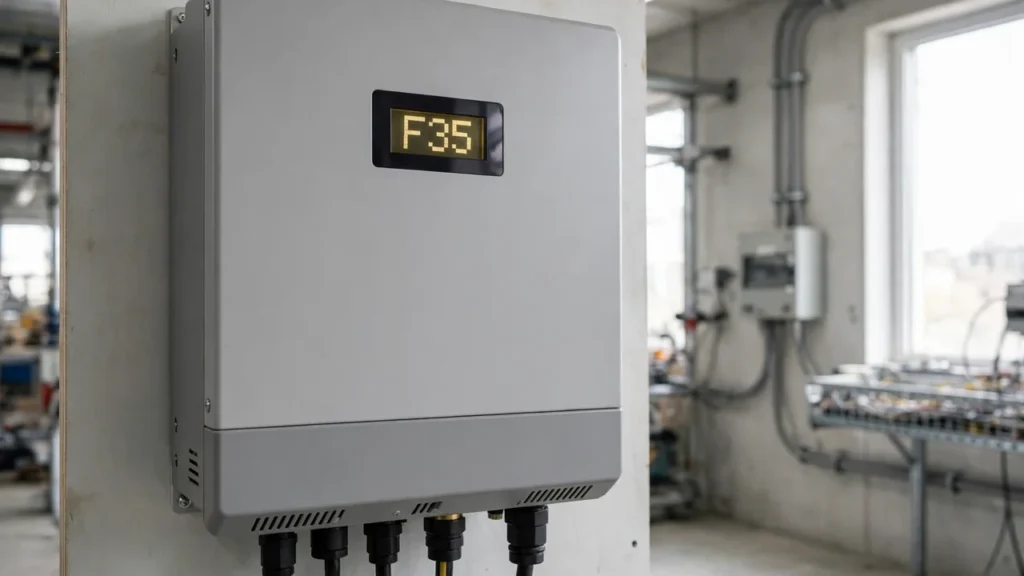
Inverex Nitrox Fault Codes 2026: Technician’s Complete Decode List for F01 to F64
Inverex Nitrox Fault Codes 2026: Technician’s Complete Decode List for F01 to F64 One evening, a shop owner called me. His Inverex…
 Category:
Electronic Parts
Where to Buy Inverter Repair Parts in Peshawar
Looking for inverter repair parts in Peshawar? Learn what inverter spare parts are important and where to buy original inverter repair parts…
2 Comments
[…] Good quality capacitors last longer and handle heat better. Cheap parts fail early and cause repeat problems. […]
[…] no light deserves a startup capacitor test before a board swap. For the next value up, read the 400V 47uF capacitor guide, and for the larger filtering value, see the 400V 82uF capacitor guide. When you order, ask for the […]