



Hybrid Inverter Overload in Pakistan Is Increasing During Summer – Users Are Facing Sudden Shutdowns
Technicians say hybrid inverter overload cases rise in summer due to heavy load and heat, causing sudden shutdowns and damage.

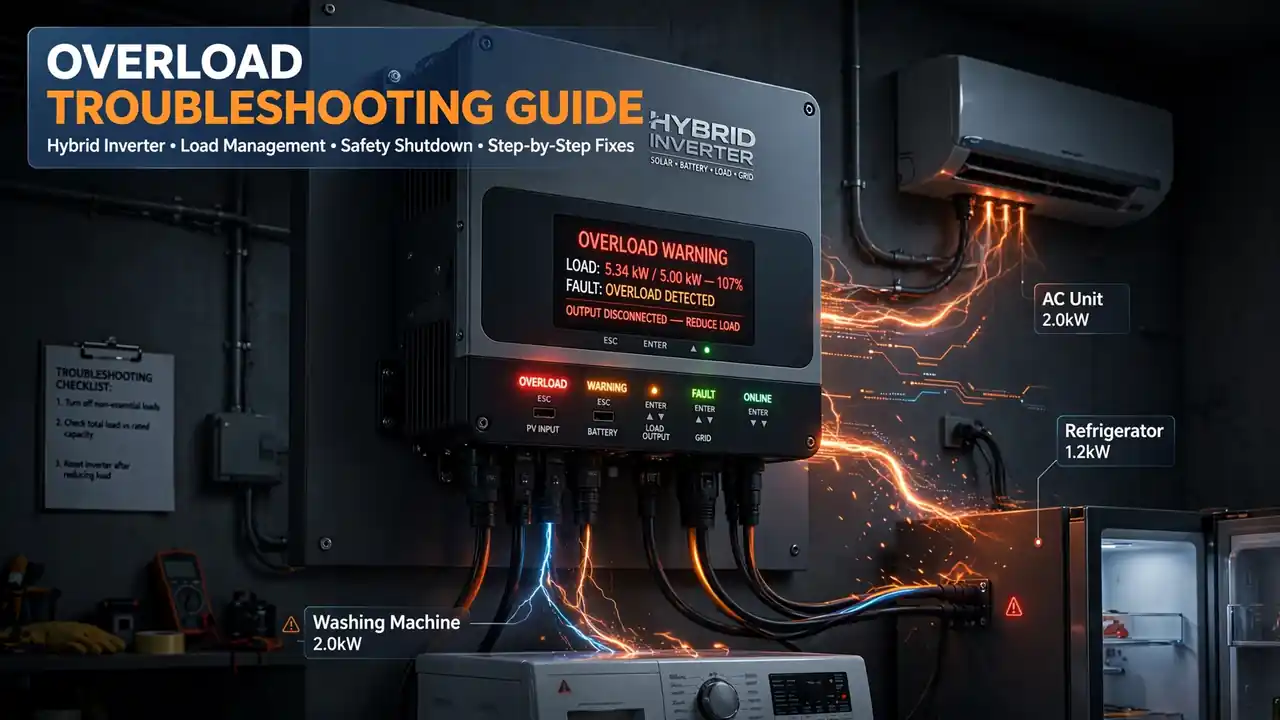
Last summer, my phone would not stop ringing. Homeowners calling in panic. Their hybrid inverters had shut down without warning. Fans stopped. Lights went out. And this happened during the worst heatwave of the year. I work with SunTech Mall, supplying original spare parts to repair shops across Pakistan. Every summer we watch the same pattern repeat. Hybrid inverter overload cases spike as temperatures rise. Perfectly good inverters shut down, and sometimes they never turn back on. The scary part is that most of these failures are preventable. This guide explains why overload happens in summer, how to spot the warning signs, and what you can do to protect your inverter. Read it now, before the next heatwave hits.
Here is what most users get wrong: they think overload only happens when you plug in too many things at once. In reality, summer heat alone can push a normally loaded inverter over the edge.
What You Will Learn in This Guide
- Understand what inverter overload really means
- See why summer makes overload much more likely
- Spot the early warning signs before shutdown
- Avoid the common mistakes that trigger overload
- Protect your inverter with smart load planning
- Know what to do when overload damage happens
Understand What Inverter Overload Really Means
Every inverter has a maximum power limit. A 5kW inverter can handle 5,000 watts of load. When you connect appliances that need more than this limit, the inverter goes into overload. It cannot magically produce extra power. So it protects itself by shutting down.
Think of it like a bridge with a weight limit. A few extra cars might be fine for a while. But keep overloading it, and the structure weakens. Repeated overload damages internal parts even when the inverter restarts each time. The MOSFETs, capacitors, and control board take a beating with every overload event.
Here is what surprises most users. Overload is not just about the total watts. Starting current matters too. Motors in refrigerators, air conditioners, and water pumps draw two to three times their normal power for a few seconds when they start. If two motors start at the same moment, the spike can overload an inverter that seemed fine.
Note: Check your inverter’s rated capacity on its nameplate or manual. Many users do not know their inverter’s actual limit. You cannot manage load if you do not know the limit.
See Why Summer Makes Overload Much More Likely
Summer creates a perfect storm for inverter overload. Three things happen at once. First, you use more power. Fans run all day. Air conditioners run all night. Refrigerators work harder in hot kitchens. Your total load in July can be double your load in January.
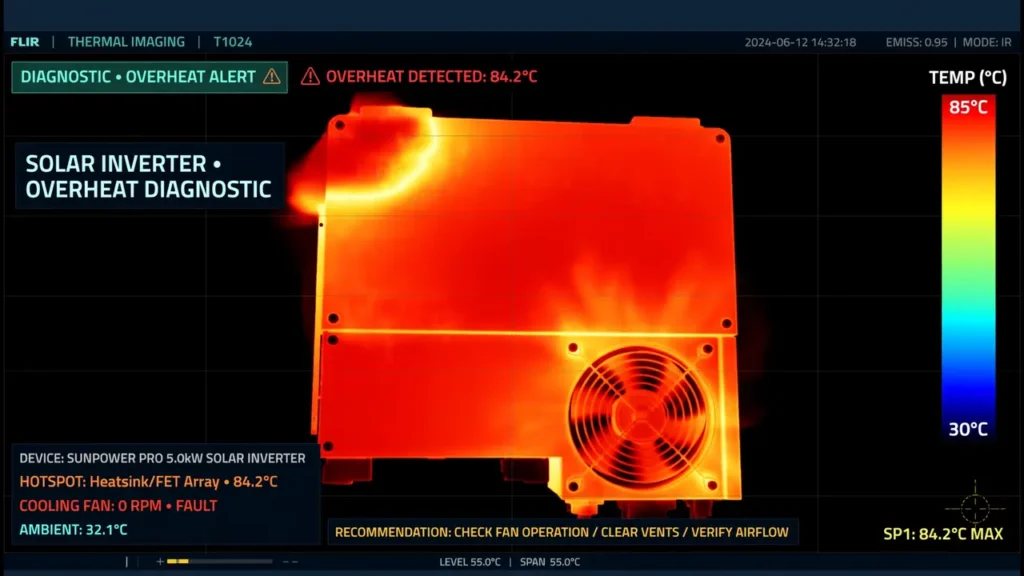
Second, heat reduces what your inverter can handle. Electronic parts lose efficiency as temperature rises. An inverter rated for 5kW in cool weather may struggle with the same load at 45 degrees. Heat shrinks your inverter’s real capacity exactly when you need it most.
Third, heat slows cooling. The inverter’s fan works overtime, but the air it pulls in is already hot. Internal temperature climbs. Protection circuits trigger earlier. This is why an inverter that ran fine in winter starts tripping in summer with the same appliances. Our overheating guide explains the heat problem in full detail.
Spot the Early Warning Signs Before Shutdown
Inverters rarely die without warning. They complain first. Learn to hear the complaints. The most common early sign is repeated restarting. The inverter runs for a while, shuts off, then starts again. Users often ignore this, thinking it is a minor glitch. It is not minor. It is the inverter telling you the load is too much.
Watch for these warning signs. Error codes or warning symbols on the display. Check our error codes guide to decode them. The inverter body feels much hotter than usual. The fan runs at full speed constantly, even at night. Lights dim briefly when heavy appliances start. Backup time gets shorter for no clear reason.
If you notice two or more of these signs, your inverter is struggling. Reduce the load immediately. Do not wait for a full shutdown. Every overload event causes hidden damage inside.
Bonus Tip: Keep a simple list of your appliances with their watt ratings, usually printed on a label at the back. Add them up. If the total is above 80 percent of your inverter’s rating, you are in the danger zone.
Avoid the Common Mistakes That Trigger Overload
Repair technicians see the same mistakes every summer. The biggest one is slow load creep. You install the system for basic needs. Then you add a new air conditioner. Then a bigger refrigerator. Then a water pump. Nobody recalculates the total load. One day the inverter gives up.
Another common mistake is running heavy appliances together. The washing machine, iron, and water pump all running at noon will spike the load far beyond normal. Stagger your heavy appliances. Run the washing machine in the morning and the iron in the evening. This simple habit prevents most overload trips.
Many users also ignore the difference between running watts and starting watts. A 1,500-watt air conditioner might need 4,000 watts for three seconds at startup. If your inverter is already near its limit, that spike will trip it. Always leave headroom for starting surges.
Poor ventilation is another trigger. An inverter in a closed, hot room will overload at a lower load than the same inverter in a cool, open space. Read our installation mistakes guide to check your setup.
Protect Your Inverter With Smart Load Planning
Smart load planning is the best defense against summer overload. Start by knowing your numbers. Write down your inverter’s rated capacity. List every appliance with its wattage. Calculate your typical daytime and nighttime loads separately, because they differ.
Follow the 80 percent rule. Keep your regular load below 80 percent of the inverter’s rating. This leaves room for starting surges and for the capacity loss caused by summer heat. If your inverter is 5kW, plan for 4kW of regular load. The extra margin is your safety net.
Prioritize your appliances. Decide what must run during load shedding and what can wait. Fans, lights, and the refrigerator are essentials. The iron, washing machine, and electric heater can wait for grid power. Some hybrid inverters let you set load priorities in their settings menu. Use this feature if your model has it.
Bonus Tip: Do a summer load audit every year before the hot season starts. Appliances get added silently over the year. A yearly check takes twenty minutes and prevents summer surprises.
Consider your battery bank too. Weak batteries make overload worse because voltage drops under heavy load, forcing the inverter to draw more current. Our battery setup guide shows how to keep your bank healthy.
Keep Your Inverter Cool to Raise Its Real Capacity
Cooling is not just about comfort. It directly affects how much load your inverter can handle. A cool inverter delivers its full rated power. A hot one trips early. In summer, cooling becomes critical.
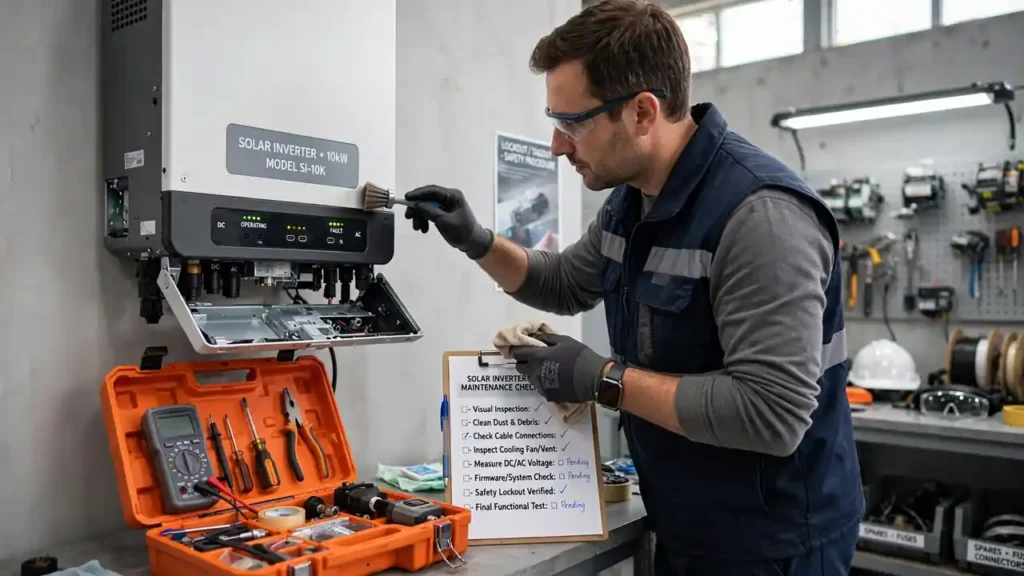
Make sure the installation area has fresh airflow. Clean the vents monthly, because dust blocks cooling exactly when you need it most. Check that the cooling fan spins strongly. Listen for changes in fan noise. A struggling fan in summer is an emergency, not a minor issue.
Never install an inverter where afternoon sun hits it directly. A shaded wall inside a ventilated room is ideal. If relocation is not possible, at least make sure nothing blocks the vents. Boxes, curtains, and clothes piled near the inverter are common in Pakistani homes. Move them away.
For a deeper look at heat management, read our complete maintenance guide. The monthly routine there takes five minutes and prevents most heat-related failures.
Know What to Do When Overload Damage Happens
Sometimes damage happens despite your best efforts. Maybe the previous owner overloaded it for years. Maybe a heatwave pushed it past the limit. When internal parts fail, you need repair, not just resetting.
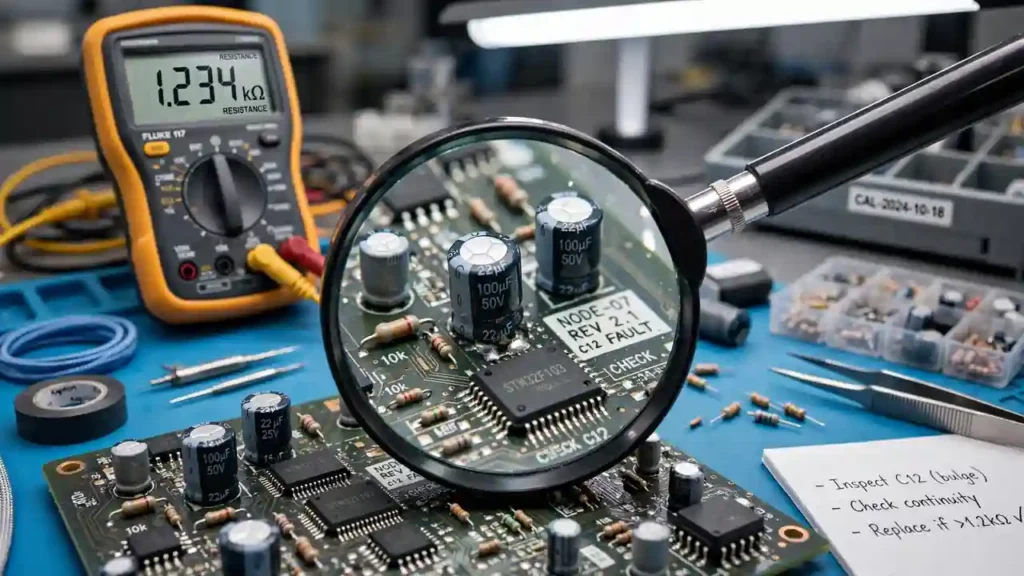
Repeated overload typically damages the power stage first. MOSFETs burn out from the combined stress of high current and high heat. Capacitors dry out faster. In severe cases, the control board itself fails. A technician can diagnose which parts need replacement.
When repair time comes, insist on original spare parts. Cheap copy MOSFETs and capacitors fail quickly under summer stress, and you will be back at the repair shop within months. Learn how to choose the right MOSFET so you understand what goes into your inverter. Quality parts cost more upfront but save money over time.
Note: If your inverter trips on overload with a normal load that it handled fine last year, something has weakened inside. Do not just keep resetting it. Get it checked before a small fault becomes a dead board.
How Overload Affects Homes Differently From Businesses
For home users, overload means losing backup power during the worst moments. The inverter trips right when load shedding hits on a hot afternoon. Children suffer in the heat. Food in the refrigerator starts warming. The family blames the solar system, but the real culprit is unmanaged load.
For shops and offices, the cost is direct money. Every shutdown stops work. Computers restart and unsaved work is lost. Customers walk out of a dark, hot shop. Business owners should be extra strict about load planning because every trip costs them income. A yearly professional load assessment is a smart business expense.
Frequently Asked Questions
Why does my inverter work fine in winter but trip in summer?
Two reasons combine in summer. Your power usage goes up with fans, coolers, and air conditioners. At the same time, heat reduces your inverter’s effective capacity. The same load that was comfortable in winter becomes too much in summer. Reduce load or improve cooling to fix it.
Can overload permanently damage my inverter?
Yes. Each overload event stresses internal components. Occasional trips cause little harm, but repeated overload weakens MOSFETs, capacitors, and the control board over time. Eventually a part fails completely. This is why you should treat every overload trip as a warning, not just an inconvenience.
How do I calculate my total home load?
Check the watt rating on each appliance, usually on a label at the back or bottom. Add up everything that might run at the same time. Remember that motors need two to three times their rated watts for a few seconds at startup. Keep your total below 80 percent of your inverter’s rated capacity for safe operation.
Should I buy a bigger inverter to avoid overload?
A bigger inverter helps only if your load genuinely exceeds your current one’s capacity. But oversizing has downsides too, including higher cost and lower efficiency at small loads. First try proper load management. If your essential load truly needs more power, then upgrading makes sense. Consult a technician before deciding.
Why does my inverter trip when the air conditioner starts?
Air conditioner compressors draw a large starting current, often two to three times their running watts. This sudden spike can overload the inverter for a few seconds. Solutions include reducing other loads before starting the AC, using a soft starter device, or making sure your inverter has enough headroom above your normal load.
Is it safe to keep resetting the inverter after overload trips?
Resetting is safe as an emergency measure, but it is not a solution. Every trip signals that something is wrong with your load or cooling. If trips happen often, find and fix the cause. Repeated resetting while ignoring the root problem leads to expensive internal damage.
Do hybrid inverters overload more than simple UPS inverters?
Hybrid inverters handle more complex jobs, managing solar, battery, and grid power together. This complexity means more things can go wrong, but a properly sized hybrid with good load management is very reliable. The key is the same for all types: know your load, keep it within limits, and keep the unit cool. Browse common spare parts to understand what wears out.
Final Thoughts
Summer in Pakistan is brutal. Your inverter feels it just like you do. The difference is that you can step into the shade, but your inverter cannot. It sits there in the heat, handling every watt you throw at it, asking only for reasonable load and decent airflow.
Overload is not bad luck. It is math. Too much load plus too much heat equals shutdown. But the same math works in your favor. Manage the load, beat the heat, and your inverter will serve you faithfully through the hottest months.
Start today. List your appliances. Do the 80 percent calculation. Clean those vents. And if you ever need genuine spare parts for repair, remember that SunTech Mall is Pakistan’s trusted source for original solar inverter and UPS components. We supply repair shops nationwide, with fast delivery to your doorstep. Visit our shop or explore the spare parts collection to keep your system running strong all summer long.