


Introduces Powerful Sungrow 4.8 MW Inverter for a Brighter Future
Sungrow’s SG4800UD-MV-US inverter and PowerTitan 3.0 battery are game-changers for North America’s solar industry. The 4.8 MW inverter blends central and string inverter benefits, offering flexibility and reduced costs, while the PowerTitan…

At SunTech Mall, we work daily with the inverters people actually own — 1kW to 10kW hybrids running Pakistani homes and shops. But sometimes the global solar industry produces something worth understanding even if you will never buy it. Sungrow’s 4.8 MW modular inverter is one of those things.
We follow industry developments because today’s utility-scale technology becomes tomorrow’s mainstream features. The monitoring, modularity, and grid support in giant solar plants today will shape the hybrids on Pakistani rooftops tomorrow.
The confusion: readers see “4.8 MW inverter” headlines and wonder if it matters to them — or assume they can buy one for home. A 4.8 MW machine is roughly a thousand times more powerful than a typical home inverter. Different world entirely.
This article is industry insight, not a product listing — SunTech Mall does not sell megawatt-class utility equipment. We will explain in simple language what utility-scale inverters are, who Sungrow is, what the new 4.8 MW modular inverter does, and why Pakistan’s solar future makes it worth your attention.
Let’s start with the scale itself — because “megawatt” is where most people’s intuition breaks.
Every spec below comes from Sungrow’s official product pages and reputable industry reporting (pv magazine covered the September 2025 launch at RE+ Las Vegas). Unconfirmed details are labeled as such — we do not invent specs.
- Grasp What “Utility-Scale” Really Means
- Meet Sungrow, the Global Inverter Giant
- Understand Central vs String Inverters Simply
- See What Sungrow’s 4.8 MW Inverter Actually Does
- Discover Why This Matters for Pakistan
- Learn What It Means for You as a Buyer or Technician
- Frequently Asked Questions
Grasp What “Utility-Scale” Really Means
A typical Pakistani home runs on a 3kW to 10kW hybrid inverter — wall-mounted, connected to a dozen or two panels, powering one household.
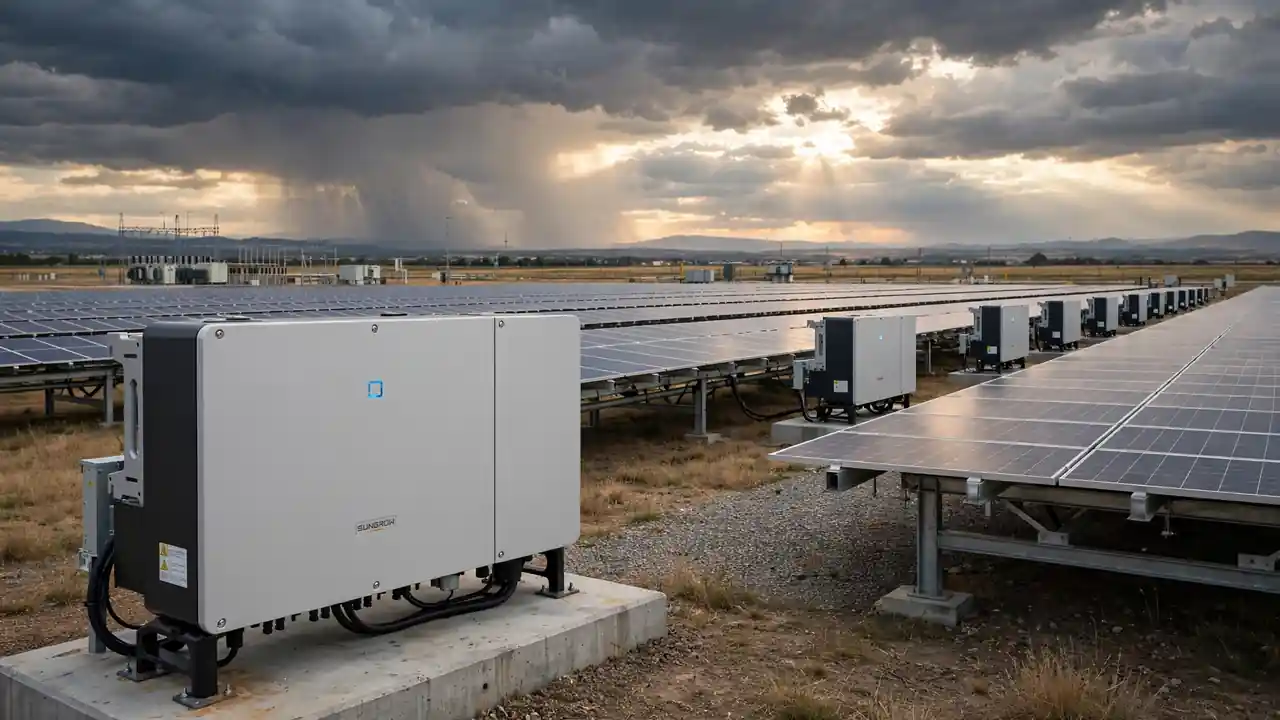
A utility-scale inverter starts around 500kW and climbs into the megawatts (1 MW = 1,000 kW). Sungrow’s 4.8 MW unit handles roughly 500 to 1,000 homes’ worth of solar in one machine. It arrives on a truck, not in a box.
These giants live in solar power plants — vast panel fields feeding the national grid directly. Their job is not backing up one house; it is generating at the scale of a small power station.
The engineering differs too. A home inverter serves one family’s loads; a utility inverter keeps voltage and frequency steady across a region, survives transmission faults, and squeezes every fraction of efficiency from gigawatt-hours. A 0.1% gain at utility scale dwarfs anything at home scale.
That is why they look nothing like home inverters: they come as turnkey stations — inverter, transformer, and switchgear pre-installed in a container-sized skid, dropped on a concrete pad, ready to connect.
So when you read “4.8 MW inverter,” think power plant, not rooftop. But do not stop reading — because what happens at power-plant scale has a way of flowing downhill to the equipment you actually buy.
Meet Sungrow, the Global Inverter Giant
Sungrow, founded in China in 1997, has grown into one of the world’s largest solar inverter manufacturers — consistently ranked among the top global PV inverter suppliers by shipment volume by research firms such as Wood Mackenzie.
Its range spans residential string inverters of a few kilowatts to multi-megawatt central and modular utility inverters, plus large battery storage systems. Few manufacturers cover that whole span.
Sungrow equipment runs in plants across Asia, Europe, the Americas, the Middle East, and Africa — a familiar sight in the utility industry, which is why its launches make global solar press.
Why should Pakistani readers care? Our market runs largely on imported inverter technology, and global leaders hint at where mainstream products head: higher voltages, smarter monitoring, modular designs, stronger grid support. Sungrow’s moves read like an early draft of your next inverter’s feature list.
With that context, let’s look at the machine itself — and the clever design idea behind it.
Understand Central vs String Inverters Simply
To appreciate Sungrow’s 4.8 MW design, you need to know the two classic approaches to large solar plants — and the trade-off between them.
Central inverters are the traditional choice: one enormous unit handles a huge panel block. Efficient and cost-effective per watt — but a single point of failure: when it goes down for maintenance, a large chunk of the plant stops producing.
String inverters are the opposite: many smaller units, each handling a panel “string.” One failure barely matters and maintenance is easier — but managing hundreds of units adds complexity and cost at very large scales.
For years designers chose one philosophy. Sungrow’s modular concept takes the best of both: a large block built from smaller identical modules — central-scale power with string-like resilience. One module in service, the others carry on.
Think team of horses versus one elephant: the elephant is strong but a stumble stops everything; the team keeps pulling when one horse rests. Sungrow’s modular inverter is the team approach, engineered for megawatts.
This “modular” idea is the key to the whole product. Now let’s see how Sungrow actually built it.
See What Sungrow’s 4.8 MW Inverter Actually Does
In September 2025, Sungrow unveiled the SG4800UD-MV modular inverter at the RE+ trade show in Las Vegas, aimed at the North American utility market. Here are the verified facts about it.
Each inverter unit delivers 800 kW; up to six operate in parallel to form a 4.8 MW block. This is Sungrow’s “1+X” modular concept: combine units like building blocks to match plant size, with finer granularity than previous generations.
It is designed for 1500V DC systems — the modern utility standard. Higher voltage means lower current for the same power: thinner cables, lower losses.
The split modular structure allows a single module replacement in under one hour, per Sungrow — the difference between a minor service visit and a day of lost generation.
It supports grid-forming operation: the inverter helps stabilize the grid — supporting voltage and frequency — rather than just feeding power in. As solar grows worldwide, this capability is becoming essential, and regulators are starting to require it.
It is built for harsh conditions: full power at ambient temperatures up to 45°C, with a sealed NEMA 4X enclosure against weather, dust, and water. Anyone who has seen a Pakistani summer knows why heat tolerance matters.
It watches itself: internal fault diagnosis with real-time monitoring, self-cleaning air ducts, DC arc-fault protection, and 24-hour insulation monitoring. At utility scale, nobody walks the plant daily — equipment must report its own problems.
To be clear about what this product is: the SG4800UD-MV as launched is a North America–focused utility product. It is not sold by SunTech Mall, and it is not something a homeowner or shop owner would buy. We cover it because it shows where inverter engineering is going — and that direction affects everyone in solar.
Discover Why This Matters for Pakistan
Pakistan may not be buying 4.8 MW inverter blocks tomorrow, but the trends behind this product are already reshaping the Pakistani solar market.
Large solar projects are growing: factories cutting energy costs, housing societies exploring bigger installations, and ongoing discussion of grid-scale renewable capacity. Every such project needs serious inverter technology, and global products like Sungrow’s define what “serious” looks like.
Modularity is coming downstream — serviceable modules instead of monolithic boxes are reaching smaller commercial inverters. For Pakistani technicians, modular thinking means faster repairs and less downtime.
Grid-support features are the future everywhere. As solar penetration grows, operators care what inverters do for the grid, not just what they take from the sun. Grid-forming in products like the SG4800UD-MV previews requirements that will eventually reach national grid codes — including Pakistan’s.
Heat-tolerant design is directly relevant: full power at 45°C ambient means engineering for climates like ours. When evaluating any inverter for Pakistan, heat derating is one of the most important specs to check.
Monitoring and self-diagnosis raise expectations: as large plants normalize intelligent fault location, smaller-system buyers expect similar visibility. The app monitoring on today’s hybrids descends from utility-scale systems.
You do not need to buy a megawatt to benefit from the megawatt world. Its engineering lessons — build modular, respect heat, monitor everything, support the grid — are already filtering into the products on Pakistani shelves.
Learn What It Means for You as a Buyer or Technician
So what do you actually do with this knowledge? Quite a lot, whether you buy, install, or repair solar equipment.
Buyer: judge inverters by what the industry converges on — honest heat ratings, good monitoring, serviceable design, real engineering depth. A brand that builds 4.8 MW stations has solved problems your 5kW hybrid will never face.
Installer: watch the commercial and industrial segment. As larger Pakistani projects grow, familiarity with modular concepts and grid-compliance requirements becomes a professional edge.
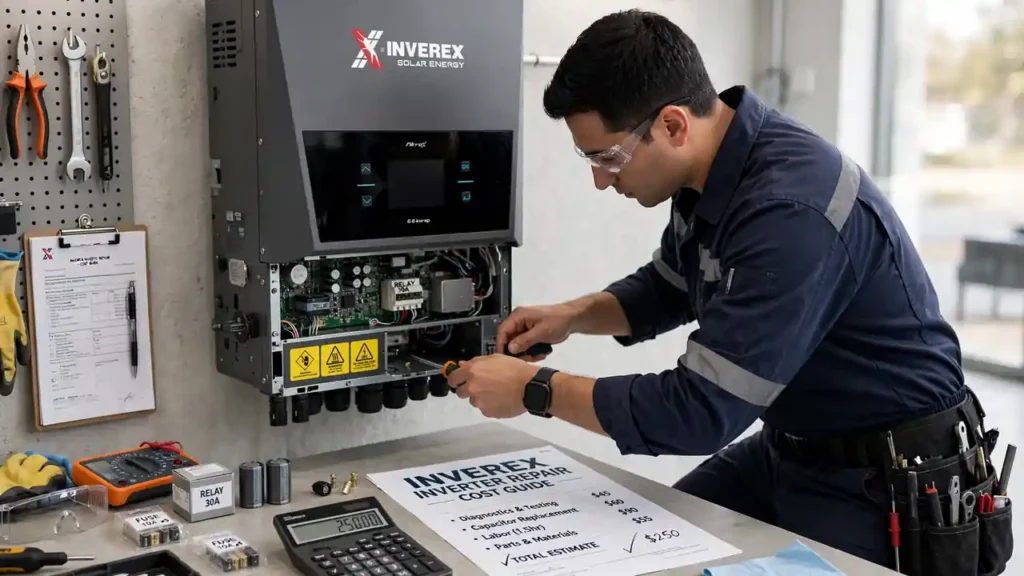
Repair technician: fundamentals never change. A 5kW hybrid and a 4.8 MW block fail at the same weak points — semiconductors, capacitors, cooling, control electronics. Master them with our guides on power MOSFETs, bridge rectifiers, and capacitors, and you can service whatever comes.
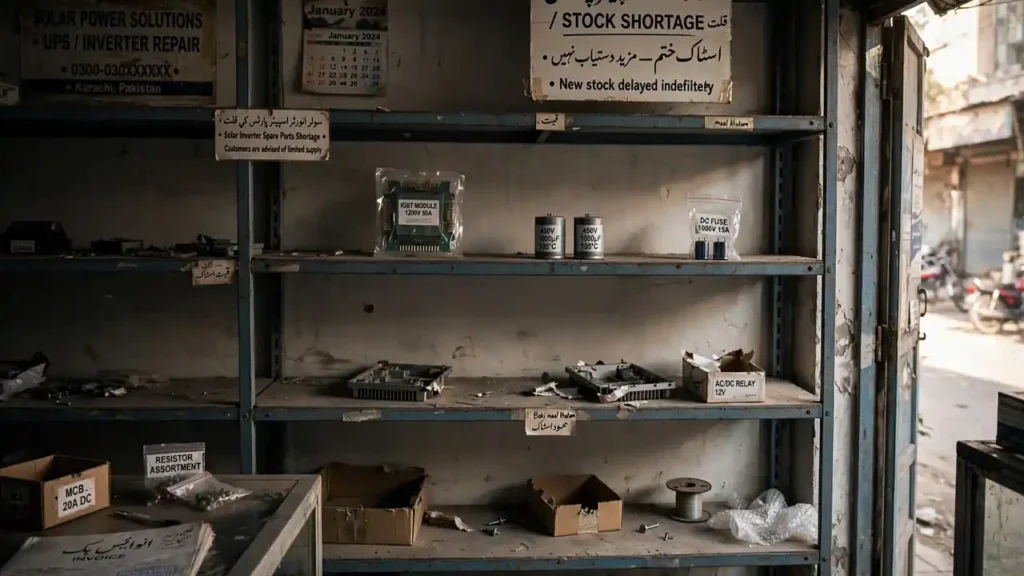
Repair shop owner: stock genuine parts for the inverters people actually own. The megawatt world fascinates, but revenue comes from home and shop hybrids — our genuine inverter parts guide tells you what to shelve.
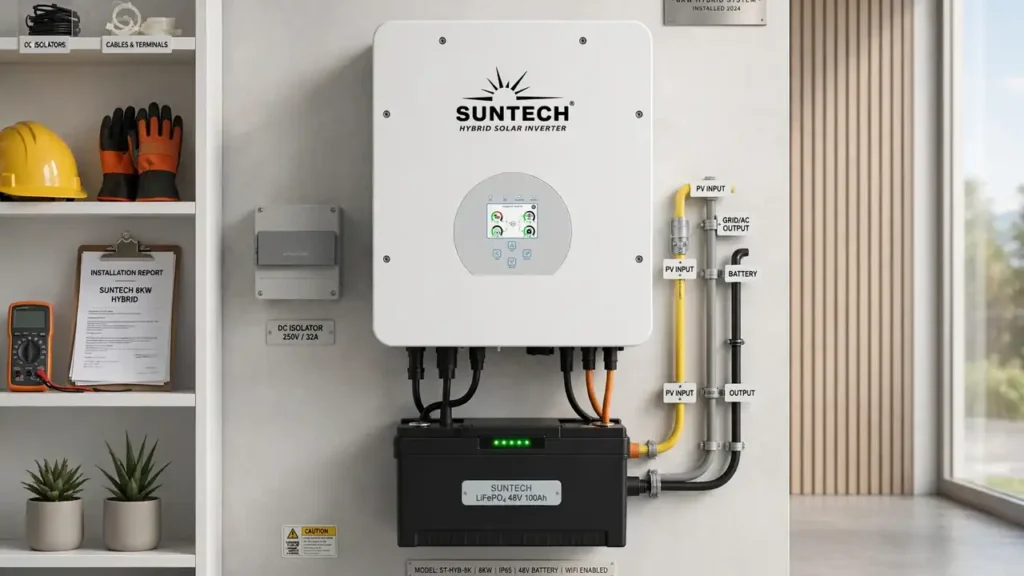
And when those hybrid systems need batteries, make an informed choice with our lithium vs lead-acid comparison — because the storage behind the inverter matters as much as the inverter itself. Browse all of it at SunTech Mall.
Note: This article is industry education, not a sales page. SunTech Mall supplies components, batteries, and related solar equipment for residential and commercial systems — we do not sell megawatt-class utility inverters. We publish explainers like this so our customers understand the industry they are part of.
Frequently Asked Questions
Can I buy the Sungrow 4.8 MW inverter for my home or business?
No — and you would not want to. It is utility-scale equipment designed for solar power plants, launched for the North American market. A home needs a 3–10kW hybrid inverter, which is a completely different product class. SunTech Mall does not sell megawatt-class inverters.
What is a turnkey station?
A pre-assembled, container-sized unit with inverter, transformer, and switchgear — delivered ready to drop on a concrete pad. The builder just connects cables and switches on.
What is the difference between central and string inverters?
Central: one large unit per panel block — efficient but a single point of failure. String: many smaller units — more resilient but complex at huge scales. Modular designs combine both strengths.
What does “grid-forming” mean?
An inverter that actively stabilizes the grid — supporting voltage and frequency — instead of merely injecting power. Increasingly important as solar grows.
Why do utility inverters use 1500V DC?
Higher voltage means lower current for the same power: thinner cables, lower losses, lower cost. The standard for new utility plants; residential systems use much lower voltages.
Does Sungrow sell inverters in Pakistan?
Sungrow is global, but specific model availability in Pakistan depends on local distributors. This article is industry news — for equipment you can actually buy, check current listings on SunTech Mall.
Will utility-scale trends affect my home solar system?
Indirectly, yes. Utility-pioneered features — monitoring, modular serviceable designs, heat tolerance, grid support — gradually reach residential and commercial products.
Final Thoughts
You started with a 4.8 MW headline and wondered why it mattered. Now you understand utility scale, can explain central versus string inverters, know what Sungrow actually announced — verified facts only — and see how distant engineering trends reach Pakistani rooftops.
That is the mark of someone who truly understands their industry, not just their own rooftop. Whether you buy, install, or repair solar equipment, this bigger picture makes you sharper at the smaller decisions.
And for those smaller, real-world decisions — the hybrid inverter on your wall, the batteries behind it, the components inside it — SunTech Mall is here with genuine parts, honest guidance, and fair prices delivered across Pakistan.
Keep exploring: our battery section for storage, the home appliances section for related categories, and our repair guides whenever your bench needs backup. The future of solar is bright — and now you can see a little further into it.
2 Comments
[…] Read More: Introduces Powerful Sungrow 4.8 MW Inverter for a Brighter Future […]
[…] Read More: Introduces Powerful Sungrow 4.8 MW Inverter for a Brighter Future […]