
100 Ohm 1W SMD Resistor Original Parts Store in Mardan
Find high-quality 100 Ohm 1W SMD resistors at our Original Parts Store in Mardan. Explore genuine electronic components, expert guides, and local buying options. As trusted SMD resistor suppliers in Pakistan, we…

At SunTech Mall, we pack resistor orders every single day — for repair shops in Lahore, inverter technicians in Peshawar, and students building their first circuits in Mardan. And one small part causes more confusion than almost any other: the 100 ohm 1W SMD resistor. We care about it because we have seen what happens when someone picks the wrong one. A board works fine for a week, then dies. An LED panel flickers and burns. A customer comes back angry, and the technician loses money on a repair that should have been simple.
Here is the fear every beginner should take seriously: a fake “1W” resistor, or the right value in the wrong package, will overheat, drift out of spec, and fail — sometimes taking nearby parts down with it. The good news? None of this is hard to avoid. By the end of this guide, you will read any SMD resistor marking in seconds, choose the correct package for a true 1-watt rating, calculate current with Ohm’s law, and solder the part without lifting pads. Let us begin.
If “SMD markings” and “power derating” sound too technical, relax. This guide comes down to reading three or four printed digits and doing one simple division. If you can read a price tag, you can read a resistor. Each section below ends with something you can use on your very next repair.
Table of Contents
- Understand what a 100Ω 1W SMD resistor really is
- Read any 100-ohm marking in under 30 seconds
- Pick the right package for a true 1W rating
- Know exactly where this resistor gets used
- Calculate current and power with Ohm’s law
- Solder SMD resistors without lifting pads
- Apply derating so your resistor lives long
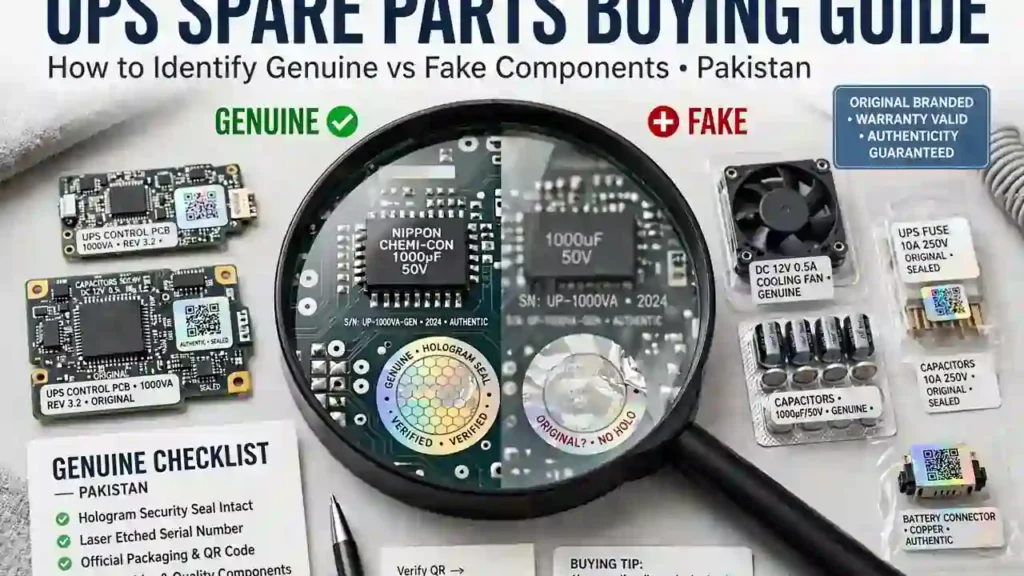
- Spot fake “1W” resistors before they burn your board
- Buy genuine 100Ω resistors in Pakistan
- Frequently Asked Questions
Understand What a 100Ω 1W SMD Resistor Really Is
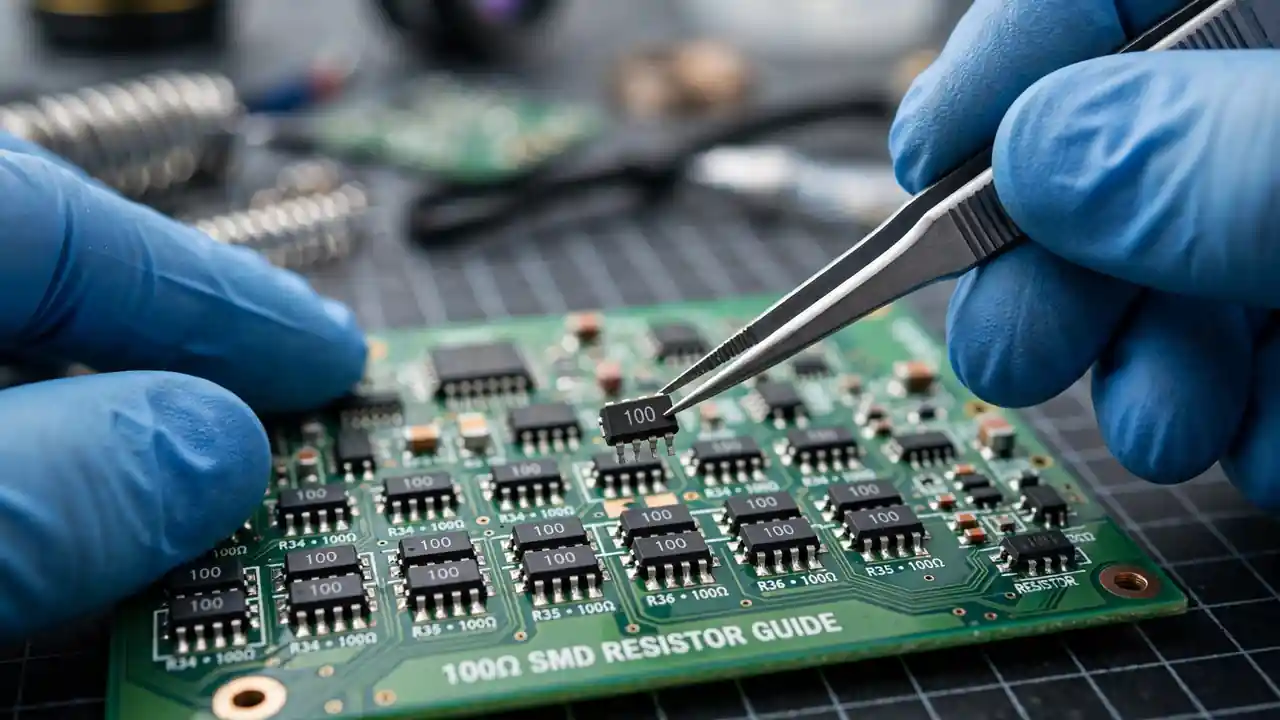
Open any modern circuit board and you will see tiny black rectangles with silver ends. Those are SMD — surface-mount device — resistors. The 100 ohm 1W SMD resistor is one of the most common values in electronics. It resists current flow by exactly 100 ohms, and it can safely turn up to 1 watt of electrical energy into heat.
Why does “1W” matter? Power is heat. A standard small SMD resistor handles only 0.125W. This one handles eight times that, which makes it right for circuits where real current flows — LED strings, driver stages, and interface lines — not just tiny signals.
On a datasheet you will see: resistance 100Ω, power 1W (rated at 70°C ambient), tolerance ±5% (marked “101”) or ±1% (marked “1000”), and a package big enough to dump the heat. Tolerance tells you how far the real value can wander: a 5% part measures 95–105Ω, a 1% part stays at 99–101Ω. Now let us decode the numbers printed on the body — a skill you will use forever.
Read Any 100-Ohm Marking in Under 30 Seconds
Manufacturers print a code instead of “100 ohms” because the part is the size of a grain of rice. There are three systems, and you will meet all of them in Pakistani markets.
3-digit code (5% resistors): the first two digits are the value, the last digit adds zeros. 101 means 10 plus one zero = 100Ω. A part marked 102 is 1000Ω, and 100 is just 10Ω. This is the most common marking on 5% parts.
4-digit code (1% and 2% resistors): three value digits plus the multiplier. A 1% 100-ohm resistor is marked 1000 — 100 followed by zero zeros, still 100Ω. Do not let the extra zero confuse you.
EIA-96 code (tiny precision parts): two digits plus a letter. A 1% 100-ohm resistor here is 01A, where “01” means 100 and “A” means multiply by 1. Look it up in any free online table.
You may also see a tolerance letter: F means ±1%, J means ±5%. That is the whole system. But reading the value is only half the job — the package size decides whether “1W” is real.
Bonus Tip: If the marking is rubbed off, do not guess. Measure the resistor out of circuit with a multimeter. A 100Ω part should read close to 100Ω — a wild reading means the part is damaged or was never 100Ω.
Pick the Right Package for a True 1W Rating
Here is the honest truth most sellers will not tell you: package size and power rating are locked together by physics. A bigger ceramic body dumps more heat. Standard ratings are roughly 0805 = 0.125W, 1206 = 0.25W, 2010 = 0.75W, and 2512 = 1W. The 2512 measures about 6.3 × 3.2 mm — clearly visible without a magnifier.
So a genuine 1W SMD resistor almost always comes in a 2512 package. If a seller hands you a tiny 0805 or a standard 1206 labeled “1W,” be suspicious — a standard 1206 is a quarter-watt part, and a full watt will cook it. When you order, check the marking (101 or 1000) and the package.
For the precision version in this exact package, see our guide to the 100 ohm 1W 2512 1% SMD resistor, which covers tolerance, E24/E96 series, and heat dissipation in depth. An undersized resistor does not fail quietly — it can desolder itself, scorch the PCB, and damage neighboring parts.
Know Exactly Where This Resistor Gets Used
The classic job is LED current limiting. LEDs do not limit their own current — without a resistor they pull more and more until they burn. A 100Ω resistor in series sets a safe, predictable current, and the 1W rating handles LED strings and panels that draw real current.
You will also find 100Ω on microcontroller interface lines, protecting MCU pins from shorts and damping signal ringing. In voltage dividers, two 100Ω resistors split a voltage cleanly in half. In pull-up networks, they hold a line at a defined level when nothing drives it.
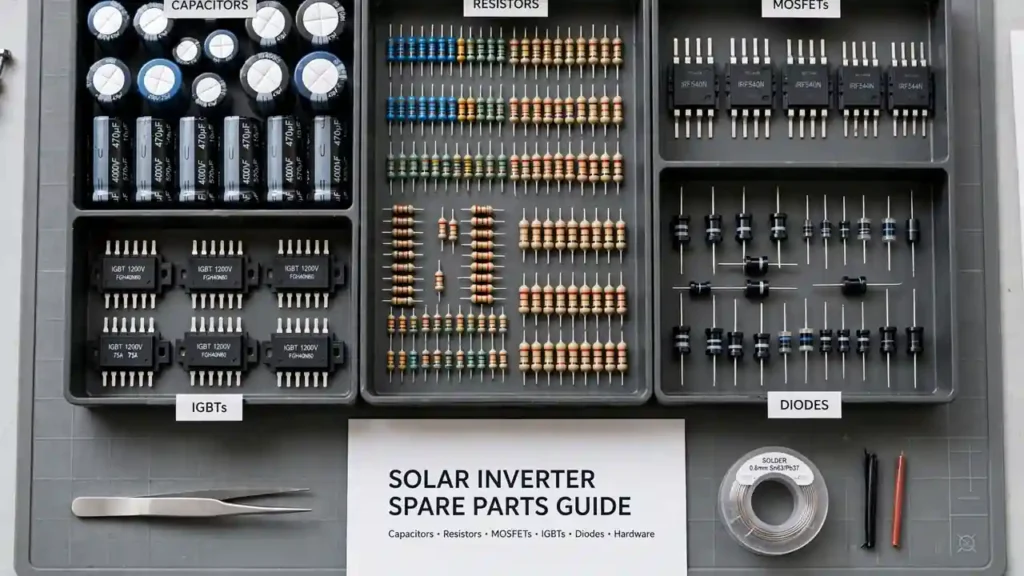
Repair technicians meet this part constantly. Blown driver stages in solar inverters with burnt MOSFETs often take nearby gate resistors with them — and 100Ω is a common gate-resistor value. It also appears in power-supply feedback networks and audio stages. If you repair home appliances or LED drivers, keep a strip in your kit. Knowing where it goes is useful; knowing how much current it carries is what keeps it alive.
Calculate Current and Power With Ohm’s Law
Ohm’s law is the only math you need: I = V ÷ R, and power is P = V² ÷ R. Two real examples:
LED circuit: 5V supply, red LED drops 2V, so the resistor sees 3V. Current = 3 ÷ 100 = 30mA — healthy. Power = 0.03² × 100 = 0.09W, far below 1W. The resistor stays cool.
The dangerous one: 12V directly across 100Ω gives current = 12 ÷ 100 = 0.12A, and power = 144 ÷ 100 = 1.44W — 44% over the rating. The resistor overheats, drifts, and eventually fails, possibly scorching the board. This is the most common beginner mistake: right value, wrong power.
Build the habit: before you solder, do the ten-second math. If the answer is anywhere near the rating, go bigger.
Note: For current-sensing jobs you need a much smaller resistance — a 100Ω part is the wrong tool. See our guide to the 0.1 ohm 5W wirewound resistor for how shunt resistors work.
Solder SMD Resistors Without Lifting Pads
A 2512 is one of the friendliest SMD parts to hand-solder — big enough for tweezers, with visible pads. You need an iron with a small chisel tip, thin solder, flux, and tweezers. Set the iron around 320°C; hotter just lifts pads.
Tin one pad with a small blob. Grip the resistor with tweezers, heat the blob, and slide the part in so one end sits in the molten solder. Hold still for two seconds — now it is anchored. Solder the other end: touch the iron to pad and end cap together, feed in a little solder, pull away. Keep each joint under three seconds.
Use flux generously so solder flows instead of balling up, and never press down hard while solder is molten — that tears pads off. A good joint looks like a small shiny slope from pad to end cap. Clean joints and correct parts installed — now the rule that keeps them alive for years.
Apply Derating So Your Resistor Lives Long
A 1W resistor can survive 1W, but it will run hot, drift, and age fast. Professionals follow one rule: never exceed 50–60% of the rating in continuous use. For a 1W part, design for 0.5–0.6W maximum. It stays cooler, holds its value, and lasts years.
Heat also comes from the environment. Datasheets rate power at 70°C ambient; above that, allowed power drops along a derating curve. Inside a closed inverter cabinet in a Pakistani summer, ambient can pass 60°C, and that 1W rating shrinks fast. Wide copper traces help — they act as a heatsink — so a resistor on fat traces runs cooler than on thin ones.
When you replace a burnt resistor, check whether surrounding pads and traces are heat-damaged too. Size with margin, respect the heat, and the resistor becomes the most reliable part on the board.
Spot Fake “1W” Resistors Before They Burn Your Board
Technicians across Pakistan tell us the same story: a reel of suspiciously cheap “1W” resistors, then boards failing within weeks. A resistor is easy to fake — print any marking on any body. Protect yourself with four checks.
Measure before soldering. A genuine 100Ω 5% part reads 95–105Ω. A wild reading means damage or fraud. Check package vs. rating — a true 1W is a 2512, not an 0805. Inspect the print — genuine markings are crisp and centered; fakes look blurry or rub off. Ask for the series and datasheet — a real supplier names the manufacturer series; a mystery seller cannot.
This matters beyond one part. A drifting resistor in a MOSFET gate-drive circuit can overheat the MOSFET itself, turning a two-rupee part into a thousand-rupee repair. Buy genuine from someone who tests what they sell.
Buy Genuine 100Ω Resistors in Pakistan
In Mardan, Peshawar, or anywhere in Pakistan, you can hunt local markets and hope — or order from a supplier that verifies every batch. At SunTech Mall, every resistor is sourced from trusted manufacturers and checked for value, marking, and package before shipping.
We serve repair shops that cannot afford comebacks, students building first projects, and businesses assembling products. Need companion parts? Our ceramic disc capacitors and electrolytic capacitors come from the same verified stock. Prices vary by brand and quantity — check the current price on SunTech Mall. Order genuine parts from SunTech Mall and stop gambling on mystery components.
Frequently Asked Questions
What does the “101” marking mean?
3-digit code: first two digits (10) are the value, the last digit (1) adds one zero. So 101 = 100Ω. Standard on 5% SMD resistors.
Can I use a 1206 instead of a 2512 for 1W?
No — a standard 1206 is rated 0.25W. Some special high-power 1206 series exist, but you must confirm on the datasheet. When in doubt, use the 2512.
What is the difference between 1% and 5%?
A 5% part measures 95–105Ω; a 1% part stays at 99–101Ω and is marked “1000”. Use 1% where accuracy matters — dividers, measurement, precision current limiting.
How much current can a 100Ω 1W resistor handle?
I = √(P÷R) = √(1÷100) = 0.1A (100mA) at full rating. Stay under ~70mA continuous for reliability.
Why did my 100Ω resistor burn?
Almost always excess power — e.g., 12V across 100Ω makes 1.44W, killing a 1W part. Other causes: a counterfeit with a fake rating, or a too-small package sold as “1W”.
Are SMD resistors polarized?
No. Solder them in any orientation — an upside-down marking is purely cosmetic.
Can I replace a through-hole 100Ω 1W resistor with SMD?
Electrically identical. You just need SMD pads or an adapter board, and pads wide enough to dump the heat.
Final Thoughts
You started unsure what those tiny printed numbers meant. Now you read any 100-ohm marking in seconds, you know a true 1W lives in a 2512 package, you run the Ohm’s law math before soldering, and you can spot a fake across the workbench. That is technician knowledge, and you earned it in one sitting.
Congratulations — next time a scorched resistor lands on your bench, you will not guess. You will measure, calculate, pick the right package, and fix it properly. That is the kind of repair that stays fixed and brings customers back.
Stock up on the genuine parts that make those repairs possible. Order genuine 100Ω resistors from SunTech Mall — verified value, correct package, delivered anywhere in Pakistan.