



UF5M Diode Explained: What This Small 5A, 1000V Part Does in Your Solar Inverter
Solar inverters play a crucial role in converting direct current (DC) from solar panels into alternating current (AC) for household or commercial use. To ensure efficiency, UF5M 5A 1000V ultra-fast diodes are…


Your quick guide to the UF5M diode: what it is, its real specs, where it works in a solar inverter, and how to test it before you blame the big parts.
Key takeaways: The UF5M is a 5-amp, 1000-volt ultra-fast diode in a surface-mount SMC package. Its job is to switch off very fast, in 75 nanoseconds at most, so it suits high-frequency inverter power supplies. A slow diode in its place can overheat and kill nearby MOSFETs. Test it out of circuit, and never replace it with a standard rectifier like the 1N4007.
In this guide: what the name means · the real specs · where it works · how to test it · how to spot a fake · how to pick a replacement · FAQs.
What Does the Name UF5M Actually Mean?
Think of the name as a short code, not a mystery.
- UF means ultra-fast. This diode stops conducting very fast when current reverses. That speed matters in circuits that switch tens of thousands of times per second.
- 5 means 5 amps. It can carry 5 amps of average forward current, when it is mounted well on a board with enough copper to shed heat.
- M means 1000 volts. M is the top voltage code in this family. It can block up to 1000 volts in reverse.
The family runs from low to high voltage like this:
| Code | Max reverse voltage |
|---|---|
| UF5A | 50 V |
| UF5B | 100 V |
| UF5D | 200 V |
| UF5G | 400 V |
| UF5J | 600 V |
| UF5K | 800 V |
| UF5M | 1000 V |
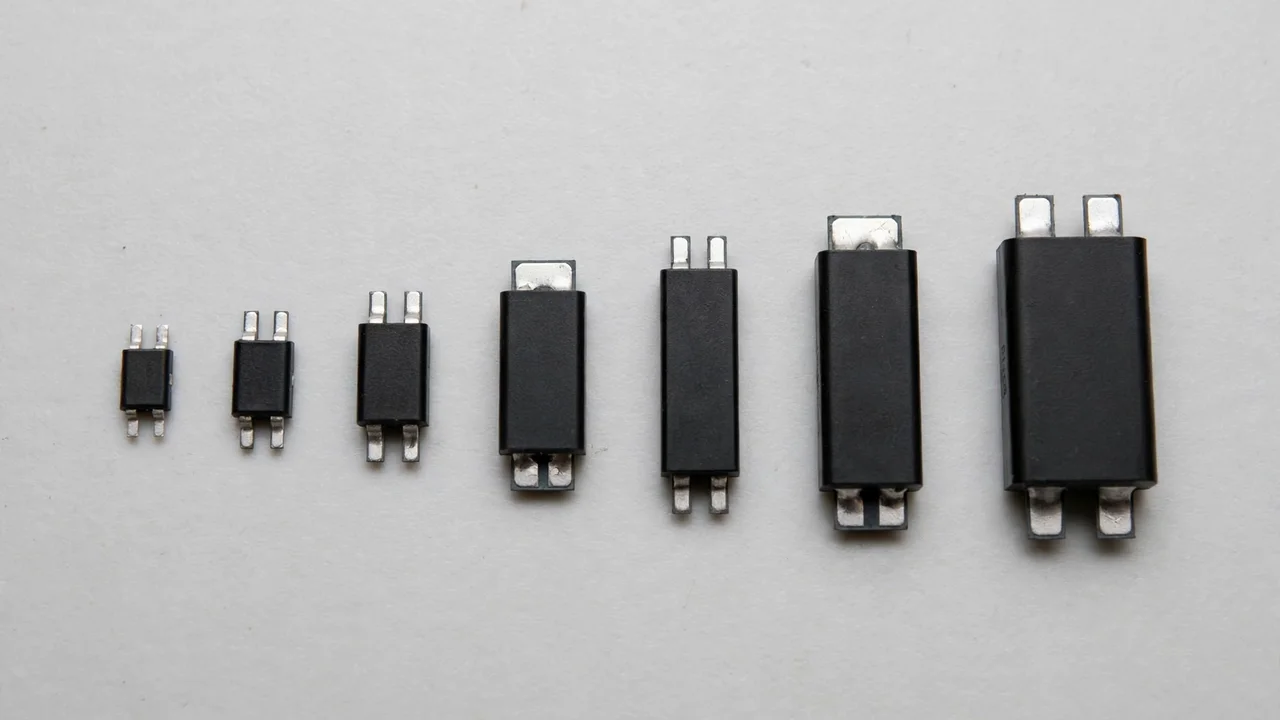
The package is called DO-214AB, also known as SMC. It is a chunky surface-mount package. Its size helps it handle 5 amps and real heat.
What Are the Real UF5M Specs?
These numbers come from published UF5A–UF5M datasheets, measured at 25 °C unless stated. Check the datasheet row for your exact part, not just the family headline.
| Spec | UF5M value |
|---|---|
| Max repetitive reverse voltage | 1000 V |
| Max RMS reverse voltage | 700 V |
| Max DC blocking voltage | 1000 V |
| Max average forward current | 5.0 A |
| Peak surge current (8.3 ms half-sine) | 150 A |
| Max forward voltage at 5 A | 1.7 V |
| Max reverse recovery time | 75 ns |
| Max reverse leakage at 25 °C | 10 µA |
| Max reverse leakage at 100 °C | 300 µA |
| Junction temperature range | −65 °C to +150 °C |
Two numbers deserve your full attention. First, 75 nanoseconds is the speed that makes this diode “ultra-fast”. A standard rectifier can take over 1000 nanoseconds to switch off. Second, at 5 amps, a 1.7-volt drop means over 8 watts of heat. That is why board copper and airflow matter so much.
Source: UF5A–UF5M datasheet (PDF)
Where Does the UF5M Work in a Solar Inverter?
You will find fast diodes like this in the small, high-frequency power sections of an inverter, not in the slow mains output stage.
- Auxiliary power supply outputs. The small standby supply powers the control board. It switches fast, so its output diodes must be fast too.
- Freewheeling and clamp circuits. Coils and transformer windings make voltage spikes when current stops. A fast diode clamps those spikes and protects MOSFETs and chips. See our guide on how to choose the right power MOSFET.
- Snubber networks. A resistor, capacitor, and diode snubber calms ringing across a switching device. The diode must be fast enough to catch very short spikes.
- Gate-driver and charge-pump circuits. These move charge fast between capacitors, so a slow diode would lag and waste energy.
If a repair keeps eating MOSFETs, look here first. A slow or fake diode in one of these spots can be the real cause. Our IRFB4115 MOSFET guide covers the switching parts these diodes protect.
How Do You Test a UF5M With a Multimeter?
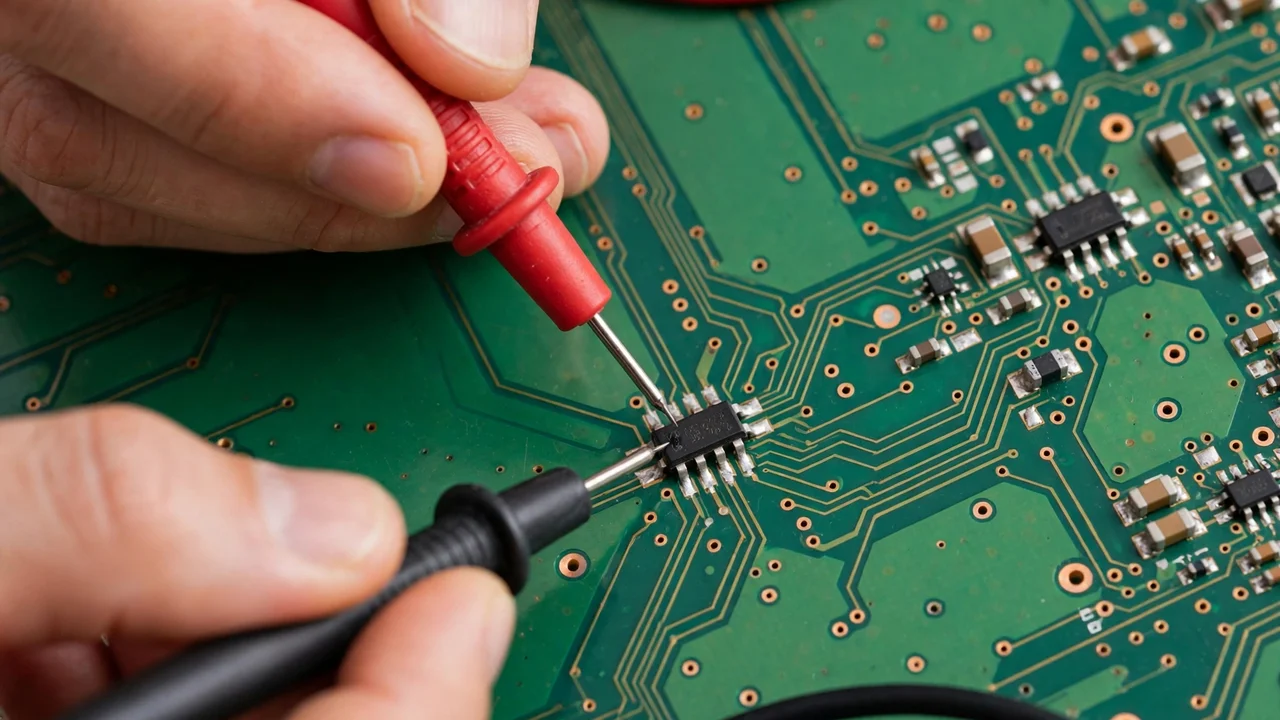
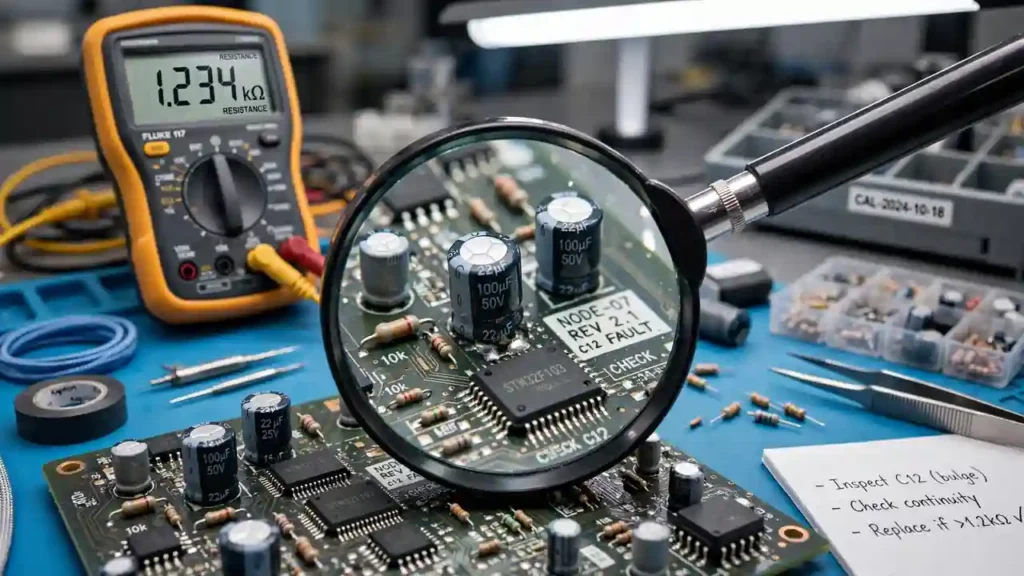
Use diode-test mode on a digital multimeter. Test out of circuit for a firm answer, because parts in parallel on a board can fool your meter.
- Lift one end. Desolder one end of the diode, or remove it fully. In-circuit readings are only a rough hint.
- Test forward. Set diode mode. Touch red to the anode and black to the cathode, the end with the band. A good UF5M often reads about 0.4 to 0.8 volts. Your exact reading depends on your meter, so compare it with a known-good diode.
- Test reverse. Swap the probes. The meter must read OL, meaning open. A low reverse reading means the diode is shorted or leaky. Replace it.
- Watch for the fake-diode trap. A normal diode test cannot measure recovery speed. A fake slow diode can pass steps 2 and 3, then fail in the real circuit. If a “UF5M” tests fine but keeps failing in a switching spot, suspect a fake.
- Check heat under power. After a swap, run the inverter and feel the diode with care. Warm is normal. Scorching hot within minutes means the wrong part, too much current, or another fault.
For wider fault-finding, browse our electronic parts guides.
How Can You Spot a Fake UF5M?
Fakes are common because this is a high-demand repair part. No single check proves a part is real, but these signs should make you pause.
- Blurry or soft markings. Real parts have crisp, even marks. Cheap ink that rubs off easily is a warning sign.
- Wrong package size. A real SMC package has standard size. Compare it with a known-good part, with calipers if you can.
- A batch that all looks identical in a odd way. Blank, nonsense, or identical lot codes across a whole batch are suspect.
- A price far below the normal range. Check the live price on the website, and be wary of a deal that looks too good.
- Repeat failure after a “good” test. As above, this points to a slow diode dressed up as an ultra-fast one.
Bonus tip: If you find one fake on a board, check the other diodes too. Fakes often travel in batches.
How Do You Pick the Right Replacement?
Keep it simple, and do not guess.
- Match UF5M for UF5M when you can. The voltage and speed ratings fit that circuit on purpose.
- Never go down in voltage or speed. A lower-voltage part, or a standard rectifier, is not a safe swap.
- A higher-voltage part of the same family may work in an emergency, but only if the package and speed match. When in doubt, use the exact part.
- Respect the package and the board. A smaller package cannot shed the same heat, even if the part number looks close.
Check the live price and availability on the website in our electronic parts section. For related reading, see our BZX84C18 zener diode guide and our chopper transformer guide, which shows where fast diodes work in auxiliary supplies.
Frequently Asked Questions
Can I replace a UF5M with a 1N4007?
No. The 1N4007 is a standard rectifier, far too slow for a switching circuit. It will overheat, fail, and may damage nearby parts. Always use an ultra-fast type.
My meter says the diode is good, but it keeps failing. Why?
The most likely cause is a fake slow diode sold as a UF5M. A meter test cannot measure recovery speed. Try a diode from a trusted source and see if the repeat failures stop.
What does the “M” in UF5M mean?
It codes the voltage rating. In this family, M means 1000 volts max repetitive reverse voltage.
Can I use a UF5J (600 V) instead of a UF5M (1000 V)?
Only if the real reverse voltage in that circuit stays well below 600 V, with good margin. In most spots designed for a UF5M, the answer is no. Do not downgrade voltage.
How hot should a UF5M run?
Warm is normal, since it can shed several watts at full current. Too hot to touch within minutes points to the wrong part, excess current, or poor heat sinking.
Where can I buy a genuine UF5M in Pakistan?
Check the live price and availability on the SunTech Mall website, or message SunTech Mall on WhatsApp through the website for advice on your repair.
Verdict: A Small Part That Decides Big Repairs
The UF5M earns its place with one trait: speed. Its 75-nanosecond recovery keeps a switching supply cool and safe, while a slow diode turns the same supply into a repeat failure.
So test it out of circuit, match the exact part, and buy from a source you trust. When a repair keeps failing, check the small diode everyone skipped. More often than you expect, that is the whole story.
Related: why hybrid inverters suit Pakistan · solar plant installation guide · SunTech Mall home
1 Comment
[…] UF5M diode guide · BZX84C18 zener diode guide · wind turbine guide · why hybrid inverters suit Pakistan · […]