
Day Solar Inverter Spare Parts – Easy Repair Guide for Everyone
An easy guide to day solar inverter spare parts. Learn how day solar inverters are repaired using simple spare parts.

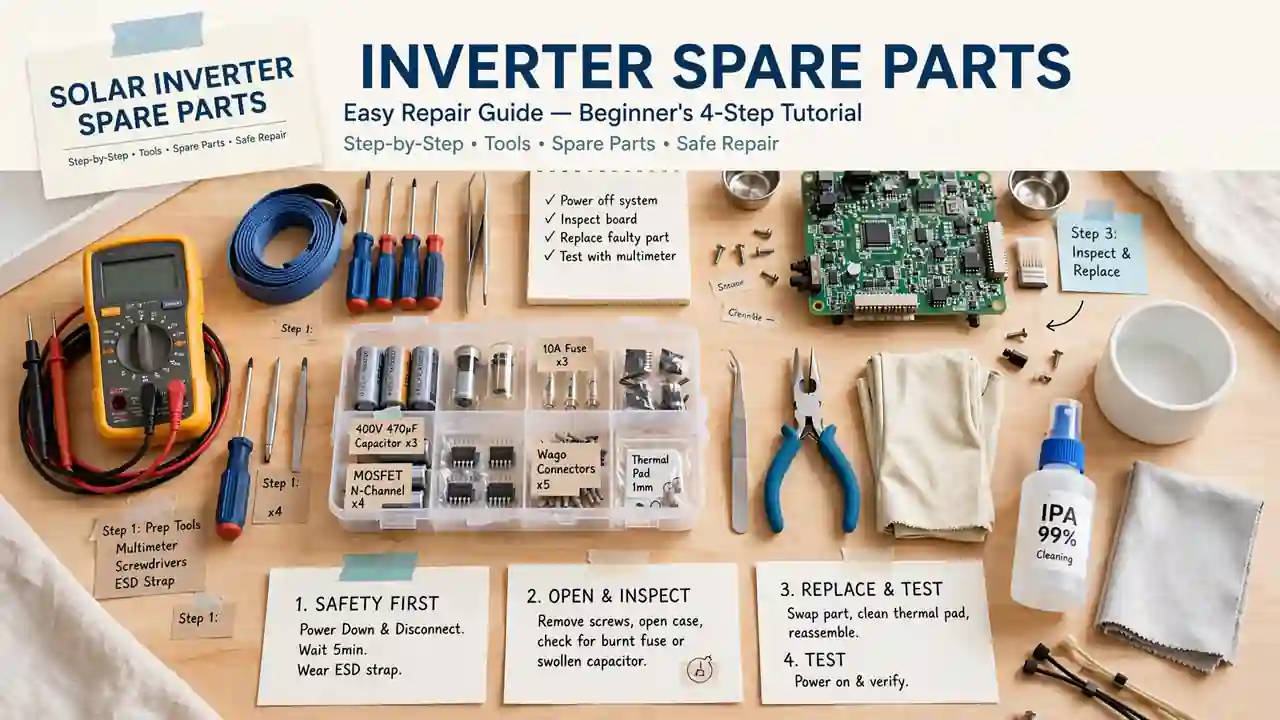
Not every home needs a fancy imported inverter. For millions of Pakistani families, a simple day solar inverter does the job. It runs the fans, lights up the rooms, and keeps life normal during load shedding. These simple machines are affordable, easy to understand, and repairable by local technicians everywhere. I work with SunTech Mall, where we supply original spare parts to repair shops across Pakistan. Every day we see day solar inverters come back to life with the right replacement part. We also see them die permanently when the wrong part is used. This guide is written for everyone, no technical background needed. You will learn how day solar inverters work, which parts fail most often, and how to get them repaired correctly. Let us begin with the basics.
Good news: you do not need an engineering degree to understand this guide. If you can follow simple instructions, you can follow this article.
What You Will Learn in This Guide
- Understand how a day solar inverter works
- Meet the spare parts inside your inverter
- Recognize the signs that repair is needed
- Avoid the most common repair mistakes
- Choose the right replacement parts
- Extend your inverter’s life with simple habits
Understand How a Day Solar Inverter Works
A day solar inverter does one main job. It converts DC electricity from solar panels and batteries into AC electricity for your home. During daylight hours, it can also manage battery charging from the panels. The design is deliberately simple, similar to a UPS, which is why local technicians understand it so well.
Inside, the inverter has three main sections. The input section receives DC power from batteries or panels. The power section uses MOSFETs or transistors to switch this power rapidly, creating AC. The output section with its transformer delivers stable 220-volt power to your appliances. When something fails, the symptoms usually point to one of these three sections.
This simplicity is the reason day solar inverters remain popular. Fewer complex parts means fewer things that can break. And when something does break, the faulty section is easier to find and fix. For basic home backup, this straightforward design is often all you need.
Note: Day solar inverters are typically sized for essential loads like lights, fans, and small appliances. They are not designed to run heavy machinery or large air conditioners.
Meet the Spare Parts Inside Your Inverter
Let us meet the key components. Knowing their names helps you talk to technicians and understand repair estimates.
Power MOSFETs and Transistors
These are the hardest-working parts in the inverter. Mounted on metal heat sinks, they switch current thousands of times per second. All the power your home uses flows through them. They handle the most stress and fail most often. Heat, overloading, and poor cooling kill them. A burned MOSFET may look blackened or cracked, or it may look normal and only fail testing. Learn how to choose the right MOSFET for replacements.
Transformer
The heavy iron-core component that produces your 220-volt output. Transformers are rugged and long-lasting. When they weaken, output voltage becomes unstable or the inverter hums loudly. Local winders can often rebuild them, which costs less than buying new.
Control Card
The circuit board that manages everything. It controls charging, monitors battery voltage, and triggers protections. When it fails, the inverter behaves strangely. It may work sometimes and fail other times. It may show confusing symptoms that seem to change. Erratic behavior often means control card trouble.
Cooling Fan
Pushes hot air out and keeps everything cool. Fans are cheap but critical. A dead fan in summer will kill expensive parts within days. Listen for changes in fan noise. Any grinding, rattling, or silence is a warning.
Capacitors, Diodes, and Small Parts
These small components support the bigger ones. Capacitors smooth voltage. Diodes direct current flow. They fail less dramatically but cause real problems. A swollen capacitor on any board is a clear sign of failure. Our parts names and functions guide explains every component in detail.
Bonus Tip: When a technician names a failed part, ask to see it. A trustworthy technician will show you the damaged component and explain what went wrong. This simple habit protects you from unnecessary replacements.
Recognize the Signs That Repair Is Needed
Your inverter tells you when it needs help. Learn its language. The most obvious sign is random shutdowns or restarts. An inverter that worked fine yesterday but keeps tripping today has a developing fault. Do not just keep resetting it.
Watch for unstable output. Lights flicker. Fan speed varies for no reason. The inverter feels much hotter than usual. You hear unusual humming, buzzing, or crackling. The display shows fault codes or warning lights. Backup time drops sharply. Any of these signs means something inside is weakening.
Another subtle sign is declining performance. If your system produces less backup than before with the same sunlight and same load, internal components are degrading. Gradual decline is still decline. Early attention prevents sudden total failure. Check our error codes guide if your display shows warnings.
Avoid the Most Common Repair Mistakes
The biggest repair mistake is replacing parts without finding the root cause. A MOSFET burned out. The technician replaces it. It burns again in a month. Why? Because the real cause was a weak cooling fan, or overloading, or a faulty driver circuit. Always diagnose first, replace second.
The second biggest mistake is using wrong replacement parts. A capacitor with lower voltage rating. A MOSFET with higher resistance. A fan that spins the wrong direction. Each of these seems like a small difference. Each causes the repair to fail. Always match original specifications exactly.
Another common error is incomplete repair. The technician fixes the obvious burned part but ignores the stressed neighbors. Stressed components fail soon after. Experienced technicians check surrounding parts, not just the visibly damaged one. Learn how to identify all faulty parts, not just the obvious ones.
Note: Never let anyone bypass fuses or protection circuits “temporarily.” These protections prevent fires. Bypassing them to test something is dangerous and can destroy the inverter completely.
How to Choose the Right Replacement Parts
Correct part selection makes or breaks a repair. Follow this process. First, identify the exact failed component. Read its part number carefully. One wrong character means a different part with different ratings.
Second, match the specifications. For MOSFETs, voltage and current ratings must equal or exceed the original. For capacitors, capacitance and voltage must match. For transformers, the VA rating and model must suit your inverter. “Close enough” is not good enough in power electronics.
Third, buy genuine parts from trusted suppliers. The market has originals and copies mixed together. A copy MOSFET may work for weeks, then burn and take neighboring parts with it. The small saving on a fake part becomes a large bill for repeat repair. At SunTech Mall, every component is genuine with clear specifications. Browse our MOSFET collection or the full electronic parts range.
Fourth, test after repair. Power up with a small load first. Check that output voltage is stable. Let it run for a while before connecting everything. Patient testing catches problems before they cause damage.
Why UPS-Based Design Makes Repair Easier
Many day solar inverters share their design with UPS systems. This is actually great news for owners. It means the parts, the repair techniques, and the technicians are all widely available. Almost every electronics market has shops that understand UPS-based circuits deeply.
UPS-based parts are standardized. Transformers, MOSFETs, relays, and control ICs follow common patterns. A technician who has repaired a hundred UPS units can handle your day solar inverter confidently. Familiarity means faster, cheaper, more reliable repairs.
This shared design also means parts are easy to source. You are not hunting for rare proprietary components. Standard parts from reputable suppliers fit and work correctly. Our most-used spare parts guide lists exactly what workshops stock for these repairs.
Extend Your Inverter’s Life With Simple Habits
Repairs fix problems. Habits prevent them. These simple practices add years to your inverter’s life. Install the inverter in a shaded, ventilated spot. Never in direct sun, never in a closed hot room. Clean dust from vents every month. Dust is the silent killer of all electronics in Pakistan.
Do not overload the inverter. Running constantly at maximum capacity stresses every component. Keep regular load comfortably below the rated limit. Check wire connections every few months for looseness or discoloration. Loose connections create heat, and heat destroys parts.
Use proper fuses and breakers. They are cheap insurance against catastrophic damage. When something goes wrong electrically, a fuse sacrifices itself to save expensive parts. Never replace a blown fuse with a higher rating or a wire. That defeats the entire purpose. Our maintenance guide covers the full monthly routine in five minutes.
Bonus Tip: Keep a simple log of repairs and part replacements with dates. This history helps technicians diagnose recurring issues and helps you decide when repair no longer makes economic sense.
When Repair Makes Sense and When It Does Not
Most day solar inverter failures are worth repairing. The design is simple, parts are available, and labor costs are reasonable. A MOSFET replacement, fan replacement, or capacitor replacement will typically cost far less than a new inverter.
Consider replacement instead of repair in a few situations. The transformer is severely damaged and rewinding costs approach new unit prices. Multiple major sections failed simultaneously. The inverter is very old and inefficient compared to modern options. Compare total repair cost against a new unit honestly. A good technician gives you this comparison without pressure.
For repair shops, this honesty builds business. Customers return to shops that advise fairly. They also bring friends. The workshops we supply at SunTech Mall grow through this exact reputation. Quality parts and honest advice create loyal customers.
Frequently Asked Questions
Can I repair my day solar inverter myself?
Basic tasks like cleaning vents, checking connections, and replacing external fuses are safe for careful owners. Internal circuit repairs involve high voltage and need technical knowledge. Capacitors can hold deadly charge even when unplugged. Unless you are trained in electronics repair, use a qualified technician for anything inside the case.
How do I find a good repair technician?
Ask for recommendations from neighbors or local shops. A good technician diagnoses before replacing, shows you failed parts, and explains the fault clearly. Be cautious of anyone who immediately suggests replacing the whole board without testing. Experience with UPS-based systems is a strong positive sign.
Are spare parts easily available for day solar inverters?
Yes. Because these inverters use standard UPS-based components, parts are widely available. MOSFETs, capacitors, relays, fans, and control ICs are stocked by electronics suppliers everywhere. For guaranteed genuine parts with proper specifications, SunTech Mall delivers nationwide across Pakistan.
How often should I service my inverter?
Do a basic visual check monthly. Look at vents, listen to the fan, glance at the display. A professional inspection once a year catches weakening components before they fail. In very dusty areas, clean vents more frequently. Prevention always costs less than repair.
Why does my inverter keep blowing fuses?
Repeatedly blown fuses signal a real fault, not bad fuses. Something is drawing too much current. Common causes include shorted MOSFETs, damaged transformer windings, or overloaded output. Never replace a fuse with a higher rating. Find and fix the underlying fault. Our repair guide explains systematic fault-finding.
Is it normal for the inverter to hum?
A soft hum is normal, especially from the transformer. But a loud or changing hum is not. Increasing noise often means the transformer is stressed or a mounting has loosened. If the hum suddenly gets louder, have it checked. Catching transformer stress early can prevent complete failure.
What is the lifespan of a day solar inverter?
With proper care and quality repairs, a day solar inverter can serve for many years. The exact lifespan depends on usage, environment, and maintenance. Units in cool, clean locations with moderate loads last longest. Regular maintenance and timely part replacement are the two biggest factors you control.
Final Thoughts
Day solar inverters prove that simple can be beautiful. No complicated features. No sealed mysteries. Just honest machines doing an honest job, keeping Pakistani homes lit through load shedding. They ask little and give a lot.
Treat yours well. Keep it clean and cool. Do not overload it. Fix small problems before they grow. And when parts are needed, choose genuine components that match specifications. Your inverter will repay this care with years of faithful service.
Remember that SunTech Mall is Pakistan’s trusted source for original solar inverter and UPS spare parts. We supply the repair shops that bring these inverters back to life every day, with fast nationwide delivery. Whether you need a single MOSFET or a full set of components, visit our shop or explore the spare parts collection. Together, we keep Pakistan powered.