
220pF 1kV DIP Capacitor: How to Read the 221 Code and Use It Safely at High Voltage
When it comes to high-voltage capacitors, the 221PF 220PF 1KV DIP capacitors stand out for their reliability and versatility. These capacitors, commonly used in power supplies, signal filtering, and voltage regulation, play…

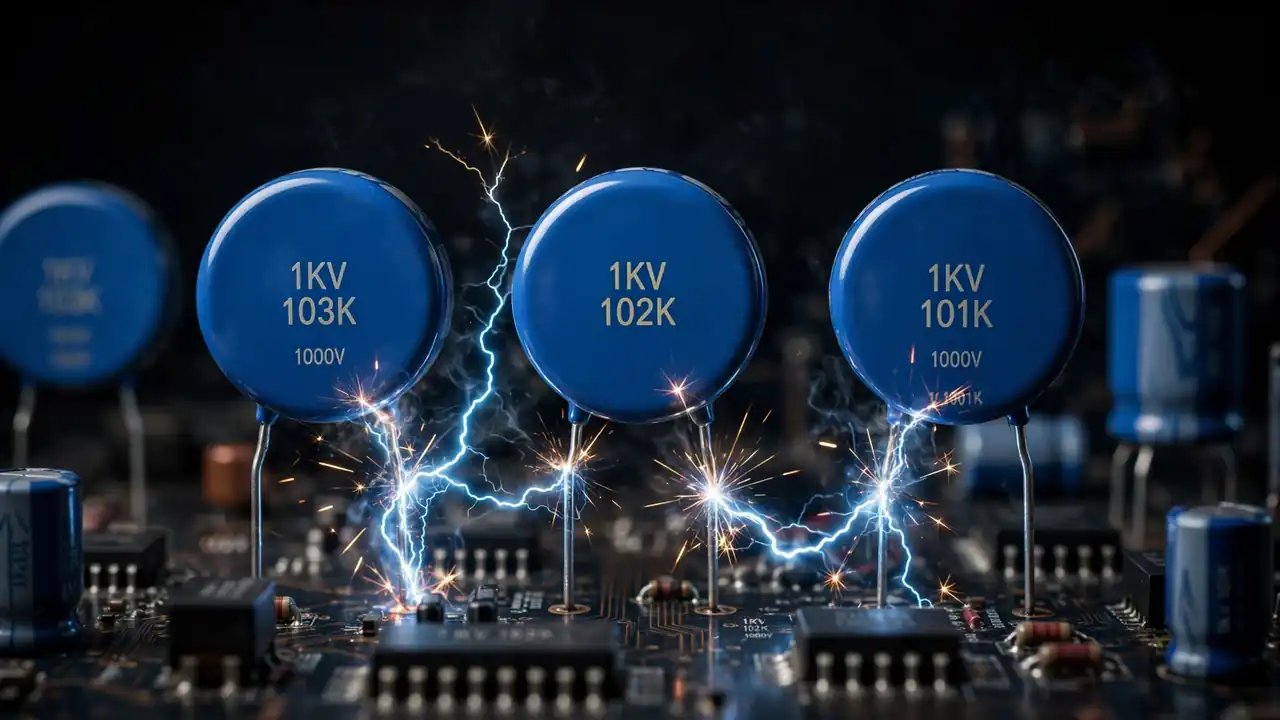
A 220pF 1kV DIP capacitor is a small through-hole ceramic part marked 221. The code means 220 picofarads, and the 1kV rating means it can handle up to 1,000 volts DC. It sits in flyback supplies, snubber networks, and high-voltage stages of inverters, where spikes run far above the normal voltage.
What does the 221 marking mean?
The three-digit code works the same way across the industry. The first two digits are the value, and the third digit is the number of zeros to add. The answer comes out in picofarads.
221 means 22 followed by one zero: 220 picofarads. That is the same as 0.22 nanofarads. Once you know the rule, you can read other parts too: 222 is 2,200pF, and 223 is 22,000pF, which is 22nF. For a quick lookup of other codes, this ceramic capacitor code chart lists the common three-digit values in pF and nF.
1kV is the highest DC voltage rating: 1,000 volts. That is not the normal working voltage. It is the ceiling the part is built to survive, and the gap between the working voltage and that ceiling is the point.
DIP means the part has two leads for through-hole mounting in PCB holes. It solders easily, it inspects easily, and it suits repair work well.
Why does a circuit need a 1,000-volt part?
A circuit running at a few hundred volts does not need a 1kV capacitor for show. It needs one because switching circuits make spikes.
Flyback transformers make sharp high-voltage pulses by design. Switching transistors ring when they turn off fast. Surges arrive from the mains without warning. A capacitor sitting in those spots sees brief peaks far above the steady voltage.
Skilled technicians keep a derating habit here too: the rating should stand well above the worst peak the circuit can make, not just above the nominal voltage. A 1kV part on a 400 to 500V peak spot has room to absorb surprises. A barely adequate part does not.
What is the difference between a general 1kV ceramic and a Y-rated safety capacitor?
This is the most important distinction in this guide, so read it with care. Not every high-voltage capacitor is safe in every high-voltage spot.
A general-purpose 1kV ceramic capacitor, like the 220pF 1kV DIP capacitor in this guide, is built to handle high voltage in normal circuit spots: across transformer windings, in snubber networks, and in filter and tuning spots inside equipment.
A Y-rated safety capacitor is a different part. It is certified to sit between mains voltage and earth ground, where its failure could expose a person to shock. Y-rated parts are designed and tested to fail safely in that specific, dangerous spot.
The rule is simple: never fit a general-purpose high-voltage ceramic where a Y-rated safety capacitor belongs. The voltage numbers may look alike, but the safety certification is not interchangeable. If the original part in a mains-to-earth spot was Y-rated, the replacement must be Y-rated too. When you are unsure which spot you are looking at, ask a skilled technician before you power up.
Safety-rated parts carry printed marks from certification bodies on their bodies. If you pull a part from a mains-filter spot and see no safety marks, treat that as a warning and investigate before you fit a like-for-like replacement.
Where does the 220pF 1kV capacitor work?
| Spot | What it does there | What to watch |
|---|---|---|
| Flyback converters | Sits across windings and in resonant spots, shaping pulses and taming ringing | Match the value exactly; the designer picked it for a reason |
| Snubber networks | Works with a small resistor across a switching device to absorb the turn-off spike | Keep the leads short and the part close to the device |
| High-voltage filtering and coupling | Filters noise and couples signals between stages at very different voltages | The 1kV rating gives insulation margin a lower-rated part cannot |
| Inverter power stages and auxiliary supplies | Steadies and protects high-voltage switching nodes | A shorted small ceramic here can kill a switching transistor, so test before you trust |
How do you handle and solder it without cracking it?
Ceramic bodies are strong under pressure and fragile against bending and impact. Treat them like tiny ceramic tiles, not like resistors.
Keep the leads fairly short in high-frequency spots, because long leads add inductance that dulls the part’s high-frequency work. But never bend the leads right against the body. Leave a short straight section so bending stress stays out of the ceramic.
Solder with a properly heated iron and get in and out in two to three seconds per joint. Long heat soaks into the body and can weaken it. Let the joint cool without moving the board.
After soldering, check the 220pF 1kV DIP capacitor under magnification. The body should be clean and crack-free, and the solder joints should be smooth. In a high-voltage spot, a rough or cracked part is not worth the risk. Replace it.
When you remove an old high-voltage ceramic, cut or desolder it gently instead of rocking it. Rocking stresses the pads and the future home of the replacement. Clean holes let the new part sit right.
How do you test a 220pF 1kV DIP capacitor with basic tools?
Use a capacitance meter with a picofarad range, and test the 220pF 1kV DIP capacitor out of circuit. In-circuit readings mean nothing at these small values, because parallel paths on the board swamp the reading.
Expect a reading near 220pF, inside the part’s tolerance band. A reading of zero, an open circuit, or a value far off the mark means the part is dead. Also check for shorts: a 220pF capacitor should never read as a short.
One limit to know: a standard meter resistance range cannot prove high-voltage insulation. It can confirm the part is not shorted, but it cannot prove the part will hold 1kV. For that, trust the rating of a genuine new part from a sound source. That is exactly why buying verified stock matters at high voltage.
What mistakes cause arcs and burnt boards?
- Fitting a lower voltage rating than the original. Spikes exceed nominal voltage, so the margin is functional, not decoration.
- Fitting a general ceramic where a Y-rated safety part belongs. The numbers may match, but the certification does not.
- Bending leads hard against the body, or gripping the part with pliers. Micro-cracks from that stress can arc under voltage.
- Heating a joint for too long, or moving the board while the solder is still molten.
- Trusting an in-circuit reading at 220pF. Parallel paths make it meaningless.
Frequently asked questions
What does 221 mean on a capacitor? It is the standard three-digit value code: 22 followed by one zero, in picofarads. So 221 means 220pF. Do not mix it up with 222, which is 2,200pF, ten times larger.
Can I replace a 1kV capacitor with a 500V one? No. Never go below the original voltage rating. In high-voltage switching spots, spikes run above the nominal voltage, so the margin that 1kV gives is real engineering, not excess.
What does DIP mean for a capacitor? DIP stands for Dual In-line Package: a through-hole part with two leads that mount straight into PCB holes. It is easy to solder, easy to inspect, and well suited to repair work.
Can I use a general 1kV ceramic where a Y-rated capacitor was fitted? No. Y-rated safety capacitors are certified for mains-to-earth spots where failure could cause electric shock. A general-purpose high-voltage ceramic, even with a similar voltage number, is not a substitute.
How do I know if my 220pF capacitor is bad? Test it out of circuit with a capacitance meter and expect a reading near 220pF. Visible cracks, burn marks, or a short-circuit reading all mean replacement. In high-voltage spots, replace any part you do not fully trust.
Is 220pF the same as 0.22nF? Yes. 220 picofarads equals 0.22 nanofarads. They are the same value in different units, just as 22,000pF equals 22nF.
Where to go next
If your tests point to this 220pF 1kV DIP capacitor, check the live SunTech Mall shop for current stock of high-voltage ceramic capacitors. For the film part that often sits nearby in snubber work, read the 22nF MYLAR capacitor guide, and for the electrolytic side of the same boards, read the 450V 10uF capacitor guide. Browse the full SunTech Mall shop for the rest of your high-voltage bench.
Related Products & Categories
Related Technical Guides
 Category:
Solar Inverter Repair
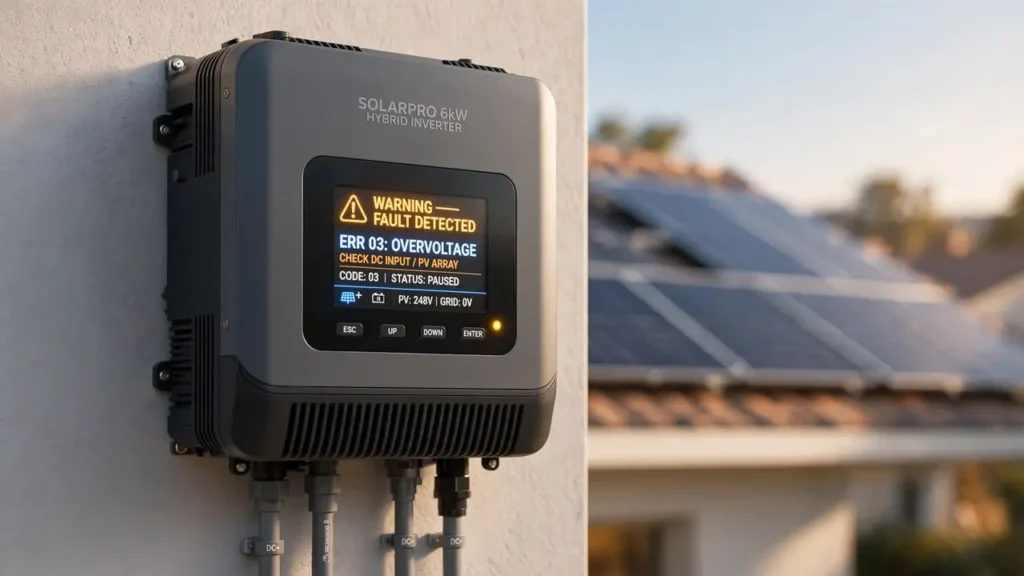
Solar Inverter Error Codes in Pakistan 2026 – Complete Troubleshooting Guide
Solar inverter showing an error or warning? This complete Pakistan-focused guide explains common fault categories, safe troubleshooting steps, Fronus code examples, repair…
 Category:
Electronic Parts
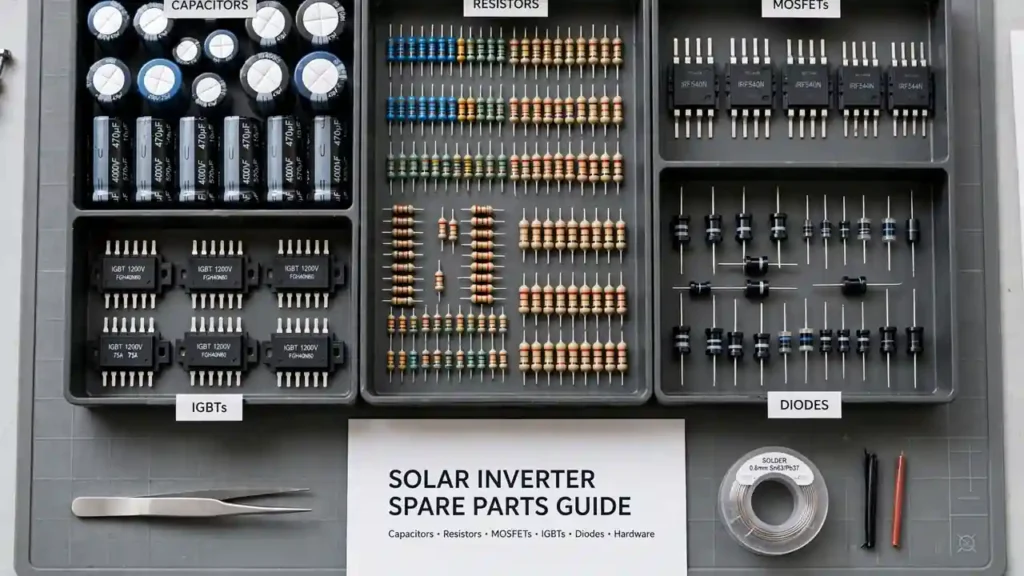
Most Used Solar Inverter Spare Parts in Pakistan – 2026 Update
Learn about most used solar inverter spare parts in Pakistan in 2026. Find which solar parts fail most and where to buy…
 Category:
Capacitors
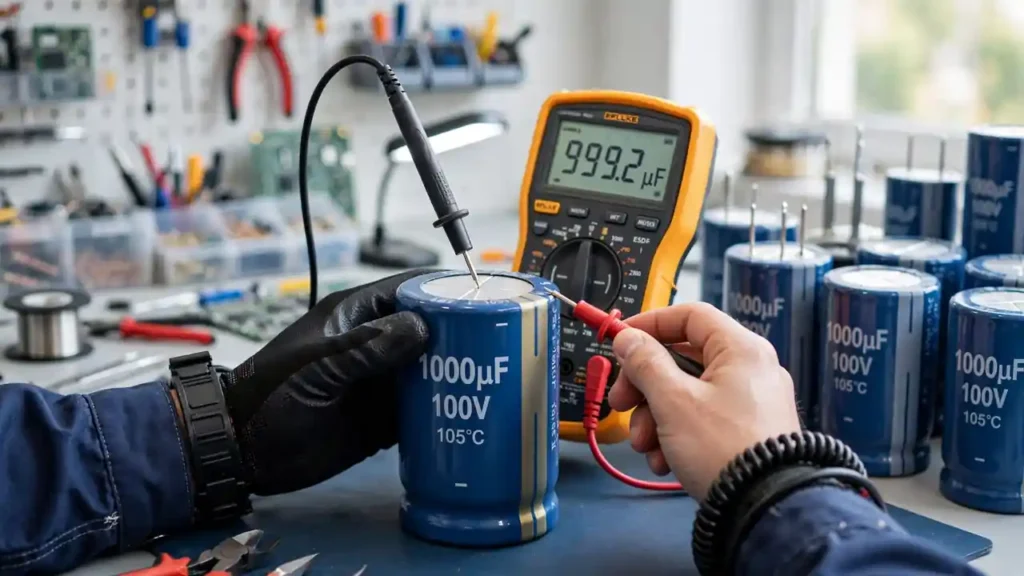
100V 1000uF Capacitor – The Best and Reliable Deal in Peshawar
In the electronics market of Peshawar, finding high-quality components at affordable prices is a priority for hobbyists, engineers, and businesses alike. Among…
1 Comment
[…] for bulk filtering to high-voltage ceramics like the 220PF 1KV DIP capacitor covered in our 220PF 1KV guide. Fresh repair guides land regularly on the SunTech Mall […]