

Premium 450V 10uF Capacitors for Sale in Peshawar – Shop Now
When it comes to solar inverters, one essential component plays a critical role in ensuring smooth and efficient operation: the 450V 10uF capacitor. In Peshawar, where solar energy is becoming an increasingly…

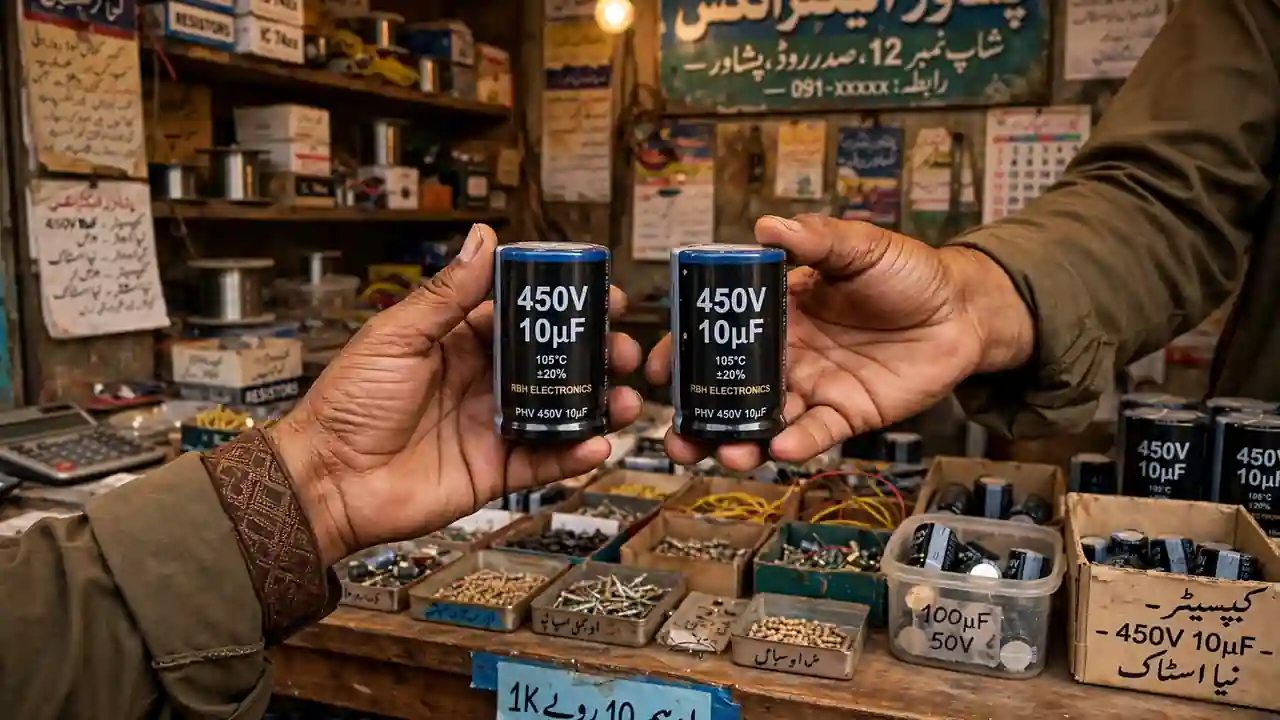
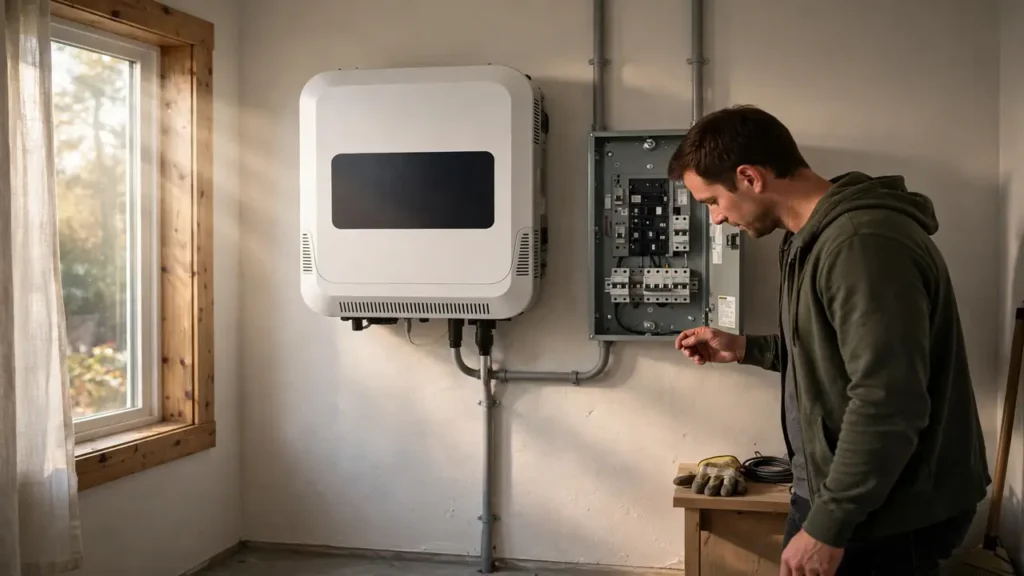
I have watched a technician replace an entire inverter control board for a fault that a single small capacitor caused. The board was fine. The 450V 10uF capacitor feeding its startup circuit was dead. My stake in this guide is simple: at SunTech Mall we supply these small high-voltage capacitors to repair shops across Pakistan, and I would rather see you fix a ten-minute part than buy a whole board.
You can trust this because it comes from real repair stories, not theory. We hear the same symptom descriptions again and again — the inverter that clicks but never starts, the unit that restarts under load — and we know which small capacitors sit behind those symptoms. Your fear is justified: this little part lives at dangerous voltage, and installing it wrong can damage it instantly.
Here is my exact promise. By the end of this guide, you will understand what the 450V 10uF aluminum electrolytic capacitor does in startup and auxiliary circuits, recognize a dying one, and replace it step by step without hurting yourself or the board. Let us look at the small part with the big job.
A quick honest note: this guide teaches you to inspect, verify, and test capacitors yourself — ratings, polarity, warning signs. If a part fails your checks, reject it no matter where it came from. When it passes, buying a 450V 10uF capacitor from SunTech Mall gets you one that already passed those checks.
In This Guide: What You Will Be Able to Do
- Explain the capacitor’s job in inverter startup circuits and auxiliary power supplies
- Understand why small value plus high voltage is exactly what these circuits need
- Recognize failure symptoms — the no-start, the restart loop, and the visual clues
- Replace the capacitor step by step with proper safety and polarity discipline
- Choose a quality replacement by reading temperature rating and datasheet specs
- Answer the common substitution questions — different values, different voltages
- Order genuine parts from a supplier that knows inverter repair
What the Little 450V 10uF Capacitor Actually Does
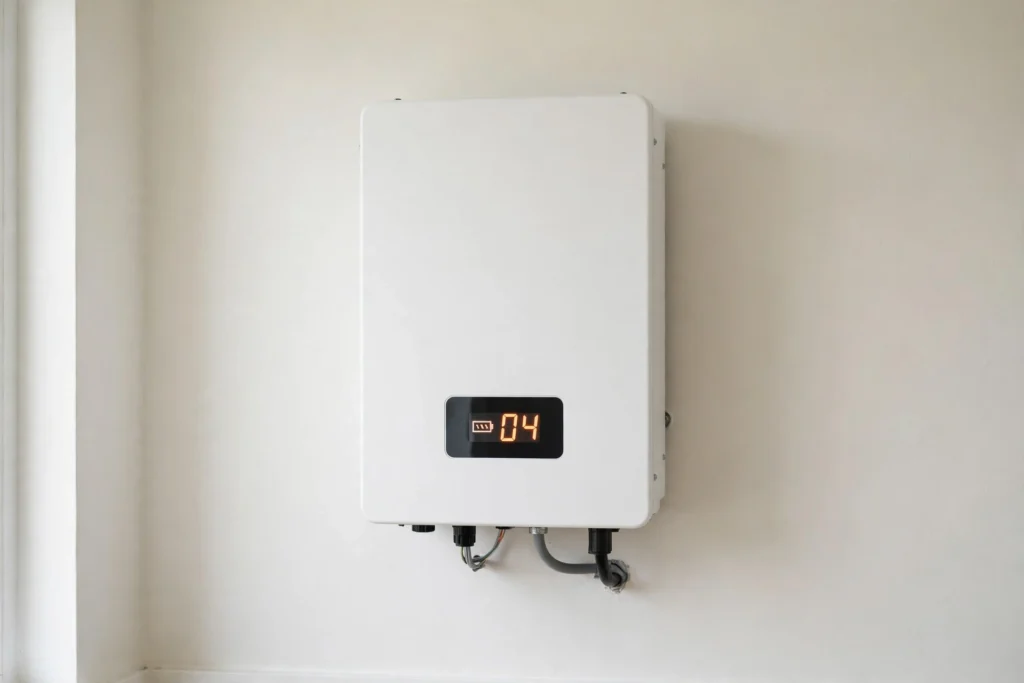
Big bus capacitors get all the attention, but inverters also need small high-voltage capacitors in their startup and auxiliary supply circuits. That is where the 450V 10uF lives.
Here is the problem it solves. When an inverter first powers up, its main control circuitry needs a small, stable supply voltage before the big power stage wakes up. A tiny auxiliary supply generates that voltage from the high-voltage DC bus — and the 450V 10uF capacitor smooths and stabilizes it.
Think of it as the part that hands the inverter its morning coffee. Without a clean auxiliary supply, the control IC cannot start, the power stage never switches, and the whole unit sits dead — even though every expensive component on the board is perfectly fine.
The value makes sense once you see the job. 10 microfarads is enough to smooth a low-current auxiliary rail. 450 volts is needed because the auxiliary supply derives from a high-voltage bus. Small capacitance, high voltage, critical position — that combination is exactly why this part fails quietly and expensively.
Note: like all aluminum electrolytics, this capacitor is polarized. The stripe marks the negative lead, and it must match the board’s polarity marking. Reverse it and the part will fail, sometimes within seconds of power-up.
How It Dies (and What a Dead One Looks Like)
The symptom pattern is so consistent that experienced technicians recognize it over the phone. The inverter clicks or tries to start but never comes alive. Or it starts, then restarts randomly, especially under load. Or the auxiliary rail measures low and unstable.
Inside, the story is familiar: heat and age dried the electrolyte, capacitance dropped, ESR climbed, and the little capacitor can no longer hold the auxiliary rail steady. The control IC browns out, the inverter gives up, and the cycle repeats.
Learn the visual warning signs, the same ones I described for its bigger cousin in our 450V 68uF capacitor guide:
- Bulging top — the vent area domes instead of sitting flat
- Leaked residue — crusty material around the base or vent
- Discolored sleeve — darkened from sustained heat
- Loose or tilted seating — internal pressure shifting the part
Bonus Tip: a capacitor can be electrically finished while looking perfect. If the auxiliary rail is unstable and the capacitor is old, do not let a clean appearance overrule your suspicion. Test it or swap it — the part costs far less than the diagnosis time.
Replacing It Step by Step
This is a high-voltage position, so the safety discipline is non-negotiable. I treat every large electrolytic as charged until I have proven otherwise. Make that your habit too.
- Disconnect all power — mains, battery, solar input, everything. Wait several minutes.
- Discharge deliberately. Use a proper resistor-based discharge tool across the capacitor’s terminals. Never short the terminals with a screwdriver; the violent discharge can damage the part and injure you.
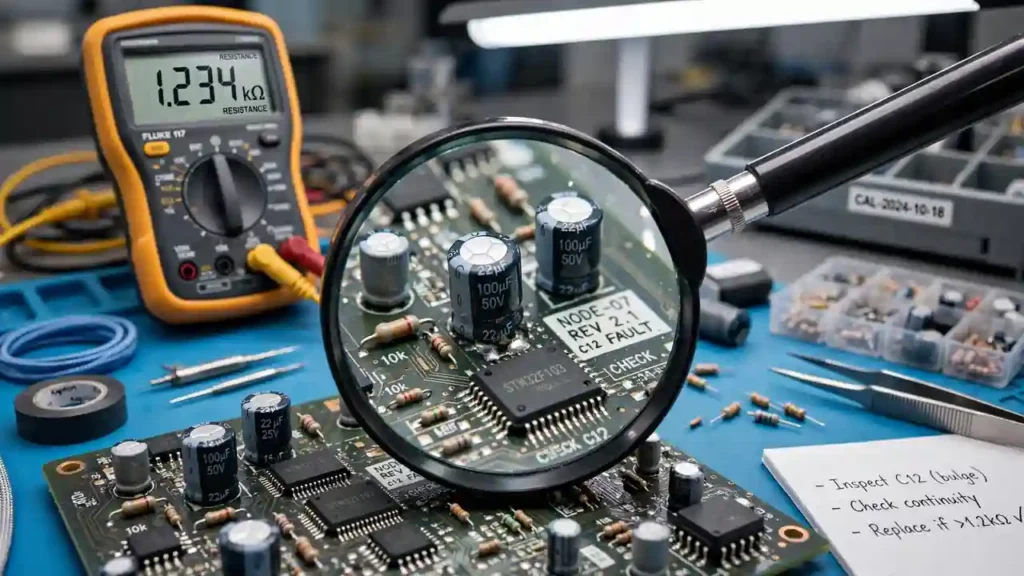
- Verify zero volts with your multimeter before your fingers go near anything.
- Photograph the board. Capture the capacitor’s orientation and everything around it.
- Remove the old capacitor cleanly and clear the solder from the holes.
- Install the new part with correct polarity. Stripe to the board’s negative marking. Double-check — this is the step where repairs die.
- Confirm it sits flat with no mechanical stress on the leads, and that lead spacing matches the holes.
- Power up and verify. The auxiliary rail should be stable, the inverter should start cleanly, and nothing should run hot or smell wrong.
Note: if the new capacitor fails quickly, stop replacing parts and investigate. A shorted component downstream or a fault in the auxiliary supply itself will kill replacements one after another. Two dead capacitors in a row means the capacitor is the victim, not the criminal.
Choosing a Good 450V 10uF Replacement
Two capacitors can share the same 450V 10uF printing and live very different lives. The difference hides in the specs most buyers never check.
Start with the temperature rating. For inverter work, insist on 105°C parts. Inverter cabinets run hot, and an 85°C part in a hot cabinet ages dramatically faster. The temperature rating is printed on the sleeve — read it before you buy.
Next, look for a real datasheet from a reputable manufacturer. It should list ESR, ripple current rating, and endurance hours. A seller who can point you to the datasheet is a seller who knows the product. A pretty label with no data behind it is a gamble.
Match the physical size too. The replacement must fit the hole spacing and sit at a sensible height. A part with the right electrical specs but wrong dimensions creates mechanical stress and assembly headaches.
Bonus Tip: when one small electrolytic in an auxiliary supply has failed from age, its neighbors have lived the same hot life. Inspect the surrounding capacitors while the board is open. Replacing a second tired part now is cheaper than reopening the unit next month.
For current stock and pricing, check SunTech Mall’s live listing for the 450V 10uF capacitor rather than relying on old price quotes — component prices move with the market.
Where This Part Sits in the Bigger Repair Picture
Startup-circuit capacitors are one chapter of inverter repair, not the whole book. The same boards carry bulk bus capacitors, gate-drive resistors, snubber networks, and high-voltage ceramics — and failures often travel in groups after a surge or overheating event.
If you are working through an inverter systematically, our 450V 68uF capacitor guide covers the big bus capacitor on the same boards. The 47 ohm 0805 SMD resistor guide covers the gate-drive side, and the 220PF 1KV capacitor guide and 22nF MYLAR capacitor guide cover the high-voltage ceramic and film positions you will meet nearby.
Browse the full electronic parts category, the main shop, and the SunTech Mall blog for the complete repair library.
Frequently Asked Questions
Can I use a 22uF capacitor instead of 10uF in a startup circuit?
Not without checking the design. Startup circuits are often tuned around a specific RC time constant — a larger capacitor changes the timing and can prevent clean startup or stress other parts. Match the original 10uF value unless you fully understand the circuit.
Can I replace a 450V capacitor with a 400V one?
No. Never go below the original voltage rating, especially in a circuit derived from a high-voltage bus. Use 450V or higher, provided the part physically fits. Voltage margin is safety margin.
Why does polarity matter so much on this capacitor?
Aluminum electrolytic capacitors are built with a polarized internal structure. Reverse voltage breaks down that structure rapidly, generating gas and heat. On a 450V rail, a reversed capacitor can vent or burst within seconds. Always match the stripe to the board’s negative marking.
How do I safely discharge a 450V capacitor?
Use a properly rated resistor-based discharge tool across the terminals, then verify zero volts with a multimeter. Never short the terminals directly with a screwdriver — the uncontrolled discharge is violent and dangerous.
How can I tell the capacitor is bad without a meter?
Look for bulging, leaking, discoloration, or tilted seating. Also watch the symptoms: an inverter that tries to start but never does, or restarts under load, points at the auxiliary supply. But visual inspection alone is not conclusive — testing or substitution confirms it.
How long will a new 450V 10uF capacitor last?
It depends on operating temperature more than anything else. A quality 105°C-rated part in a ventilated unit lasts many years. The datasheet’s endurance rating is the honest number — check it instead of guessing.
Should I replace the neighboring capacitors too?
Inspect them, and replace any that show warning signs or test poorly. Capacitors in the same hot area age together. Replacing a visibly tired neighbor while the board is open is cheap insurance against a repeat teardown.
Final Thoughts
The 450V 10uF capacitor is proof that the smallest parts can hold the biggest responsibilities. Now you know what it does in startup circuits, how its death disguises itself as a dead inverter, and how to replace it safely with the right part. That knowledge saves boards, saves money, and saves the embarrassment of condemning a good control board.
Congratulations — the next inverter that clicks but never starts will not fool you. You will check the auxiliary rail, suspect the little capacitor, and fix in minutes what others replace for a fortune.
When you need the part, get genuine 450V 10uF capacitors from SunTech Mall and keep your repair bench ready. Questions about specs, bulk orders, or stubborn inverter faults? Email info@suntechmall.com or call/WhatsApp +92 306 2244820. Follow our repair guides on Facebook, X, Instagram, and YouTube.