
450V 330uF Capacitor: What It Does on the DC Bus, How to Test It, and How to Replace It Safely
When it comes to maintaining solar inverters in Peshawar, using the right 450V 330uF capacitor is essential for ensuring long-term efficiency and performance. A solar inverter repairing part as important as the…

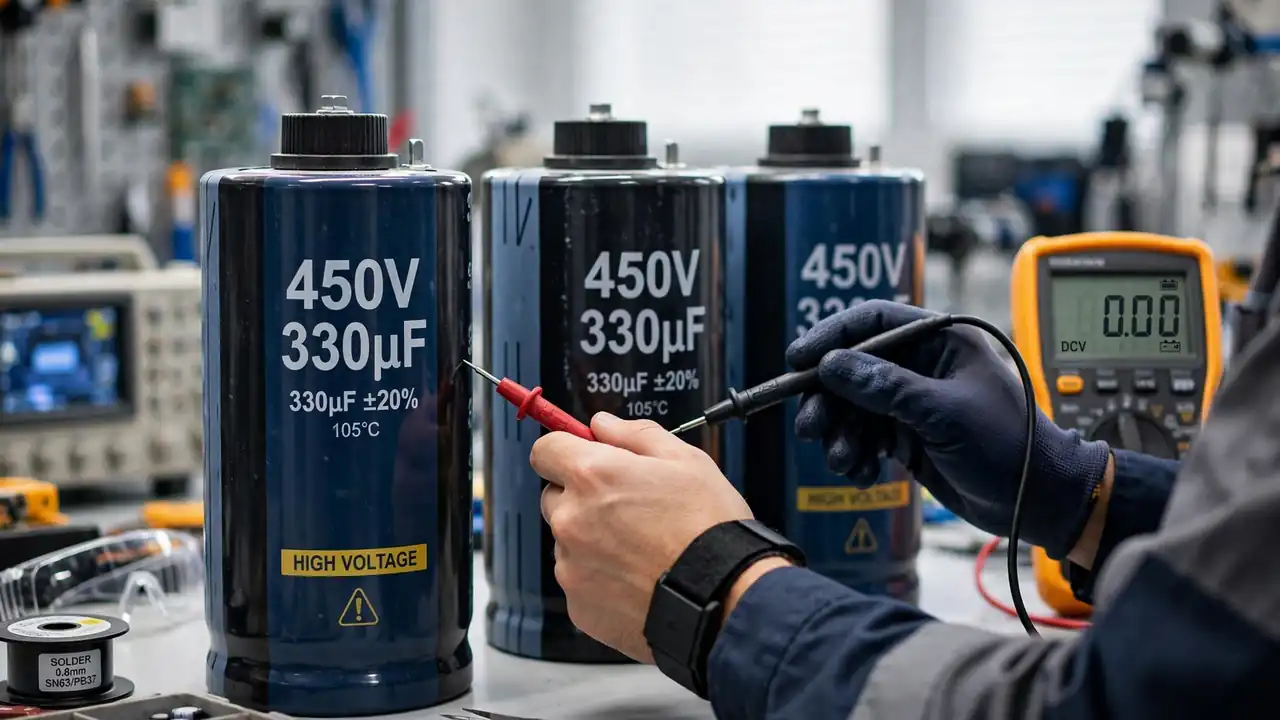
A 450V 330uF capacitor is a large polarized aluminum electrolytic part that stores bulk charge on the DC bus of a solar inverter. It smooths rectified mains voltage into steady DC for the inverter stage. When it weakens, the inverter may hum, throw faults, give unstable output, or refuse to start.
What do the numbers 450V and 330uF mean?
330uF is the capacitance. It is a large value, which is why this part works as bulk storage rather than small-signal filtering. Think of it as a tank: it stores charge on the peaks of the rectified voltage and gives it back in the valleys, so the bus stays steady.
450V is the highest DC voltage the part is built to handle. It is a ceiling, not a target. Good practice keeps the steady working voltage well below the rating. A common habit is 80 percent or less, which is 360V for a 450V part.
Why does that margin matter? On 230V AC mains, rectification gives a peak near 325V DC, before surges. Pakistan's grid swings, and the bus swings with it. A 450V part holds a healthy margin above that peak. A 400V part, run at 80 percent, only allows 320V, which is already below the normal peak. That is why swapping down to 400V is one of the most common causes of a repeat failure.
The part is polarized. The stripe down the side marks the negative lead. Fit it backwards and it will fail, sometimes with venting and a mess on the board.
Check the temperature rating on the sleeve. For inverter work, insist on 105°C. Inside a hot inverter box, an 85°C part ages far faster.
Where does the 450V 330uF capacitor work?
Its main home is the DC bus of transformerless inverters and switch-mode supplies. Rectified mains arrives as a pulsing voltage. The bus capacitor smooths it so the inverter stage can chop it into clean AC output.
You will also find this value in power factor correction stages, where it helps shape the current the unit draws from the mains. In both spots, ripple current matters as much as capacitance. Ripple current heats the part from inside, through its internal resistance, and heat is what ages electrolytics.
Size matters here too. A 450V 330uF can is large, often around 25 to 35mm across, though the exact size depends on the maker and series. Measure the space on your board, including the height and the clearance to nearby tall parts, before you buy.
What does a failing DC bus capacitor look like?
| Sign | What it tells you | What to do |
|---|---|---|
| Humming or buzzing from the inverter | Ripple on the bus is getting through | Check the bus capacitors |
| Fault codes, unstable output, or failure to start | The bus is not steady enough for the inverter stage | Test the bus capacitors before blaming the control board |
| Bulging or domed top | Gas pressure has built up inside | Replace at once |
| Leaked crusty residue around the base or vent | Electrolyte has escaped | Replace at once, and clean the board |
| Flat top, but the unit is old and the symptoms fit | A part can fail inside while it still looks fine | Test capacitance and ESR out of circuit |
How do you test it before you spend money?
Replacing a good capacitor is the most expensive mistake on a repair bench. Test first, in this order.
- Cut every power source: mains, solar input, and battery. Wait a few minutes.
- Discharge the part through a resistor, for example a 10K ohm 5W resistor across the terminals for several seconds. Never short the terminals with a screwdriver.
- Check with a meter that the bus reads near zero volts before you touch anything.
- Look first. A domed top, leaked residue, or a heat-darkened sleeve condemns the part.
- Measure capacitance out of circuit, with at least one lead lifted. Most parts of this type carry a ±20 percent tolerance, so a 330uF part should read near 264 to 396uF. A reading far below 264uF points to dried-out electrolyte.
- Check resistance. A good part shows resistance climbing toward infinity as it charges from the meter. A steady near-zero reading points to an internal short.
- If you own an ESR meter, use it. ESR often rises long before capacitance falls, so high ESR is the earliest warning of age. Compare the reading with the datasheet for the exact series, because no single ESR number fits every 330uF part.
In-circuit readings are unreliable. Parallel parts on the board corrupt capacitance and ESR results, so lift a lead for a reading you can trust.
How do you replace it safely?
Photograph the old part before removal, so its polarity is on record. Desolder with an iron that has enough thermal capacity, because the large pads sink heat. Add fresh solder first; its flux helps the old joint flow. Work fast enough to avoid lifting pads.
Fit the new part with the stripe on the negative marking, seated flat on the board. Solder clean, shiny joints and trim the leads. Then power up and verify: normal startup, no odd humming, correct output voltage, and a fifteen-minute run under load with the new part staying cool.
Substitution rules:
- Voltage rating 450V or higher, never lower.
- Capacitance close to the original, inside its tolerance band.
- Temperature rating 105°C.
- Ripple current rating equal to or better than the original, checked on the datasheet.
- Physical size and lead spacing that fit the board.
In an emergency, two identical smaller capacitors in parallel can stand in, for example two 160uF 450V parts give about 320uF. Use identical parts so they share current evenly, and treat it as a stopgap unless the design allows it.
What mistakes cause repeat failures?
- Fitting a 400V part to save money. The margin above the bus peak is too small.
- Skipping the discharge step. Bleeder resistors can fail silently, so trust the meter, not the assumption that the bus is dead.
- Testing only capacitance. A part can read near 330uF and still have ESR high enough to overheat under ripple.
- Replacing one bus capacitor and leaving its aged neighbours. They shared the same heat and hours, so a second failure weeks later is common.
- Buying on printed numbers alone. Two parts marked 450V 330uF can differ a lot in ESR, ripple rating, and rated life. The datasheet tells you which one you hold.
Frequently asked questions
Can a 450V 330uF capacitor vent or burst? It can vent violently with reverse polarity, severe overvoltage, or a fake part with poor vent scoring. A genuine part, fitted the right way round and inside its rating, does not do this in normal service.
How long does one last in a solar inverter? It depends on heat and ripple stress more than on the calendar. A quality 105°C part, run inside its ratings with ventilation, lasts years. As a rough guide used across the industry, life roughly doubles for every 10°C drop in core temperature, but the datasheet endurance figure for your exact series is the honest number to check.
Why is my new capacitor getting hot? Some warmth is normal, but real heat points to trouble: too much ripple current, high ESR in a faulty part, poor ventilation, or a circuit fault drawing odd current. Investigate instead of ignoring it.
Does the brand matter? Yes, in the sense that a maker who publishes a full datasheet, with ripple current and lifetime figures, gives you something to check. A label with no data behind it is a gamble on a high-voltage bus.
Should I replace all the DC bus capacitors at once? If one failed from age, its neighbours shared the same conditions. Replacing the set in one visit is standard shop practice and prevents a repeat teardown.
Can I test it without removing it? You can look at it in circuit, but capacitance and ESR need at least one lead lifted. Parallel parts corrupt the reading otherwise.
Where to go next
If your tests point to this part, check the live SunTech Mall shop for current stock of high-voltage electrolytic capacitors. For the smaller parts on the same boards, read the 450V 100uF capacitor guide and the 450V 68uF capacitor guide, and browse the full SunTech Mall shop for the rest of your repair bench.
Related Products & Categories
Related Technical Guides
 Category:
General
Veyron II 6KW Fault Codes 2026: What Your Display Is Telling You and What to Do First
One hot afternoon, a homeowner called our repair centre in a panic. His lights had gone out. His inverter was beeping. A…
 Category:
General
Solar Inverter Not Turning On 2026: 9 Reasons and the Step-by-Step Check a Technician Uses
Solar Inverter Not Turning On 2026: 9 Reasons and the Step-by-Step Check It was a sunny morning. The power in the house…
 Category:
Solar Inverter Repair
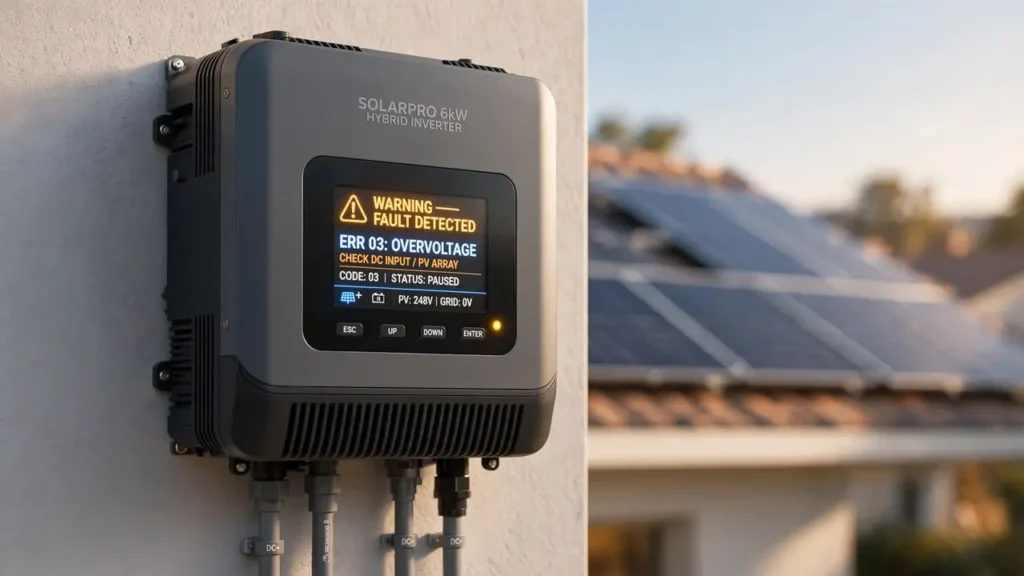
Solar Inverter Error Codes in Pakistan 2026 – Complete Troubleshooting Guide
Solar inverter showing an error or warning? This complete Pakistan-focused guide explains common fault categories, safe troubleshooting steps, Fronus code examples, repair…
1 Comment
[…] parts section lists every parameter you need. Our high-voltage capacitor guides — including the 450V 330uF, 450V 100uF, and 400V 47uF articles — help you match neighboring components on the same […]