
450V 100uF Capacitor: What It Does, How to Test It, and When to Replace It
If you’re in Multan and working with power electronics or solar energy systems, selecting the right components is crucial. One such essential component is the 450V 100uF capacitor, commonly used as a…

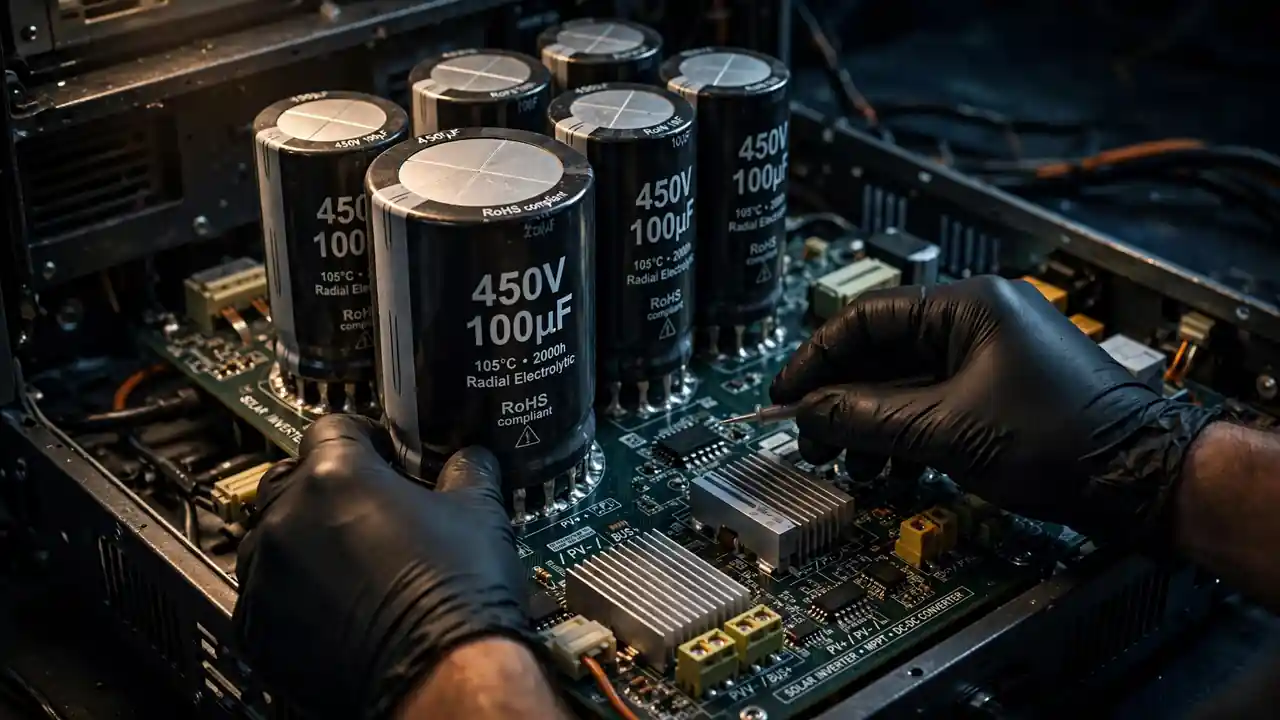
A 450V 100uF capacitor is a polarized aluminum electrolytic part that stores a small amount of charge at high voltage. In solar inverters and UPS units, it most often works in the auxiliary supply, the small circuit that powers the control board. When it weakens, the inverter may start, run for a short time, then shut down again.
What do the numbers 450V and 100uF mean?
100uF is the capacitance, the amount of charge the part can store. It is a middle-size value: big enough to smooth a low-current supply rail, small enough to fit in a tight spot on a board.
450V is the highest DC voltage the part is built to handle. It is a ceiling, not a normal working voltage. A common shop habit is to keep the steady working voltage at or below 80 percent of the rating. For a 450V part, that is 360V. The extra margin covers spikes and surges.
The part is polarized. A stripe down the side marks the negative lead. If you fit it the wrong way round, it will fail, sometimes fast and with heat and gas. Always match the stripe to the board marking before you solder.
Check the temperature rating printed on the sleeve. For work inside an inverter or UPS, a 105°C rating is the safer pick. An 85°C part ages faster in a hot box, and a hot box in a Pakistani summer is normal, not rare.
Where does this capacitor sit in an inverter?
Its most common home is the high-voltage side of the auxiliary supply. The main power stage does the heavy work, but the control chip, the gate drivers, and the display all need a steady low-voltage supply to run. The auxiliary supply makes that supply from the high-voltage side, and the 450V 100uF capacitor smooths the rectified voltage before it is stepped down.
It can also sit in startup circuits. Some designs need a small store of charge to wake the control electronics before the main stage settles. When that store fades, you get the classic symptom: the unit starts, runs briefly, then dies. After it cools, it may start again.
A third home is in power factor correction stages and snubber networks, where the part absorbs switching spikes. In those spots, ripple current matters as much as capacitance. A part with high internal resistance can overheat even when its capacitance reading still looks fine.
What does a failing 450V 100uF capacitor look like?
| Sign | What it tells you | What to do |
|---|---|---|
| Unit starts, then stops, then starts again after cooling | The startup or auxiliary rail sags as the part warms up | Test the auxiliary supply capacitors first |
| Fault codes that come and go | The control chip sees a weak supply rail and reports the fault it links to that rail | Do not trust the code alone; check the rail |
| Faint whine from the auxiliary area that changes as the unit warms | The switching supply is running off its normal point | Inspect and test the small high-voltage capacitors there |
| Bulging top, leaked residue, or a heat-darkened sleeve | The part is finished, whatever a meter says | Replace it |
| Flat top and clean base, but old age and odd symptoms | A part can fail inside while it still looks fine | Test it out of circuit, or test its ESR |
How do you test it safely?
Work on high voltage with care. A 450V capacitor can hold a dangerous charge after the power is off.
- Cut all power: mains, solar input, and battery.
- Discharge the part through a resistor, for example a 10K ohm 5W resistor held across the terminals for several seconds. Never short the terminals with a screwdriver.
- Check with a meter that the voltage is zero before you touch the part.
- Look first. A bulging top, leaked material around the base, or a sleeve darkened by heat condemns the part at once.
- Measure capacitance out of circuit. Most general parts of this type carry a ±20 percent tolerance, so a 100uF part should read near 80 to 120uF. A reading well below 80uF points to dried-out electrolyte.
- Check resistance. A good part shows resistance that climbs toward infinity as it charges from the meter. A steady low reading points to an internal short.
- If you own an ESR meter, use it. ESR is the part's internal resistance. It often rises before capacitance falls, so a high ESR reading is an early warning. Compare the reading with the datasheet for the exact series you hold, because no single ESR number fits every 100uF part.
Test out of circuit where you can. Parts still soldered to a board sit in parallel with other parts, and those parts skew the reading.
How do you replace it?
Photograph the old part before you remove it, so its polarity is on record. Desolder with enough heat, because the pads for a part this size sink heat fast. Add a little fresh solder to help the old joint flow, and work fast enough to protect the pads.
Fit the new part with the stripe on the negative marking. Seat it flat on the board and trim the leads after soldering. Then power up and watch: normal startup, steady behaviour, and a new part that stays barely warm under load for at least fifteen minutes.
Follow these rules for the replacement:
- Voltage rating 450V or higher, never lower.
- Capacitance close to the original value, inside its tolerance band.
- Temperature rating 105°C for inverter and UPS work.
- Size and lead spacing that fit the board without stress.
- A real datasheet from the maker, if you can get one, so you can check ESR and ripple current.
One more habit: when one auxiliary capacitor has aged out, check its neighbours. They have lived through the same heat and the same hours. Replacing a tired neighbour while the board is open is cheaper than opening the unit again next month.
What mistakes do people make with this part?
- Fitting a 400V part where a 450V part belongs. The lower rating leaves too little margin on a high-voltage rail.
- Trusting looks alone. A clean sleeve does not prove a good part.
- Testing in circuit and believing the number. Parallel parts corrupt capacitance and ESR readings.
- Skipping the discharge step because the unit has been off for a while. A big electrolytic can stay charged.
- Replacing the control board before checking the auxiliary supply. A weak small capacitor can fake a board fault.
Frequently asked questions
Can I use a 400V 100uF capacitor instead of a 450V one? No. Never fit a lower voltage rating than the original. The 450V rating gives the safety margin the circuit was designed around.
What reading should a good 100uF capacitor give? Near 100uF, inside its tolerance band. For a common ±20 percent part, that is about 80 to 120uF. Check the sleeve or datasheet for the exact tolerance of your part.
Can two 47uF capacitors replace one 100uF capacitor? Two 47uF parts in parallel add up to about 94uF, which sits inside the tolerance band of many 100uF parts. Use two identical parts with the same voltage rating, and only where the circuit design allows it. When in doubt, match the original part exactly.
Why does the replacement need a 105°C rating? Inverter boxes run hot. A 105°C part has the thermal headroom to last in that heat. An 85°C part in the same box ages much faster.
Should I replace the neighbouring capacitors too? Inspect them, and replace any that look bad or test badly. Parts in the same hot area age together, so a second tired part is common.
Why does my inverter run for a few minutes and then stop? A weak auxiliary supply capacitor is one likely cause, because the startup rail sags as the part warms. Test the auxiliary capacitors before you blame the control board.
Where to go next
If your tests point to this part, check the live SunTech Mall shop for current stock of high-voltage electrolytic capacitors, and read the companion guide on the 450V 330uF capacitor for the larger DC bus part that sits on the same boards. See the 450V 68uF capacitor guide for the middle-size bus capacitor, and browse the full SunTech Mall shop for the rest of your repair bench.
Related Products & Categories
Related Technical Guides
 Category:
General
Veyron II 6KW Fault Codes 2026: What Your Display Is Telling You and What to Do First
One hot afternoon, a homeowner called our repair centre in a panic. His lights had gone out. His inverter was beeping. A…
 Category:
General
Solar Inverter Not Turning On 2026: 9 Reasons and the Step-by-Step Check a Technician Uses
Solar Inverter Not Turning On 2026: 9 Reasons and the Step-by-Step Check It was a sunny morning. The power in the house…
 Category:
Solar Inverter Repair
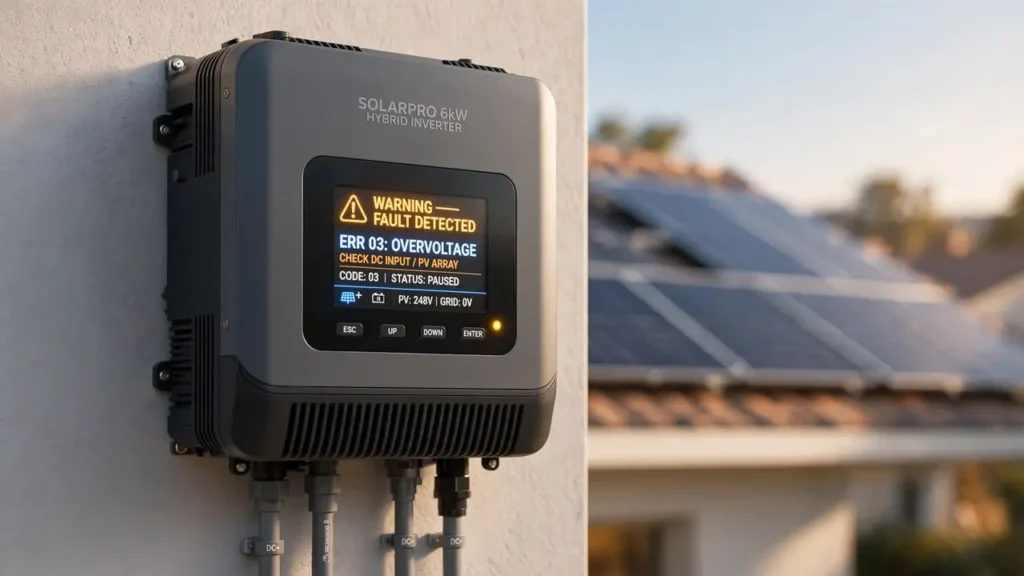
Solar Inverter Error Codes in Pakistan 2026 – Complete Troubleshooting Guide
Solar inverter showing an error or warning? This complete Pakistan-focused guide explains common fault categories, safe troubleshooting steps, Fronus code examples, repair…
1 Comment
[…] genuine high-voltage stock in our electronic parts section. Related guides: the 450V 100uF capacitor, 400V 47uF capacitor, and 400V 82uF capacitor articles cover neighboring components on the same […]