
Inverter Capacitor Bulging? 6 Signs Your Capacitor Is Failing Before the Inverter Stops — 2026 Guide
A bulging capacitor top is the clearest sign your inverter capacitor is failing. Other signs are leaking fluid, a humming sound, random shutdowns, and a unit that restarts again and again. Replace…

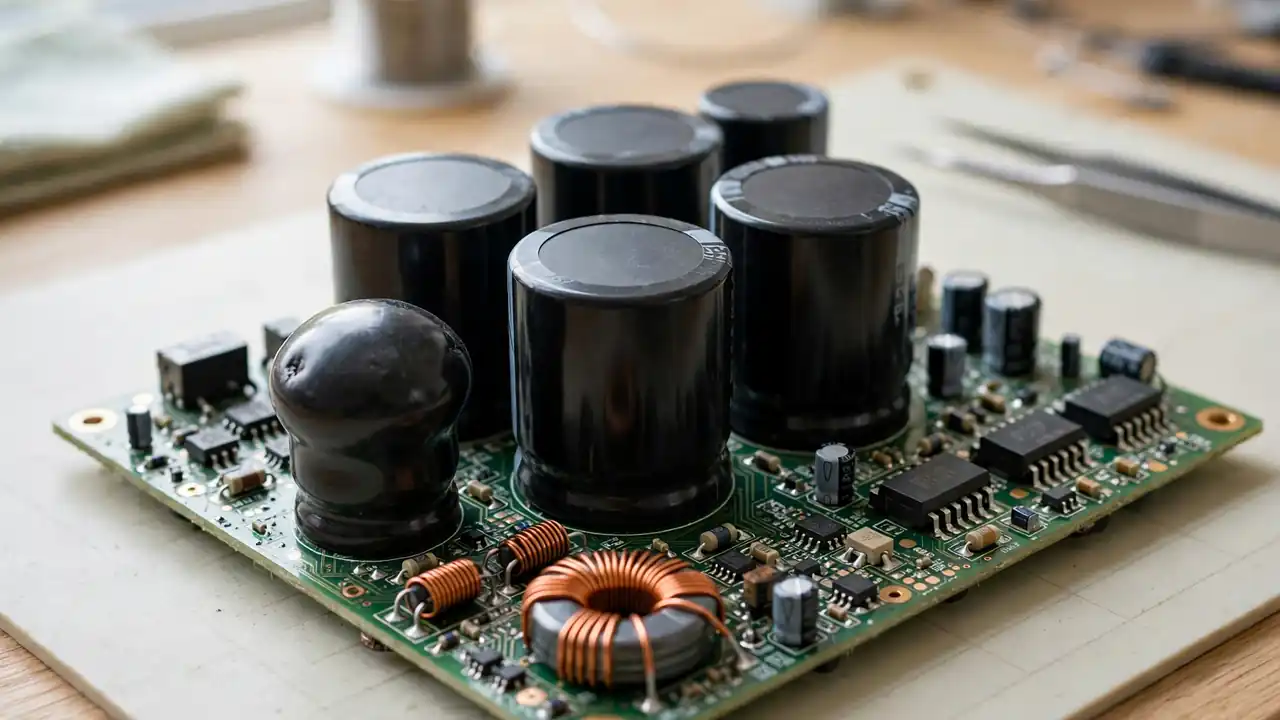
A bulging capacitor top is the clearest sign your inverter capacitor is failing. Other signs are leaking fluid, a humming sound, random shutdowns, and a unit that restarts again and again. Replace the part before the inverter stops for good.
Last summer a customer brought his inverter to our repair centre with a strange complaint. The unit worked fine in the morning, then shut down by itself at noon. It started again after cooling down, then shut down again the next day. He had already changed the battery and checked the wiring. Nothing was wrong. On the bench we found the real fault in two minutes. One big capacitor on the DC bus had a domed top and a small brown stain under it. The part cost very little. The weeks of shutdowns it caused cost him far more. That is the mistake this guide stops. A capacitor gives you warnings long before it kills the inverter — if you know where to look.
This guide is for home users whose inverter behaves strangely, and for technicians who need to explain the fault in plain words. You will learn what a capacitor does inside your inverter, why capacitors fail faster in Pakistan, what a bulging capacitor looks like, the 6 signs of a failing capacitor, how a technician tests one, and how to pick the right replacement. For what happens when heat wins inside the unit, read our Solar Inverter Overheating guide. For the monthly care routine that keeps parts alive longer, read our Solar Inverter Maintenance guide.
Trust nudge: SunTech Mall runs its own inverter and UPS repair service centre in Pakistan. We open inverters, test capacitors on the bench, and fit replacements every day. We also sell original solar inverter and UPS spare parts to technicians and home buyers across Pakistan. So this guide comes from real bench work, not from sales talk.
What You Will Learn in This Guide
What a capacitor does inside your inverter; why capacitors fail faster in Pakistan; what a bulging capacitor looks like; the 6 signs of a failing capacitor; how a technician tests a capacitor; how to match a replacement part; what happens if you ignore a bad capacitor; how to make capacitors last longer; and answers to 6 common questions. You can browse more models in the Solar Inverters section.
What does a capacitor do inside your inverter?
A capacitor is a small part that stores electric charge and lets it out smoothly. Think of it like a small water tank on a pipe. When the flow is uneven, the tank fills and empties to keep the pressure steady. Inside your inverter, capacitors smooth the voltage on the high-voltage DC bus and in the auxiliary power supply. Without them, the voltage would jump up and down with every switching cycle, and the control board would get confused.
The capacitors that fail most often are the big black cylinders called aluminum electrolytic capacitors. They are filled with a liquid called electrolyte. Heat slowly dries that liquid out over years. As the liquid dries, the capacitor stores less charge and resists the flow more. We call that resistance ESR. A healthy capacitor has low ESR. A dying one has high ESR. That is why a capacitor can look fine from the outside and still be dead inside. Our Solar Inverter Spare Parts guide explains this in simple words: a weak capacitor causes instability, humming, or shutdowns — often without any visible damage.
Note: Never open the inverter case yourself to look at the capacitors. High DC voltage stays inside even after you switch the unit off, and capacitors hold charge long after the power is gone. Everything inside the case is a trained technician’s job, and opening it can also end your warranty. Every check in this guide is done from outside the case, except the bench tests, which belong to a technician.
Why do capacitors fail faster in Pakistan?
Capacitors fail for simple reasons, and our climate speeds all of them up.
Heat. Heat is the biggest killer. Inverter cabinets in Pakistani summers run very hot inside, and every extra degree shortens a capacitor’s life. A widely used engineering rule says capacitor life roughly halves for every 10°C of temperature rise. An inverter boxed into a closed cabinet, or mounted in direct sun, cooks its own capacitors. Our 250V 47uF capacitor guide states the same rule, which is why it tells you to pick the 105°C version for warm gear.
Age. Electrolyte dries out slowly even in a cool room. A capacitor that has worked for five or six summers in a hot inverter room is near the end of its life, even if it still works today. Age is not a fault. It is a clock.
Wrong temperature rating. Standard 85°C capacitors age fast in hot inverters. For any capacitor working inside a solar inverter or UPS, the temperature rating should be 105°C. Our 400V 47uF capacitor guide is blunt about this: in enclosed power electronics, 85°C parts live on borrowed time.
Overvoltage and spikes. A capacitor has a maximum voltage rating printed on its sleeve. That number is a ceiling, not a target. The professional rule is to keep the working voltage at or below 80% of the rating. For a 450V part, that means about 360V or less. Lightning, loose wiring, and bad earthing send spikes that push the voltage past the limit. One big spike can wound a capacitor that fails weeks later.
Cheap or fake parts. A cheap capacitor fitted during an earlier repair often gives up at the next summer. Fake parts look the same on the outside but use poor electrolyte and thin foil inside. If you want to learn how to spot them, read our guide on Original vs Fake Inverter Spare Parts.
Ripple current. Every switching cycle pushes current in and out of the capacitor. Heavy loads mean heavy ripple. A capacitor rated for low ripple current, fitted where the ripple is high, heats itself from the inside and dies early. Matching the ripple rating matters as much as matching the voltage.
What does a bulging capacitor look like?
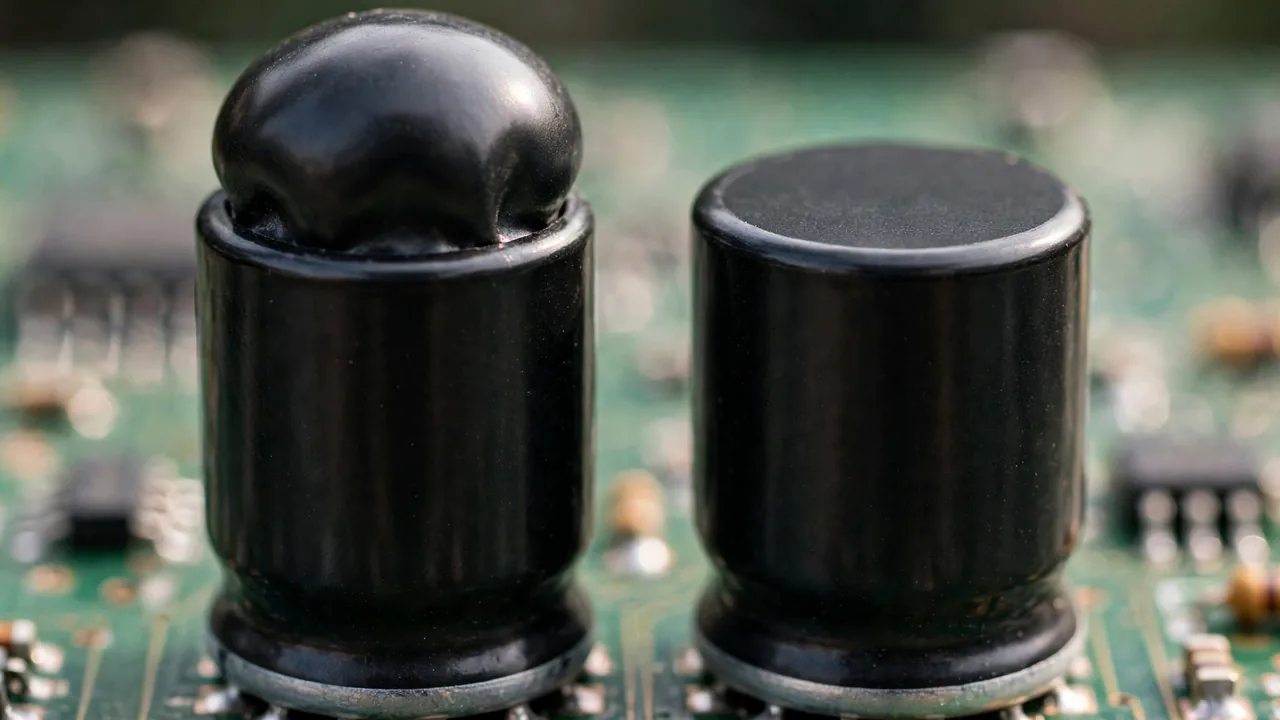
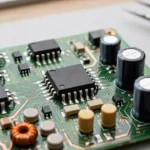
The top of a healthy electrolytic capacitor is flat. The top of a failing one domes upward like a small hill. That dome is gas. When the electrolyte breaks down from heat or overvoltage, it makes gas inside the sealed can. The pressure has nowhere to go, so the top bulges. Most capacitor tops have a scored cross or K-shaped vent. That vent is a safety valve. When the pressure gets too high, the vent splits open and lets the gas out. A split vent, a domed top, or a top that is no longer flat all mean the same thing: replace this part now.
Look also for leaking fluid. A dying capacitor can weep brownish electrolyte from the top vent or from the bottom seal where the leads come out. The fluid dries into a brown crust on the board. It can corrode the copper tracks around it, so a small leak can grow into board damage if it is ignored. A capacitor can also tilt or lift off the board when the pressure pushes it up. If the sleeve looks swollen or the part sits crooked, the inside has already failed.
Bonus Tip: A bulging top is proof of failure, but a flat top is not proof of health. Many capacitors fail with no visible sign at all. The electrolyte dries out quietly, the capacitance drops, and the inverter starts acting strange while every part still looks perfect. That is why the 6 signs below matter more than looks alone.
6 signs your inverter capacitor is failing
Watch for these six signs in order. One sign alone may have another cause. Two or more together point strongly at the capacitors.
- The inverter restarts again and again. This is the classic sign. The unit powers on, runs for seconds or minutes, then shuts off. After cooling down, it may start again. Our 450V 100uF capacitor guide calls intermittent startup the classic sign of a dying capacitor in the auxiliary supply. The control board loses its smooth power, resets, and tries again.
- Random shutdowns on hot afternoons. The inverter works in the morning and dies at noon. Heat makes a weak capacitor worse, so the fault shows up when the room is hottest. If the shutdown follows the heat of the day, not the load, suspect the capacitors.
- A humming or buzzing sound from inside. A healthy inverter hums softly from its transformer. A loud, harsh buzz that is new can mean the capacitors are no longer smoothing the voltage, so ripple reaches parts that should never see it. Do not confuse this with fan noise — our fan noise guide helps you tell the two apart.
- Fault codes that come and go. The display shows a fault code, you reset the unit, the code clears, then it returns the next day. A weak capacitor in the auxiliary supply feeds the control board, so its failure produces confusing symptoms — random fault codes or failure to start — that look like control board problems.
- The output drops or the lights flicker. When the DC bus capacitors can no longer hold the voltage steady, the output sags under load. Lights flicker, the fan slows, and the inverter may switch to battery and back for no clear reason.
- The inverter will not start at all. The display stays dark, or the unit clicks and dies. A fully dried-out capacitor in the startup circuit cannot store the energy the unit needs to wake up. By this stage the capacitor has been dying for weeks, and the earlier signs were missed.
How does a technician test a capacitor?
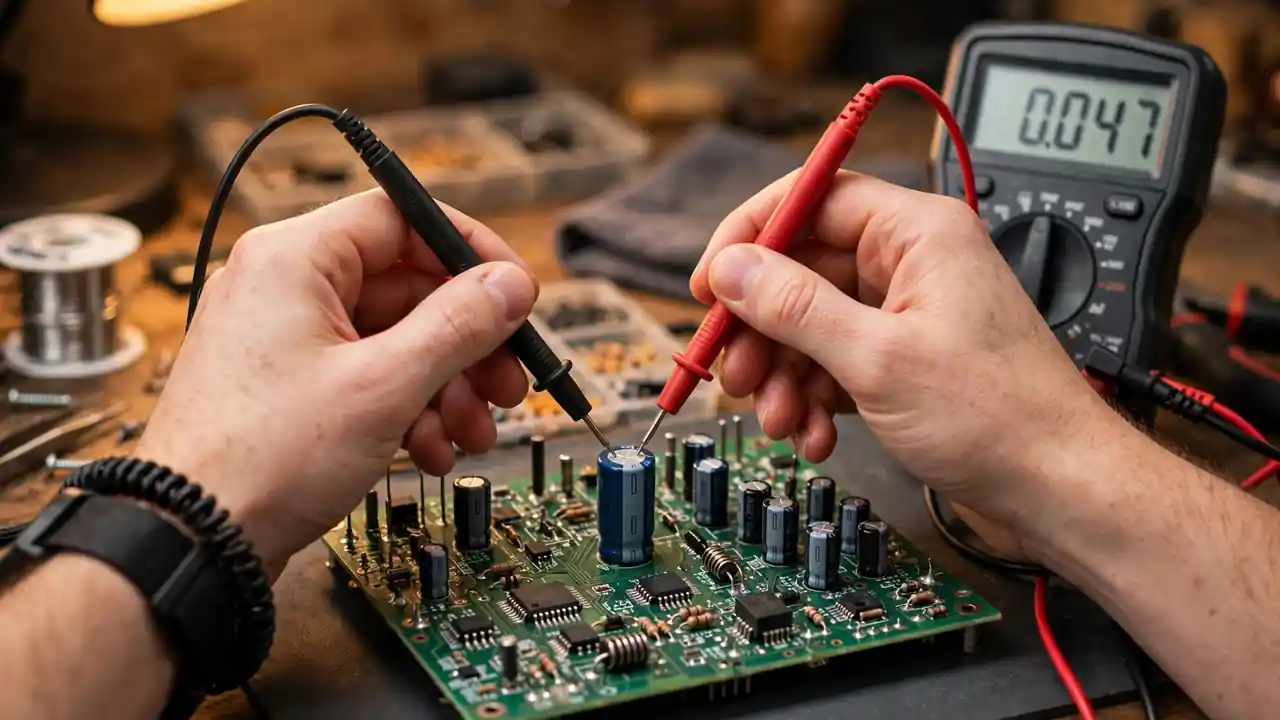
A technician never guesses. Two quick bench tests settle it.
Capacitance test. The capacitor is removed from the board, discharged, and measured with a multimeter on capacitance mode. Every electrolytic has a standard tolerance of ±20%. A 100uF part should measure roughly 80uF to 120uF. A reading well below 80uF means the electrolyte has dried out. A reading near zero means the part has failed inside. For a 47uF part, the healthy range is roughly 37uF to 56uF, and below 37uF means meaningful drying. These ranges come from our 450V 100uF guide and our 400V 47uF guide.
ESR test. An ESR meter measures the internal resistance directly. High ESR is the earliest warning of a dying capacitor, often months before the capacitance drops. This is why technicians say an ESR meter is their best friend for capacitor work. A capacitor can pass a capacitance test and still fail an ESR test, so a good bench checks both.
Note: Discharging is not optional. A technician discharges the capacitor with a 10K ohm 5W resistor across the terminals for several seconds and confirms zero volts before touching it. Never short a big capacitor with a screwdriver — the spark can damage the part and hurt you. If you do not have the tools and the training, this test belongs to a repair shop.
How to pick the right replacement capacitor
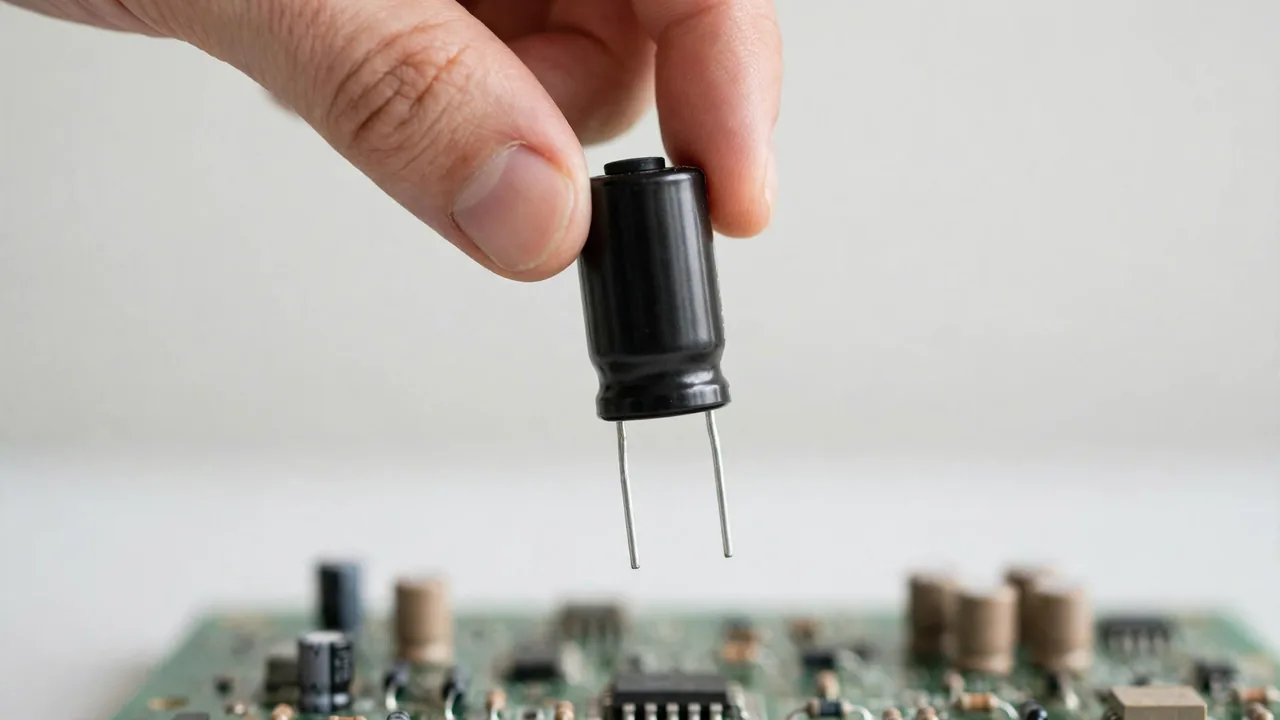
Matching a capacitor is not guesswork. Read the sleeve of the old part and match all five things in the table. When in doubt, bring the old part to the shop — a good seller matches it for you.
| What to match | Rule | Why it matters |
|---|---|---|
| Capacitance (uF) | Match it exactly, or stay very close in filtering jobs | The value sets how much charge the part stores; the wrong value changes how the circuit behaves |
| Voltage rating (V) | Same or higher, never lower | A lower rating has no safety margin and will fail early, possibly taking other parts with it |
| Temperature rating | 105°C for inverter and UPS work | 85°C parts age fast in hot cabinets and live on borrowed time |
| Size and lead spacing | Must fit the same holes on the board | A part that does not fit cannot be soldered safely, even if the numbers match |
| Low ESR / ripple current | Match the series class, not just the two big numbers | A general-purpose part in a high-ripple spot heats itself from inside and dies early |
Two more rules from the bench. First, the stripe down the side marks the negative lead. The part is polarized. Reverse connection will destroy it, sometimes violently, so always check polarity against the board markings before soldering. Second, buy original parts from a trusted seller. Counterfeit capacitors are common because the popular values sell in huge numbers. Our Original vs Fake guide shows the hands-on checks. You can browse genuine values in the Capacitors section — check the live price on the product page before you order.
What happens if you ignore a bad capacitor?
A bad capacitor does not stay a small problem. The ripple it stops smoothing reaches the MOSFETs and IGBTs next. Those parts run hotter, switch badly, and can fail in a chain. A capacitor that costs very little can take down power parts that cost far more. A leaking capacitor is worse: the fluid corrodes the copper tracks on the board, and a corroded track can mean a board repair instead of a part swap. In the worst case, a capacitor under pressure vents with a loud pop and a sharp smell. The inverter stops on the spot, usually on the hottest day of the year, when you need it most. Every week you wait turns a small, cheap fix into a bigger, costlier one.
How to make capacitors last longer
You cannot stop capacitors from ageing, but you can slow the clock a lot. Keep the inverter in a cool, shaded place with free air on all sides. Never box it into a closed cabinet. Clean the dust from the vents so the fan does not have to fight for air — our fan noise guide shows how dust chokes cooling. Keep the load within the inverter’s size so the parts do not run near their limit all day. Check the wiring and earthing so spikes do not reach the board. And when a capacitor is replaced, insist on a 105°C low-ESR original part. A good part fitted once lasts years. A cheap part fitted twice costs more in the end.
Frequently Asked Questions
Can a capacitor fail without bulging?
Yes. Most failing capacitors look perfectly normal. The electrolyte dries out quietly inside, the capacitance drops, and the ESR rises, while the top stays flat. Bulging is proof of failure, but a flat top is never proof of health. Only a capacitance and ESR test can confirm a capacitor that looks fine.
How long does an inverter capacitor last?
It depends on heat. In a cool, well-ventilated room, a good 105°C capacitor can last many years. In a hot cabinet in a Pakistani summer, the same part ages far faster, because capacitor life roughly halves for every 10°C of temperature rise. After five or six hot summers, a check on the bench is wise even if nothing has failed yet.
Can I replace a capacitor with a higher voltage rating?
Yes, if it fits. A higher voltage rating is safe and gives more margin. Never fit a lower voltage rating than the original part. Also match the capacitance closely, pick the 105°C rating, and check that the lead spacing fits the board.
Why does my inverter restart again and again?
A dying capacitor in the auxiliary supply is the most common cause. The control board loses smooth power, resets, and tries again. It can also be a loose connection or a weak battery, so a technician should test the capacitors before changing anything else.
Is a humming inverter always a capacitor problem?
No. Transformers hum, and the hum grows with load. That is normal. A new, harsh buzz is different. It can mean the capacitors are no longer smoothing the voltage, but it can also mean overload or other failing parts. Switch heavy loads off and call a technician if the buzz is new or keeps growing.
Can a bad capacitor damage other parts?
Yes. When a capacitor stops smoothing, ripple voltage reaches the MOSFETs, IGBTs, and control board. Those parts run hotter and can fail in a chain. A leaking capacitor can also corrode the board. Fixing the capacitor early protects the expensive parts around it.
Final Thoughts
A capacitor is a small part with a big job. It keeps the voltage smooth so every other part can do its work. When it starts to fail, it warns you: a domed top, a brown stain, a hum, a restart, a shutdown on a hot afternoon. Listen to those warnings. A capacitor checked early is a cheap fix. A capacitor ignored can take down the whole inverter.
If your inverter shows any of the 6 signs in this guide, take it to a technician and ask for a capacitance and ESR check before the next hot day. And when you need a genuine replacement, browse the Capacitors section on SunTech Mall — match the exact value printed on your old part, pick the 105°C low-ESR original, and check the live price on the product page. Questions? Message us on WhatsApp at 0306-2244820 and tell us the value printed on your old capacitor — we will help you match it.
1 Comment
[…] Inverter Capacitor Bulging? 6 Signs Your Capacitor Is Failing Before the Inverter Stops — 2026 Gui… […]