

BZT52C39V Zener Diode: How to Use It for Voltage Regulation and Protection
The BZT52C39V Zener diode is a 39V SMD Zener diode commonly used in electronic circuits for Zener diode voltage regulation and Zener diode for overvoltage protection. This SOD-123 Zener diode is compact…

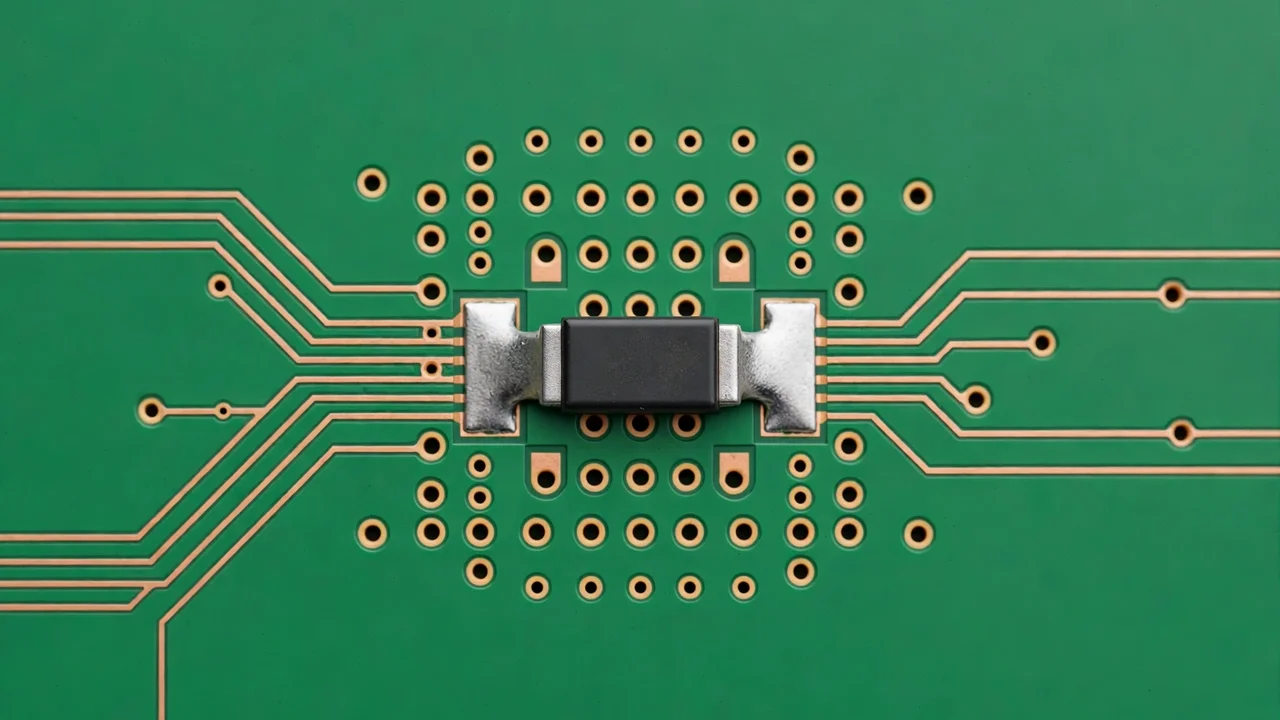
Dek: This guide shows you how the BZT52C39V zener diode works, how to size its resistor with real math, and when to use it for regulation or for protection.
Key takeaways
- The BZT52C39V is a small SMD zener diode in a SOD-123 package. It holds about 39 V across itself and clamps anything higher.
- Its “C” grade means about ±5% tolerance, so a real part may clamp between about 37 V and 41 V.
- You must always use a series resistor. The resistor sets the current and stops the diode from burning up.
- Use it for small, steady regulation jobs and for moderate overvoltage protection. For big, violent surges, step up to a TVS diode.
- Check the live price on the website. Always confirm the specs against your maker’s datasheet.
In this guide: How it works · Specs in plain words · Resistor math · Power checks · Regulation vs protection · Mistakes · FAQ · Verdict
How does a zener diode work?
A normal diode is a one-way street: current flows forward and is blocked in reverse. A zener diode follows the same rule, right up to a special point called the breakdown voltage. Past that point, it starts to conduct in reverse, and the voltage across it locks at the breakdown value even as more current flows.
Think of a pressure relief valve on a water tank. Below the set pressure, the valve stays shut. Above it, the valve opens and holds the pressure right at that level. The BZT52C39V is a 39 V relief valve for electricity. Below 39 V in reverse, it barely conducts. Above 39 V, it clamps hard.
That one trick gives you two jobs. First, voltage regulation: put the zener across your load with a series resistor feeding it, and the load sees a steady 39 V even when the input wobbles. Second, overvoltage protection: put the zener across a sensitive circuit, and any surge above 39 V gets clamped before it can do damage.
Note: Zener breakdown is a designed effect, not damage. The diode is built to do this again and again. What kills a zener is too much current making too much heat. That is why the resistor and power math below are non-negotiable.
What do the BZT52C39V specs mean?
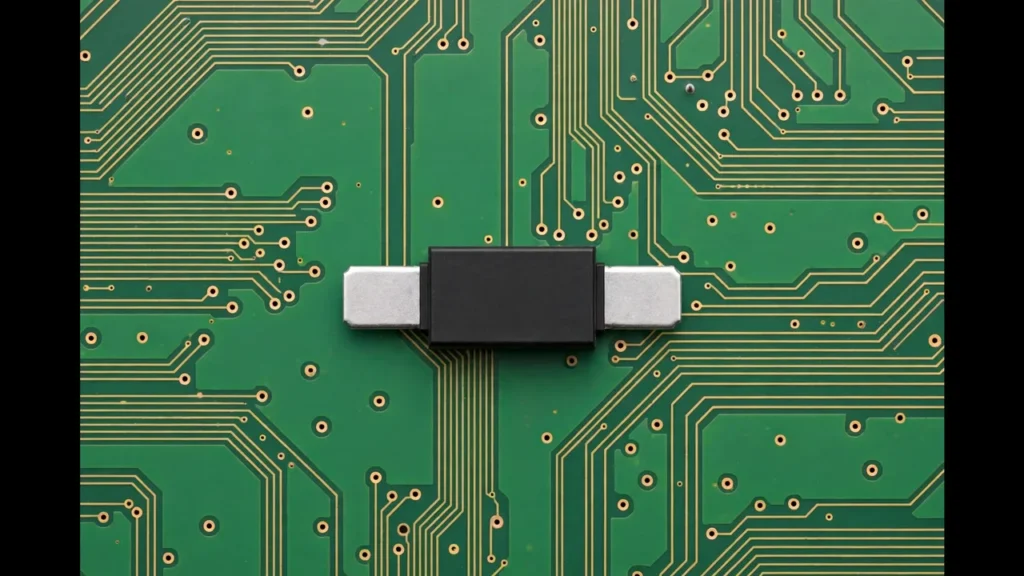
Let us decode the part number. BZT52C is the series: small-signal SMD zener diodes in a SOD-123 package. The C suffix is the tolerance grade, about ±5%. 39V is the nominal zener voltage. Put together: a 39 V, ±5% zener in a tiny SOD-123 body.
| Spec | Figure | What it means for you |
|---|---|---|
| Zener voltage (Vz) | 39 V nominal, about 37–41 V with ±5% tolerance | Your “39 V” part may clamp anywhere in that range; fine for protection, not for precision work |
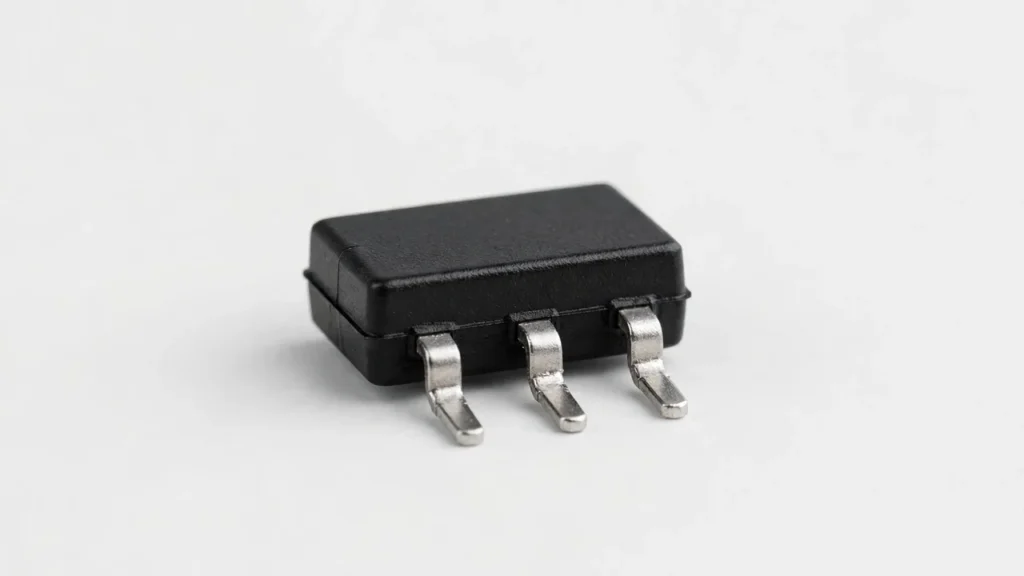
| Package | SOD-123 | A tiny rectangular SMD body that takes almost no board space |
| Power rating | About 500 mW class (some makers rate up to 590 mW) | The ceiling for heat the diode can shed; design well below it and check your maker’s datasheet |
| Test current | About 2 mA for the voltage rating | The voltage is specified at a small test current, not at zero current |
| Max zener impedance | About 130 Ω | A measure of how stiff the clamping is; lower is better |
| Reverse leakage | Very low below breakdown (about 100 nA at 27.3 V for one maker) | The diode barely loads your circuit until it is needed |
Sources for these figures: Diodes Incorporated BZT52C39 listing and Nexperia BZT52 series data. Makers differ slightly on power rating, so always check yours.
How do you calculate the series resistor?
This is the heart of zener design, and it is just Ohm’s law. The series resistor drops the gap between the input voltage and the zener voltage, and it sets a safe current through the diode.
R = (Vin − Vz) ÷ Iz
Vin is your input voltage, Vz is 39 V, and Iz is the current you choose to run through the zener. Here is a real example. Your input is 48 V, a common telecom rail. You choose a zener current of 5 mA:
R = (48 V − 39 V) ÷ 5 mA = 9 V ÷ 0.005 A = 1,800 ohms. The nearest standard value is 1.8 kΩ. Done.
How do you pick Iz? It must be large enough to keep the zener in solid breakdown under all conditions, a few milliamps at least for this series. It must also be small enough to keep power ratings comfortable. Five milliamps is a sensible middle ground here.
Bonus tip: Always design for the worst case, not the typical case. Check the highest input voltage you expect, which gives maximum current and power. Then check the lowest input voltage, which gives minimum current — it must still keep the diode in breakdown. If both extremes work, your design is solid.
How do you check the power ratings?
Two quick calculations, thirty seconds, zero excuses.
Zener power: Pz = Vz × Iz. In our example: 39 V × 5 mA = 0.195 W. That sits comfortably below the roughly 0.5 W rating. Good.
Now see why the old article’s 10 mA example was risky: 39 V × 10 mA = 0.39 W, uncomfortably close to the ceiling. Lower current is the safer habit here.
Resistor power: Pr = (Vin − Vz)² ÷ R. In our example: 9 V² ÷ 1,800 Ω = 81 ÷ 1,800 = 0.045 W. A standard quarter-watt (0.25 W) resistor handles that with room to spare. As a rule, pick a resistor rated for at least twice your calculated dissipation. Resistors are cheap. Smoke is expensive.
Also redo the math at the tolerance extremes. At 41 V worst-case zener voltage with a 48 V input, the resistor sees only 7 V and current drops. At 37 V, it sees 11 V and current rises. Run your power check at the combination that gives maximum dissipation.
Clean input filtering helps too. Our 50V 4.7nF SMD capacitor guide explains why a quieter rail means the zener works less hard.
When should you use it for regulation, and when for protection?
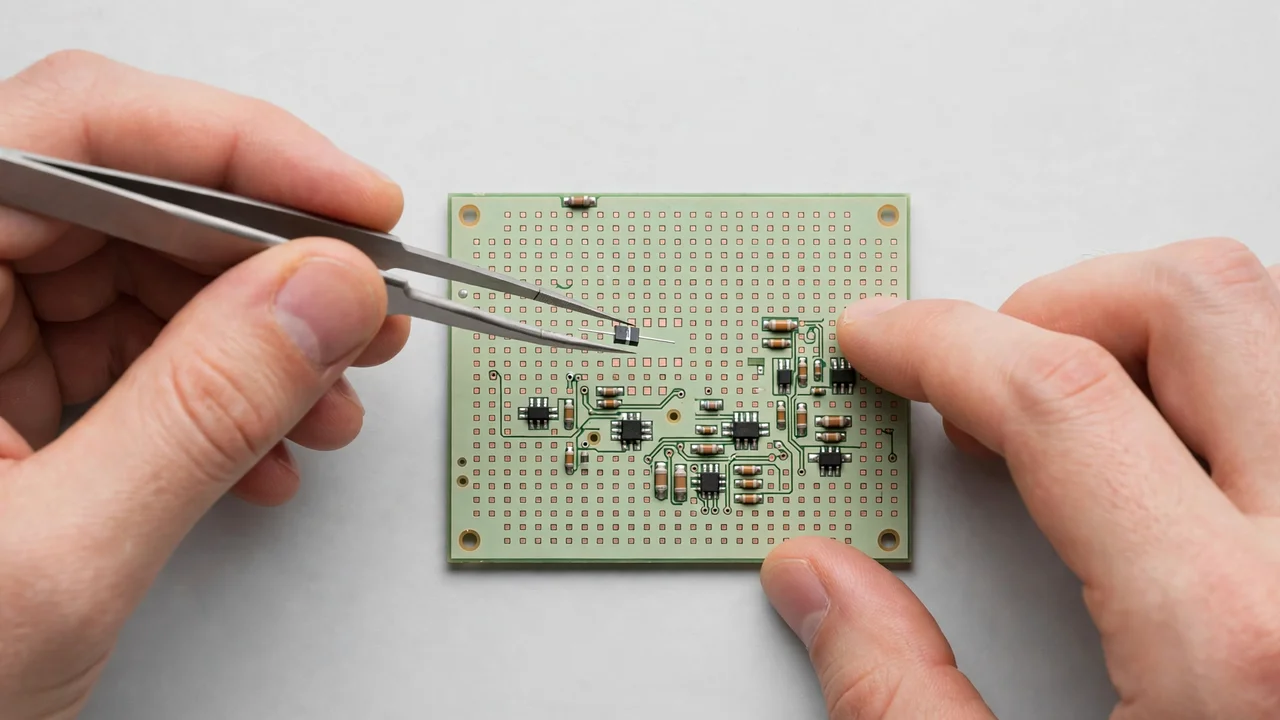
For regulation, the zener sits across the load, fed by the series resistor from the input. The resistor must supply both the zener current and the load current. The design must hold from no load to full load. This works well for small, steady loads like reference rails and bias supplies.
For protection, the zener sits across the sensitive circuit, often with a series resistor or fuse upstream. Under normal conditions it does nothing at all. The rail sits below 39 V and the diode just watches. When a surge pushes the rail above 39 V, the zener clamps hard. Here the question is different: can the diode survive the surge energy? For big, violent transients, a small 500 mW zener is not the right part. Step up to a TVS diode. For moderate overvoltage events, the BZT52C39V is a perfectly respectable guard.
Where does 39 V protection actually appear? Telecom equipment running on 48 V rails uses 39 V-class clamping below the rail. Industrial control boards with 24–48 V supplies use it on exposed input lines. Inside solar inverters and UPS systems, auxiliary rails and gate-drive supplies get zener protection against switching spikes. That is also why it pairs well with our TLP250H gate driver optocoupler guide.
Note: A zener protects against overvoltage, not reverse polarity or sustained massive overcurrent. Each threat needs its own guardian. Good protection design layers them: fuse for overcurrent, zener or TVS for overvoltage, series diode for reverse polarity.
Which wiring mistakes kill zeners on day one?
Mistake one: forward instead of reverse. The zener must be reverse-biased to regulate: cathode toward the positive rail, anode toward ground. Wire it forward and it acts like an ordinary diode dropping about 0.7 V, while your circuit starves. On a SOD-123 body, check the cathode stripe against the datasheet or a known-good board.
Mistake two: no series resistor. Connecting a zener directly across a stiff voltage source above its breakdown is a short, dramatic life. The resistor is not optional. It is the part that makes the whole circuit possible.
Mistake three: resistor value guessed, not calculated. Too small and the diode overheats. Too large and the diode drops out of breakdown at low input voltage, so regulation collapses exactly when you need it.
Mistake four: ignoring the tolerance spread in precision jobs, then blaming the part for being “inaccurate.” A ±5% zener is a protection and rough-regulation part, not a calibration standard. For precision, use a part like the TL431 shunt regulator instead.
Mistake five: counterfeit parts with soft, sloppy breakdown knees. A genuine BZT52C has a sharp, clean breakdown. If your “39 V zener” starts conducting softly at 30 V, it is not a 39 V zener.
Frequently asked questions
Can I use the BZT52C39V to get 39 V from a 12 V supply?
No. A zener can only clamp a voltage down, never boost it up. To get 39 V from 12 V you need a boost converter. The zener works when your input is higher than 39 V and you want to hold a node at 39 V, or when you want to clamp spikes above 39 V.
What is the difference between the BZT52C and BZT52B series?
Same SOD-123 package and power class, different tolerance grade. C parts are about ±5%, B parts about ±2%. For general protection duty, the C grade is the economical standard.
How do I test a zener diode with a multimeter?
A standard diode test only checks the forward direction. To verify the zener voltage, reverse-bias it: connect it cathode-positive through a series resistor to a supply above 39 V, and measure across the diode. It should read about 39 V. Never skip the series resistor in this test.
Why is my zener getting hot even though the circuit “works”?
Heat means the current is higher than intended. Common causes: input voltage higher than assumed, the resistor value misread, or the load disconnected so the zener absorbs all the resistor current. Measure the real current, redo the power math with real numbers, and resize the resistor.
Where can I buy a genuine BZT52C39V in Pakistan?
Buy from a supplier that lists the full part number, including the tolerance suffix. SunTech Mall stocks the BZT52C39V zener diode for repair shops across Pakistan. Check the live price on the website, or reach us on WhatsApp. Other values in the same series, like the BZT52C12 12 V zener, are also stocked.
Verdict
You now understand the pressure-valve idea behind zener breakdown, you can size the series resistor from scratch, you run both power checks without being reminded, and you know exactly when this diode should regulate and when it should stand guard. That is complete, usable knowledge.
Protection design is one of those skills that quietly separates reliable products from warranty nightmares. The next time you see an unprotected input rail on a board, you will know exactly which tiny part belongs there and exactly how to size it.
Related reading: TLP250H gate driver guide · TL431 shunt regulator guide · 0 ohm SMD resistor guide · Shop all products
Sources: Diodes Incorporated BZT52C39 listing · Nexperia BZT52 series data