


Best 50V 100uF Capacitor with Whole sale Deal in Peshawar
re you searching for high-quality 50V 100uF capacitors at an affordable price in Peshawar? Whether you're an electronics enthusiast, a professional engineer, or a business owner looking to stock up on reliable…

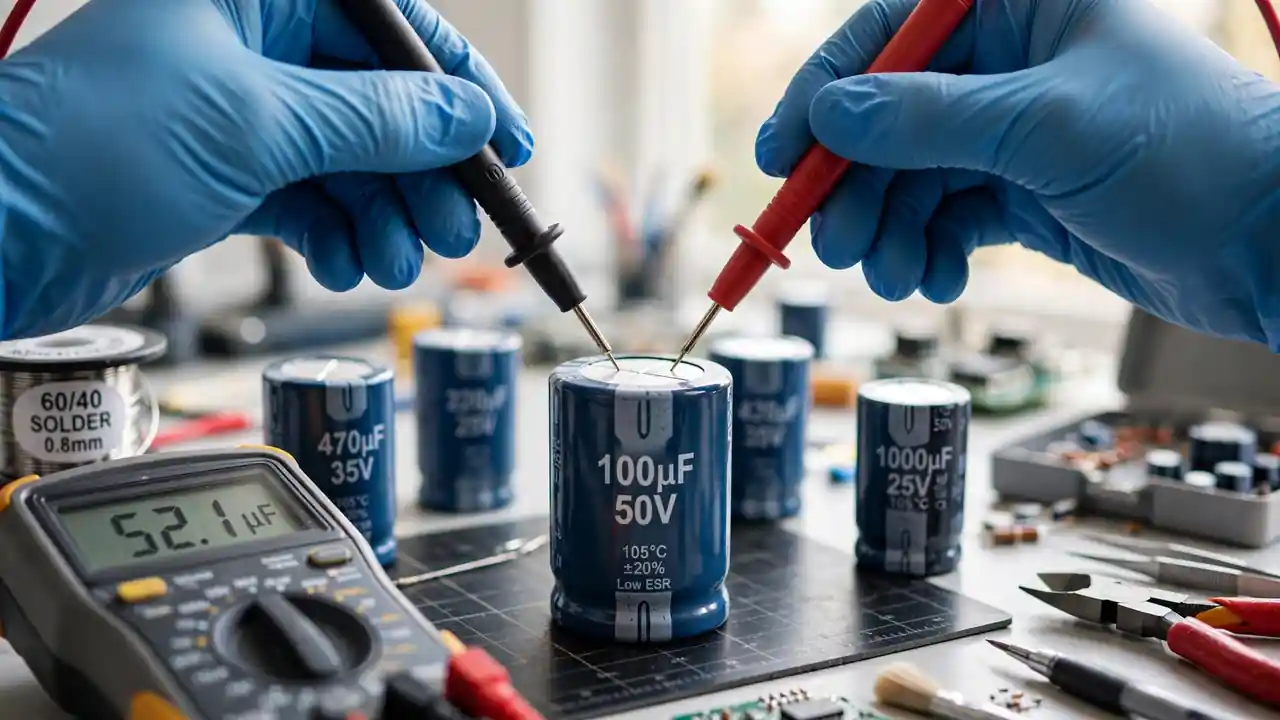
Introduction: The Tiny Part That Decides Whether Your Circuit Lives or Dies
I have spent years around electronic repair work, and I can tell you something from the heart: most dead power supplies I have seen were killed by one cheap, tired capacitor. The 50V 100uF capacitor is one of the most-used components in electronics — it sits inside power supplies, audio amplifiers, UPS boards, and LED drivers all over Peshawar. And yet most buyers know nothing about it beyond two numbers printed on its sleeve.
Here is my personal stake: at SunTech Mall, repair technicians walk in every week holding blown boards, asking why their circuits keep dying. Often the answer is the same — a counterfeit or wrong-spec capacitor that dried out, bulged, and gave up.
Your fear is probably this: you buy a bag of capacitors, solder them in, and the project works for a month — then dies. Was it the capacitor? Was it fake? Was the voltage rating wrong? This guide answers all of that. My exact promise is simple: by the end of this article, you will know what a 50V 100uF capacitor does, how to pick the right type, how to spot a failing one before it kills your circuit, and how to buy genuine ones at wholesale prices in Peshawar.
So keep reading. The next few minutes could save your next project — and your next repair bill.
Trust nudge: Look, I know what this looks like — an electronics store telling you to buy capacitors from that same store. Fair. But here is the difference: this guide teaches you things that help you even if you buy from someone else. I will show you how temperature ratings work, why capacitors fail, and how to spot fakes. If you know all that and still choose SunTech Mall, it will be because the knowledge convinced you, not because a headline pushed you.
In This Guide: What You Will Be Able to Do
- Understand exactly what a 50V 100uF capacitor does in a circuit, in plain language
- Tell electrolytic, ceramic, and film capacitors apart — and know when each one is the right choice
- Read a capacitor’s ratings and pick the right voltage, temperature, and size for your project
- Recognize the visible warning signs of a dying capacitor before it destroys your board
- Buy capacitors wholesale in Peshawar without getting fooled by fakes or wrong specs
What a 50V 100uF Capacitor Actually Does
The first time I held a swollen electrolytic capacitor, it felt like a tiny balloon about to pop. That was the moment I understood: a capacitor is a storage tank for electricity.
A 50V 100uF capacitor is an aluminum electrolytic capacitor. The “100uF” (100 microfarads) tells you how much charge it can store. The “50V” is its voltage rating — the maximum voltage it can safely handle. Go beyond that number and the capacitor fails, sometimes dramatically. In real circuits, these capacitors do three main jobs: power supply filtering (smoothing ripples in DC voltage), signal coupling (passing AC signals while blocking DC in audio stages), and energy storage (a quick reserve the circuit grabs when load spikes).
Bonus Tip: That 50V rating is a ceiling, not a target. If your circuit runs at 24V, a 50V capacitor gives you a comfortable safety margin. If your circuit runs at 48V, that margin is dangerously thin — choose a higher rating like 63V or 100V instead. A common rule of thumb is to use a capacitor rated for at least 1.5 times your circuit’s maximum voltage.
Electrolytic vs Ceramic vs Film: Which One Do You Actually Need?
Walk into any electronics market in Peshawar and you will see three big families of capacitors. I have watched beginners grab whichever one is cheapest and wonder why their circuit misbehaves. The type matters more than most people think.
Electrolytic capacitors (like our 50V 100uF) are the workhorses for larger capacitance values. They store a lot of charge in a small package, which makes them ideal for power supply filtering. But they are polarized — they have a clear positive and negative lead, and wiring them backwards is a fast way to destroy them.
Ceramic capacitors are small, cheap, and non-polarized. You find them in tiny values (picofarads to a few microfarads), placed close to chips to kill high-frequency noise. They cannot replace an electrolytic where bulk energy storage is needed — the physics just does not work.
Film capacitors are the precision players — stable, very low losses, long life. You see them in audio and high-frequency circuits where accuracy matters, at a higher cost per microfarad than electrolytics.
So when do you pick the 50V 100uF electrolytic? When you need a solid chunk of capacitance — around 100 microfarads — for filtering or coupling in a low-to-medium voltage circuit. That is its home turf. For more on the components that work alongside capacitors in repair work, see our guide to the 3-pin rocker switch for UPS and solar inverters.
Note: Never swap an electrolytic for a ceramic just because both say “100uF.” Beyond a few microfarads, ceramic capacitors with that value are either huge, expensive, or have voltage-dependent capacitance that makes them behave unpredictably. Match the type to the job.
Why the 105°C Rating Matters More Than You Think
Here is something I wish someone had told me years ago: two capacitors can look identical and perform identically on day one — and one can die in a year while the other lasts a decade. The difference is usually the temperature rating.
Capacitors are filled with a liquid electrolyte, and heat is their enemy. Over time, heat evaporates that liquid — engineers call this “drying out.” As the electrolyte dries, the capacitor’s ESR (Equivalent Series Resistance) climbs, its filtering ability collapses, and eventually the circuit fails.
Capacitors rated for 105°C use better electrolytes and seals than cheaper 85°C parts. Inside a warm power supply or a UPS sitting in a Pakistani summer room, the inside temperature can easily cross 60–70°C. A 105°C-rated capacitor keeps a bigger safety margin and lasts far longer in that environment.
Bonus Tip: When buying, ask for the temperature rating before you ask for the price. A 105°C 50V 100uF capacitor from a genuine brand is one of the best “insurance policies” you can put inside a repair job. The small price difference pays for itself in reliability.
How Capacitors Die: The Warning Signs You Can See With Your Eyes
I have opened hundreds of dead power supplies, and capacitor failure has a signature. Learn to read it and you can diagnose a dead board in under a minute.
Bulging tops. A healthy electrolytic capacitor has a flat top. When pressure builds inside, the scored vent on top pushes upward into a dome — or worse, bursts and leaks. If you see a bulging cap, it is done. Replace it.
Leaking electrolyte. Sometimes the capacitor leaks a brownish or black crusty residue around its base or from the vent. That crust is dried electrolyte. The capacitor is dead, and the leaked fluid can corrode the circuit board around it.
Loose or tilted seating. A capacitor that rocks in its solder joints may have been overheated or poorly soldered. Reflow or replace it.
Silent death — no visible sign. This is the tricky one. Capacitors can dry out completely with zero visible change. If a power supply hums, overheats, or produces unstable voltage but all caps look fine, the capacitors are still your prime suspects. This is why repair technicians replace the whole set of electrolytics in old boards rather than hunting for one bad apple.
Note: When replacing a failed capacitor, match or exceed the voltage rating and capacitance, and match the physical size if board space is tight. Check polarity twice before soldering — reverse polarity on an electrolytic is dangerous.
Buying Wholesale in Peshawar: How to Save Money Without Getting Fakes
Peshawar’s electronics markets are a treasure for anyone building or repairing electronics — if you know how to shop. I have seen the same component sold at wildly different quality levels on the same street. Here is how to buy smart.
Why wholesale makes sense. If you run a repair shop or assemble electronics, you go through capacitors by the hundred. Buying in bulk gives you lower per-unit cost, consistent quality across batches, and steady supply so projects never stall.
The fake problem is real. Counterfeit capacitors are one of the most common fake components in the market. They carry the printed specs of premium brands but contain inferior internals. They work at first — which is exactly why they are dangerous — then fail early. The tell-tale signs: suspiciously low prices, inconsistent printing on the sleeve, and weight that feels wrong for the size.
Buy from a supplier who tests and stands behind stock. A serious supplier sources from known manufacturers, stores components properly (heat and humidity damage stock too), and will answer questions about ratings. That is exactly how we operate at SunTech Mall — browse our electronic parts collection or check our 50V 100uF aluminum electrolytic capacitor listing directly.
For larger solar projects, you may also want our guide on choosing the best solar inverter for home and the best solar panel brands in Pakistan — capacitors and switches are the small parts, but the big parts need just as much care.
Bonus Tip: When buying wholesale, ask for one consistent brand and batch per order. Mixing brands in one repair job can cause subtle mismatches in ESR, which matters in high-ripple circuits like UPS chargers.
Your Quick Checklist Before You Buy Any Capacitor
Tape this to your workbench — mentally, at least:
- Capacitance and voltage: 100uF and 50V (or higher voltage) for this job.
- Temperature rating: Prefer 105°C for anything that runs warm.
- Low ESR: Ask for low-ESR types for switching power supplies and UPS boards.
- Polarity markings: Clear negative stripe on the sleeve.
- Physical size: Check diameter and height against your board’s footprint.
- Genuine source: Buy from a supplier you can return to if a batch fails.
Want a second opinion on a spec? Message us at info@suntechmall.com or call/WhatsApp +92 306 2244820 — we help customers match components to their circuits every day.
Frequently Asked Questions
Can I use a 63V 100uF capacitor instead of a 50V 100uF one?
Yes, in most cases. A higher voltage rating is always safe as long as the capacitance (100uF) matches and the physical size fits your board. Never go lower than the original voltage rating, though.
What happens if I install an electrolytic capacitor backwards?
Reverse polarity causes the capacitor to heat up rapidly. It can vent, leak, or in extreme cases burst. Always double-check the polarity stripe (negative lead) against your board’s markings before soldering.
How long does a 50V 100uF electrolytic capacitor last?
It depends on temperature and quality. A good 105°C-rated capacitor in a cool circuit can last many years; a cheap 85°C part in a hot UPS may fail within a year or two. Heat is the main killer — keep circuits ventilated.
What is ESR and why does it matter?
ESR (Equivalent Series Resistance) is the internal resistance of the capacitor. Low ESR means the capacitor can handle rapid charge-discharge cycles efficiently — critical in switching power supplies. High ESR causes heating and poor filtering.
Can a capacitor fail without any visible sign?
Yes. Electrolyte can dry out internally with no bulging or leaking. If a power supply misbehaves but all capacitors look fine, suspect dried-out caps anyway — this is why experienced technicians replace full capacitor sets in old boards.
Is it safe to buy capacitors wholesale online in Pakistan?
Yes, if you buy from an established supplier with real contact details and a physical presence. Check SunTech Mall’s shop for genuine stock, and avoid sellers who cannot tell you the brand, temperature rating, or ESR class of what they sell.
Do I need a low-ESR capacitor for audio amplifiers?
Low-ESR types are most critical in switching power supplies and UPS circuits. For audio coupling stages, standard electrolytics usually work fine, but low-ESR or audio-grade types can give cleaner performance in the power supply section.
Final Thoughts
The 50V 100uF capacitor is small, cheap, and easy to overlook — and that is exactly why it causes so much trouble. A two-minute decision at the parts counter decides whether your circuit runs for years or dies in months. Now you know how to read its ratings, why the 105°C marking matters, how to spot a dying one, and how to buy genuine stock at wholesale prices in Peshawar.
Congratulations — you now know more about capacitors than most people who solder them every day. That knowledge is a genuine advantage in your repair work and your projects.
If you are ready to stock up, come to SunTech Mall — genuine components, wholesale deals, and real technical help. Browse our electronic parts, order online at suntechmall.com, email info@suntechmall.com, or call/WhatsApp +92 306 2244820. Power your circuits with parts you can trust.