


Shine Bright With Lithium Batteries: Best Ultimate Victory Over Lead-Acid!
Imagine a world where your devices last longer, charge faster, and are kinder to the planet. That’s the promise of lithium batteries, the modern champions of energy storage. Whether you’re powering an…

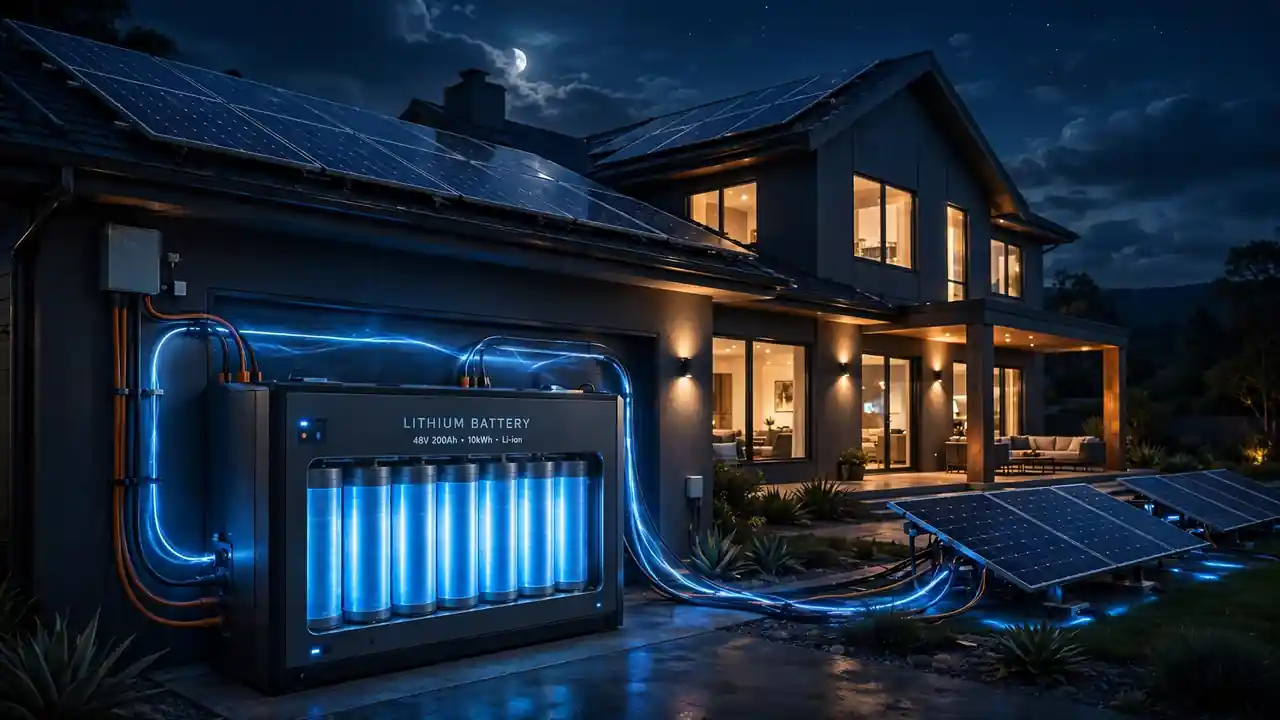
“Which battery should I buy for my solar system?” Customers ask us this at SunTech Mall almost every day. They are tired of batteries dying during load shedding, tired of replacing them every couple of years, and confused by the price gap between lithium and lead-acid.
We sell batteries and solar components across Pakistan, so we hear both sides. Some customers swear by lead-acid; others switched to lithium and never looked back. Both are telling the truth — the right answer depends on your situation.
The fear behind the question is money. After the inverter, batteries are the most expensive part of a backup system. Choose wrong and you overpay upfront — or pay again and again in replacements.
This guide gives you an honest comparison — no sales pitch. You will learn how each battery works, the real lifespan numbers, what “depth of discharge” means for your wallet, how to size for load shedding, and how to stay safe. By the end, you will know which battery fits your home and budget.
Let’s start inside the battery, because the chemistry explains everything else.
We sell both types, so we have no reason to push either. Numbers below come from datasheets and industry testing — and where prices vary, we tell you to check current rates instead of quoting stale figures.
- See How Each Battery Actually Works
- Compare Real Lifespan Numbers
- Understand Depth of Discharge (Your Wallet Will Thank You)
- Feel the Difference: Weight and Size
- Count the Real Cost Over 10 Years
- Size Your Battery Bank for Load Shedding
- Stay Safe With Both Battery Types
- Frequently Asked Questions
See How Each Battery Actually Works
A lead-acid battery is old, proven technology: lead plates in sulfuric acid. Drawing power triggers a chemical reaction that releases electrons — your electricity. Charging reverses it. Simple, and used for over 150 years.
Solar lithium batteries are almost always LiFePO4 — lithium iron phosphate. Lithium ions shuttle through a stable phosphate structure, far more stable than phone-battery chemistry — which is why LiFePO4 is the standard for solar storage.
The lead-acid reaction stresses the lead plates every cycle. Deep discharges cause sulfation — hard crystals that permanently cut capacity. Like bending a paperclip back and forth: eventually it breaks.
The LiFePO4 reaction barely stresses its structure at all. The phosphate crystal stays stable through thousands of cycles. That is the entire reason lithium lasts so much longer — it is not marketing, it is chemistry.
Lithium batteries also include a BMS (battery management system) — an electronic guardian preventing overcharge, over-discharge, and overheating. Lead-acid has no such protection; your charger settings are the only safety net.
The chemistry decides lifespan, usable energy, and maintenance. Everything else in this guide is just consequences.
Compare Real Lifespan Numbers
This is the number that matters most, so let’s be precise and honest.
A typical flooded lead-acid battery lasts 300 to 500 cycles at 50% discharge. A cycle is one full charge and discharge — so at one daily cycle, normal for solar backup, that is roughly 1 to 2 years before capacity drops badly.
Better lead-acid types (AGM, gel) stretch this to roughly 500 to 800 cycles under gentle use. Still, we are talking about a few years, not a decade.
A quality LiFePO4 lithium battery delivers 3,000 to 5,000 cycles at 80% depth of discharge — at one daily cycle, that is 8 to 13 years of service.
Lithium lasts roughly ten times longer in cycle life — the difference between replacing batteries three or four times in a decade versus buying once.
The honest caveat: these numbers assume proper charging and reasonable temperatures. A lithium battery baked in a 50°C storeroom with wrong settings will not reach rated cycles — but quality and care matter for both, and the gap remains enormous.
If your system cycles daily, lifespan alone usually settles the debate. But another hidden number matters just as much.
Understand Depth of Discharge (Your Wallet Will Thank You)
Depth of discharge (DoD) means how much of the battery’s stored energy you actually use before recharging. This single concept changes the entire price comparison.
A lead-acid battery should only discharge to about 50% DoD — deeper, and sulfation destroys it. So a “100Ah” lead-acid battery really gives about 50Ah of usable energy. You paid for 100Ah but can safely use half.
A LiFePO4 battery safely discharges to 80–100% DoD daily. A 100Ah lithium battery gives roughly 80 to 100Ah of usable energy — nearly double the usable power from the same labeled capacity.
Make it concrete: for 100Ah of usable nightly backup, lead-acid at 50% DoD needs a 200Ah bank; lithium at 80%+ needs only 100–120Ah. The lithium bank is roughly half the labeled size — which shrinks the price gap considerably.
This is the mistake we see most often: buyers compare a 100Ah lead-acid battery against a 100Ah lithium battery as if they were equals. They are not. Compare usable energy, and lithium’s true cost looks very different.
Think in usable amp-hours, not label amp-hours, and you shop like a professional. Professionals also think about weight — because someone has to carry these things.
Feel the Difference: Weight and Size
A 100Ah lead-acid battery weighs around 25 to 30 kilograms. A 200Ah bank — what you need for 100Ah usable — weighs as much as an adult.
A 100Ah LiFePO4 battery weighs roughly 10 to 14 kilograms — about one-third the weight for similar usable energy, and often half the volume.
Installation becomes a one-person job. Lithium fits on a shelf or in tight spaces where lead-acid never would, and floors carry less load — which matters in apartments and shops.
Lead-acid must stay upright and ventilated — liquid acid plus hydrogen gas while charging. Lithium is sealed, mounts any way, and needs no gas ventilation. That alone solves many installation headaches.
Weight alone rarely decides, but it turns a painful installation into an easy one — and it brings us to the question everyone really wants answered.
Count the Real Cost Over 10 Years
Let’s be honest: lithium costs more upfront — typically two to three times a lead-acid battery of the same labeled capacity. No point hiding it; you will feel it at checkout.
But sticker price is not real price. Real price is lifetime spend. For a home needing 100Ah usable nightly with daily cycling:
Lead-acid path: a 200Ah bank (100Ah usable) lasting about 2 years means 4 to 5 banks over 10 years — plus distilled water, terminal cleaning, and heavy replacements.
Lithium path: one 100–120Ah LiFePO4 battery lasting the full 10 years. Buy once — no water, no corrosion, no maintenance visits.
Multiply the lead-acid price by four or five purchases and lithium usually wins clearly. Prices change, so check current rates on SunTech Mall’s battery section and redo this math with real figures.
When does lead-acid still win? When the battery rarely cycles — a few outages a month. Then calendar aging, not cycles, is the limit, and the cheaper upfront cost makes sense.
But for daily solar cycling — the normal case in Pakistan with regular load shedding — lithium’s total cost of ownership is usually lower. Pay once, or pay repeatedly: that is the real choice.
Note: Battery prices in Pakistan move with the dollar rate and import costs, so never decide on old price quotes. Always compare usable amp-hours and cost per cycle, not sticker prices. A battery that costs twice as much but lasts five times longer is the cheaper battery.
Size Your Battery Bank for Load Shedding
Buying the right size matters as much as buying the right type. Too small, and your power dies mid-outage. Too big, and you waste money.
Step 1: List what must stay on. LED lights, fans, a Wi-Fi router, phone chargers, maybe a TV. Skip heavy appliances like air conditioners and water heaters — backup systems are not built for those.
Step 2: Add up the watts. Example: 4 LED bulbs (40W) + 2 fans (150W) + router (15W) + chargers (30W) ≈ 235W — round to 250W.
Step 3: Multiply by backup hours. For 6 hours: 250W × 6h = 1,500Wh.
Step 4: Convert to battery size (12V system): 1,500Wh ÷ 12V = 125Ah usable. That means about 150Ah of lithium (80% DoD) or 250Ah of lead-acid (50% DoD).
Step 5: Match your inverter. Lithium needs the correct charging voltage profile — most modern hybrids have a lithium mode. Wrong settings shorten any battery’s life.
This simplified sizing gets you close; for shops, offices, or large homes, consult a proper installer. If the inverter itself needs attention, our guides on genuine inverter spare parts and MOSFET failures keep the whole system healthy.
Stay Safe With Both Battery Types
Batteries store serious energy. Respect them, and both types are safe. Ignore the basics, and both can hurt you.
Lead-acid safety: sulfuric acid plus hydrogen gas while charging — install ventilated, never in a sealed closet. Keep sparks away, wear gloves and eye protection, clean terminal corrosion early, and never short terminals with tools.
Lithium (LiFePO4) safety: the safest lithium chemistry, but rules apply. Buy with a proper BMS (never bypass it), use the correct lithium charging profile, and never puncture, crush, or expose the battery to fire. Keep it dry and within rated temperature.
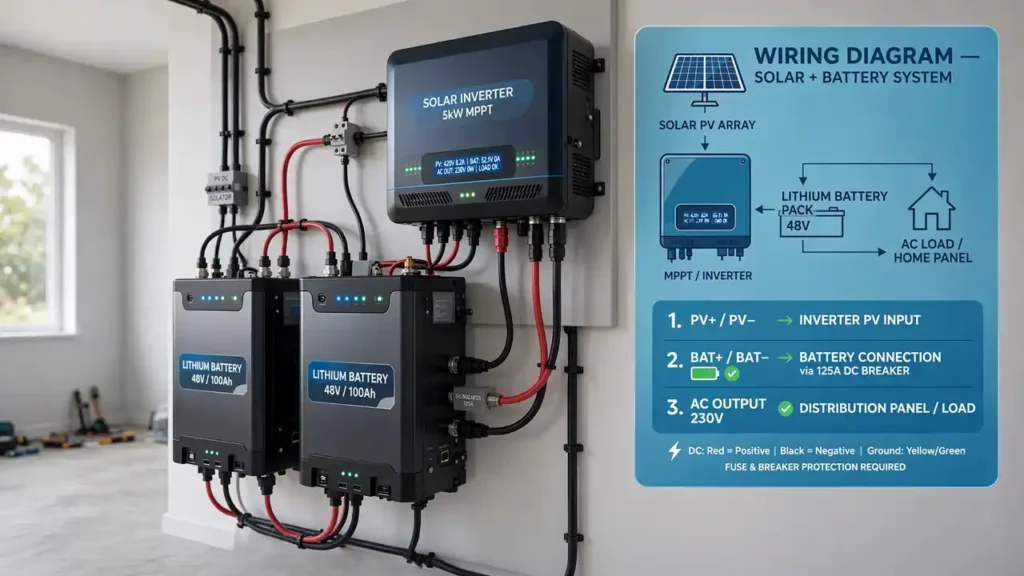
For both types: a fuse or breaker on the battery cables is non-negotiable. Size cables properly — thin wires overheat. Tighten terminals; loose ones arc and melt. Keep batteries out of direct sun and rain.
Pakistan’s summer warning: heat shortens every battery’s life. A battery baking in a 50°C tin shed dies young regardless of type — a cool, shaded spot is free lifespan.
Safety is not complicated — it is just consistent. Ventilate lead-acid, protect lithium’s BMS, fuse everything, and keep things cool. Do that, and your battery bank will serve you quietly for years.
Bonus Tip: Upgrading from lead-acid to lithium? Check charger settings before connecting. Many inverters default to lead-acid voltages — switch to the lithium/LiFePO4 profile per the battery datasheet. Wrong voltages are the top reason new lithium batteries underperform.
Frequently Asked Questions
Can I replace my lead-acid batteries with lithium without changing the inverter?
Often yes, if it has a lithium mode or adjustable charging voltages — check the manual for LiFePO4 settings. Otherwise you may need a settings update or external charger; ask your installer before buying.
How many years will a LiFePO4 battery really last in Pakistan?
With daily cycling, correct settings, and reasonable temperatures: typically 8 to 10+ years (3,000–5,000 cycles). Extreme heat and wrong voltages shorten this.
Is lithium safe for home use?
Yes — LiFePO4 strongly resists thermal runaway and is widely used in homes worldwide. Buy reputable, keep the BMS intact, fuse the cables, and follow this guide’s safety basics.
Why do my lead-acid batteries die every two years?
Deep discharging below 50%, chronic undercharging, high heat, and neglected water top-ups. Daily deep cycling simply wears lead-acid out — chemistry, not bad luck. This is exactly where lithium pays for itself.
Can I mix old and new batteries in one bank?
No — for either type. Mixing ages and capacities causes the weaker batteries to drag down the stronger ones, shortening the life of the whole bank. Always replace a bank as a matched set.
Which battery is better if outages are rare in my area?
If it cycles only a few times monthly, lead-acid can win — calendar aging limits both types, so cheaper upfront wins. Lithium’s advantage shows in daily cycling, the norm where load shedding is frequent.
Final Thoughts
You came with a confusing question and a real fear of wasting money. Now you know the chemistry, the real lifespan numbers, the depth-of-discharge trick behind every price comparison, and how to size and protect your system.
Here is the honest summary: lithium costs more today and usually costs less over ten years — if your battery cycles daily. Lead-acid costs less today and makes sense for occasional backup. Neither is “better” in the abstract. The better battery is the one that matches your usage.
The hard part — learning — is done. Next: browse genuine batteries at SunTech Mall, check current prices in our battery section, and build backup that actually survives load shedding.
Want to go deeper? Read our guides on genuine hybrid inverter parts, bridge rectifiers, and where utility-scale solar is heading. An informed buyer is a powerful buyer — and now, that is you.