Premium Chopper Transformers for Solar Inverters and UPS in Islamabad
In the heart of Pakistan’s capital, Islamabad, the demand for reliable power solutions is surging. Whether it’s for homes, businesses, or industrial setups, uninterrupted power supply is critical. This is where Chopper…

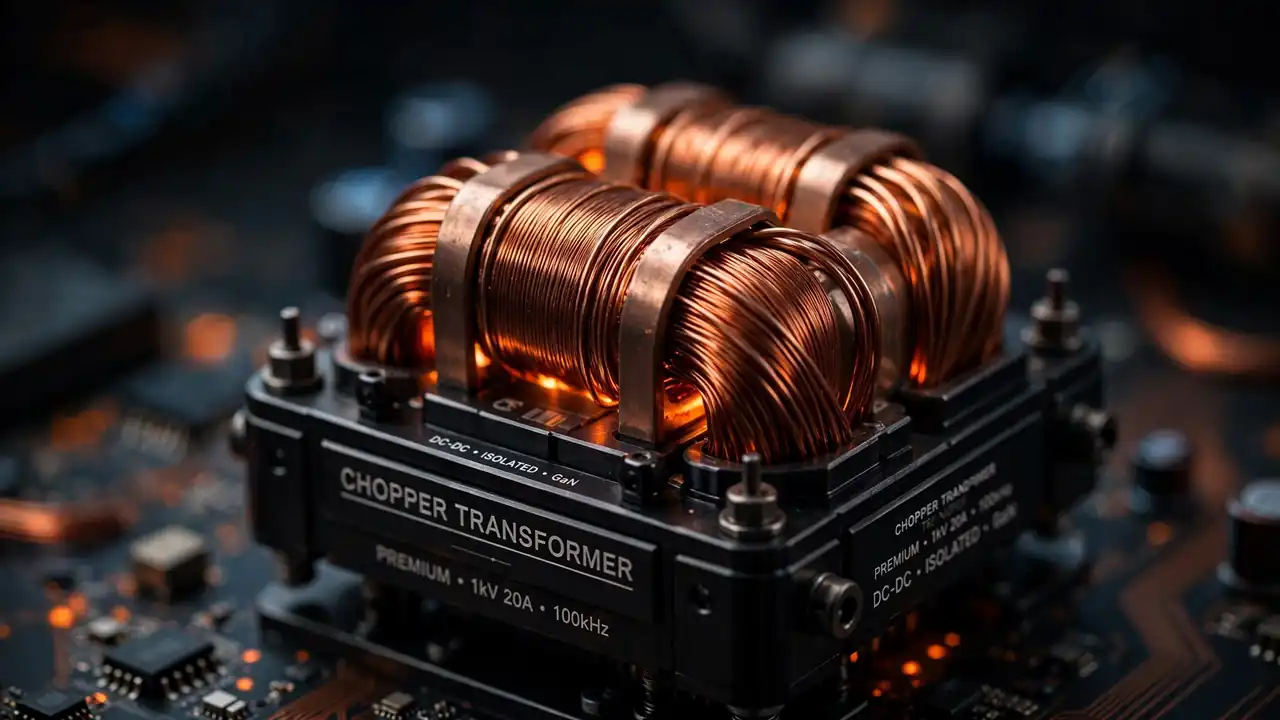
There is a small component inside your solar inverter that most people have never heard of — yet without it, the entire machine is a paperweight. It is called the chopper transformer, and it powers the inverter’s own brain. When it fails, the inverter goes completely silent: no display, no lights, no response at all. I have diagnosed dozens of “completely dead” inverters where this little transformer was the only problem. In this guide, I will explain in plain language what a chopper transformer does, why premium quality matters so much, how to recognize failure, and how to choose a genuine replacement. Whether you repair inverters or just want to understand your system, this knowledge is worth having.
My promise: By the end, you will understand this mysterious component better than most people selling it — and you will know exactly what to look for when buying one.
What You Will Learn in This Guide
- What a chopper transformer is and why every inverter needs one
- How it works: the chopper principle in plain language
- Why premium quality matters (and what cheap ones get wrong)
- The 5 warning signs of a failing chopper transformer
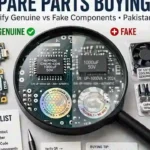
- How to choose and verify a genuine replacement
What Is a Chopper Transformer?
Let me start with an analogy. Your inverter’s main job is converting DC to AC at high power. But the inverter also needs low-voltage DC to run its own control circuits — the microcontroller, the display, the protection systems, the gate drivers. It cannot use the raw high-voltage DC directly. It needs a separate, smaller power supply inside itself.
That internal power supply is a switched-mode power supply (SMPS), and the chopper transformer is its heart. It takes high-voltage DC, “chops” it into high-frequency pulses using a switching transistor, passes those pulses through a small transformer, and converts them back into the various low voltages the control circuits need — typically 12V for fans and drivers, 5V for logic, sometimes 15V for gate drive circuits.
The key point: Without the chopper transformer doing its job, the inverter’s brain has no power. The machine cannot even wake up to tell you what is wrong. That is why chopper transformer failure looks like total death.
How It Works: The Chopper Principle in Plain Language
The working of an SMPS is based on what engineers call the chopper principle — and the name tells you everything. Imagine chopping a steady stream of water into rapid pulses. By controlling how long each pulse lasts (the “duty cycle”), you control how much average power gets through.
Here is the sequence inside your inverter:
- Rectification: Incoming AC (or DC from batteries) is converted to high-voltage DC and stored in large capacitors.
- Chopping: A power MOSFET switches this DC on and off tens or hundreds of thousands of times per second, controlled by a PWM controller IC.
- Transformation: These high-frequency pulses pass through the chopper transformer, which steps the voltage down (or up) and provides electrical isolation between the dangerous high-voltage side and the safe low-voltage side.
- Rectification and filtering: Fast diodes convert the transformer output back to DC, and small capacitors smooth it into clean, stable voltages.
Why high frequency? This is the clever part. A transformer operating at 50Hz (like the big iron-core transformers of the past) needs a massive iron core. But at 50,000Hz or higher, the same power transfers through a tiny ferrite core — a special ceramic magnetic material that works efficiently at high frequencies. That is why the chopper transformer is small enough to hold between two fingers while handling the job that once needed kilograms of iron.
For power MOSFET-based designs, chopping frequencies around 200kHz are common, making the transformer and filter components remarkably compact. This is the same principle behind every modern phone charger, computer power supply, and LED driver — the chopper transformer concept powers the modern world.
Why Premium Quality Matters So Much
Not all chopper transformers are equal. The difference between a premium unit and a cheap one comes down to physics and manufacturing discipline:
Core material and construction
Premium transformers use high-grade ferrite cores with consistent magnetic properties. Cheap cores may have impurities or air gaps that cause overheating, audible whining, and premature failure. The core is the soul of the transformer — everything else depends on it.
Winding quality
The copper windings must have exact turn counts and proper insulation between layers. Premium manufacturers wind precisely and insulate thoroughly. Cheap units may have shorted turns (invisible from outside) that cause overheating and eventual burnout. They may also use thinner wire than specified, increasing resistance and heat.
Isolation and safety
The chopper transformer is the safety barrier between lethal high voltage and the low-voltage circuits a technician might touch. Proper inter-winding insulation, correct creepage distances, and hi-pot testing separate safe transformers from dangerous ones. This is not a place to save money.
Thermal performance
In Pakistani summers, inverter cabinets run hot. Premium transformers use insulation materials rated for high temperatures and designs that dissipate heat effectively. Cheap insulation degrades, cracks, and eventually shorts — often taking the switching MOSFET and controller IC with it in a cascade of destruction.
Bonus Tip: When a chopper transformer fails, always check the switching MOSFET and PWM controller IC too. Transformer failure often kills these neighbors, and replacing only the transformer leads to a second failure within days.
5 Warning Signs of a Failing Chopper Transformer
1. Completely dead inverter. No display, no LEDs, no fan movement, no response to any input. The auxiliary supply is gone, so nothing can start. This is the classic symptom.
2. Audible whining or ticking. A healthy SMPS is silent or nearly so. High-pitched whining suggests core saturation or loose windings. Repetitive ticking often means the PWM controller is trying to start, detecting a fault, and shutting down in a loop.
3. Burnt smell near the SMPS section. Overheated windings produce a distinctive smell. If you detect it, stop using the inverter immediately — continued operation risks fire and further damage.
4. Visible damage. Cracked or discolored ferrite core, melted bobbin plastic, or scorched PCB around the transformer all indicate failure. Sometimes the damage is obvious; sometimes it hides inside.
5. Intermittent operation. The inverter works sometimes and dies randomly. Thermal expansion can make a cracked winding connect and disconnect as temperature changes — maddening to diagnose without understanding the pattern.
Note: A dead inverter is not always the chopper transformer. Blown fuses, failed start-up resistors, and dead PWM controllers cause identical symptoms. Systematic diagnosis — fuse first, then start-up circuit, then transformer — saves time and parts.
How to Choose a Genuine Replacement
Chopper transformers are not generic components. Unlike a resistor you can substitute freely, a chopper transformer must match the original design’s turns ratio, inductance, core type, and pinout. Here is what to verify:
- Application match: Confirm the transformer is specified for your inverter type and power class. A transformer from a 1kW UPS will not work in a 5kW hybrid inverter.
- Pinout compatibility: The physical pin arrangement must match the PCB footprint. Even if electrically similar, a wrong pinout is useless.
- Build quality: Inspect the core for cracks, check that windings are neat and fully insulated, and verify the bobbin is intact with no melting or discoloration.
- Source reputation: Buy from suppliers who understand what they sell and guarantee authenticity. A transformer is too critical for mystery stock.
For related power-stage components, see our guides on MOSFET selection, the TLP350H gate driver optocoupler, and genuine chopper transformers for hybrid inverters.
Get Premium Chopper Transformers from SunTech Mall
SunTech Mall supplies premium chopper transformers and complete SMPS repair components to Pakistan’s inverter repair community. Five years of serving workshops has taught us exactly what technicians need:
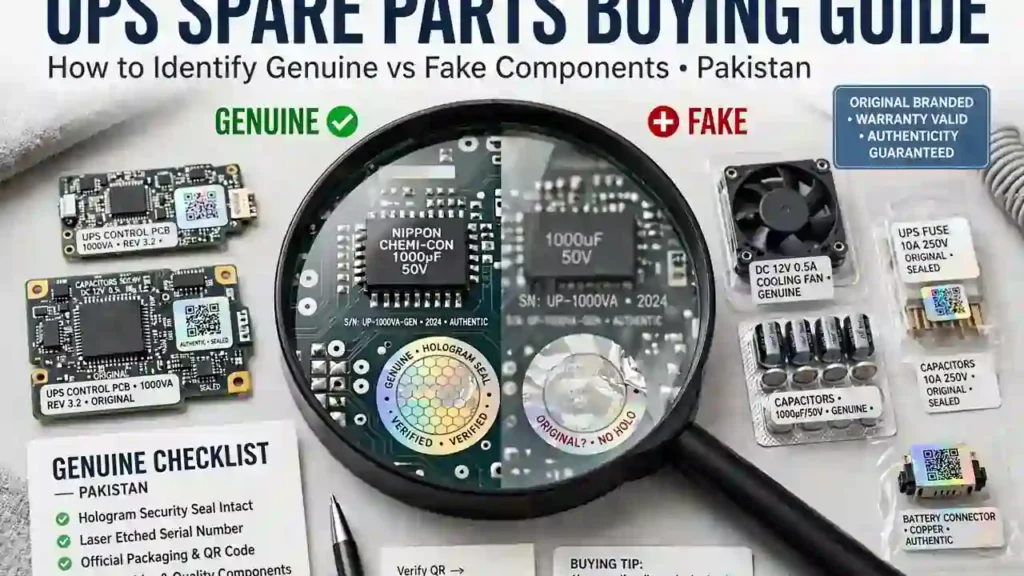
- Genuine, verified stock: No counterfeits, no substandard cores, no mystery windings.
- Application guidance: Not sure which transformer fits your inverter? Ask us — info@suntechmall.com or +92 306 2244820.
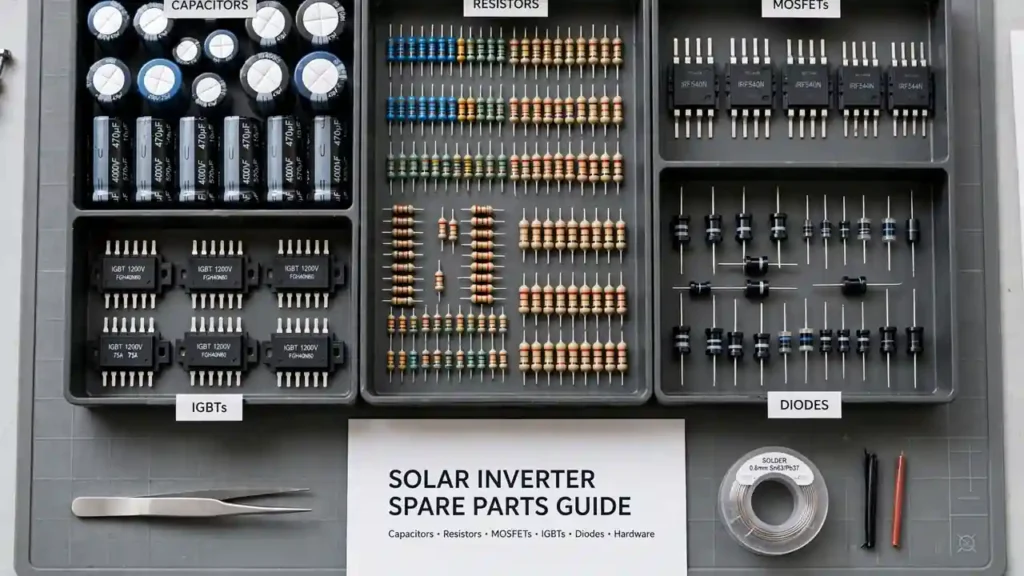
- Complete repair ecosystem: Switching MOSFETs, PWM controllers, fast diodes, capacitors — everything around the transformer in one place.
- Nationwide delivery: To your workshop, wherever in Pakistan you are.
Browse our genuine hybrid inverter parts or explore the choppers category for related components.
Frequently Asked Questions
What does a chopper transformer do in a solar inverter?
It is the core of the inverter’s internal switched-mode power supply. It converts high-voltage DC into the various low voltages (12V, 5V, etc.) needed to power the control circuits, display, fans, and gate drivers. Without it, the inverter cannot operate at all.
Why is my inverter completely dead with no display?
The most common cause is failure in the auxiliary SMPS section — often the chopper transformer itself, the switching MOSFET, the PWM controller IC, or the start-up resistors. A technician should check these in sequence: fuse, start-up circuit, transformer, controller.
Can I use any chopper transformer as a replacement?
No. Chopper transformers must match the original design’s turns ratio, inductance, core characteristics, and pinout. Using the wrong transformer can prevent startup or destroy the control circuit. Always match the application or consult an expert.
What causes chopper transformers to fail?
Lightning strikes and voltage surges, prolonged overheating, manufacturing defects in cheap units (shorted turns, poor insulation), and age-related insulation breakdown. In Pakistan, surge damage during monsoon season is a leading cause.
How is a chopper transformer different from a regular transformer?
A regular mains transformer works at 50/60Hz with a heavy iron core. A chopper transformer works at tens or hundreds of kilohertz with a small ferrite core. The high frequency allows the same power transfer in a fraction of the size and weight — but requires completely different design and materials.
What is the chopper principle in SMPS?
The chopper principle means switching DC on and off rapidly (chopping it into pulses) and controlling the average output by varying the duty cycle — the ratio of on-time to off-time. This allows efficient voltage conversion with small, light components compared to old linear power supplies.
Should I rewind a burnt chopper transformer?
Rewinding is possible for experts with the right equipment, but matching the original’s exact turns, wire gauge, insulation, and core gap is difficult. For most repairs, a genuine replacement transformer is more reliable and often more economical when you count labor time.
Final Thoughts
The chopper transformer is small, silent, and invisible to most inverter owners — yet it holds the power of life and death over the entire machine. Understanding how it works, recognizing its failure signs, and knowing how to source a genuine replacement puts you ahead of most people in the repair trade.
Congratulations — you now understand one of the least-understood components in power electronics. The next time an inverter arrives completely dead, you will know exactly where to look first.
For premium chopper transformers and every component around them, visit SunTech Mall. Original parts, expert guidance, delivered across Pakistan.