
50V 100uF Capacitor: How to Pick, Test, and Replace One Safely
re you searching for high-quality 50V 100uF capacitors at an affordable price in Peshawar? Whether you're an electronics enthusiast, a professional engineer, or a business owner looking to stock up on reliable…

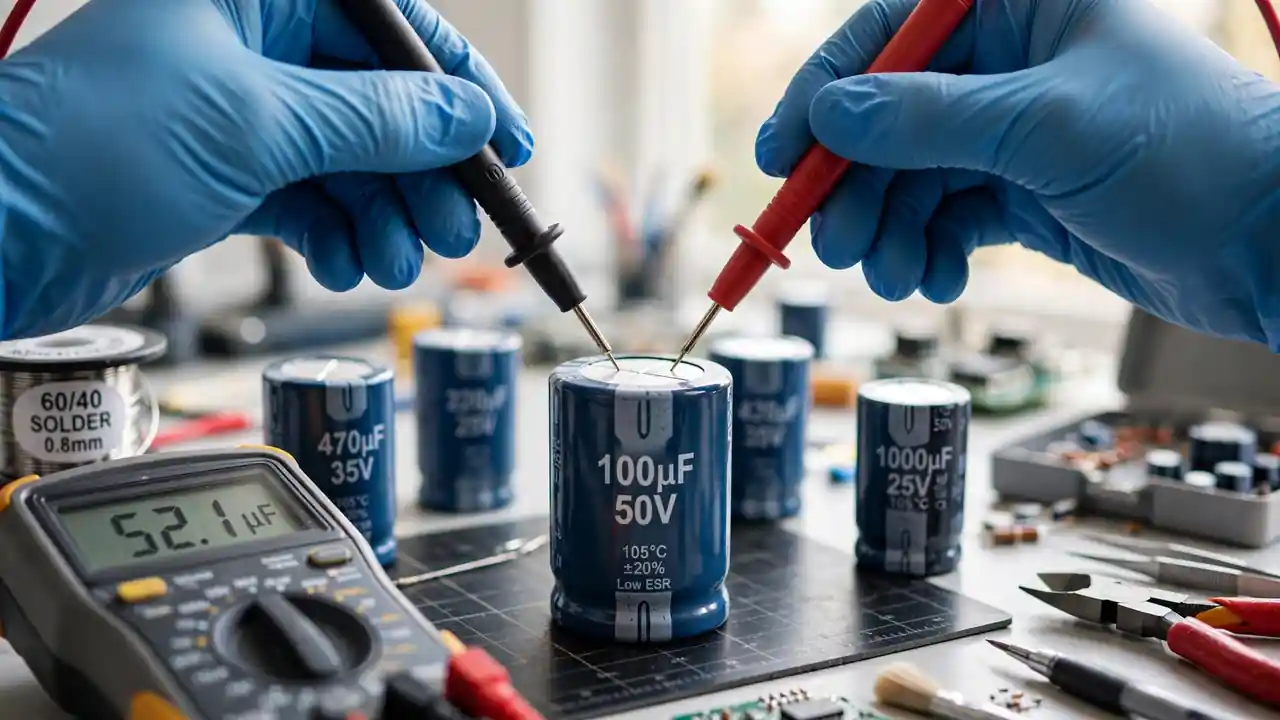
A 50V 100uF capacitor is a small aluminium electrolytic part that stores charge and smooths power in supply circuits — and it is one of the first parts to die in a hot power supply or UPS board. The two numbers on its sleeve tell you only part of the story. This guide explains what they mean, why two capacitors with the same label can live very different lives, and how to pick and fit a replacement that lasts.
What do "50V" and "100uF" actually mean?
100uF (100 microfarads) is the capacitance: how much charge the part can store. More capacitance means a bigger smoothing reserve for the circuit.
50V is the voltage rating: the most voltage the part can safely handle, non-stop. It is a ceiling, not a target. Run a 50V capacitor at 49 volts all day in a hot box and it will age fast. Run it at 24 volts and it has room to breathe.
In real circuits, this part does three main jobs: smoothing ripples in DC power supplies, passing AC signals while blocking DC in audio stages, and holding a quick reserve of energy the circuit grabs when the load spikes. When it weakens, all three jobs get worse at once — which is why a tired capacitor makes a whole board act sick.
Why the same label can mean a very different life
Two capacitors can both read "50V 100uF" and still differ widely in the numbers that decide how long they live:
- ESR (Equivalent Series Resistance). Think of it as internal friction. Low ESR means the capacitor handles rapid charge and discharge with less heat. High ESR means more heat, worse filtering, and earlier failure. In switching power supplies and UPS boards, low ESR matters more than most buyers realise.
- Ripple current rating. This is how much alternating current the part can carry without overheating. A part run past its ripple rating cooks itself from the inside, even if the voltage looks fine.
- Temperature rating and rated life. A common pair is 105°C for 2,000 hours at full rated conditions. That "hours at max" number is not the life in your cool circuit — life stretches a lot at lower temperatures — but it tells you the quality class. A 105°C part uses better electrolyte and seals than a cheap 85°C part.
- Size and lead spacing. A perfect electrical match that does not fit the board holes is useless. Check diameter, height, and lead spacing before you order.
The lesson: never buy on the two sleeve numbers alone. Ask for temperature rating, ESR class, and ripple rating, or buy a series whose datasheet states them.
85°C vs 105°C: the number buyers skip
Heat is the main killer of electrolytic capacitors. Inside, a liquid electrolyte slowly dries out. As it dries, ESR climbs, filtering weakens, and one day the circuit fails. Inside a warm power supply or a UPS sitting through a Pakistani summer, the inside temperature can easily cross 60 to 70°C.
A 105°C-rated part keeps a bigger safety margin in that heat than an 85°C part. For anything that runs warm — power supplies, UPS boards, LED drivers — prefer 105°C. When buying, ask for the temperature rating before you discuss anything else. It is the cheapest insurance in a repair job.
A rough derating rule used by repair guides: pick a voltage rating at least 1.5 times your circuit's highest steady voltage. A 25-volt rail deserves a 35V or 50V part, not a 25V part. If your rail runs at 48 volts, a 50V capacitor has almost no margin — step up to 63V or 100V instead, if it fits.
How to spot a dying capacitor with your eyes
Open a dead power supply and capacitor failure has a signature. Learn it and you can diagnose a board in under a minute:
- Bulging top. A healthy electrolytic has a flat top with a scored vent. When pressure builds inside, the top domes upward. A domed cap is done. Replace it.
- Leaking electrolyte. A brownish or black crusty residue around the base or vent is dried electrolyte. The part is dead, and the leaked fluid can corrode the board around it. Clean the board before fitting the new part.
- Loose or tilted seating. A capacitor that rocks in its solder joints was overheated or poorly soldered. Reflow or replace it.
- No visible sign at all. This is the tricky one. A capacitor can dry out fully with zero change outside. If a supply hums, overheats, or gives unstable voltage while every cap looks fine, suspect dried-out caps anyway. This is why experienced technicians replace the full set of electrolytics in old boards rather than hunting for one bad part.
One caution: a bulged capacitor is a symptom, not just a part failure. If the circuit runs hotter than the part is rated for, the same fate awaits the replacement. Fix the heat or the margin too, or you will repeat the repair.
Replacement rules that prevent a second failure
| Check | Rule |
|---|---|
| Capacitance | Match the nominal value, within its tolerance band (often ±20%). Do not swap 100uF for a far-off value without checking the circuit design. |
| Voltage rating | Equal or higher than the original. Never lower. |
| Temperature rating | Equal or higher. Prefer 105°C for warm circuits. |
| ESR | Equal or lower than the original at the working frequency, for switching supplies. |
| Ripple current | Equal or higher than the original at the same reference frequency. |
| Physical size | Diameter, height, and lead spacing must fit the board footprint. |
| Polarity | Negative stripe to the board's negative marking. Check twice before soldering. |
Reverse polarity on an electrolytic is dangerous. The part heats fast, vents, leaks, or in extreme cases bursts. The negative stripe on the sleeve and the board marking must agree. If they do not, stop and re-check the circuit diagram.
Buying in bulk without getting fakes
If you run a repair shop, you buy capacitors by the hundred, and bulk buying makes sense: lower per-unit cost, one consistent batch, and steady supply. It also raises the fake risk. Counterfeit capacitors carry the printed specs of good brands with inferior insides. They work at first — which is exactly why they are dangerous — then fail early.
Warning signs: prices far below every other seller, inconsistent or blurry sleeve printing, and weight that feels wrong for the size. When a bulk order arrives, test a sample: measure capacitance and ESR on a few parts per batch and reject a batch where capacitance sits far below nominal or ESR sits far above the datasheet maximum.
Buy from a supplier who can tell you the brand, the temperature rating, and the ESR class of what they sell, and who will stand behind a failed batch. Ask for one consistent brand and batch per order. Mixing brands in one repair can cause small ESR mismatches that matter in high-ripple circuits like UPS chargers.
Bench checklist before you solder
- Capacitance and voltage confirmed: 100uF, 50V or higher voltage.
- Temperature rating confirmed: 105°C preferred for warm circuits.
- ESR class confirmed: low ESR for switching supplies and UPS boards.
- Polarity markings clear: negative stripe on the sleeve matches the board.
- Size checked: diameter, height, and lead spacing fit.
- Source trusted: a supplier you can return to if a batch fails.
- Power off, board discharged, and old electrolyte cleaned before fitting.
Frequently asked questions
Can I use a 63V 100uF capacitor instead of a 50V 100uF one?
Yes, in most cases. A higher voltage rating is safe as long as the capacitance matches and the part fits the board. Never go lower than the original voltage rating.
What happens if I install an electrolytic capacitor backwards?
Reverse polarity makes the part heat up fast. It can vent, leak, or in extreme cases burst. Always check the negative stripe against the board marking before soldering.
How long does a 50V 100uF electrolytic capacitor last?
It depends on heat and quality. A good 105°C-rated part in a cool circuit can last many years. A cheap 85°C part in a hot UPS may fail within a year or two. Heat is the main killer, so ventilation matters as much as the brand.
What is ESR and why does it matter?
ESR is the capacitor's internal resistance. Low ESR means it can handle rapid charge and discharge with less heat — critical in switching power supplies. High ESR causes heating and poor filtering, and it climbs as the part ages.
Can a capacitor fail with no visible sign?
Yes. Electrolyte can dry out inside with no bulging or leaking. If a power supply misbehaves but every cap looks fine, suspect dried-out caps anyway. This is why technicians often replace full capacitor sets in old boards.
Is it safe to buy capacitors in bulk online in Pakistan?
Yes, if you buy from an established supplier with real contact details and a physical presence. Avoid sellers who cannot tell you the brand, temperature rating, or ESR class of what they sell, and test a sample from each batch on arrival.
The next step
A 50V 100uF capacitor is small, cheap, and easy to overlook — and that is exactly why it causes so much trouble. A two-minute check of voltage margin, temperature rating, ESR, size, and polarity decides whether your circuit runs for years or dies in months. Browse genuine stock at SunTech Mall's shop, and for the switches that fail alongside tired capacitors, read our 3-pin rocker switch guide.
Sources: general electrolytic selection guidance (voltage derating, ripple, ESR, lifetime matching) from capacitor selection guides and replacement cross-reference guides; capacitor marking reference for polarity and sleeve markings.
Related Products & Categories
Related Technical Guides
 Category:
Solar Inverter Repair
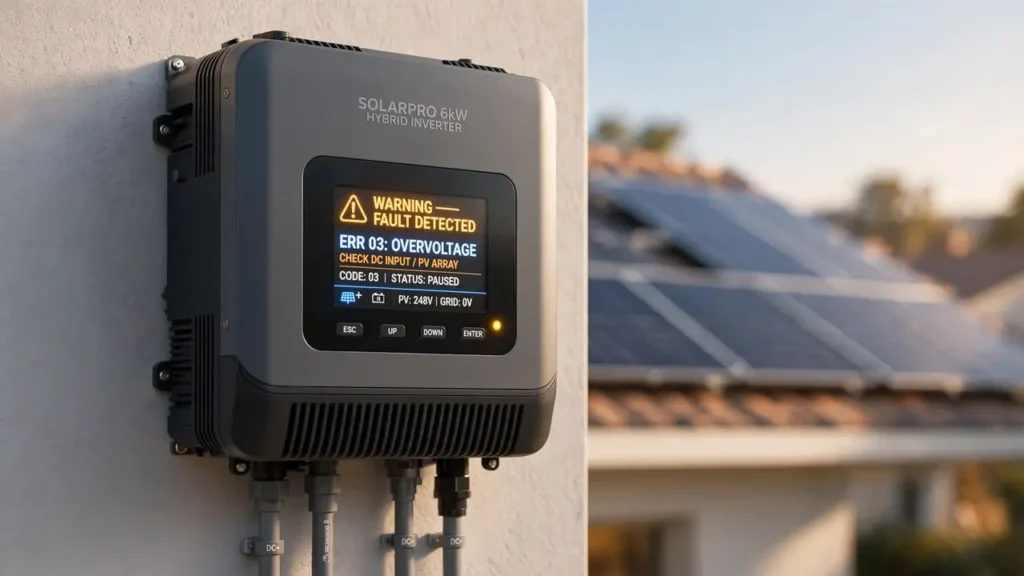
Solar Inverter Error Codes in Pakistan 2026 – Complete Troubleshooting Guide
Solar inverter showing an error or warning? This complete Pakistan-focused guide explains common fault categories, safe troubleshooting steps, Fronus code examples, repair…
 Category:
Electronic Parts
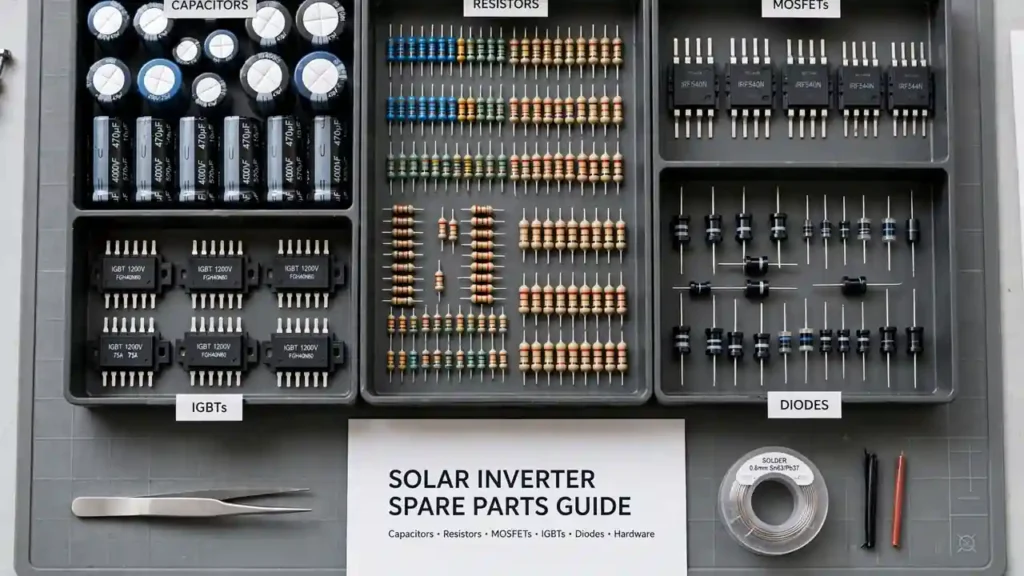
Most Used Solar Inverter Spare Parts in Pakistan – 2026 Update
Learn about most used solar inverter spare parts in Pakistan in 2026. Find which solar parts fail most and where to buy…
 Category:
DIY Repairs
Solar Inverter Spare Parts in Pakistan – Easy Repair Guide
Solar inverter spare parts in Pakistan explained in simple words. Learn about repair parts for local, Chinese, and UPS solar inverters.
1 Comment
[…] You now know the step that prevents most mistakes: identify the switch type first, then wire to that type. When you need the part itself, browse SunTech Mall's shop and check the ratings printed on the switch before you order. For the capacitors that fail alongside tired switches, read our 50V 100uF capacitor guide. […]