
Best 35V 680uF aluminum electrolytic capacitor in Islamabad
When working on electronic circuits, especially those involving power regulation or filtering, choosing the right capacitor can make all the difference. Among the most commonly used components is the 35V 680uF aluminum…

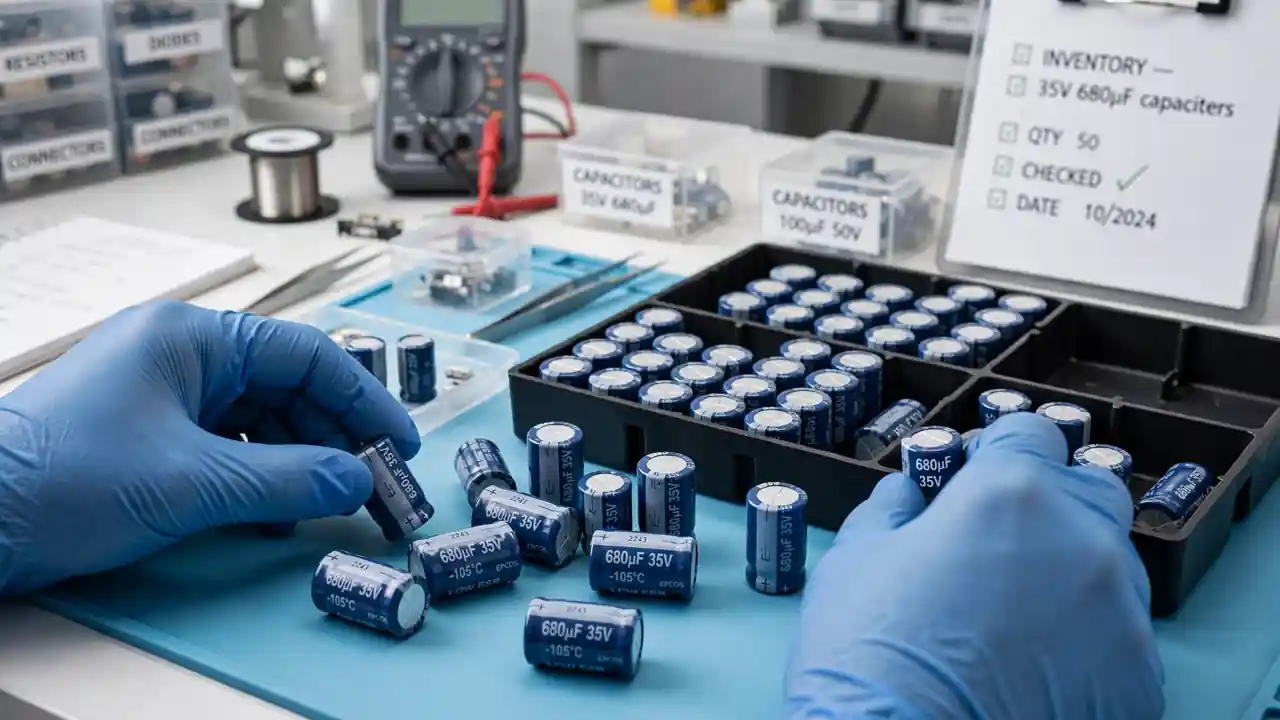
Why Does a Small Low-Voltage Capacitor Cause Random Inverter Resets?
A tired 35V 680uF capacitor can make an inverter reset, flicker its display, or drop its connection, even though the big power parts test fine. It filters the low-voltage rail that feeds the control board. When that rail gets noisy, the control board misbehaves, and the fault looks like a software problem.
This guide answers one question in plain words: what does this capacitor do, how do you know when it has failed, and how do you pick a safe replacement? It is written for a repair technician, a shop owner, or a careful home user who can use a multimeter. High-voltage work still needs care, and low voltage does not mean zero risk. Discharge the part before you touch it.
What do the markings 35V 680uF mean?
The sleeve tells you four things. First, 680uF is the capacitance, the amount of charge the part can store. That is a large value for a low-voltage part, and it suits a job where the circuit needs a steady reserve of charge. Second, 35V is the highest DC voltage the part is rated for. Never run it above that rating.
Third, a 35V 680uF capacitor is an aluminum electrolytic capacitor, so it has a polarity. The stripe on the sleeve marks the negative side. Fit it the wrong way and it will fail. Fourth, the common tolerance for this type is plus or minus 20 percent. That means a new part can read anywhere from 544uF to 816uF and still be inside its marked tolerance.
A workshop rule helps here. Many technicians keep the working voltage well below the rating, often around 20 percent below it. For a 35V part, that points to about 28V as a comfortable ceiling. This is a rule of thumb for longer life, not a value printed on every sleeve. Always check the series datasheet for the part you hold in your hand, because the series, not just the headline numbers, sets the ripple and temperature limits.
Where does this capacitor sit in an inverter?
You will find a 35V 680uF capacitor on the low-voltage side, not on the main high-voltage bus. It often sits near the rails that feed the brain of the unit. A microcontroller may run on 3.3V or 5V, but those small voltages often come from a higher rail, such as 12V, 15V, or 24V. The 680uF capacitor steadies that middle rail. It smooths dips when a load switches on, for example when a fan starts or a relay pulls in.
A 35V 680uF capacitor also serves the gate drivers. Those drivers switch the big power transistors on and off. They need a clean, firm supply to do that job well. If their supply sags, switching gets soft, losses rise, and the power transistors run hot. The fault then looks like a transistor problem, but the cause sits one stage back, on the driver rail.
Display boards and communication boards share the same story. A screen, a WiFi module, or a serial link all hang off low-voltage rails. When the rail is noisy, the screen flickers, readings garble, or the link drops. Because one rail feeds many boards, one weak capacitor can cause several faults at once. That pattern is a clue, not a coincidence.
Why do the symptoms look like software faults?
A microcontroller needs a stable supply to think straight. When the rail dips for a brief moment, the chip can brown out and restart. To the user, that looks like a crash or a firmware bug. The unit may work fine at rest and fail only when a load changes. A fan kick, a relay click, or a sudden load step can be the trigger.
This is why a visual check alone is not enough. A 35V 680uF capacitor can dry out inside while its can still looks flat and clean. Its capacitance may still read near normal, while its internal resistance, called ESR, has risen. ESR is the resistance inside the capacitor itself. High ESR turns ripple current into heat and noise, so the rail gets dirty even though the headline capacitance looks acceptable. An ESR meter catches this early. A capacitance meter alone can miss it.
Heat ages these parts even at low voltage. The inside of an inverter gets hot, and heat dries the electrolyte over time. A 105°C rated part is the safer choice for inverter service, because the enclosure does not care that the rail is only 12V. The part still sits in hot air.
How do you test a 35V 680uF capacitor?
Work with the power off and the 35V 680uF capacitor discharged. A short through a resistor is the safe habit, even at 35V, because the same habit protects you on a high-voltage board. Then follow these steps in order:
- Look at the can. Check for a domed top, a leaking seal, or a stained sleeve. Any of these condemns the part.
- Lift at least one lead, or remove the part, before you trust a capacitance or ESR reading. Parts still wired in parallel with other parts can hide a dead capacitor.
- Measure capacitance and let the reading settle. A large value like this takes a few seconds to charge from the meter.
- Measure ESR if you have an ESR meter. Compare the result with the series datasheet or with a known-good part of the same series. Do not judge ESR against a single number from memory, because ESR limits change with series and size.
- If you have an oscilloscope, look at the rail with the scope set to AC coupling. A healthy filtered rail shows small, clean ripple. A rail with a dead filter capacitor shows spikes that line up with load switching.
| Test | Good result | Replace the part |
|---|---|---|
| Visual check | Flat top, clean seal, sharp markings | Domed top, leak, stain, or loose sleeve |
| Capacitance | About 544uF to 816uF | Well below 544uF, or near zero |
| ESR | Close to the series datasheet or a known-good sample | Clearly higher than a known-good sample of the same series |
| Rail on a scope | Small, steady ripple | Large spikes when a load switches |
How do you pick a safe replacement?
When you replace a 35V 680uF capacitor, match the job, not just the two headline numbers. Voltage must be 35V or higher. A 50V part is a common and safe step up, as long as it fits the board. Never fit a lower voltage rating. Capacitance should stay at 680uF for a filter rail, or close to it. In a plain filtering job, a nearby value can work, but in a circuit where the value sets timing or regulator stability, stay close to the original.
The series matters as much as the value. If the original was a low-ESR series, fit a low-ESR series. A general-purpose part in a low-ESR spot will run hot and fail early, even though the sleeve shows the same voltage and capacitance. Check the series if you can read it. If you cannot, a 105°C low-ESR part is the safer default for inverter rails. Then check the fit. Confirm diameter and height against the footprint and the parts next to it. Do not bend neighbours out of the way, and do not leave the part floating on long leads.
After you fit the new part, power up and watch the rail. Check for a clean start, a steady rail voltage, and no resets when loads switch. If you scoped the rail before, scope it again. The spikes that troubled the old part should be gone.
Should you replace the neighbours too?
On an older board, it can make sense to replace the set of low-voltage electrolytics on the same rail, including the 35V 680uF capacitor. They share the same age, heat, and working hours. The parts are small, while opening the unit a second time costs real labour. This is a judgement call, not a rule. If the board is young and only one part tests bad, replace the bad one and keep the rest under watch. If the board is old and several parts sit on the same hot rail, a set change saves a return visit.
A final check saves embarrassment. Before you close the unit, re-check polarity twice. The stripe goes to the negative side, and the board marking should agree with your photo of the original. A reversed electrolytic on any rail is a fault you create yourself, and it is easy to avoid.
Frequently Asked Questions
Can I use a 50V 680uF part in place of a 35V 680uF part?
Yes, if it fits. A higher voltage rating gives more margin. Never go lower than the original rating.
Why does my capacitor look fine but test bad?
At low voltage, the common failure is slow drying inside the can. Capacitance falls and ESR rises without a bulge. That is why a meter test matters more than a look.
Is capacitance or ESR the better test here?
Both help, and they tell different stories. Capacitance shows how much charge the part still stores. ESR shows how cleanly it can deliver that charge under load. Test both when you can.
Can one bad rail capacitor cause resets, flicker, and dropped links at the same time?
Yes. One rail feeds the control chip, the display, and the link. Noise on that shared rail can upset all three at once.
Should I replace all rail capacitors on an old board?
It is sensible on an old board where the parts share age and heat. On a young board, replace only the part that tests bad.
Why pair a big electrolytic with a small ceramic capacitor?
The big part handles slow ripple and load steps. The small ceramic part handles fast noise. If the rail is still noisy after a new electrolytic, check the small ceramic part too.
Next step
If you are tracing a reset or flicker fault, test the 35V 680uF capacitor and the other low-voltage rail capacitors before you blame the control board. For the neighbouring high-voltage values on the same boards, read the 400V 47uF capacitor guide and the 400V 33uF capacitor guide. For the larger filtering value, see the 400V 82uF capacitor guide. If you need a part, ask SunTech Mall for the exact series and rating, and check the part on arrival with a capacitance and ESR test before you fit it.
SunTech Mall supplies spare parts and everything you need at wholesale prices across Pakistan.
Parts you need
35V 680uF Aluminum Electrolytic Capacitor — check the live price and stock on the product page.
Related Products & Categories
Related Technical Guides
 Category:
General
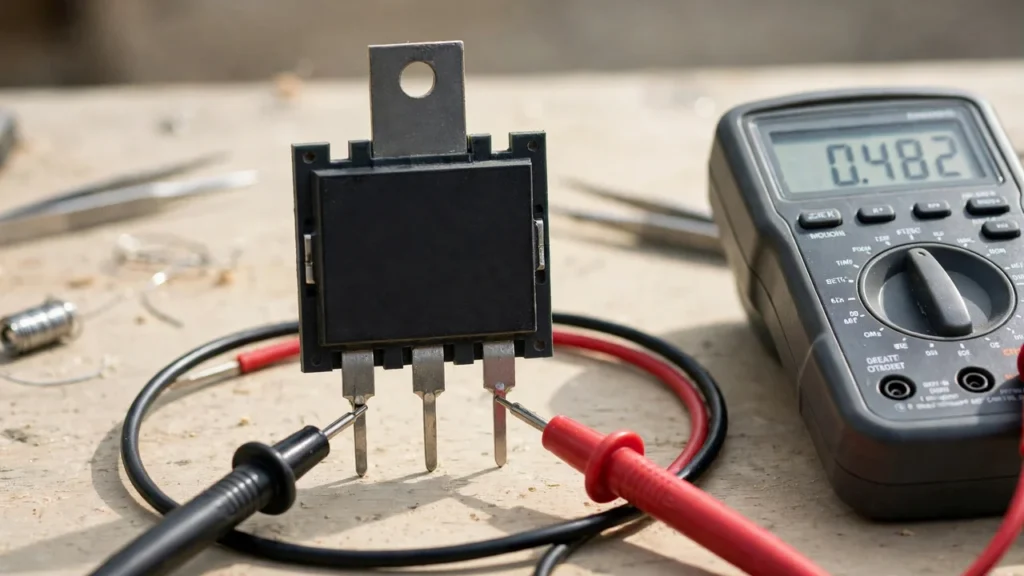
How to Test a MOSFET With a Multimeter 2026: Find a Bad MOSFET Before It Burns Your Board
Last month, a technician brought me a dead inverter board. He had already fitted a new MOSFET. The board died again in…
 Category:
General
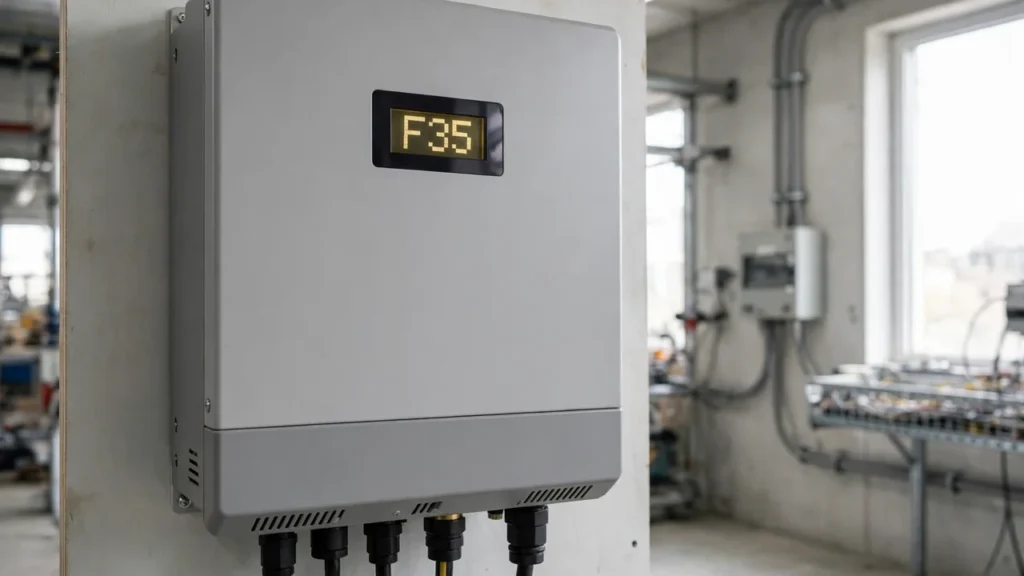
Inverex Nitrox Fault Codes 2026: Technician’s Complete Decode List for F01 to F64
Inverex Nitrox Fault Codes 2026: Technician’s Complete Decode List for F01 to F64 One evening, a shop owner called me. His Inverex…
 Category:
Electronic Parts
Where to Buy Inverter Repair Parts in Peshawar
Looking for inverter repair parts in Peshawar? Learn what inverter spare parts are important and where to buy original inverter repair parts…
2 Comments
[…] with published series specifications in our electronic parts section. Companion guides: the 35V 680uF and 35V 4200uF articles cover the neighboring rail capacitors, plus our solar equipment […]
[…] Solder cleanly, check the polarity twice, and power up. Watch for a clean start, a steady rail, and no resets when loads switch. For the neighbouring high-voltage values on the same boards, read our 400V 47uF capacitor guide and our 400V 82uF capacitor guide. For low-voltage rail capacitors, see our 35V 680uF capacitor guide. […]