
Description
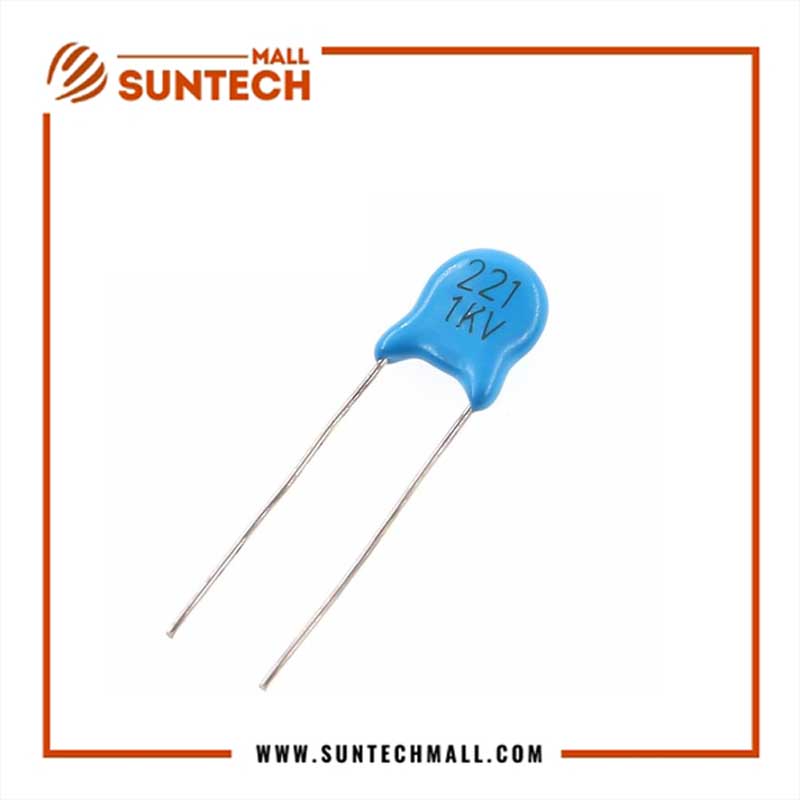
If your board needs a 220pf 1kv capacitor, and the old part is a 220pF disc rated at 1kV with radial leads, this is the part to order. It is a 220pf 1kv capacitor in a round disc body with two leads, built as a high voltage disc capacitor for filtering, noise suppression, and voltage stabilization in high-voltage circuits where a low-voltage part would fail. It fits solar inverters, DC-DC converters, snubber circuits, and EMI suppression jobs that need a fixed 220pF value at up to 1kV. It does not fit jobs that need a different capacitance value, a higher voltage than 1kV, or a surface-mount body. Check the checks below before you order, so the value, the voltage, the tolerance, and the lead spacing all match your board.
This is an original, high-quality part.
What it does
A capacitor stores electrical charge and gives it back when the circuit needs it. A disc capacitor does that job as a round flat disc with a lead on each side, which solders straight into the holes of a board. This 220pf 1kv part holds its 220pF value within 10%, so a board that calls for 220pF gets between 198 and 242pF. The 1kV rating is what sets it apart from the low-voltage disc capacitors used on logic boards — it can stand across a high-voltage stage without damage, as long as the voltage limits below are respected. You can check the value from the code: the value code for this part is 221, which reads as 22 followed by 1 zero, or 220 picofarads — that is 0.22 nanofarads.
Repair techs use a part like this as a 220pf dip capacitor for high-frequency filtering, where it lets the wanted signal through and blocks the rest, and for transient voltage suppression, where it soaks up sudden voltage peaks before they can damage the rest of the board. It also fits snubber circuits, where it tames switching spikes, and EMI suppression, where it cuts electrical noise before it spreads. The disc has silver-plated sides, and the leads are tinned copper-clad steel wire.
Key features
- 220pF (0.22nF) capacitance, ±10% tolerance
- 1kV rated voltage
- Disc body, radial leads, through-hole mounting
- Disc size about 10 mm, lead spacing about 12.5 mm
- Lead diameter 0.7 mm
- Non-polarized — fits either way round
- Value code 221
Checks before you order
- Value — read the code: your board list must call for 220pF (0.22nF), which is the part marked 221. Do not read the code as 1nF by mistake — the live spec block lists 102 (1nF), but the product name and body text say 221 (220pF), so confirm the marking on the disc before you order (see the gates note). A 100PF 1kV dip capacitor is a different value for a different job, not a swap for this one.
- Voltage: the voltage across this part must never go above 1kV. If your circuit runs at a higher voltage, this part is the wrong pick — check the board list and the Download file for the voltage your circuit really needs, because the live spec block lists 2kV (see the gates note).
- Tolerance: the real value may sit up to 10% away from 220pF, so between 198 and 242pF. If your circuit needs tighter than 10%, this part is the wrong pick — do not hope the part you get sits near the middle.
- Body and fit: your board must take a radial disc with two leads about 12.5 mm apart. Measure the old part and match it against the holes and the space on your board. The disc is about 10 mm across — if your old part is much bigger or smaller, check the board list again before you order. A 470PF 1kV dip capacitor is a different value for a different job, not a swap for this one.
- Polarity: this part has no polarity — it fits either way round. If your board list calls for a polar part, this is the wrong pick.
- Fit for the job: this part suits high-voltage filtering, transient voltage suppression, snubber circuits, and EMI suppression. If your job needs a safety capacitor across the mains or a much larger value for bulk energy storage, this part is the wrong pick — match the board list exactly.
Specifications
All figures below are the live page’s own figures, except the capacitance and the voltage, which come from the product name and the live body text, because the spec block lists a different value and voltage (see the gates note). No figure here was guessed, and no dielectric or temperature range is claimed, because the live page gives neither. The publisher should confirm the figures against the Download file at publish time (see the gates note).
| Type | High-voltage disc capacitor, radial leads, through-hole |
| Capacitance | 220pF (0.22nF) |
| Value code | 221 |
| Tolerance | ±10% (198 to 242pF) |
| Rated voltage | 1kV (as named on the live page — see the gates note) |
| Termination style | Radial |
| Lead diameter | 0.7 mm |
| Lead spacing | About 12.5 mm |
| Disc size | About 10 mm |
| Polarity | None — non-polarized |
Other names for the same part (good to know)
Shoppers and repair techs call this same part by a few names. 220pf 1kv is the plain name from its value and its voltage. 220pf 1kv capacitor is the name buyers use when the full rating matters. 220pf dip capacitor is the name buyers use with the mounting style. 1kv disc capacitor is the name buyers use with the voltage and the shape together. High voltage disc capacitor is the name for its type. If your board list calls for 220pF at 1kV in a radial disc body, this page is the right match. Do not judge by the spec block alone — the name and the body text say 221 (220pF) at 1kV, while the spec block says 102 (1nF) at 2kV — check the value, the voltage, and the lead spacing too.
Frequently Asked Questions
What does 221 mean, and what is 220pF?
221 is the value code for 220 picofarads, which is 0.22 nanofarads. Under the standard 3-digit code, 221 means 22 followed by 1 zero, in picofarads. Code 220 would be only 22pF — a different part — so check the marking on the disc before you order.
What does 1kV mean for this part?
1kV is the rated voltage: the highest voltage the part is made to stand across in normal use, which is 1000 volts. The voltage across the part must stay at or below 1kV. Note that the live spec block lists 2kV and a 1nF value — the publisher must confirm the stocked part’s value and voltage from the Download file and the photo marking before publishing (see the gates note).
Is this capacitor polar?
No. It is a disc capacitor, so it has no polarity and fits either way round. If your board list calls for a polar part, this is the wrong pick.
Can I use a different value, like a nearby picofarad part?
No, not without checking the circuit. The capacitance value sets how the part filters signals and soaks up spikes, so a different value changes how the circuit behaves. Only swap in a different value if the circuit design allows it — otherwise match the board list exactly.
How do I fit a disc capacitor?
Push the two leads through the matching holes on the board and solder them. Check the lead spacing against the holes before you solder — the live page states about 12.5 mm, so measure the old part rather than guessing from the value alone. Keep the disc clear of parts that cannot take heat.
What is the price of this part?
Check the live price on the website. The price shown on the product page is the current one.
Use note kept from the old page: this part was listed before as a 220PF 1kv Dip Ceramic Capacitor, a high-voltage disc capacitor for solar inverter and power electronics applications, for stable capacitance, for high-frequency filtering, transient voltage suppression, and energy storage, for DC-DC converters, snubber circuits, and EMI suppression, and for reducing voltage spikes, improving power efficiency, and protecting sensitive components from electrical noise — and that use still stands.
Reviews

Superb product and great handling.

100% original product, highly recommended.

Quick delivery and great products
Happy with the quality and price
Quick and hassle-free checkout
The quality is top-notch
Great products at great prices
Excellent communication and service
Highly recommend, great service
Great products at great prices
User-friendly website and fast checkout
Highly satisfied with both product and service


