
20D561K Varistor: How This Small Blue Disc Protects Your Equipment
Three years ago, during a monsoon storm in Lahore, a repair shop owner I know lost eleven phone chargers, two LED TVs, and a customer's amplifier in one night. A single lightning…

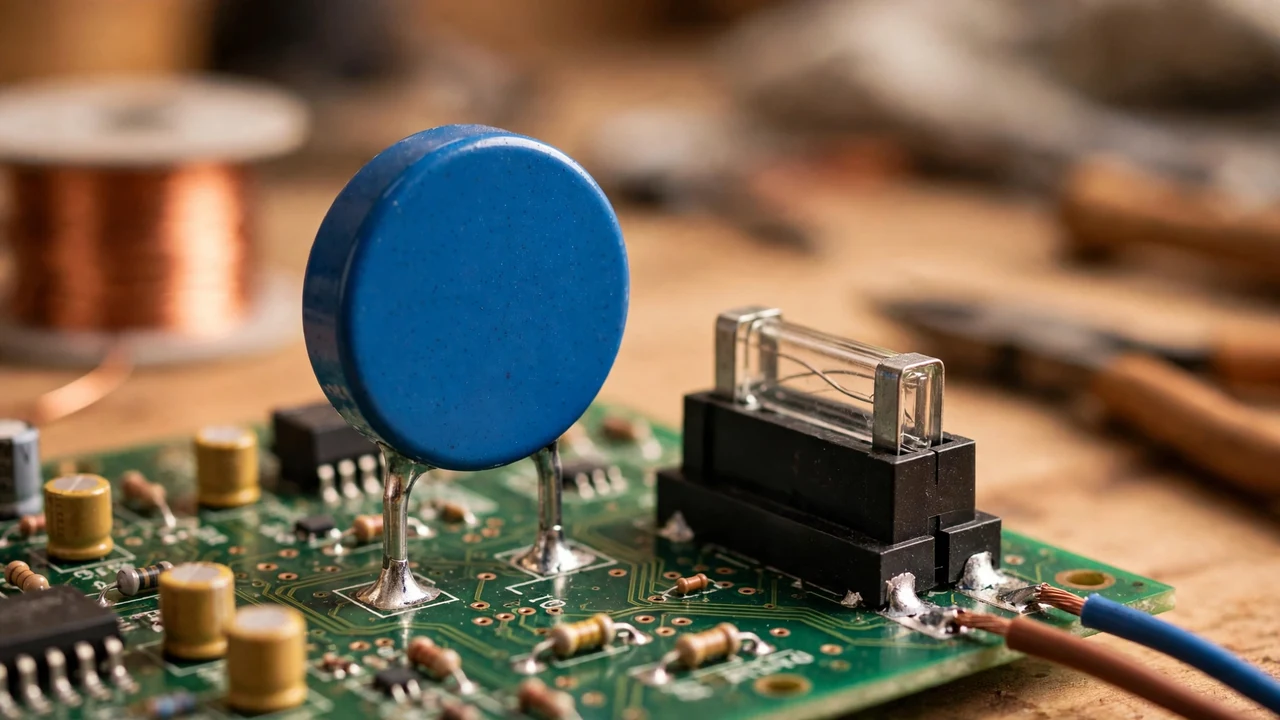
Three years ago, during a monsoon storm in Lahore, a repair shop owner I know lost eleven phone chargers, two LED TVs, and a customer’s amplifier in one night. A single lightning surge through the mains wiring did it all. The next week, he started fitting a tiny blue disc across the mains input of every device he repaired. That part was a metal oxide varistor, and he has not lost a repaired device to a surge since.
At SunTech Mall, we supply original electronic components across Pakistan, and the 20D561K varistor is one of the most valuable small parts we stock. It fits almost anywhere, and it stands between your equipment and the voltage spikes the grid delivers: lightning strikes, load-shedding switching, and transformer faults.
The fear is justified. A single surge can destroy expensive equipment in a fraction of a second, and most people think about surge protection only after the damage is done. Worse, many people install the right part in the wrong place, which gives false confidence.
Key takeaways
- 20D means a 20 mm disc, 561 means 560V nominal varistor voltage, and K means ±10% tolerance.
- A varistor sits across the lines, does nothing at normal voltage, and clamps surges in under 25 nanoseconds.
- Always fit it across live and neutral, after the fuse, as close to the mains entry as possible.
- Varistors wear out with every surge and usually fail short-circuit, so the fuse is mandatory, not optional.
- Never swap voltage codes by looks alone: a 20D471K is not a 20D561K.
What does the code 20D561K actually tell you?
Varistor part numbers are not random. They follow a standard industry code, and reading them takes seconds once you know the pattern.
20D means a 20-millimetre disc. The “20” is the diameter of the metal-oxide disc in millimetres, and “D” stands for disc. This is a large varistor, and size matters: the bigger the disc, the more surge energy it can absorb. A 20 mm part handles far more energy than the small 7 mm or 10 mm varistors found in cheap chargers.
561 means 560 volts nominal. The varistor voltage is the voltage at which the device starts to conduct strongly, measured at 1 milliamp. This number decides which circuits the part suits. A 560V nominal varistor is meant for higher-voltage mains and industrial lines, not for low-voltage electronics.
K means ±10% tolerance. The actual varistor voltage of any single part falls within 10% of the 560V nominal value. That gives a working band of 504V to 616V, as listed in the 20D series datasheets.
So the full reading is: a 20 mm metal oxide varistor with a nominal 560V characteristic, ±10%. When you see a 14D471K or a 10D471K, the same decoding applies: disc size, voltage code, tolerance.
Bonus tip: never substitute a varistor by size alone. A 20D471K and a 20D561K look identical, but their voltage ratings differ. Always match the voltage code to your circuit.
| Figure (20D series datasheets) | Value | What it means for you |
|---|---|---|
| Varistor voltage at 1 mA | 560V, range 504–616V | The band where it starts to conduct strongly |
| Max. continuous AC voltage | 350V AC | The highest mains voltage it can sit across day to day |
| Max. continuous DC voltage | 460V DC | The highest DC voltage it can sit across day to day |
| Clamping voltage | 920V (one source lists 925V) | The voltage it lets through during a heavy surge — see note below |
| Surge current, 8/20 µs | 6,500A once (some listings say 6,000A) | The biggest single surge pulse it is rated to survive — see note below |
| Energy rating | About 210–230J by source | How much surge energy it can absorb — sources disagree, see note below |
| Response time | Under 25 nanoseconds | How fast it reacts to a spike |
| Operating temperature | −40°C to +85°C | The temperature range it is rated for |
A note on figures that disagree. Different 20D561K datasheet copies do not agree on every number. Clamping voltage appears as both 920V and 925V. Surge current appears as both 6,500A and 6,000A. Energy appears as 210J, 220J, and 230J in different sources, with higher-surge energy figures higher still. I have kept both wordings here rather than picking one silently. Before you design around a limit, check the datasheet for the exact maker and batch you hold.
How does a varistor actually protect your circuit?
A metal oxide varistor is a voltage-dependent resistor. That single phrase explains everything it does.
At normal voltage, the varistor barely conducts. It looks like an open circuit, draws almost no current, and affects nothing. The moment voltage rises above its threshold, its resistance collapses and it conducts heavily, shunting the excess energy away from the sensitive parts. When the surge passes, it returns to its high-resistance state.
Think of it as a pressure relief valve on a water pipe. Normal pressure: the valve stays shut. A sudden spike: it opens, vents the excess, and closes again. Your equipment downstream never sees the spike.
The varistor connects in parallel across the lines it protects, typically across live and neutral at the mains input. Because it sits across the lines rather than in series with them, it does not interfere with normal operation at all. It only acts during the brief moments when voltage goes past safe levels.
Note: a varistor absorbs surge energy, and every surge wears it down slightly. It is a consumable protector, not an immortal one. That is why the failure section later in this guide matters so much.
Where does the varistor belong in your circuit?
Correct placement is everything. A varistor in the wrong position protects nothing.
Across the mains input, after the fuse. The standard position is directly across live and neutral, immediately after the mains fuse and switch. Placing it after the fuse is critical: if the varistor ever fails short-circuit, the fuse blows and cuts power safely.
As close to the entry point as possible. Surges should be clamped before they travel across your board. Mount the varistor near the mains connector, with short leads. Long wires add inductance, which slows the clamping response.
One per protected line pair. For single-phase equipment, one varistor across live and neutral covers the main threat. In industrial panels, varistors are fitted across each phase pair and from each phase to earth, forming a complete protection network.
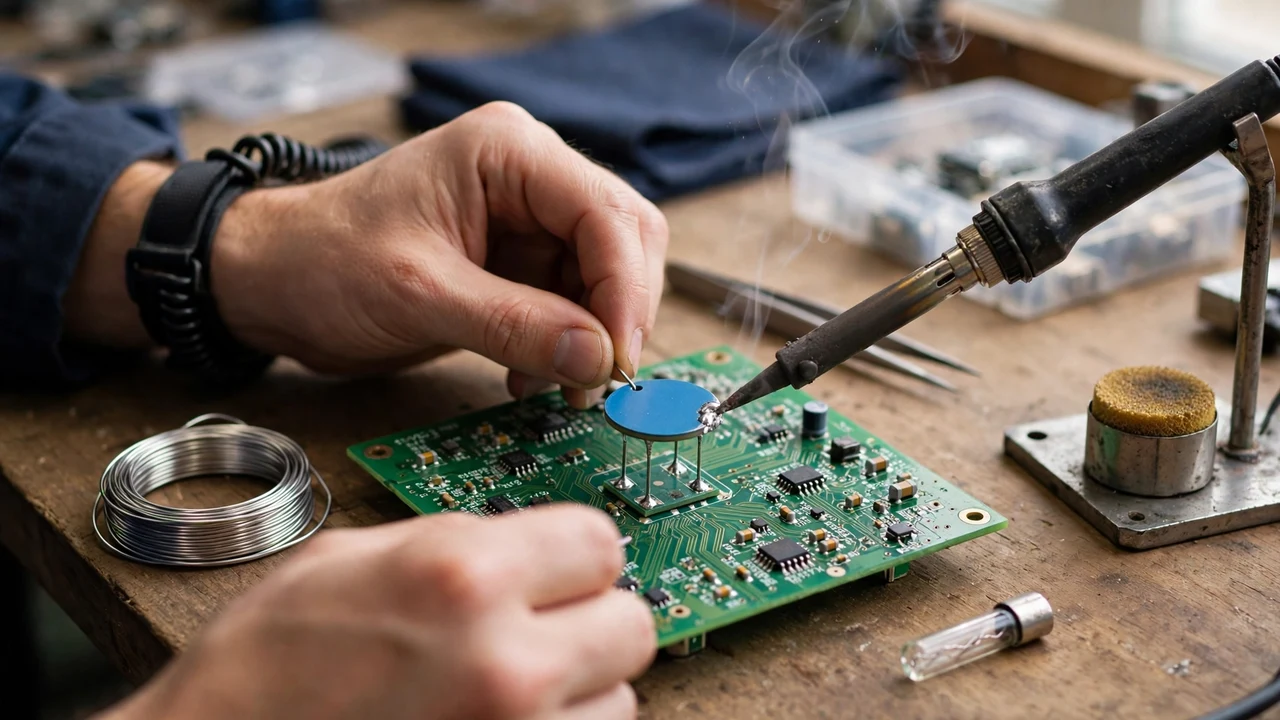
Bonus tip: in gear you repair often — phone chargers, LED drivers, small UPS units — check whether the maker included a varistor at all. Many budget products leave it out to save cost. Adding a correctly rated varistor during repair is one of the highest-value upgrades you can make.
What does it protect in homes and offices?
The Lahore repair shop story at the start is the home case in miniature. Here is what this class of varistor delivers for home and office gear.
Surge protection for everything with a plug. Phone chargers, LED TVs, desktop computers, audio amplifiers, and microwave ovens all face the same threats: lightning-induced surges, switching transients when heavy loads connect or disconnect, and faults on the distribution network. A varistor at the input absorbs these before they reach delicate semiconductors.
Longer equipment life. Many electronic deaths blamed on “bad luck” are actually cumulative surge damage. Each small transient stresses semiconductors slightly, and the damage adds up. Continuous varistor protection removes that slow damage, and equipment simply lasts longer.
Low-cost insurance. The varistor is one of the lowest-cost parts in any device, yet it protects the most expensive ones: the microcontroller, the display driver, and the power transistors.
Compact and easy to retrofit. The disc package with two radial leads fits almost anywhere. During repair, it solders directly across the mains input pads in minutes, with no circuit redesign needed.
What does it protect in industrial settings?
In industrial settings, the stakes are higher: a surge does not just kill a charger, it stops a production line.
Protection for control panels and drives. Motor drives, PLCs, and control panels hold sensitive electronics right next to heavy switching loads: contactors, large motors, and welders that make constant transients. Varistors at panel inputs and across contactor coils absorb these locally.
Less downtime. An industrial surge can destroy drives and controllers worth far more than the varistor protecting them, and the downtime costs dwarf even the equipment cost. Proper surge protection is one of the cheapest reliability investments a plant can make.
Safety for people and wiring. Severe overvoltage can cause insulation breakdown, arcing, and fire. By clamping transients, varistors cut the risk of electrical fires and protect the people working around the equipment.
Note: industrial sites often need coordinated protection: varistors at the equipment combined with surge protective devices at the distribution board. One part alone is not a whole protection system.
What is the failure mode nobody tells you about?
Here is the part most sellers skip, and it is the most important section of this guide.
Varistors wear out. Every surge the varistor absorbs degrades the metal-oxide material slightly. After enough surges, or one massive one, its leakage current rises and its clamping voltage drifts. In the end, it can fail.
They usually fail short-circuit. A dead varistor typically becomes a near-short across the mains. Without a fuse upstream, that means overheating, smoke, and fire risk. This is why the varistor must always sit after a correctly rated fuse.
Visual inspection catches many failures. A varistor that took a severe surge often shows it: cracked or discoloured coating, a burnt smell, or visible charring. Any varistor that looks damaged has done its job and must be replaced.
Replace after known severe events. If equipment was connected during a direct lightning strike nearby, replace the varistor even if it looks fine. Its protection ability may be exhausted invisibly.
Bonus tip: when you repair surge-damaged equipment, always check the mains fuse first, then the varistor, then the rest of the power supply, in that order. The fuse and varistor are designed to sacrifice themselves. What lies beyond them tells you how bad the event was.
How do you buy a genuine 20D561K varistor in Pakistan?
Counterfeit protection parts are worse than useless: they give false confidence while protecting nothing. Here is how to buy right.
Buy from a component specialist. General traders may not know a varistor from a thermistor. Specialists do. Check the live price and stock in the electronic parts category at SunTech Mall or on the SunTech Mall homepage.
Check the markings. Genuine varistors carry crisp, legible printing of the full part number, 20D561K, on the epoxy body. Blurry, incomplete, or easily rubbed-off printing is a warning sign.
Match the full part number. Do not accept a “similar” varistor without checking the voltage code. A 20D471K is not a 20D561K, and the wrong voltage rating either clamps too late (no protection) or conducts during normal operation (overheating).
Buy spares. Varistors are consumable protectors. Repair shops keep common values in stock, because every surge season brings damaged equipment to the bench.
For related reading, see our 25V 1500uF capacitor guide for power supply filtering and our 250V 47uF capacitor guide for high-voltage filtering.
Frequently asked questions
What is a varistor used for?
A varistor protects electronic circuits from voltage surges and transient spikes. It sits across the power lines, does nothing during normal operation, and conducts heavily to absorb excess voltage during a surge.
What does 20D561K mean?
20D is a 20 mm disc size, 561 means 560V nominal varistor voltage (measured at 1 mA), and K means ±10% tolerance. It is a large, high-energy metal oxide varistor for higher-voltage mains and industrial use.
Where should I install the varistor?
Across live and neutral at the mains input, after the fuse and as close to the entry point as possible. It must always be protected by an upstream fuse, because failed varistors typically short-circuit.
Can a varistor be tested with a multimeter?
Only roughly. A good varistor reads very high resistance on a multimeter. A reading near zero ohms means it has failed short. But a meter cannot confirm it still clamps correctly: a varistor that survived a severe surge may look fine yet protect poorly.
How long does a varistor last?
It depends on the surges it absorbs. In a quiet electrical environment, it can last the life of the equipment. In surge-prone areas, it degrades with each event and should be inspected, and replaced, after known severe surges.
Can I use a 20D561K on a 220V home appliance?
Check your circuit needs carefully. The 561 code means 560V nominal varistor voltage, which suits higher-voltage applications. For standard 220–230V mains protection, lower voltage codes are commonly used. Match the varistor to your line voltage and expected transients, or ask a technician.
Does a varistor need maintenance?
No. It needs no power and no routine care. What it needs is inspection after storms and surge events, and replacement when it shows damage or has absorbed a known severe surge.
Verdict: should you fit a 20D561K varistor?
Yes, where its voltage code matches your circuit. It is a small, low-cost disc that asks for nothing until the night a surge comes down the wires. Then, in a fraction of a second, it decides whether your equipment survives. Fit it across live and neutral, after the fuse, close to the entry point, and replace it after severe events.
If this guide helped you, share it with someone who repairs or maintains equipment. When you need genuine varistors, check the live price on the website in the electronic parts section at SunTech Mall. Questions? Reach us through SunTech Mall and chat with us on WhatsApp through the website.


1 Comment
[…] for protecting 220–230V AC circuits. The same decoding works for its bigger cousins — see our 20D561K varistor guide for the 20mm industrial […]