
Day Solar Inverter Repair 2026: 7 Common Faults and the Real Parts That Fix Them
A Day Solar inverter fails in seven common ways: no output, repeated restarts, heat shutdown, no solar input, blown fuses, strange noise, and a faulty display. Most faults come from heat, dust,…

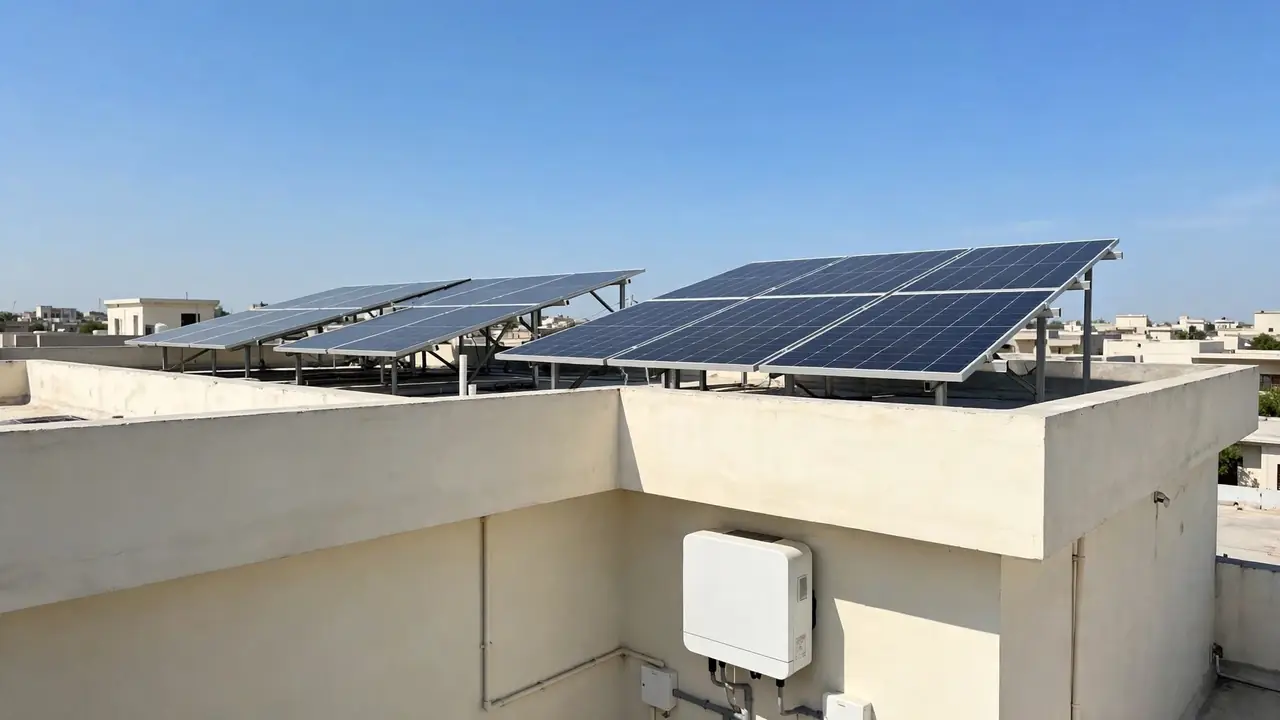
A Day Solar inverter fails in seven common ways: no output, repeated restarts, heat shutdown, no solar input, blown fuses, strange noise, and a faulty display. Most faults come from heat, dust, or one tired part. This guide gives the symptom and the likely part for each one.
In This Guide
Last month, a technician in our repair centre opened a Day Solar inverter that had stopped at noon every day for a week. The owner had already changed the panels and the wiring, and nothing had helped. Inside the case, the fault was small: a tired cooling fan and two swollen capacitors. Two small parts had stolen a week of sunlight. That is how most Day Solar repairs go. One small part fails, and the whole daytime system stops.
This guide explains day solar inverter repair in simple words. If you are new to this inverter, read What Is a Day Solar Inverter 2026 first. You will learn the seven faults a Day Solar inverter shows most, the part that usually causes each one, and the safe first check a technician uses. Day Solar does not publish a public fault-code list, so this guide works from symptoms, display readings, and meter checks, not from codes.
Trust nudge: This guide comes from SunTech Mall, a solar inverter spare parts store in Pakistan whose repair team fixes Day Solar inverters on the bench every day.
Why Does My Day Solar Inverter Show No Output at All? Why Does My Day Solar Inverter Keep Restarting Again and Again? Why Does My Day Solar Inverter Shut Down on Hot Afternoons? Why Does My Day Solar Inverter Show No Solar Input From the Panels? Why Does My Day Solar Inverter Trip the Breaker or Blow the Fuse? Why Is My Day Solar Inverter Making a Strange Noise? Why Does the Display Show a Fault but the Inverter Still Runs? How Do I Diagnose a Day Solar Inverter Fault Safely? When Should I Call a Technician Instead of Fixing It Myself?
Why Does My Day Solar Inverter Show No Output at All?
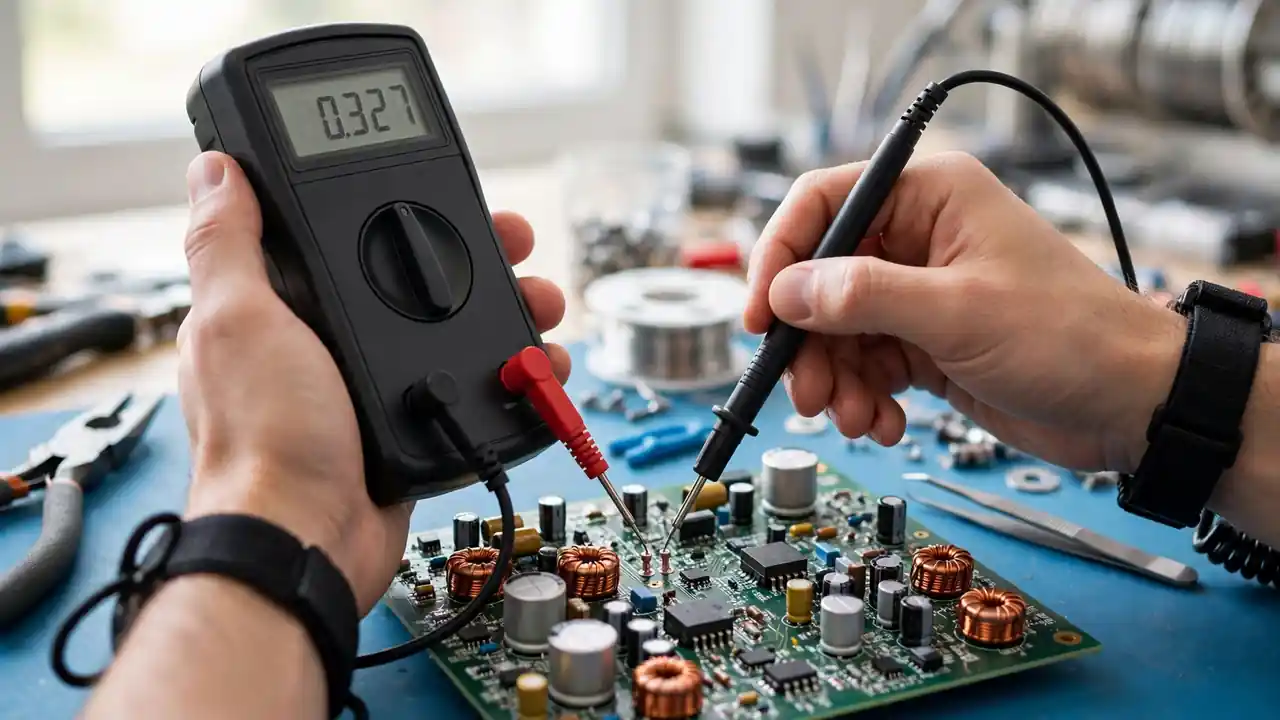
No output is the fault that scares owners most. The fans stop, the lights go out, and the display is dark. Before you call it dead, check the simple things first. Start with the disconnects and breakers: an inverter is fed by both a DC and an AC disconnect, and either one being open looks like a dead inverter. Check the AC breaker and the DC disconnect. If your inverter will not turn on at all, read our guide on Solar Inverter Not Turning On 2026.
If the breakers are fine and the display stays dark, the fault is inside. Power MOSFETs do the fast switching work, thousands of times per second, and they are the number one failure our repair centre sees. The symptom is often a dead inverter or a burnt smell. Match the exact MOSFET number, voltage, current, and package before you buy. One common original MOSFET we carry is the HY3215 N Channel MOSFET TO-247, and our guide on how to test a MOSFET with a multimeter shows how a technician tests one.
IGBTs are the heavy lifters in larger inverters. A failed output stage with dead IGBTs is one of the most common causes of no output at all. A dead inverter can also come from the chopper transformer, the small transformer that feeds the control circuits. When it fails, there is no display and no sign of life at all. One original part we carry is the Chopper Transformer 113-100600-011, and you can check the live price on the product page.
Note: A blown fuse is a symptom, not a diagnosis. Something else failed first, usually a MOSFET, an IGBT, or a shorted capacitor. Fit the same fuse rating, then find what blew it. Never fit a bigger fuse.
Why Does My Day Solar Inverter Keep Restarting Again and Again?
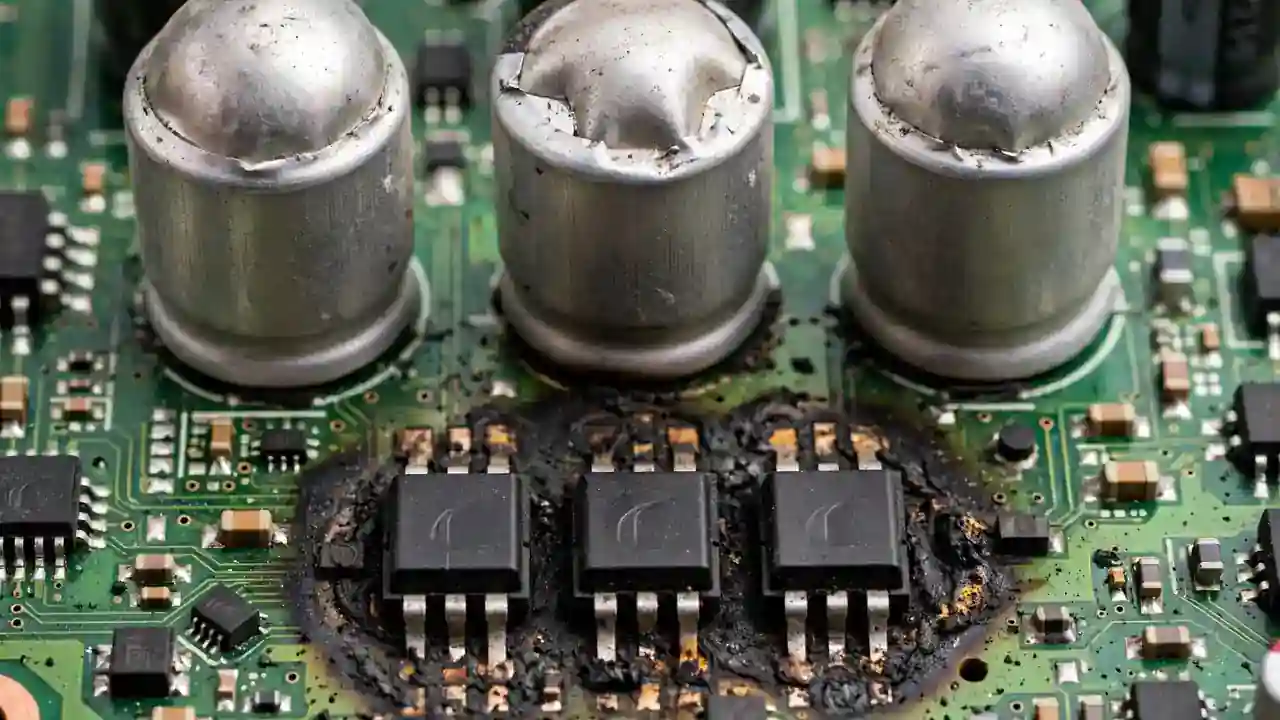
An inverter that restarts again and again is telling you its power is not steady. It runs for a few minutes, stops, starts again, and stops again. The most common cause is a tired DC bus capacitor. These big cylindrical parts smooth the power between the panels and the switching stage. They work in heat every day, and heat is what ages them. A simple rule from capacitor makers is that the life of an electrolytic capacitor halves for every 10°C rise in temperature.
A failing DC bus capacitor often bulges at the top, leaks, or tilts to one side. A flat top means healthy. A bulging top means dying. Aged DC bus capacitors can no longer hold the bus steady, so the inverter reports bus over-voltage or under-voltage, or fails under load.
When you replace a DC bus capacitor, match three facts together: the capacitance, the voltage, and the temperature rating. In Pakistan summers, always choose 105°C rated capacitors. A common DC bus value is the 450V 100uF capacitor for solar inverters, and you can check the live price on the product page.
Note: Never open the inverter case yourself to look at the capacitors. They can hold a painful charge even after the power is off. That check is a technician's job, on the bench.
Why Does My Day Solar Inverter Shut Down on Hot Afternoons?
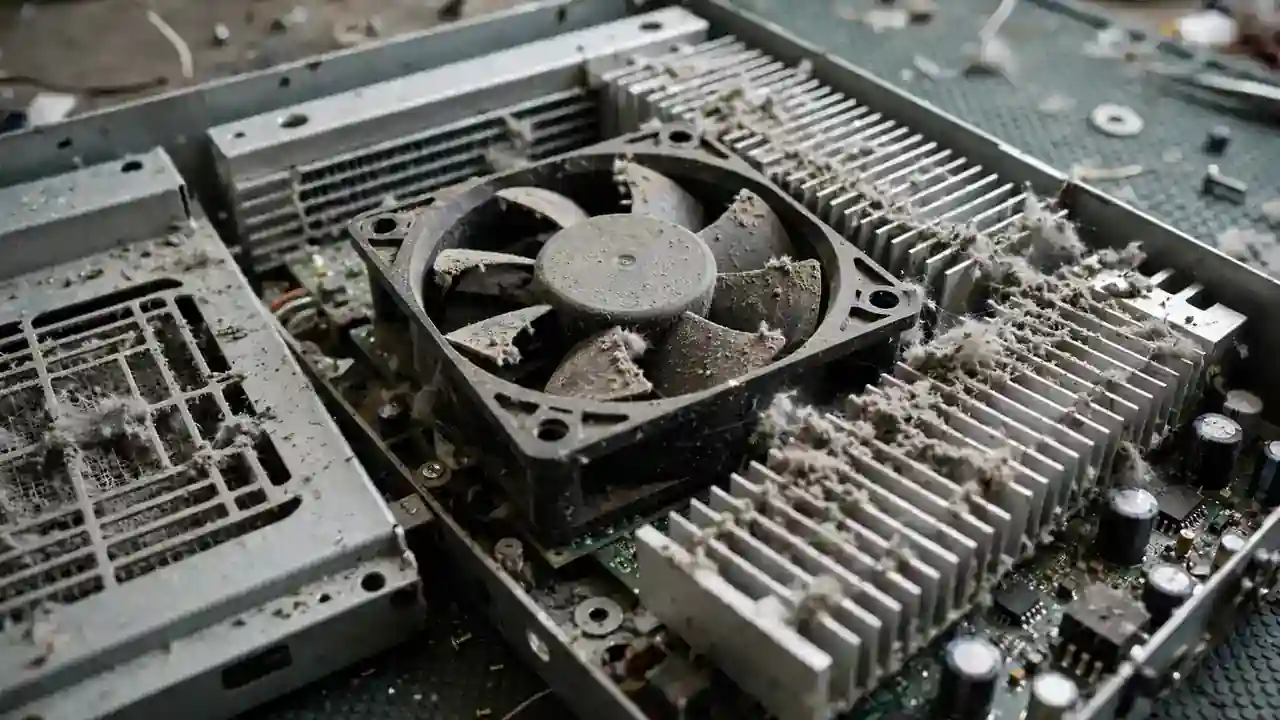
This is the most seasonal fault in Pakistan. The inverter works fine in the morning, then shuts down at noon, and works again in the evening. The pattern is the clue: the fault follows the heat, not the load. A Day Solar inverter works hardest at noon, in the hottest part of the day, with no battery to share the load.
The cooling fan is the cheapest part that protects the most expensive parts. It pulls cool air over the heatsink and pushes hot air out. When a fan slows down, gets noisy, or stops, the MOSFETs and IGBTs cook in their own heat. A worn-out cooling fan, dust-choked heatsinks, or a failed temperature sensor cause the shutdown, and left running, overheating is what kills IGBTs. Our solar inverter overheating guide explains how heat builds up in summer.
Dust is the silent partner in this fault. Keep the vents clear with a dry brush, and never stack boxes against the inverter. Never mount the inverter in direct sun or in a closed hot box. When the fan itself must be replaced, match the fan voltage and size exactly. A 12V fan in a 24V slot will burn, and a 24V fan in a 12V slot will spin too slowly. One common original fan we carry is the brushless 12V 0.40A DC fan for solar inverters, and you can check the live price on the website for it.
Bonus Tip: Once a month, listen to your inverter for ten seconds. Grinding, rattling, or silence when the unit is hot are warning signs.
Why Does My Day Solar Inverter Show No Solar Input From the Panels?
The inverter is on, the display is lit, but it shows no solar input. The panels are on the roof, the sun is shining, and still nothing comes in. This fault sits on the DC side, between the panels and the inverter, and the cause is often outside the case.
Start with the simple outside checks. The usual causes, in order, are burnt or loose MC4 connectors, a tripped or failed DC breaker or isolator, reversed polarity, or a failed MPPT input stage on the board. Look at the DC breaker first. If it has tripped, find out why before you reset it. Check the visible connectors for burn marks, loose plugs, or water inside. WattSimple says the timing tells your installer a lot: a fault that appears wet and clears dry is moisture.
If the wiring is sound, the fault moves inside, to the MPPT input stage. MPPT means Maximum Power Point Tracking. When the MPPT stage fails, the inverter cannot see the panels at all, even when the panels are fine. A failed rectifier diode or bridge can also block the DC path. Diodes fail short or open, often from overheating or voltage spikes. Our guide on rectifier diode and bridge fault explains the symptoms in simple words.
Note: No output at night is normal, not a fault. Panels make no power in darkness. Only a missing input in full daylight is worth chasing.
Why Does My Day Solar Inverter Trip the Breaker or Blow the Fuse?
A breaker that trips again and again, or a fuse that blows the moment you fit a new one, is the inverter protecting itself. Do not fight the protection. Find the cause. The usual causes are overload, a failing output relay, earth leakage, or a protection circuit that has drifted out of calibration.
First, check the load. A Day Solar inverter has a fixed rating, and a load above that rating will trip it. A simple rule: continuous loads above about 80% of the inverter's rating age the output stage fast, and heavy motor starts on a small unit do the same. Motors like fridges, water pumps, and air conditioners draw a short surge when they start. Our guide on how many kW inverter for home shows the easy load calculation.
Second, check for a shorted power part. When a MOSFET or IGBT fails short, it pulls heavy current the moment the inverter switches on, and the fuse blows at once. That is the classic sign: a new fuse blows instantly, with no delay. Heat, overload, and a weak gate driver are the top causes, and a repair that only changes the burnt part often fails again in a week. Third, check for earth leakage. A damaged cable, a wet socket, or a faulty appliance can leak current to earth. Switch off the loads one by one and see which one brings the trip back.
Note: Never fit a bigger fuse, and never bypass a breaker. A bigger fuse lets the fault current keep flowing until the board burns.
Why Is My Day Solar Inverter Making a Strange Noise?
A healthy inverter makes only a soft, steady sound. When the sound changes, listen carefully, because each sound points to a different part. A grinding, rattling, or clicking fan is the most common noise, and it means the fan bearing is worn or the blades are clogged with dust. Fan bearings wear out after years of spinning, especially in heat. Our guide on why your inverter fan is making noise explains what each sound means, and when the fan must be replaced. A fan that runs loud all the time is also a warning: it may be working hard because the vents are blocked or the load is too big.
A steady sound from the transformer is normal, but a new loud buzz is not. WattSimple is clear: do not ignore burning smells, discoloration, or buzzing. Shut the system down by the maker's procedure and call a technician. A loud buzz with a hot case can mean a loose connection, a failing transformer, or a part arcing inside.
Repeated clicking is a third sound with its own cause. A board-level repair service describes it as the unit trying and failing to connect, again and again. The usual causes are a worn relay with burnt contacts, unstable grid voltage, or a weak relay-drive circuit on the control board. Clicking that never stops is not a setting problem. It is a part problem, and it needs a bench check.
Why Does the Display Show a Fault but the Inverter Still Runs?
This fault confuses owners, because the inverter seems to work while the display says something is wrong. Do not ignore the display. The inverter is protecting itself, and the warning is there for a reason. A code on the screen is the inverter protecting itself. A good technician reads the code, then traces the stage it points to, instead of just clearing it.
Here is the honest limit of this guide. Fronus and Inverex publish fault-code lists for their models. Day Solar models do not publish a public fault-code list, so there is no code table to look up. Diagnosis works from the symptom, the display reading, and meter checks.
When the display shows a fault but the inverter still runs, the cause often sits on the control board, the small board that thinks, measures, and switches. The control board carries the control ICs that set the switching rhythm, the current sensors that watch the load, and the gate driver circuits that tell the MOSFETs when to switch. A weak gate driver makes the MOSFETs switch at the wrong time, so they heat up and burn. That is why a repair that only changes the MOSFETs often fails again in a week. If the control section itself is dead, the fix is a board, not a part. One option is the China Day Solar Inverter PCB Circuit Board, and you can check the live price on the website. Match the exact board number to your inverter model before you order.
How Do I Diagnose a Day Solar Inverter Fault Safely?
Day solar inverter repair starts with the symptom, not with a guess. Day Solar models do not publish a public fault-code list, so diagnosis works from three facts: the display reading, what the inverter does, and what a multimeter reads.
Do these six steps at home without opening any case. Every step is an outside check.
- Read the display and write down what it shows, with the time and the weather.
- Check the AC breaker and the DC disconnect first.
- Listen to the fan and look at the vents from outside the case.
- Check the load against the inverter rating, and switch off heavy loads.
- Watch the pattern over a few days, and write down when it fails.
- Smell the air near the inverter from a safe distance, and look for burn marks.
Use this table before you order any part. Find the symptom, read the first check, and only then order.
| Symptom | Likely part | First check |
|---|---|---|
| No output, dark display | MOSFETs, IGBTs, fuse, chopper | Check breaker and DC disconnect |
| Restarts again and again | DC bus capacitors | Look for bulging tops |
| Shuts down at noon | Cooling fan, dust in vents | Listen to the fan, clean vents |
| No solar input in daylight | MC4 connectors, DC breaker, MPPT stage | Check DC breaker and connectors |
| Breaker trips, fuse blows | Shorted MOSFET or IGBT, overload | Check load size first |
| Strange noise | Fan bearing, relay, transformer | Note when the noise starts |
| Display fault, still runs | Control board, gate driver, sensor | Write down the display reading |
A safe repair follows the same sequence: disconnect all power, discharge the capacitors, and verify zero voltage with a multimeter.
Note: Safety first, always. Disconnect the breaker before any work. The DC bus holds charge after switch-off, so wait for the discharge to fall below 5V and verify it with a multimeter. Never open a live inverter, and never touch the battery terminals with wet hands. Inside work belongs to a qualified technician only.
When Should I Call a Technician Instead of Fixing It Myself?
Call a technician when the fault recurs after clearing, when the system stays offline for more than a day in good weather, or when there is any burning smell, buzzing, or visible damage. DC-side faults always need a trained person, because DC wiring stays live in daylight.
Call a technician also when the board itself is the suspect: burnt PCB traces, MOSFETs that burn again after a fresh repair, or a display fault that will not clear. A good repair finishes with a full-load bench test, so the same fault does not return. Our guide on solar inverter repair cost shows what a technician visit usually covers.
Repair makes sense when the fault is in one stage. Replacement is the better call when the main board is burnt across several stages, or when the same inverter has failed three times in a short period.
Frequently Asked Questions
Can I repair my Day Solar inverter myself?
You can do the outside checks in this guide. Inside work belongs to a qualified technician only, because the DC bus holds charge after switch-off.
Why does my Day Solar inverter show no fault code I can look up?
Day Solar models do not publish a public fault-code list. Diagnosis works from the symptom, the display reading, and meter checks.
How much does a Day Solar inverter repair cost?
It depends on the part and the stage that failed. A fan or a fuse is a small job. A burnt power stage is a bigger one. Our solar inverter repair cost guide shows what a visit usually covers.
Why does my inverter work in the morning but stop at noon?
Heat is the most likely cause. A slow or dusty fan cannot cool the power parts at noon, so the inverter shuts down to protect itself. Clean the vents and check the fan.
Can I fit any MOSFET or fan in my Day Solar inverter?
No. Match the exact part number, voltage, current, and package for a MOSFET, and the exact voltage and size for a fan. A lower-rated look-alike will burn quickly.
Should I repair my Day Solar inverter or buy a new one?
Repair it if the fault is in one part or one stage. Replace it only if the board is burnt across several stages, or the same inverter has failed three times in a short period.
Final Thoughts
A Day Solar inverter rarely dies all at once. One small part fails, and the whole daytime system stops. Learn the symptoms in this guide, match the exact part number before you buy, and check what killed the part before you fit a new one.
Ready to fix your Day Solar inverter? Start with our Day Solar Inverter Spare Parts 2026 guide to match the right part, see the China Day Solar Inverter PCB Circuit Board if the board itself is the fault, and browse the full range at SunTech Mall. Questions? Message SunTech Mall on WhatsApp at 0306-2244820 with your inverter model and the symptom.
Published on 21 November 2026. Updated on 21 November 2026.
Sources: WattSimple — Solar Inverter Troubleshooting (symptom table, breaker checks, what is normal at night, ground faults, when to call) ; Solar Sync Solution — Solar Inverter Repair Service (board-level repair, no output, PV not detected, fan failure, DC bus faults, repair vs replace) ; TechFine — Solar Inverter Problems and Solutions (symptom-first diagnosis, safe outside checks) ; Elkatek — Solar Inverter Faults and Repair (IGBT faults, DC bus capacitors, gate drivers)
Related Technical Guides
 Category:
General
SPD and Voltage Protection 2026: Save Your Solar Inverter From Power Surges
An SPD, or surge protection device, guards your solar inverter from voltage spikes caused by lightning and grid switching. It sends the…
 Category:
General
Lithium Battery Lifespan 2026: 7 Mistakes That Kill Your Battery Early — A Technician’s Guide
Published on 20 November 2026. Updated on 20 November 2026. A lithium battery lasts years longer when you avoid seven mistakes: draining…
 Category:
General
Split AC Inverter PCB Repair 2026: Repair the Board or Replace It — A Technician’s Guide
Published on 19 November 2026. Updated on 19 November 2026. Repair the board when one part has failed and the rest of…
1 Comment
[…] to tell when yours has done its job. If your inverter has already stopped after a storm, read our Day Solar Inverter Repair 2026 guide […]