
Solar Inverter Not Turning On 2026: 9 Reasons and the Step-by-Step Check a Technician Uses
Solar Inverter Not Turning On 2026: 9 Reasons and the Step-by-Step Check It was a sunny morning. The power in the house was off. A man pressed the button on his inverter.…

Solar Inverter Not Turning On 2026: 9 Reasons and the Step-by-Step Check
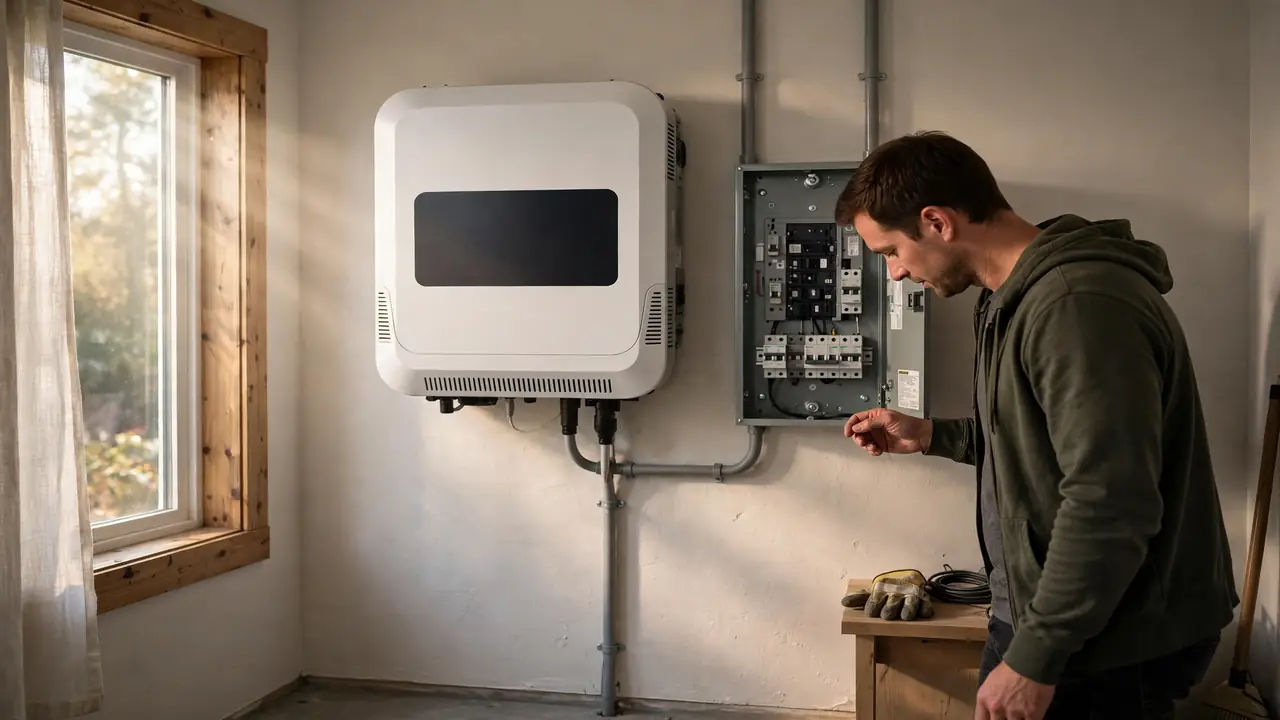
It was a sunny morning. The power in the house was off. A man pressed the button on his inverter. Nothing happened. No screen light. No beep. No fan sound. The inverter was dead quiet. He thought the inverter was broken and he would need a new one. But when it was checked, the problem was just one tripped breaker. A breaker is a safety switch that cuts power when something goes wrong. He turned it on, and the inverter started at once.
This guide tells you the same kind of story, step by step. When a solar inverter does not turn on, there are 9 common reasons. You will learn them in the order a technician checks them. First come the easy outside problems. Last come the hard inside problems.
You will learn what a blank screen means, and how it differs from a dead inverter. You will learn how a system with a battery differs from a system with no battery. And you will learn when to try it yourself, and when to stop and call a technician. At the end, you will get a checklist. You can use it the next time your inverter does not start.
Trust nudge: SunTech Mall runs its own inverter and UPS repair service center. Every day, we open inverters that will not turn on. Most of the time, the problem is the first item on this list. So trust this order. It comes from real work, not from theory.
What You Will Learn in This Guide
- The 9 reasons an inverter does not turn on, from easy to hard
- How to check each reason, step by step
- How a blank screen differs from a dead inverter
- How to restart in a safe way
- Three vital readings from a multimeter
- When you must call a technician
First, Know the Difference: Blank Screen or Dead Inverter?
This difference matters a lot. If the screen is blank but the inverter makes a soft sound or a beep, it still gets power. The problem may be the screen or a setting. If the inverter is dead quiet, with no light and no sound, it gets no power at all. Or its inside power part is bad.
One more thing to know. At night or in very cloudy weather, an on-grid inverter may stay off. An on-grid inverter is one that works with the main power grid and has no battery backup. It needs a set level of DC voltage from the solar panels to start. DC voltage is the kind of power that comes from panels and batteries. When the sun is weak, the voltage is too low, so the inverter does not start. That is not a fault. That is how it works.
A hybrid inverter is different. It can also take power from a battery. If a battery is joined and the inverter is still quiet, the problem is in the battery, the fuse, or an inside part. Once you know this difference, you can start the right check.
Reason 1: The DC Isolator or Breaker Is Off
This is the most common reason. Power from the solar panels goes through a DC isolator to reach the inverter. An isolator is a big on-off switch for solar power. If this switch is off, the inverter gets no solar power. Sometimes there is a second isolator on the roof. Both must be on.
Here is how to check. Look at the DC isolator near the inverter. Its handle must be in the on position. Then look at the AC breaker too. AC power is the main grid power in your home. In your home distribution board, the solar MCB must be on. An MCB is a small safety breaker for one circuit. If any breaker looks tripped, turn it on one time.
If the breaker trips again right after you turn it on, do not keep turning it on. A breaker that trips again and again points to a short circuit or a big fault. A short circuit means power found a wrong, easy path. In that case, keep the inverter and load off and call an electrician.
Reason 2: A Problem With House Power or the Grid
On-grid and hybrid inverters need grid power to work. If the whole house has no power, or if the solar circuit is off on its own, the inverter will stay off. First, check other things in the house. Is power coming to any other place in the house?
If the house has power but the solar circuit is off, look at the solar breaker in the distribution board. Sometimes a breaker trips halfway. It looks neither fully on nor fully off. Turn it fully off, then turn it on again.
This problem grows more common after a storm or rain. A power surge can trip a breaker. A surge is a sudden jump in power. So after a storm, check the home board before you check the inverter.
Reason 3: The Battery Is Dead or Its Wire Is Loose
In a hybrid or off-grid inverter, the battery is the life of the system. Off-grid means the system works without the main grid. If the battery is fully empty, the inverter will not turn on. If a battery terminal is loose, the same thing happens. A terminal is the metal end where the wire joins the battery. If white or green color builds up on a terminal, the contact gets weak.
Here is how to check. Look at the battery terminals. Is any wire loose? Is there rust or white powder on a terminal? If yes, first clean the contact and tighten the wire well. Then check the battery fuse too.
Also check the battery voltage. If the battery has not been charged for a long time, it may need charging on its own. A fully dead battery cannot be charged by the inverter itself. In that case, charge the battery from outside, or change it.
Reason 4: Low Sun or No Voltage From Solar
A solar inverter needs a set level of DC voltage to start. Early in the morning, late in the evening, or in very cloudy weather, the voltage may not be enough. At those times, the inverter staying off is normal. Do not call it a fault.
But if the sun is strong and the inverter still does not turn on, check the solar side. Is there dust or shade on the panels? Are the MC4 connectors loose? An MC4 connector is the plug that joins solar panel wires. Even one loose plug can stop a whole string. A string is a row of panels joined in a line.
The surest check is to measure the panel DC voltage with a multimeter. A multimeter is a small tool that checks voltage. If the voltage is zero, a wire is broken somewhere in the string. If the voltage is very low, one or more panels may have a problem. Be careful when you check voltage. DC voltage can be risky to touch.
Reason 5: The DC Fuse Is Blown
Some inverters have a DC fuse inside. A power surge or a short can blow this fuse. When the fuse blows, power has no path into the inverter. From outside, the inverter looks fine. But from inside, it is off.
Checking this fuse is a technician job, because you must open the inverter to reach it. If you think the fuse is blown, keep the inverter off and show it to a technician. When a fuse is changed, it must be the same rating. Rating means the same size and current limit. A fuse with a bigger rating can put the board in danger.
Reason 6: Loose Wires, Rust or a Short
Wire problems grow slowly. Heat, damp air and time make cable lugs weak. A lug is the metal end fixed to a wire. If water gets into an MC4 connector, rust builds up. On a rusty joint, power does not flow well.
When you check, look for a burnt smell or black marks. If any connector or wire shows burn marks, take it apart at once. Giving power again to burnt wires can cause a fire risk.
Always do wire work with the power off. First, take solar and battery off. Then touch the wire. This care can save your life.
Reason 7: A Short or Overload on the Output
If the inverter turns off the moment it turns on, or if it does not turn on at all, the output side may have a short. A bad machine, wet wires, or a wrong wire joint can cause this. The inverter stays off to save itself.
Here is how to check. Take the output load off the inverter. That means unplug all the things joined to the inverter. Then try to turn the inverter on. If it runs with no load, the problem is in the load or the wires. Then join things back one by one and watch which one turns the inverter off.
If the inverter still does not turn on with no load, the problem is inside the inverter. Move to the next step.
Reason 8: An Inside Fault — MOSFET, IGBT or System Card
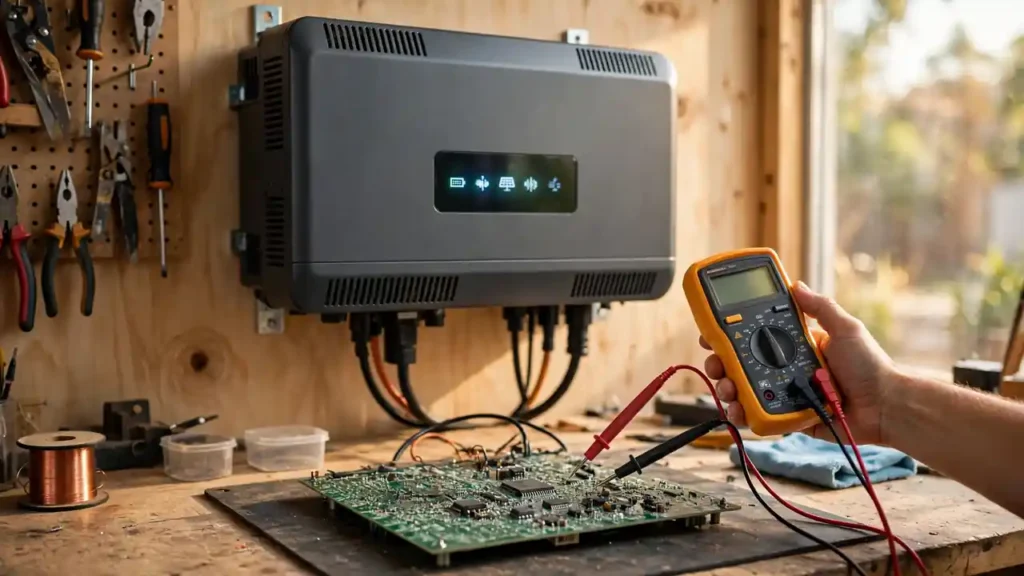
This is the hardest reason. Inside the inverter sit power parts. MOSFET and IGBT parts control power flow. Think of them as fast, strong switches. The system card is the main control board. It runs the whole inverter. If any of these goes bad, the inverter will not turn on.
These are the signs. The inverter is dead quiet. All wires look fine. Battery and solar are both there. Still, no light turns on. Sometimes you smell burning from inside the board. Sometimes a part looks swollen.
For this problem, a technician tests the MOSFET parts and the drive circuit with a multimeter. The drive circuit is the small circuit that tells a MOSFET when to switch. If a short part is found, it is changed. Common parts for this work include the full MOSFET category, NCEP 85T16 and HY3215. Before you change a part, match the old part number and package. Package means the size and shape of the part.
If the system card is the problem, matching the card number matters most. A wrong card can break the inverter again. For this job, it is better to take help from a technician.
Reason 9: A Screen or Control Problem (The Inverter Runs, You Just Cannot See It)
Sometimes the inverter runs, but the screen is off. You think the inverter is not on. In truth, only the screen or its wire is bad. You can tell by the sound. If you hear a soft sound, or if a phone app shows power data, the inverter works fine. Only the screen has a problem.
Do not worry in this case. Check the sound and the app. If the app shows power being made, the inverter works well. The screen problem still needs a technician, but it is not urgent.
Note: A communication problem and a power problem are not the same. No data in the app does not always mean no power is made. First, check the screen and the sound. Then make your choice.
Step-by-Step Check: In What Order to Look
Now put all 9 reasons in one order. This is the same order a technician uses.
- Check house power and the solar breaker. Turn a tripped breaker on.
- Turn the DC isolator on. Also check the roof isolator.
- Check battery terminals, wires and fuse.
- Check the sun and the solar voltage. Look for shade or dust on panels.
- Take the output load off and try to turn it on with no load.
- Restart in the safe way. First AC off, then DC off, wait a few minutes, then DC on, then AC on.
- Check the screen, the sound and the app, all three.
- If it still does not turn on, keep the inverter off and give it to a technician.
The best thing about this order is that you do the free and safe jobs first. The inside jobs come last. Many people do it the other way round. They open the board first, when the problem was only a breaker.
Bonus Tip: Write down the result of each check. Which breaker was tripped? What was the battery voltage? What happened after the restart? These notes help a technician find the problem fast. They also save your time.
Three Vital Readings From a Multimeter
If you have a multimeter, these three readings help a lot. The first reading is the solar string DC voltage. The second reading is the battery voltage. The third reading is the output AC voltage, but only when the inverter is on.
Use the right mode for each reading. Use DC mode for DC power. Use AC mode for AC power. The wrong mode gives a wrong reading. It can also harm the meter. If a reading does not make sense, take a photo and ask a technician.
You can also test a MOSFET with a multimeter. Find the Gate, Drain and Source pins. Gate is the control leg. Drain and Source are the power legs. A short check across these pins shows if the part is bad. A full guide on this test will come soon. But note this: when you test a board, the power must be off.
When You Must Call a Technician
Call a technician when the breaker trips again and again, when you smell burning, when a part looks swollen, when the fuse blows again and again, or when the inverter still does not turn on after all the checks. These are all signs of an inside fault.
Do not wait too long to call. A dead inverter means your home gets no solar power. Each day of delay can raise your bill. And if the problem is a short, waiting can also be risky.
SunTech Mall runs its own repair service center. You can send your inverter there for repair. Or you can buy the parts from suntechmall.com and get your own technician to repair it. The wholesale price rule is the same for everyone. Check the live price on the website. Orders go by TCS all over Pakistan within 24 hours.
Frequently Asked Questions (FAQ)
At night, my inverter stays off. Is that a fault?
No. An on-grid inverter needs a set level of DC voltage from solar to start. At night or in very cloudy weather, it does not start. That is normal.
What do I do if the breaker trips again and again?
A breaker that trips again and again points to a short or a big fault. Do not keep turning it on. Take the load off and call an electrician or technician.
The battery is fine, but my hybrid inverter still does not turn on. Why?
Then the problem may be the fuse, the wires, the DC isolator, or the inside board. Follow the checklist in this guide in order. If it still does not work, give it to a technician.
The screen is blank, but the app shows data. What does that mean?
It means the inverter works fine. Only the screen or its wire is bad. That is not urgent, but a technician must still fix the screen.
Can I open the board and check it myself?
If you do not have experience with power work, do not open the board. Do the outside checks first. Board work is a technician job, because high voltage lives inside.
What if the inverter turns on and then turns off at once?
Most often, the cause is a short or overload on the output. Take the load off and try with no load. If it still turns off, an inside fault is likely.
Where can I find parts for repair?
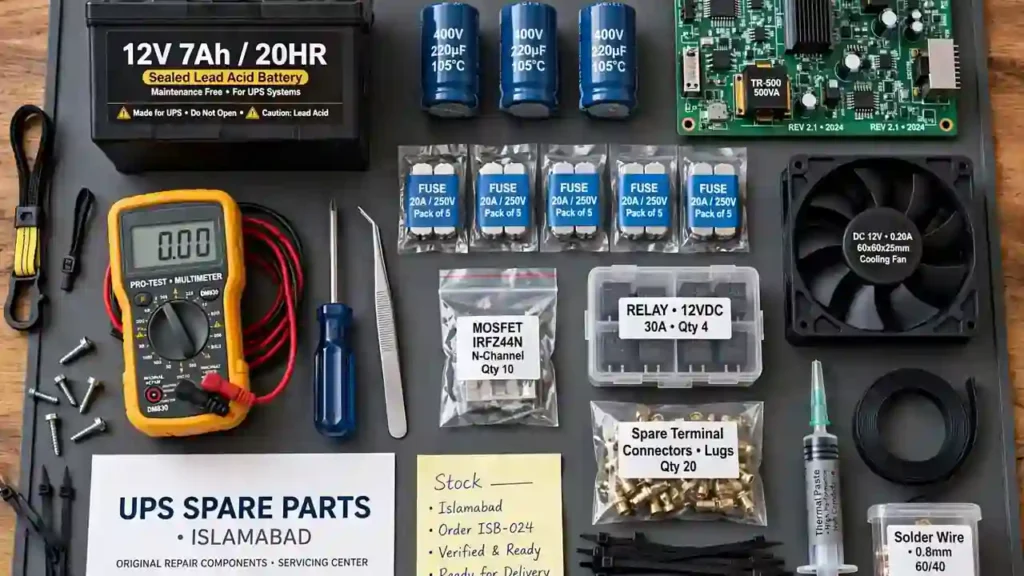
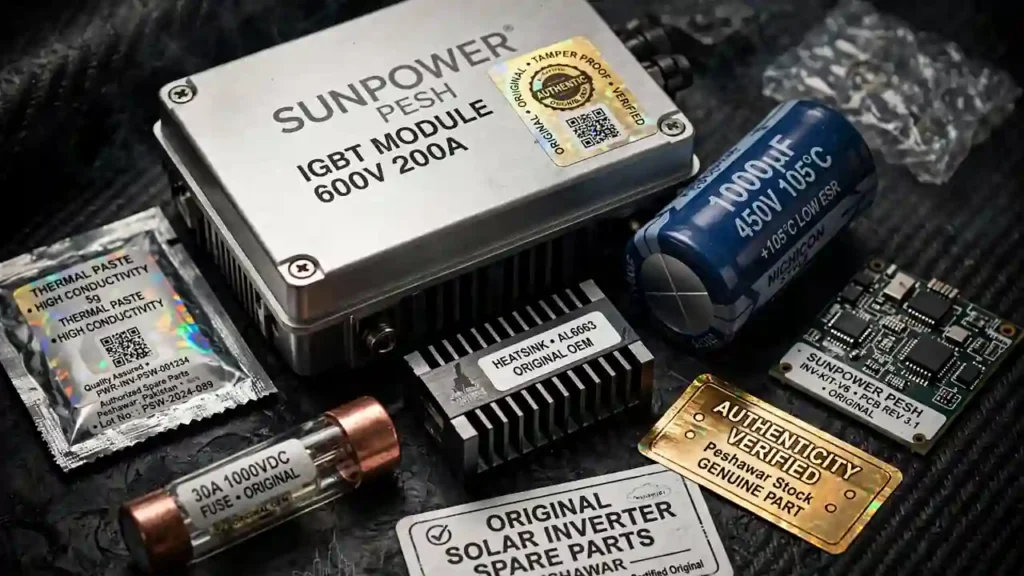
The MOSFET category, NCEP 85T16 and HY3215 are on SunTech Mall. Check the live price on the website and reach out on WhatsApp.
Final Thoughts
An inverter that does not turn on is most often not a big problem. Most often, it is the easiest problem. A breaker, an isolator, a battery terminal, or one loose plug. But people in a panic go to the hardest side first. That is why order is the biggest fix.
So my request is this. The next time your inverter does not turn on, follow the checklist in this guide. Write down each step and its result. If the problem is solved, you saved time and money. If not, your notes will cut the technician work in half.
And note this: SunTech Mall has served Pakistan with solar products and repair work since November 2022. The physical shop sits in Charsadda/Tangi. Whether you need parts or a repair, the path is the same.
Next Step: See the parts that fit here: MOSFET Category | NCEP 85T16 | HY3215 | Inverex Yukon II | Suntech HYB-10KW
Reach out on WhatsApp: 0306-2244820 — send your problem and your readings, and you will get the right advice. Check the live price on the website: suntechmall.com
Sources: For reasons an inverter does not start and safe restart steps: Utica inverter not powering on troubleshooting guide, Solax how to turn on a solar inverter (common causes), Solar Miner common inverter failure causes and manual reset steps, DSG Energy common solar inverter problems and solutions.
Published: 22 October 2026 | Updated: 22 October 2026 | SunTech Mall — Charsadda/Tangi Office, Tangi Moor, Tangi Charsadda