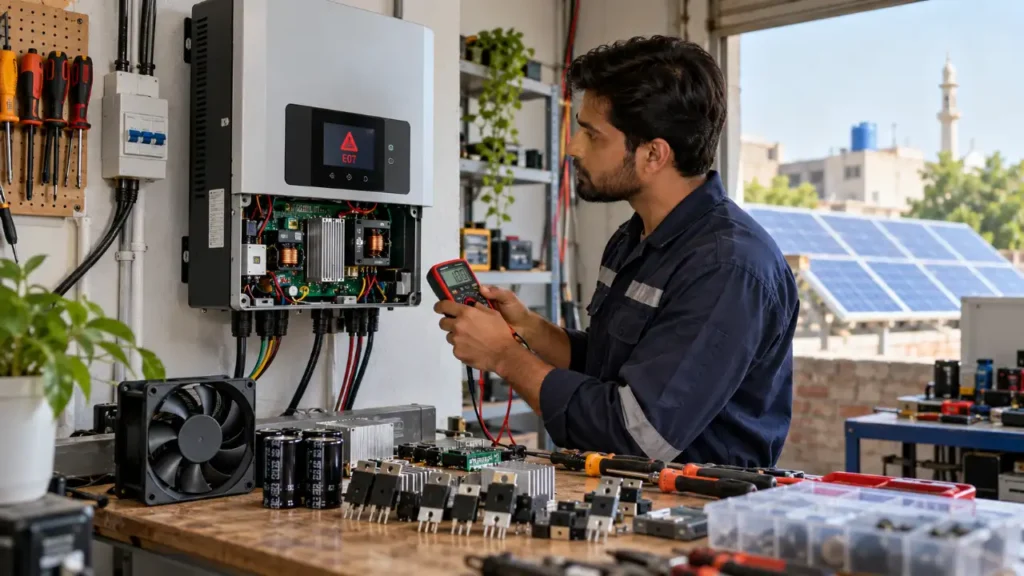
Solar Inverter Overheating in Pakistan Linked to Fan Failure and Dust – Technicians Issue Serious Warning
Technicians across Pakistan warn that cooling fan failure and dust buildup are major reasons behind increasing solar inverter overheating cases.

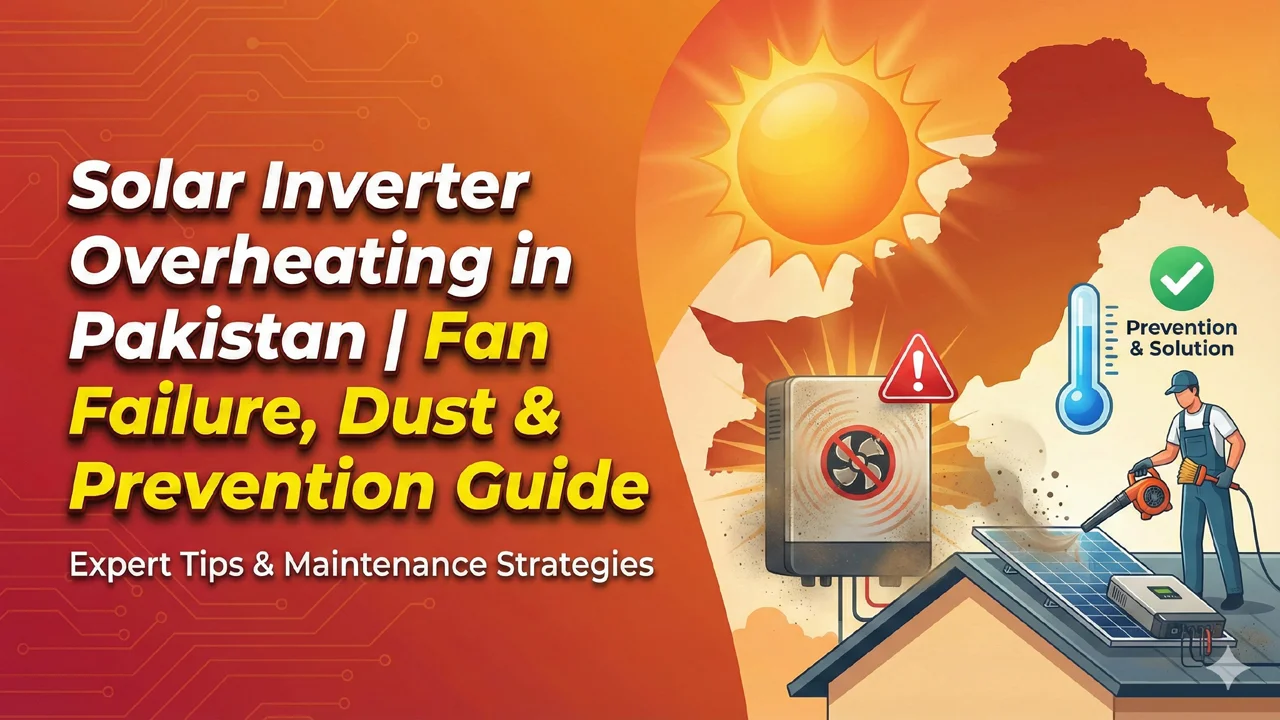
Solar inverter overheating has become one of the most common and damaging problems reported by technicians across Pakistan. What makes this issue particularly dangerous is that it develops quietly. In many cases, users continue using their solar systems without realizing that excessive heat is slowly damaging internal components.
According to experienced technicians, cooling fan failure and dust buildup are now among the top causes of inverter overheating, especially during warmer months. When left unaddressed, this problem can lead to costly repairs and significantly shorten inverter lifespan.
Why temperature control is critical for solar inverters
Every solar inverter generates heat during normal operation. Power conversion, voltage regulation, and switching processes all produce thermal energy. To keep internal temperatures within safe limits, inverters rely on cooling systems such as fans, heat sinks, and ventilation pathways.
When these cooling mechanisms function properly, excess heat is removed efficiently. However, when airflow is restricted or fans stop working, heat accumulates rapidly and begins to damage sensitive electronic components.
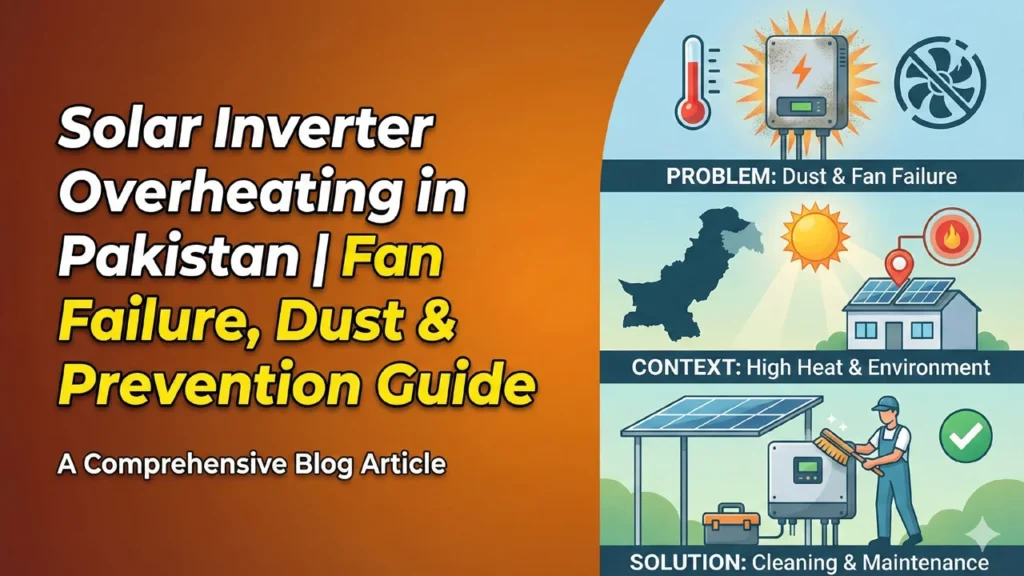
Cooling fan failure: a small component with a major impact
Cooling fans are often overlooked during maintenance, yet they play a critical role in inverter health. Technicians report that many overheating cases start with a simple fan issue that was ignored for too long.
Common reasons for cooling fan failure include:
- Dust accumulation on fan blades
- Continuous high-speed operation during summer
- Poor-quality replacement fans
- Electrical issues affecting fan power supply
Once a fan slows down or stops completely, internal temperatures rise sharply—even if the inverter is running under normal load conditions.
Dust buildup: the silent contributor to overheating
Dust is one of the most underestimated threats to solar inverters in Pakistan. Many inverters operate in environments with high dust levels, including homes, shops, and industrial areas.
Over time, dust settles on internal components, heat sinks, and ventilation grills. This creates two major problems:
- Airflow is blocked, reducing cooling efficiency
- Heat becomes trapped inside the inverter casing
Technicians frequently open faulty inverters to find thick layers of dust covering critical components, severely limiting heat dissipation.
How overheating damages internal inverter components
Excessive heat affects nearly every part inside a solar inverter. Technicians commonly observe the following heat-related damage:
- MOSFET degradation and burnout
- Capacitor drying, swelling, or leakage
- Control board instability and malfunction
- Weakening of solder joints and PCB tracks
Once these components are affected, repairs become more complex and expensive. In many cases, replacing a fan alone is no longer sufficient.
Early warning signs users should not ignore
Overheating rarely occurs without warning. Technicians advise users to watch for the following signs:
- The inverter casing feels unusually hot
- Cooling fan noise becomes weak or disappears
- Frequent thermal shutdowns or error messages
- Reduced output performance during peak hours
Ignoring these signs often turns a simple maintenance issue into a full board repair.
Impact on residential solar users
For residential users, inverter overheating usually becomes noticeable during summer. Frequent shutdowns disrupt daily routines and force households to rely more on grid electricity.
Repair costs caused by overheating are often higher than expected because multiple components may be damaged. This reduces the financial benefits of solar systems and creates frustration for users.
Impact on commercial and business users
Commercial users face even greater risks. Offices, clinics, shops, and small industries depend on stable power for daily operations. Overheating-related inverter failure can lead to downtime, productivity loss, and customer dissatisfaction.
As a result, many businesses now treat cooling system maintenance as a priority rather than an optional task.
Why overheating cases are increasing
Technicians believe inverter overheating cases are rising due to several factors:
- Higher average temperatures across Pakistan
- Longer daily operating hours for solar systems
- Increased dust levels in urban and semi-urban areas
- Lack of regular preventive maintenance
As solar adoption continues to grow, more inverters are operating under stressful conditions for extended periods.
Importance of proper ventilation and installation
Installation location plays a crucial role in inverter cooling. Inverters installed in closed cabinets, tight corners, or direct sunlight are far more likely to overheat.
Experts recommend:
- Installing inverters in open, well-ventilated areas
- Maintaining adequate clearance around the inverter
- Avoiding direct sun exposure whenever possible
These installation practices significantly reduce overheating risk.
Quality replacement fans and spare parts matter
When a cooling fan fails, replacing it with a low-quality alternative often leads to repeat problems. Cheap fans may work temporarily but fail quickly under heat and dust exposure.
Technicians prefer sourcing reliable inverter fans and spare parts from trusted suppliers such as SunTech Mall, where airflow ratings, compatibility details, and quality standards are clearly specified.
Users and technicians can explore inverter cooling fans, spare parts, and accessories directly at: https://suntechmall.com
The Blog section also provides useful maintenance guides and inverter care tips to help users avoid overheating-related failures.
Preventive maintenance every inverter owner should follow
Preventive maintenance is the most effective way to control overheating:
- Clean inverter vents and surroundings regularly
- Check cooling fan operation periodically
- Keep the inverter area free from excessive dust
- Schedule professional inspections before summer
These steps cost very little compared to repairing heat-damaged inverter boards.
Market outlook and technician advice
With rising temperatures and increased solar usage, technicians expect overheating-related failures to continue unless users take preventive action. Ignoring cooling systems significantly reduces inverter lifespan, regardless of brand or capacity.
Cooling, ventilation, and maintenance are no longer optional—they are essential for long-term system reliability.
Stay informed with expert updates
Many solar professionals share seasonal warnings, maintenance tips, and product updates through social platforms. Staying informed helps users act before damage occurs.
For updates, technical tips, and product announcements, users can follow SunTech Mall’s official Facebook page: https://www.facebook.com/suntechmall1
Final conclusion
Solar inverter overheating caused by cooling fan failure and dust buildup is a serious but preventable issue in Pakistan. What begins as reduced airflow can quickly lead to extensive internal damage if ignored. Users who monitor cooling systems, clean dust regularly, and rely on trusted suppliers for replacement parts face far fewer breakdowns. Platforms like SunTech Mall support this approach by providing reliable inverter accessories and practical guidance, helping solar users protect their systems throughout the year.