
SPD and Voltage Protection 2026: Save Your Solar Inverter From Power Surges
An SPD, or surge protection device, guards your solar inverter from voltage spikes caused by lightning and grid switching. It sends the energy safely to earth, so your inverter does not take…

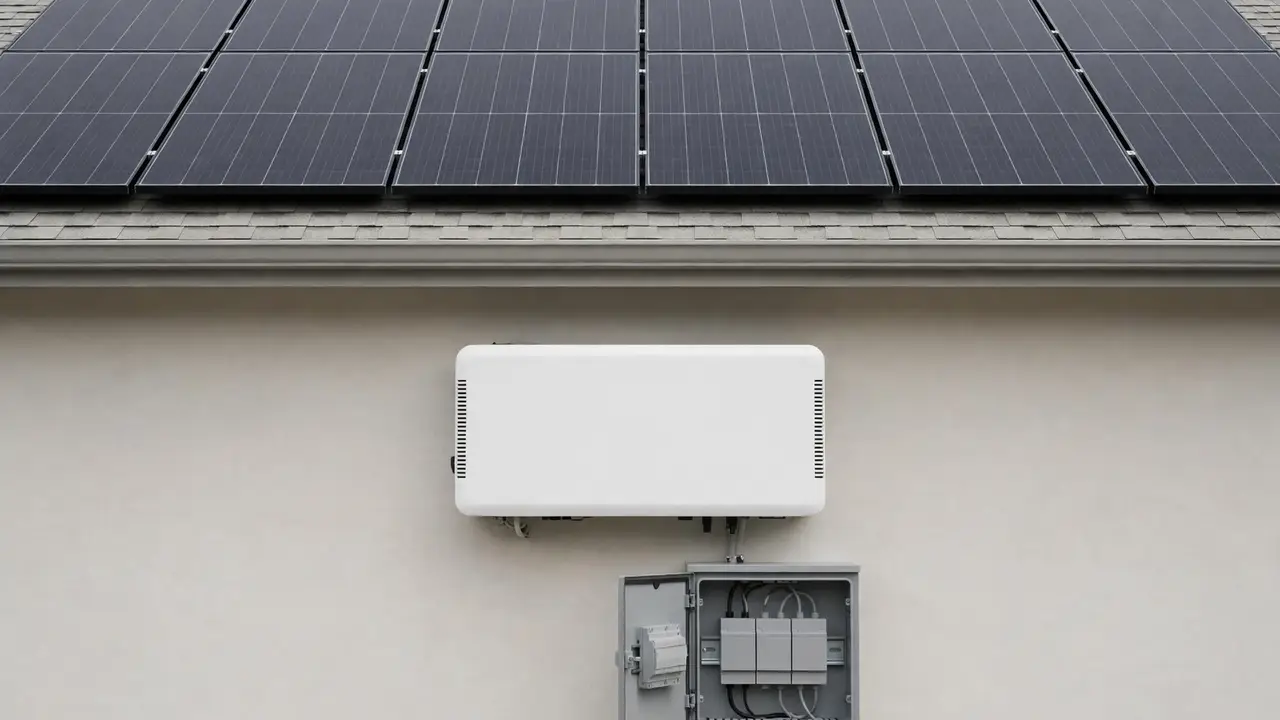
An SPD, or surge protection device, guards your solar inverter from voltage spikes caused by lightning and grid switching. It sends the energy safely to earth, so your inverter does not take the hit. For most home solar systems in Pakistan, a Type 2 DC SPD is the right start.
In This Guide
Last monsoon, a shop owner in Charsadda called our repair centre the morning after a heavy storm. His solar system had worked fine the night before. Now the inverter was dead, the display was dark, and the smell of burnt plastic hung in the air. On the bench, we found the cause in minutes. A surge had come in through the panels and killed the power stage. A small device on the wall could have taken that hit instead.
This guide explains SPD and voltage protection in simple words. SPD stands for surge protection device: a small guard that sits beside your solar system and sends a sudden spike of voltage safely to earth. You will learn what an SPD does, which type your home needs, where the DC and AC units go, and how to tell when yours has done its job. If your inverter has already stopped after a storm, read our Day Solar Inverter Repair 2026 guide first.
Trust nudge: This guide comes from SunTech Mall, a solar inverter spare parts store in Pakistan whose repair team checks surge damage on the bench every monsoon.
What Is an SPD and What Does It Do? Why Does a Solar Inverter Need Surge Protection? What Are Type 1, Type 2 and Type 3 SPDs? DC SPD vs AC SPD: Where Does Each One Go? How Do I Choose the Right SPD for My Solar System? How Do I Know My SPD Has Done Its Job? What Happens If I Skip Surge Protection? How Do I Check and Replace an SPD Safely? When Should I Call a Technician?
What Is an SPD and What Does It Do?
SPD stands for surge protection device, also called a surge protective device. Think of it as a safety valve for voltage. It sits in parallel with your solar circuit, which means it connects across the wires, not in the path of the normal current. On a normal day, it does nothing at all. It simply watches.
Inside most SPDs sits a small part called a metal oxide varistor, or MOV. Britec Electric, a maker of surge devices, explains how it works. Under normal voltage, the MOV has very high impedance, so almost no current flows through it. When a surge arrives, the MOV drops to low impedance in nanoseconds, and the surge current flows through the SPD to the protective earth, called PE, while the voltage across your inverter stays clamped. When the surge passes, the SPD resets.
The MOV is the heart of the device, and it is the same kind of part as the 20D561K Metal Oxide Varistor we carry for repairs — you can check the live price on the product page. A good SPD also has a thermal disconnector: if the MOV wears out, the disconnector cuts it off safely and the little status window turns red. That window is how you know the SPD has done its job.
Note: An SPD wears out a little with every surge it absorbs. It takes hits for your inverter, so treat it as a part that will need replacing one day, not as a fit-and-forget box.
Why Does a Solar Inverter Need Surge Protection?
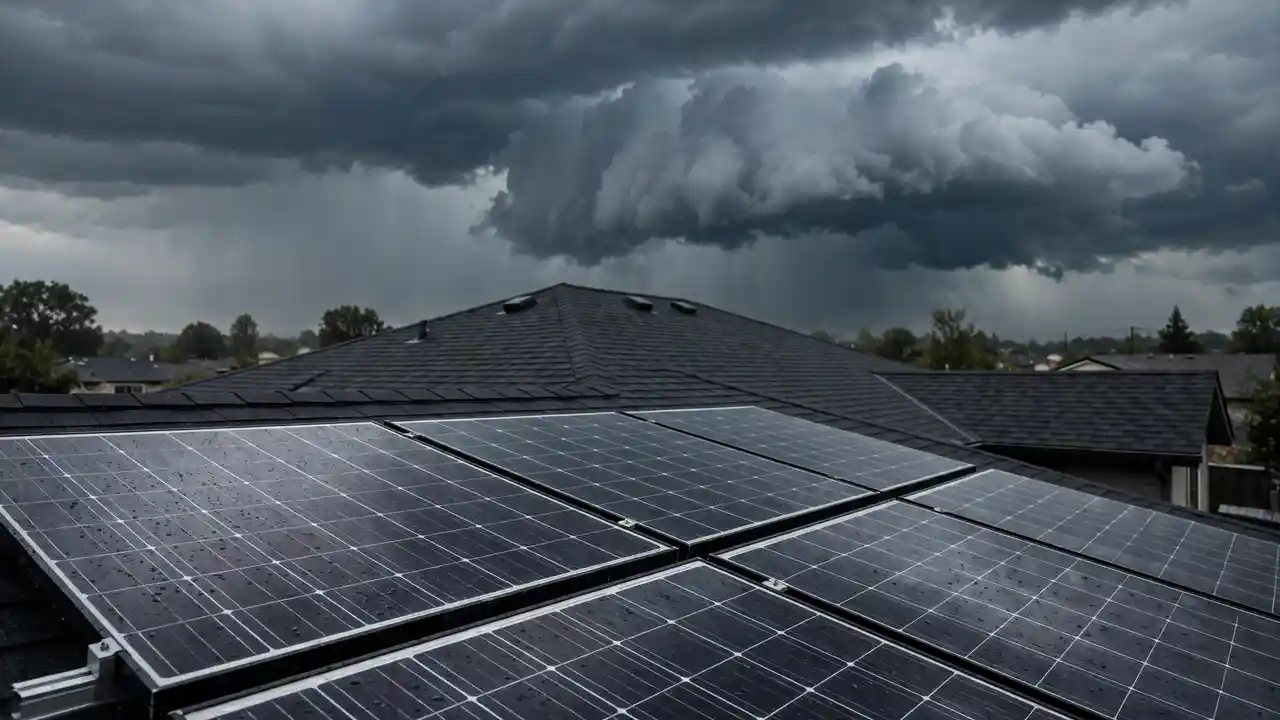
Your inverter is the most costly part of most home solar systems. The panels can last for decades, but one strong surge can kill the inverter in a microsecond, because the power stage, the MPPT circuit, and the control board all sit in the path of that spike. Industry maintenance data, quoted by Jutrion Electric, puts more than 30% of damaged PV inverters and combiner boxes down to lightning induction and grid voltage swings, so surge protection is part of the system, not an extra.
Solar systems are easy targets. Long DC cables run across the roof and act like antennas, picking up induced voltage from lightning strikes that hit kilometres away. A direct strike is not the only danger: grid switching, sudden load changes, and loose or poor earthing can all throw a spike into the system. In Pakistan, the monsoon months, roughly March to August, bring the thunderstorms that cause most of this damage, and the rooftop metal array sits high and open, catching what the storm throws.
On our bench, the most common storm victim is an inverter that worked fine the day before: the owner calls in the morning, the display is dark, and inside, the power stage is burnt. If the inverter will not turn on at all after a storm, our guide on Solar Inverter Not Turning On 2026 walks through the first checks. Heat is the other silent killer of inverters, and our solar inverter overheating guide explains how summer heat builds up.
What Are Type 1, Type 2 and Type 3 SPDs?
SPDs are sorted by the shape of the surge they are built to handle. The shape is written as two numbers, such as 10/350 or 8/20, and the unit is microseconds. A Type 1 unit is built for the long, heavy wave of a direct lightning strike. A Type 2 unit is built for the shorter wave of an induced surge or a switching spike. The table below shows where each type goes.
| SPD type | Where it goes | What it protects | Typical rating |
|---|---|---|---|
| Type 1 | Service entry, main distribution board | Whole building from direct lightning | 10/350 µs, Iimp 12.5 kA or more |
| Type 2 | Combiner box and inverter DC input | Inverter and strings from induced surges and switching | 8/20 µs, In 20 kA or more |
| Type 3 | Near sensitive equipment | Fine protection for control and monitoring gear | Combination waveform |
| Type 1+2 | Combiner box or main board on exposed sites | Both direct and induced surges in one unit | 10/350 µs and 8/20 µs combined |
Type 2 is the workhorse. Qbits Energy notes that most solar installations use Type 2, with Type 1 added at the service entry of buildings that have a lightning protection system. Type 3 sits close to sensitive equipment and gives fine protection after the bigger units have done the heavy work, and on an exposed site a Type 1+2 unit does both jobs in one DIN-rail module. For a normal home roof in Pakistan, a Type 2 DC SPD is where most systems start.
DC SPD vs AC SPD: Where Does Each One Go?
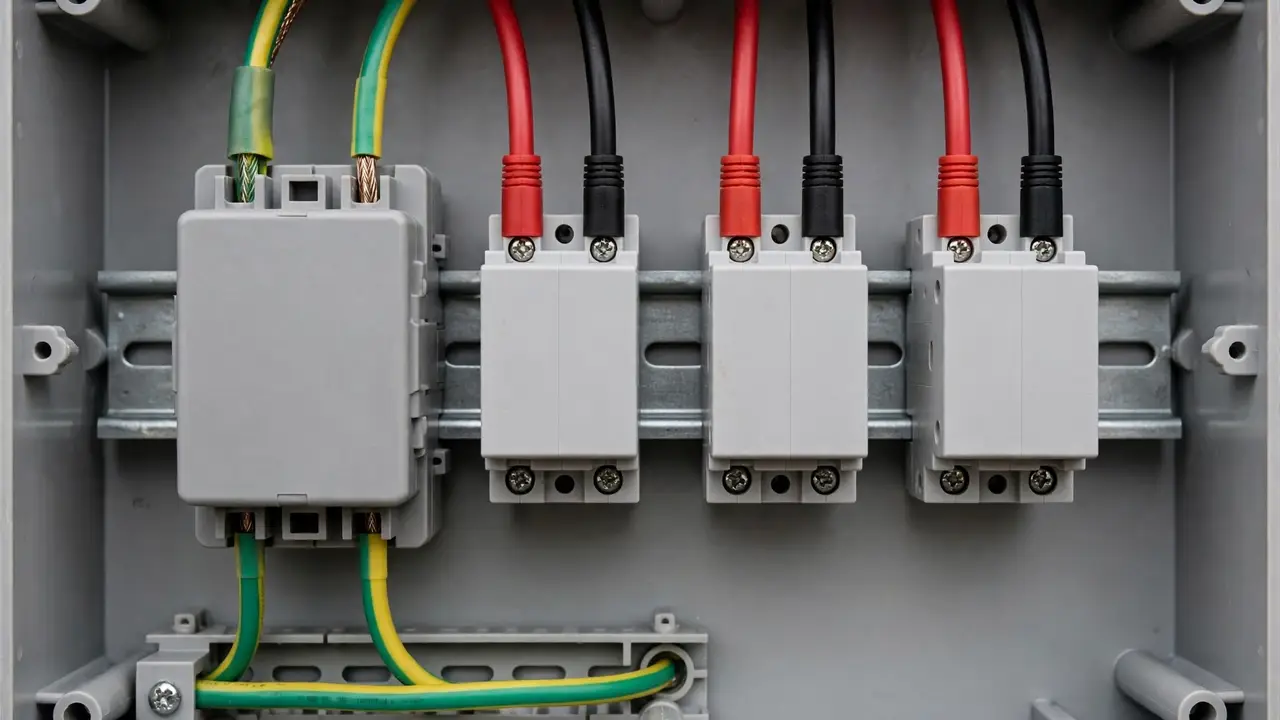
A solar system needs two kinds of SPD, because a surge can enter from two sides. The DC SPD guards the panel side: it sits in the combiner box and at the inverter DC input, the first line of defence against induced lightning. The AC SPD guards the grid side: it sits at the inverter AC output or on the main distribution board, and stops grid-borne transients from entering the inverter in reverse.
The two units are not interchangeable. A DC SPD is polarized, with a clear positive and negative side, and it uses a Y-connection: positive to earth, negative to earth, and positive to negative. It is built for high DC voltages, up to 1000 V or 1500 V, and follows the IEC 61643-31 standard for PV systems. An AC SPD follows IEC 61643-11 and relies on the AC wave passing through zero to clear an arc. DC has no zero crossing, so an AC unit on the DC side can arc, overheat, and fail.
Most of the danger comes from the panel side: industry data shows about 80% of surge impacts in PV systems come from the DC array side, so the DC SPD comes first. But the AC side still matters, because grid switching can send a spike back into the inverter. Good battery cables and lugs and tidy wiring matter here too, because loose connections make every surge worse. You can browse the full range of solar accessories on our website.
Note: Never use an AC SPD on the DC side. It may look fine for months, then fail in a storm and burn the combiner box or inverter.
How Do I Choose the Right SPD for My Solar System?
Choosing an SPD is a matching job: match the unit to your system, not to your neighbour's system. Start with the string voltage. The Uc of the SPD, its maximum continuous operating voltage, must not be lower than 1.2 times the maximum open-circuit voltage of your PV string. For a 1000 V DC system, that means a 1000 V or 1200 V DC SPD; a 600 V system takes a 600 V or 800 V unit, and a 1500 V system takes a 1500 V unit. This 1.2 times rule comes from Jutrion Electric.
Next, pick the type by exposure: a normal home roof takes a Type 2 unit, while an open or tall site, or a building with a lightning protection system, takes a Type 1+2 unit. Then check the discharge current. For a Type 2 unit, the nominal discharge current, called In, should be 20 kA or more, and in a lightning-prone area, 40 kA is the common choice. Finally, check the protection level, called Up: a lower Up clamps the surge to a lower voltage, and for a DC SPD, 2.5 kV or less is the usual guide.
When you shop for SPD surge protection solar inverter parts, start with the string voltage, not the brand. One original part we carry is the Schneider 2 Pole DC SPD 1000V DC 40KA, a Type 2 DC unit for a 1000 V string — check the live price on the website. If you are still sizing your system, our guide on how many kW inverter for home shows the easy load calculation — the size of your system sets the string voltage the SPD must match.
Note: A Uc that is too low makes the SPD work too hard and die early; a Uc that is too high clamps too late, and the surge still reaches your inverter. Match the number, do not guess it.
How Do I Know My SPD Has Done Its Job?
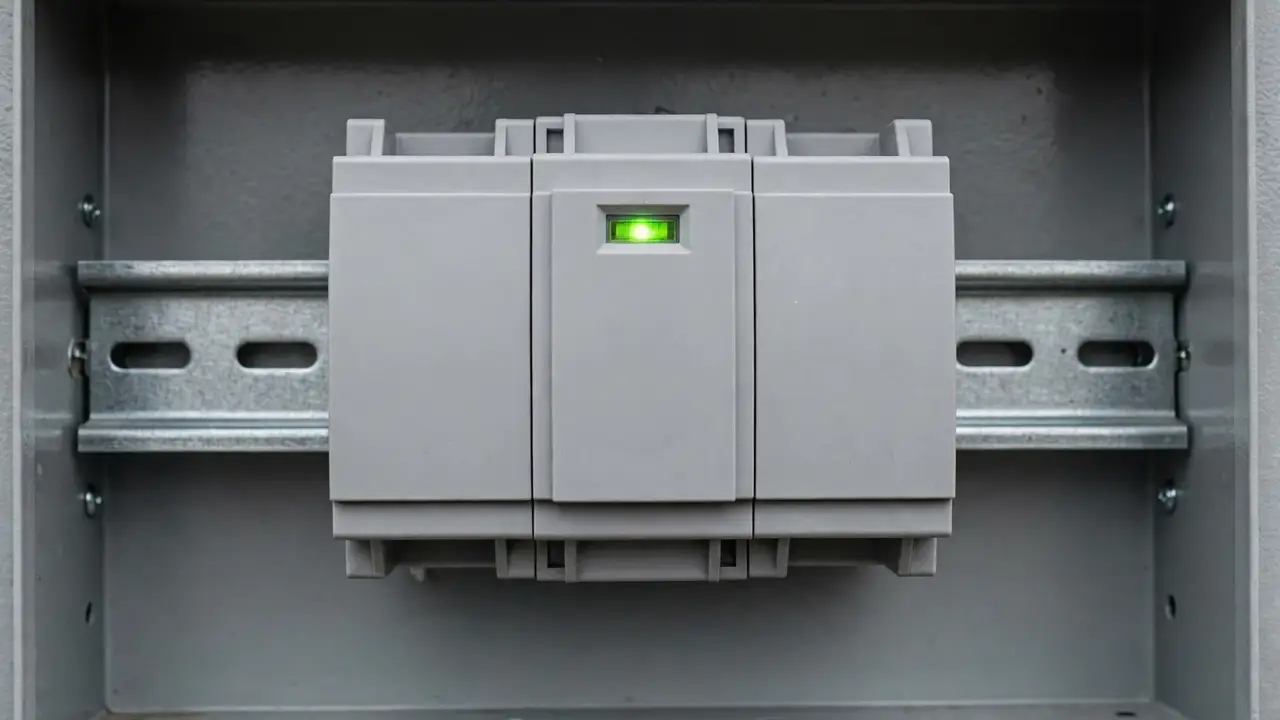
An SPD does not shout when it dies. It has one small window that tells the truth: green means the SPD is healthy and protecting your inverter, and red means it has reached the end of its life and must be replaced at once. Some windows turn grey instead of red, and that means the same thing. The thermal disconnector inside has tripped, and the SPD is no longer guarding anything.
Every surge the SPD absorbs wears it a little, and a big storm can use up years of life in one night. That is why the window needs a look at least once a year, and always after a heavy storm. In a lightning-prone area, plan to replace the SPD every 5 to 10 years even if the window still shows green, because the wear inside is not always visible.
Bonus Tip: Once a month, glance at the SPD window when you walk past the distribution box — ten seconds of looking can save your inverter.
Note: A red window means your inverter is unprotected right now — do not wait for the next storm to replace the cartridge.
What Happens If I Skip Surge Protection?
Skip the SPD, and the next big surge goes straight to the inverter. It can kill the power stage in a microsecond, burn the MPPT circuit, or damage the control board. The inverter may die at once, or fail a week later when the weakened parts give up under normal load. Either way, the repair is a bench job, and the home runs without solar while the parts are found.
On our bench, we see the same story every monsoon: an inverter comes in dead after one storm, and the power parts are burnt. A surge can also kill the rectifier stage, and our guide on rectifier diode and bridge fault explains those symptoms in simple words. A small SPD on the wall would have taken that hit for a fraction of the repair work. Our solar inverter repair cost guide shows what a technician visit usually covers, so you can see the size of the risk.
Small surges do quiet damage too: each one stresses the electronics a little, and the stress adds up over the years. Be honest about the limit: an SPD handles induced surges and switching spikes, but it cannot stop a direct lightning strike. A direct strike needs a full lightning protection system on the building.
How Do I Check and Replace an SPD Safely?
Checking and replacing an SPD is a qualified technician's job. The DC side stays live in daylight, because the panels make power whenever the sun shines. Never open a live inverter or the distribution box while the system is running. The routine below is what a technician follows, so you know what a safe job looks like.
- Switch off the DC disconnect and the AC breaker first, and lock them off if you can.
- Check with a multimeter that the DC side is dead before touching anything inside the box.
- Read the status window, and look for burn marks, a burnt smell, or a deformed case.
- Check the earth wire, and ask the technician to confirm the earthing resistance is below 5 ohms.
- Pull out the old cartridge and fit a new one of the same type, voltage, and discharge current.
- Switch the power back on in the maker's order, and check that the window shows green.
Two wiring rules make the SPD work properly: keep the wires short, with the total SPD lead length within 2.5 metres where possible, and use a thick earth wire, such as 16 mm² multi-strand copper, so the surge current has a clear path to earth. A technician tests with a multimeter — our guide on how to test a MOSFET with a multimeter shows how. Surge damage often kills power parts too, and our guide on why an IGBT burns explains why.
Note: DC stays live in daylight: panels make power whenever the sun shines, so the DC side is never safe to touch while the sun is up. That check belongs to a qualified technician only.
When Should I Call a Technician?
Call a technician when the SPD window is red and you are not trained to change a cartridge. Call one also when there is a burning smell, when the inverter died in a storm, or when the SPD keeps failing after a fresh cartridge. Repeated failure means something else is wrong, such as poor earthing or a wrong SPD type, and only a meter can find it.
Call a technician also when the earthing needs a test, or when new panels change the string voltage and the Uc must be checked again. If the surge has already damaged the inverter, the fix may be a part, not just an SPD, and our Day Solar Inverter Spare Parts 2026 guide shows the parts that fail most. A good visit ends with a green window, a firm earth connection, and a system ready for the next storm.
Frequently Asked Questions
Can an SPD stop a direct lightning strike?
No. An SPD handles induced surges and switching spikes, the most common danger. A direct strike carries far more energy and needs a full lightning protection system on the building, with rods and down conductors. The SPD is the second line of defence, not the first.
Do I need both a DC SPD and an AC SPD?
Yes. Surges can enter from the panel side and from the grid side. About 80% of surge impacts come from the DC array side, so the DC SPD is the first job, but grid switching can still send a spike in through the AC side.
How long does an SPD last?
A well-made SPD often lasts 5 to 10 years, but its life depends on how many surges it absorbs. Replace it as soon as the window turns red, and in a lightning-prone area replace it every 5 to 10 years even if the window still shows green, because the wear inside is not always visible.
What does a red window on my SPD mean?
Red means the SPD has reached the end of its life: the thermal disconnector has tripped, and the SPD is no longer protecting your inverter. Replace the cartridge at once. Until then, your inverter has no surge protection.
Can I use an AC SPD on the DC side of my solar system?
Never. An AC SPD relies on the AC wave passing through zero to clear an arc, and DC has no zero crossing, so an AC unit on the DC side can arc, overheat, and burn the combiner box or the inverter. Always use a DC SPD, built to the IEC 61643-31 standard, on the DC side.
Does an SPD work without proper earthing?
No. The whole job of an SPD is to send surge current to earth, and without a good earth it has nowhere to send the surge, so it does nothing. Ask a technician to confirm the earthing resistance is below 5 ohms.
Final Thoughts
A surge is invisible, silent, and fast. You never see it coming, and one strike can end an inverter that served you for years. An SPD is a small guard that stands in the way: it costs little next to the inverter it protects, tells you its health with one small window, and takes the hit so your inverter does not have to. Look at the window once a month, replace it when it turns red, and let a technician check the earthing. That is what SPD surge protection solar inverter owners can rely on: the right type, the right voltage, and a green window.
Ready to protect your solar inverter? See the Schneider 2 Pole DC SPD 1000V DC 40KA for a 1000 V DC system, and browse the full range at SunTech Mall. Questions? Message SunTech Mall on WhatsApp at 0306-2244820 with your inverter model and your string voltage.
Published on 22 November 2026. Updated on 22 November 2026.
Sources: Britec Electric — Electrical SPD for Solar PV Systems: Do You Really Need It? (how an SPD works, types, placement, selection) ; Qbits Energy — SPD (Surge Protection Device): Definition, Types and Solar Applications (MOV action, status window, earthing below 5 ohms, 5–10 year life) ; Jutrion Electric — Selection and Installation Guide for SPDs in Solar PV Systems (Uc rule, Y-connection, wiring, maintenance)
Related Technical Guides
 Category:
General
Day Solar Inverter Repair 2026: 7 Common Faults and the Real Parts That Fix Them
A Day Solar inverter fails in seven common ways: no output, repeated restarts, heat shutdown, no solar input, blown fuses, strange noise,…
 Category:
General
Lithium Battery Lifespan 2026: 7 Mistakes That Kill Your Battery Early — A Technician’s Guide
Published on 20 November 2026. Updated on 20 November 2026. A lithium battery lasts years longer when you avoid seven mistakes: draining…
 Category:
General
Split AC Inverter PCB Repair 2026: Repair the Board or Replace It — A Technician’s Guide
Published on 19 November 2026. Updated on 19 November 2026. Repair the board when one part has failed and the rest of…