



2SK3878 MOSFET Pull-Out in Peshawar: Test Before You Buy
This is a pull-out part, not a new part. It was removed from another device. That fact changes how you should buy it, test it, and trust it.

This is a pull-out part, not a new part. It was removed from another device. That fact changes how you should buy it, test it, and trust it.
Key Takeaways
- The 2SK3878 is an N-channel power MOSFET, a fast electronic switch with no moving parts.
- The parts sold here are pull-outs: used parts removed from another device, not new stock.
- Never install a pull-out without testing it first. A multimeter test takes minutes and saves hours.
- Replacements that burn at once usually point to another fault: heat, voltage spikes, or a weak gate drive.
- Match the datasheet to the exact piece you hold. Different sources word some figures differently, so check both wordings in the table below.
- Check the live price on the website. This guide gives no fixed price, because prices change.
What Is a Power MOSFET, in Plain Words?
A MOSFET is an electronic switch with no moving parts. A tiny signal at the gate controls a much bigger flow between the drain and the source. Think of the gate as a small tap handle that opens a very large pipe.
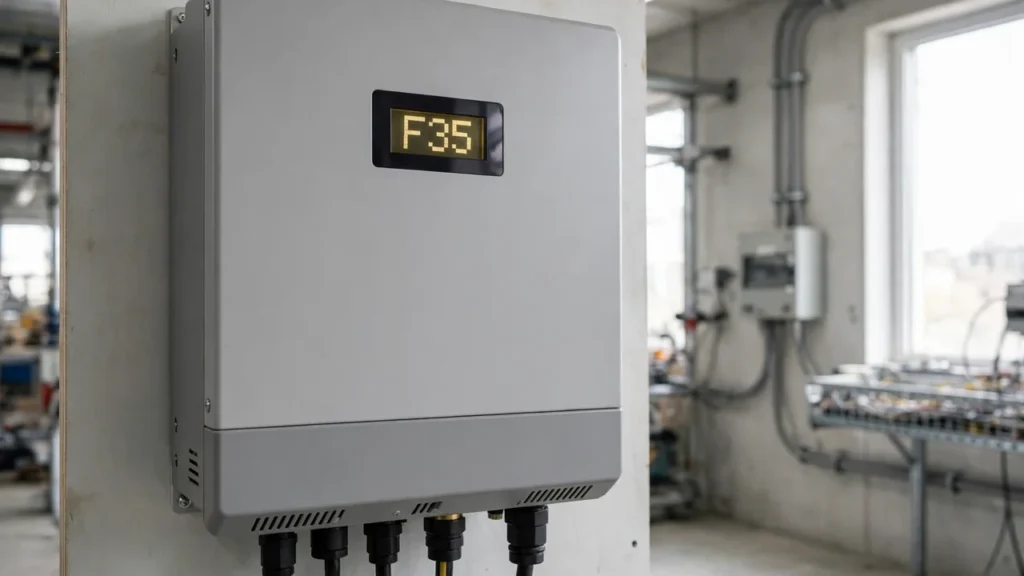
In a solar inverter, MOSFETs build the AC power your home uses. They switch DC on and off so fast that it becomes smooth alternating current. When one fails, it often fails hard, and it sometimes takes its neighbours with it.
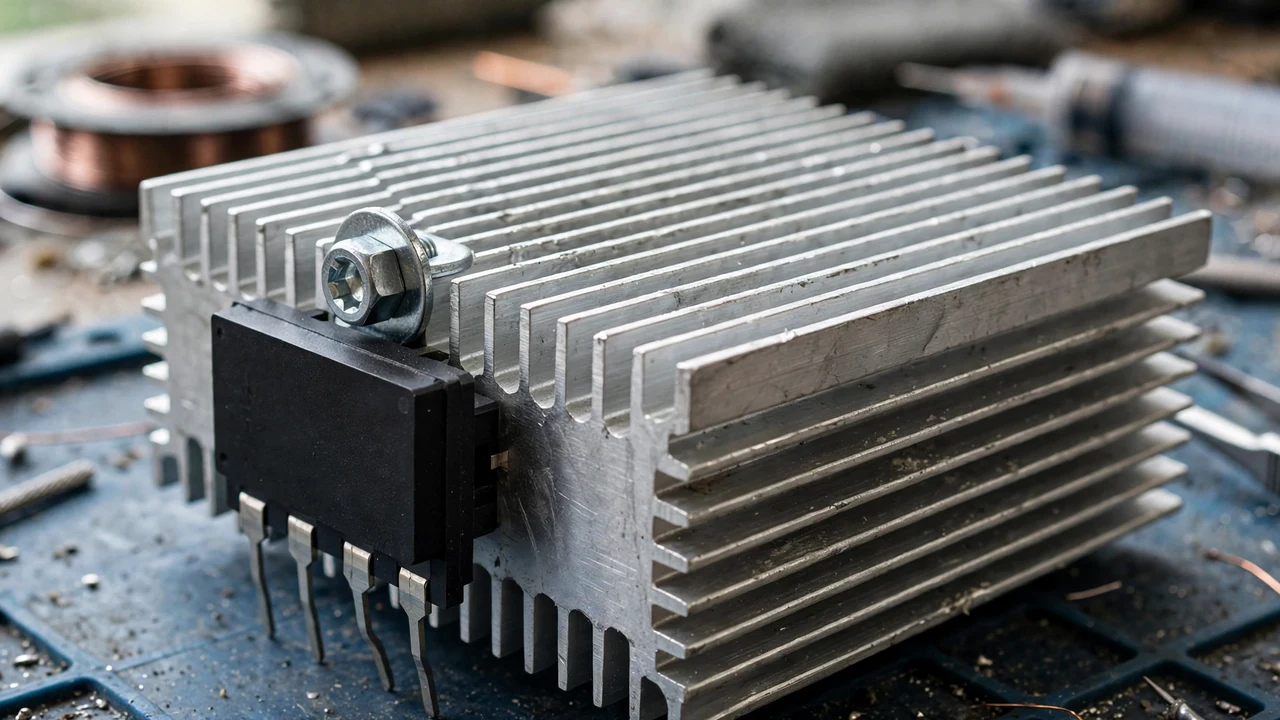
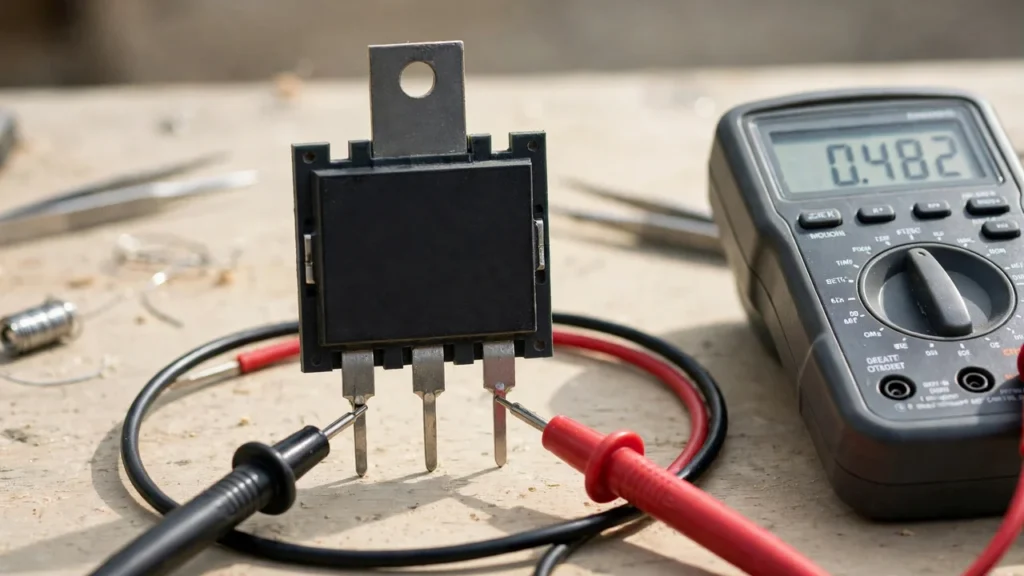
The 2SK3878 is an N-channel power MOSFET in a TO-247 package. TO-247 is the big through-hole package with a metal tab and a mounting hole, built to be bolted onto a heatsink. That tab is how it sheds heat, which is why mounting matters as much as the part itself.
Technicians still ask for the 2SK3878 by name because it earned a reputation as a tough switching part. But reputation is not a test result. Each pull-out piece must prove itself before you solder it in.
What Does Pull-Out Really Mean?
A pull-out is a used component, carefully removed from another device. That is the honest definition, and you should hold any seller to it.
For a part like the 2SK3878, tested pull-outs are often the only practical source when new stock is hard to find. A good pull-out, removed with care and tested properly, can serve well in a repair.
But the word “tested” carries the whole weight. An untested pull-out is a gamble. It might be the very reason the donor device failed, or it might have cracked during removal.
So do not buy a pull-out the way you buy a new part. Buy it the way you buy a used tool: inspect it, test it, and keep a spare or two on the shelf.
Bonus Tip: When one MOSFET in a parallel group fails, replace the whole group with matched parts if you can. MOSFETs that switch together should behave alike. Mixing one fresh part with three tired ones invites the new one to carry too much load and die young.
What Do the Datasheet Figures Say?
The figures below come from the Toshiba 2SK3878 datasheet as reported by public datasheet listings. Where sources disagree, both wordings are kept and labelled. Do not mix them into one number.
| Figure | Toshiba datasheet wording | Other listings’ wording |
|---|---|---|
| Type | N-channel MOS, silicon | N-channel power MOSFET |
| Drain-source voltage, VDSS | 900 V | 900 V |
| Drain current, ID (continuous) | 9 A | 9 A |
| Drain current, IDP (pulse) | 27 A | 27 A in some listings, not stated in others |
| Gate-source voltage, VGSS | ±30 V | ±30 V |
| Power dissipation, PD | 150 W at case temperature 25°C | 150 W |
| Drain-source on-resistance, RDS(on) | 1.0 ohm typical | 1.3 ohm maximum in some listings |
| Gate threshold voltage, Vth | 2.0 to 4.0 V | Up to 4 V in some listings |
| Maximum channel temperature | 150°C | 150°C |
| Package | TO-247 in the Peshawar listing | SC-65 / TO-3P in one datasheet index |
Read that last row with care. The Peshawar listing calls the part TO-247. One datasheet index lists the package as SC-65, also called TO-3P. These package names overlap in how sellers use them, but they are not identical words. Before you buy, compare the package, pin layout, and markings on the exact piece you will receive against the datasheet for that piece. If they do not match, do not force the fit.
The same caution applies to on-resistance. “1.0 ohm typical” and “1.3 ohm maximum” are different claims. A typical value describes an average piece. A maximum value describes a limit. Both can be true at once, but neither one tells you what your pull-out piece measures today. That is why you test.
How Do You Test a Pull-Out Before You Trust It?
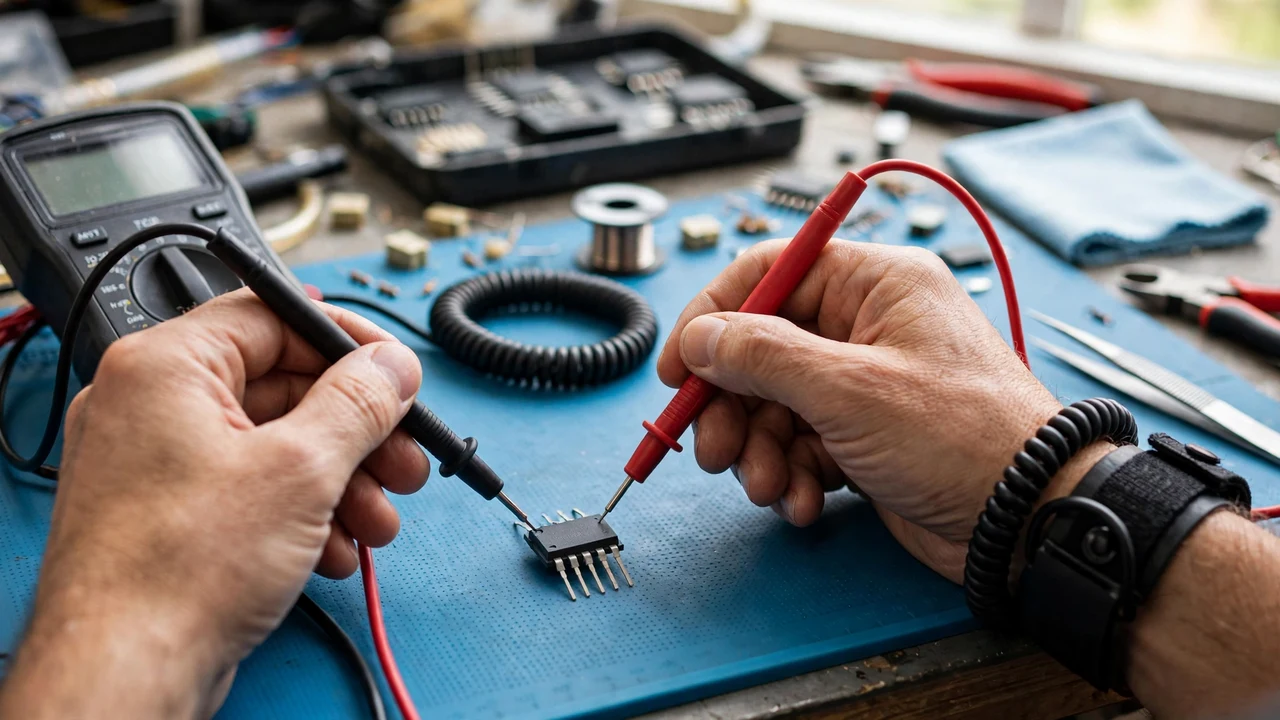
You need only a basic digital multimeter with diode mode. Always test before soldering.
First, discharge it. The gate can hold a charge like a tiny capacitor. Short all three legs together briefly so it starts empty. Testing a charged MOSFET gives nonsense readings.
Second, check the body diode. In diode mode, red on source and black on drain should show roughly 0.4 to 0.6 volts. Reversed, it should read open. Shorted both ways means a dead MOSFET. Open both ways means a suspect one.
Third, check the gate. Measure gate to source and gate to drain, both ways. All should read open. Any low reading means damaged gate insulation, and the part is finished.
Fourth, do the switching test. Touch red to gate and black to source to charge the gate. Then measure drain to source. A good MOSFET shows low resistance, because the switch is on. Short gate to source to discharge it, and it should read open again. That is a living MOSFET.
| Test | Good result | Bad result |
|---|---|---|
| Body diode, one way | Roughly 0.4 to 0.6 V | Short both ways, or open both ways |
| Body diode, reversed | Open | Any low reading that matches a short |
| Gate to source, both ways | Open | Any low reading |
| Gate to drain, both ways | Open | Any low reading |
| Switching test, gate charged | Low drain-to-source resistance | Stays open |
| Switching test, gate discharged | Open again | Stays low |
Practice on a known-good part first. Testing a batch then takes seconds each. Always work with the power off, and discharge capacitors before you touch anything inside the device.
Why Do Replacement MOSFETs Burn at Once?
Every technician knows this heartbreak. You replace the burnt MOSFETs, power up, and watch the new ones die in seconds. The MOSFETs were not the disease. They were the symptom.
Heat is the number one killer. Poor heatsink contact, dried thermal paste, a dead fan, or dust-choked vents all push temperature up.
Voltage spikes are number two. Snubber circuits absorb these spikes, so always inspect surrounding resistors and capacitors before you fit new parts.
Gate drive problems are the sneaky third killer. A weak driver can leave the MOSFET half-on, burning power instead of switching it. If replacements keep dying, measure the gate signal before you fit another set.
The professional habit is simple. Never replace power parts without asking what killed the old ones. Ten minutes of diagnosis saves a bag of MOSFETs.
How Do You Mount a TO-247 Part the Right Way?
A TO-247 MOSFET without a proper heatsink is a dead MOSFET walking. The metal tab must press firmly against the heatsink, with thermal paste filling the tiny gaps.
The catch beginners miss is this: the tab is electrically live, usually the drain. If the heatsink is shared or grounded, insulate each tab with a mica or silicone pad, plus an insulating washer on the screw. Skip this step and you short through the heatsink.
Tighten the screw firmly but gently. Too loose traps heat. Too tight cracks the package. After the repair, run the device and check the heatsink. Warm is fine. Too hot to touch means something is still wrong.
Bonus Tip: Replace old thermal paste every time you remove a power part. Paste dries out over the years, and reusing a dried crust is almost as bad as using none.
How Do You Buy Tested Pull-Outs in Peshawar?
Since you are shopping pull-outs, shop with a checklist, not with hope. Ask if each part is tested, and what the testing covers. At minimum, it should cover the body diode, gate insulation, and switching behaviour.
Inspect the package too. The TO-247 body should be free of cracks, the legs straight and untarnished, and the mounting hole clean. Overheating, discoloration, or a warped body mean the part lived a hard life. Buy a few extra as well. Spares on the shelf turn the next repair into a ten-minute job.
If you are rebuilding an inverter, it helps to understand the whole system, not just one part. Our guides on the Suntech HYB-8KW day solar inverter for Charsadda and the Suntech TFT-8KW day solar inverter for Peshawar explain what the inverter does and what to check before you buy one.
Frequently Asked Questions
What is a pull-out MOSFET?
A pull-out is a used component, carefully removed from another device. For parts that are hard to find new, tested pull-outs are often the only practical source. The key word is tested. A proper seller verifies each part before selling it.
Is a tested pull-out as good as a new part?
Not in the same way. A tested pull-out can work well in a repair, but it has a past life you cannot fully see. Its remaining life depends on how it was used, how it was removed, and how it tests today. Test it yourself, keep spares, and do not present it to a customer as new.
Can I replace a 2SK3878 with a different MOSFET?
Sometimes, but it is not a casual swap. A substitute must match the original’s voltage rating, current rating, gate characteristics, and package. The circuit may also need adjustment. In critical repairs, an exact tested replacement is safer than a near-match. When in doubt, compare the datasheets side by side.
Why did my replacement MOSFETs burn immediately?
Because something else is wrong. The usual suspects are poor heatsink contact, failed snubber parts, a faulty gate driver, or a shorted load. Replacing MOSFETs without finding the cause is like refilling a leaking bucket. Diagnose first, replace second.
Do I really need a heatsink for a TO-247 MOSFET?
Yes, in any real power application. The TO-247 package is designed to dump heat through its metal tab into a heatsink. Running a power MOSFET without one, even briefly at full load, can destroy it. Always mount it with fresh thermal paste and proper insulation where needed.
How do I remove a TO-247 MOSFET from a board without damage?
Remove the mounting screw first. Then heat all three legs with a good soldering iron while gently rocking the part out. A desoldering pump or wick helps clear the holes. Rushing this step with force cracks the package or lifts the copper pads, so patience pays.
What should I do if the markings do not match the datasheet?
Stop and ask. Do not fit a part whose package, pin layout, or markings disagree with the datasheet for that piece. A mismatch can mean a different variant, a different package name, or a wrong part. Confirm with the seller before you solder.
Verdict
The 2SK3878 is a respected name in inverter repair, but the part you buy in Peshawar is a pull-out, and that changes the deal. Buy it only if it is tested, inspect it yourself, test it with your own multimeter, and check what killed the old parts first.
If a seller cannot tell you how each piece was tested, walk away. If the package or markings do not match the datasheet, walk away. If the part tests clean and the circuit is healthy, a tested pull-out can bring a dead inverter back to life.
If you need tested 2SK3878 pull-out parts for your repair bench, check the live price on SunTech Mall and reach out through the contact options on the website with the part number and quantity. Ask for the test results before it ships. Your repairs deserve parts you can trust, and trust starts with a test.

3 Comments
[…] you are repairing an inverter with burnt switching parts, check the resistors around them too. Our 2SK3878 MOSFET repair guide explains what usually fails alongside these […]
[…] If you are curious what those look like and how technicians repair them, our guide on the 2SK3878 MOSFET used in inverter repairs is a fascinating read. And small control parts like the 2SC2655 transistor and sturdy cement […]
[…] Inside the inverter, hard-working parts do the heavy switching. One of them is the power MOSFET, and you can learn more in our guide to the 2SK3878 MOSFET used in inverter repairs. […]