

How Many kW Inverter for Home 2026: The Easy Load Calculation Method
Published on 15 November 2026. Updated on 15 November 2026. How many kW inverter for home do you need? Most Pakistani homes need a 3 to 6 kW inverter. A home with…

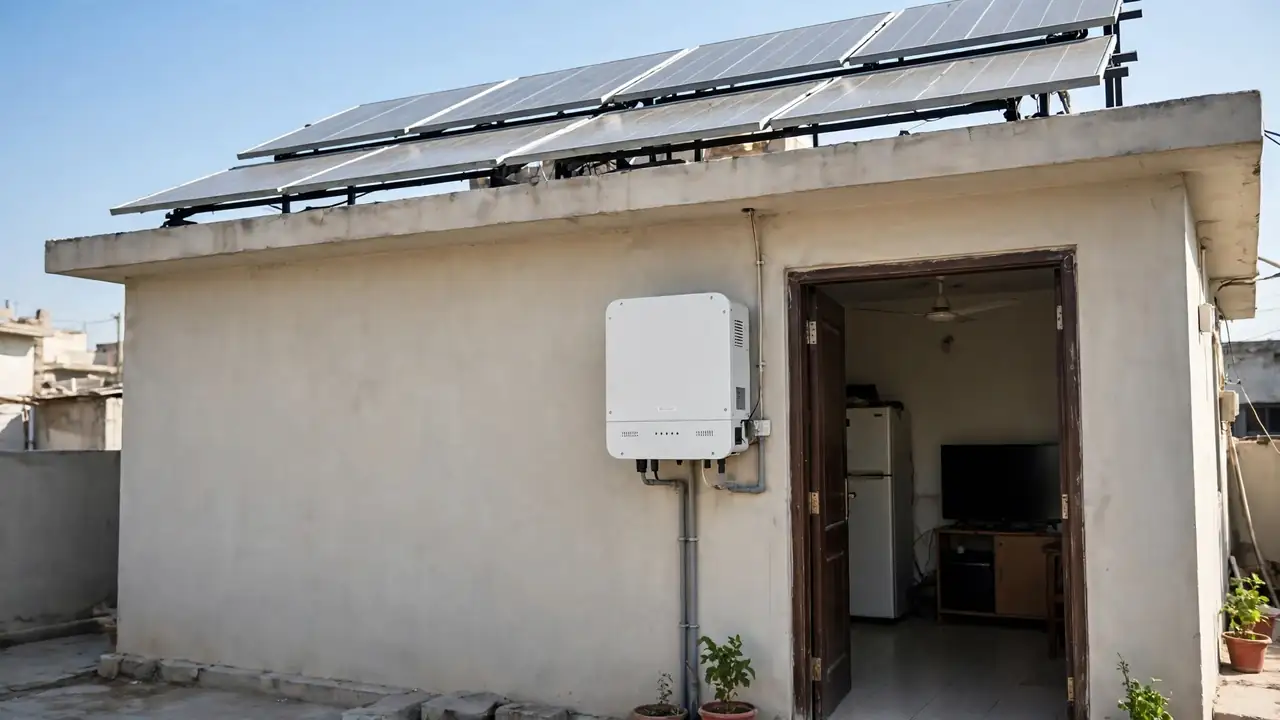
Published on 15 November 2026. Updated on 15 November 2026.
How many kW inverter for home do you need? Most Pakistani homes need a 3 to 6 kW inverter. A home with fans, lights, a fridge, and a TV fits in 3 kW. A home with one air conditioner needs 4 to 5 kW. A home with two air conditioners and a water pump needs 6 kW or more.
In This Guide
Last summer, a family in our neighbourhood bought a new inverter for their home. They picked the size by guesswork: the shop had a small one in stock, so they took it. On the first hot evening, the fridge started, the water pump started, and the inverter tripped. The lights went out. They called us, angry at the inverter. The inverter was fine. It was simply too small for their home.
This story is common in Pakistan. People buy an inverter by its model name, by what a neighbour bought, or by what the shop has on the shelf. None of those are a size. The only honest size comes from your own home load, counted in watts, with room left for motors starting up. This guide shows you that count in plain words, with a worked example you can copy.
Trust nudge: This guide comes from SunTech Mall, a solar inverter spare parts store in Pakistan that also repairs inverters and UPS systems every day. The checks below are the same ones our repair team uses when a customer asks which size fits their home.
What Does kW Mean on an Inverter? — the number on the box, in plain words How Do I List My Home Load? — walk room by room and write it down How Do I Add Up the Watts? — the 6-step load calculation What Is Surge Power, and Why Does It Trip Small Inverters? — the motor starting spike How Do I Turn Watts Into kW and kVA? — the two simple sums Which Size Fits Which Home? — a worked example for a typical home What About Batteries and Solar Panels? — the other two matches What Mistakes Make People Buy the Wrong Size? — the errors our repair team sees most When Should I Ask a Technician? — know when to stop
What Does kW Mean on an Inverter?
kW means kilowatt. One kilowatt is 1,000 watts. A watt is the unit of power: how much work an appliance does each second. When an inverter says 4 kW, it means it can deliver 4,000 watts of power, non-stop, under normal conditions. That number is called the rated power, and it is your budget. Spend more than the budget, and the inverter trips, or overheats, or shuts down to protect itself.
You will also see kVA and VA on some inverters. VA means volt-amps. For most home inverters, the maker uses a power factor of 0.8 to turn VA into watts. The sum is simple: kW equals kVA times 0.8. So a 5 kVA inverter gives about 4 kW of real power. The other way round, the kVA you need equals your kW divided by 0.8. Always check which number the label shows: kW or kVA. A 6 kVA inverter is not a 6 kW inverter. It is about a 4.8 kW inverter. That gap has fooled many buyers. Sizing guides like the EcoFlow inverter size guide explain the same watts-to-kVA step, and the ElectromechCalc inverter size guide shows the same power factor maths.
Rated power is the steady number. There is also a surge power number, which is higher, but it only lasts a few seconds. That number matters for motors, and we will come to it in a later section. For now, remember one rule: the kW number on the box is the power your home can use, all at once, without a trip.
How Do I List My Home Load?
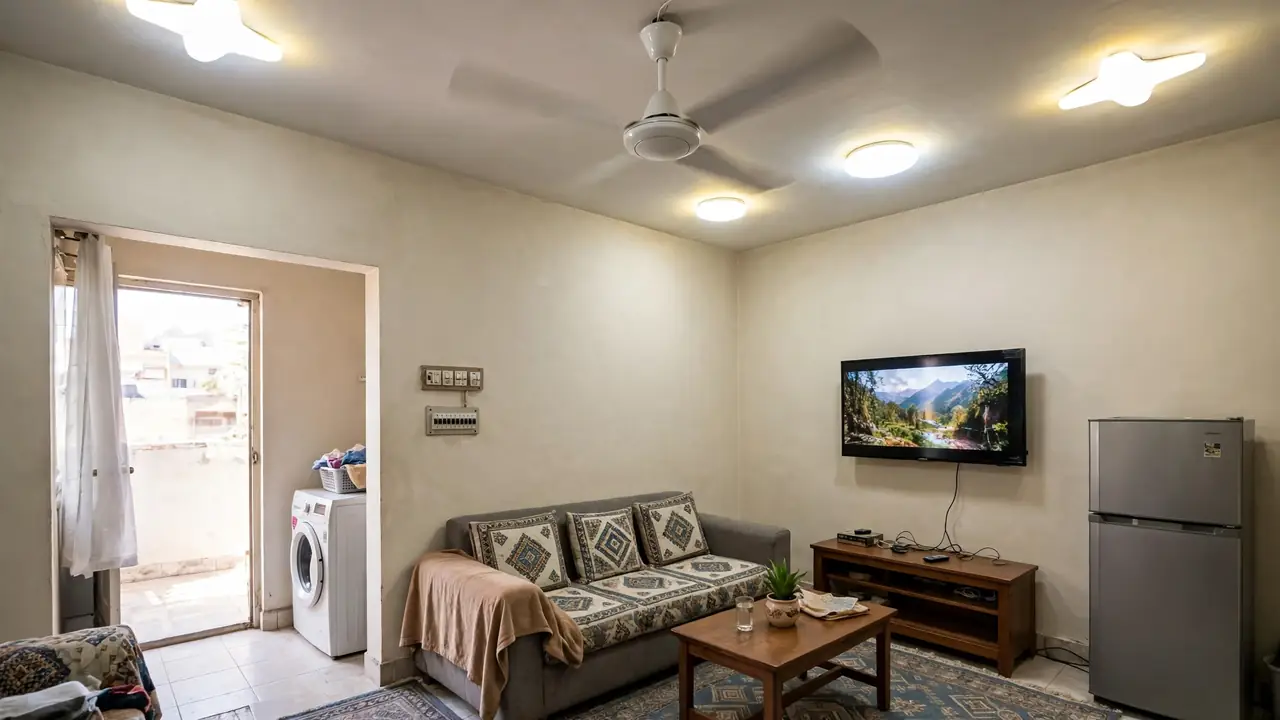
Your home load is the total watts of everything that runs at the same time in your home. Not everything you own. Only the things that run together. That difference is the heart of this guide. A home may own a washing machine, an iron, a microwave, and two air conditioners, but if they never run together, they do not all count at once.
Start with the evening. The evening is the hardest time for a home inverter: the sun is gone, the family is home, the lights are on, the TV is on, the fridge is running, and the air conditioner is cooling the rooms. That is your peak load. Walk through your home, room by room, and write down what runs in the evening.
In most Pakistani homes, the evening list looks like this. LED bulbs take about 10 to 15 watts each. Ceiling fans take about 50 to 80 watts each. A TV takes about 80 to 150 watts. A fridge takes about 100 to 200 watts while it runs. A washing machine takes about 400 to 800 watts. A microwave takes about 1,000 to 1,500 watts. An iron takes about 1,000 to 1,200 watts. A 1 HP inverter air conditioner takes about 600 to 900 watts while it runs. A 1.5 HP air conditioner takes about 900 to 1,300 watts. A 1 HP water pump takes about 750 to 1,000 watts. A Wi-Fi router takes about 20 watts. All of these figures are typical, and the label on your own appliance is always the final word.
Note: Every watt figure in this guide is a typical value to help you plan. Always check the nameplate on your own appliance. The nameplate is the small label on the back or side of the appliance, and it shows the exact watts. Two fans of the same size can differ by 20 watts. A nameplate never lies, but a guess often does.
Write the list on paper, or in your phone. One line per appliance: the name, how many you run together, and the watts from the label. Leave out the things you never run together. The iron and the washing machine usually run in the day, not in the evening peak. If two heavy things never run together, count only the heavier one.
Bonus Tip: Take a clear photo of the nameplate on each big appliance today, while everything works. Keep the photos in one folder on your phone. When you buy an inverter, or ask a shop for help, show those photos. That one folder stops most wrong sizing before it starts.
How Do I Add Up the Watts?
Now turn the list into one number. Work through these six steps in order. They take about ten minutes, and they save you from buying the wrong size. The UTL solar inverter capacity guide and the Power Nexa inverter size guide use the same add-up-and-add-headroom method.
- List every appliance that can run together in the evening, with its watts from its own label. Fans, lights, fridge, TV, router, air conditioner, and anything else that runs at the same time. Leave out anything that never runs with the rest.
- Multiply the watts by how many of each appliance run together. Four ceiling fans at 70 watts each are 280 watts, not 70 watts. Eight LED bulbs at 12 watts each are 96 watts, not 12 watts.
- Add all the running watts together. This is your total running watts. Write it down. For the worked example later in this guide, that total is 1,416 watts.
- Multiply the total by 1.2 to add 20 percent headroom. Headroom is spare room above your load. A 1,416-watt load times 1.2 is about 1,699 watts. That is the continuous power your inverter should be able to give, without running at its limit all evening.
- Work out the surge your motors need. Motors such as a fridge, a water pump, and an air conditioner compressor draw a short burst of extra power when they start. The rule for the next section is simple: required surge equals total running watts plus the highest extra startup surge of any one motor.
- Compare both numbers with the inverter rating. The continuous number must fit under the rated kW, and the surge number must fit under the surge rating on the datasheet. If either one does not fit, the inverter is too small. Check the datasheet for the exact model before you buy.
That is the whole method. No guesswork, no neighbour’s size, no shop shelf. Just your own list, your own watts, and two simple sums.
What Is Surge Power, and Why Does It Trip Small Inverters?
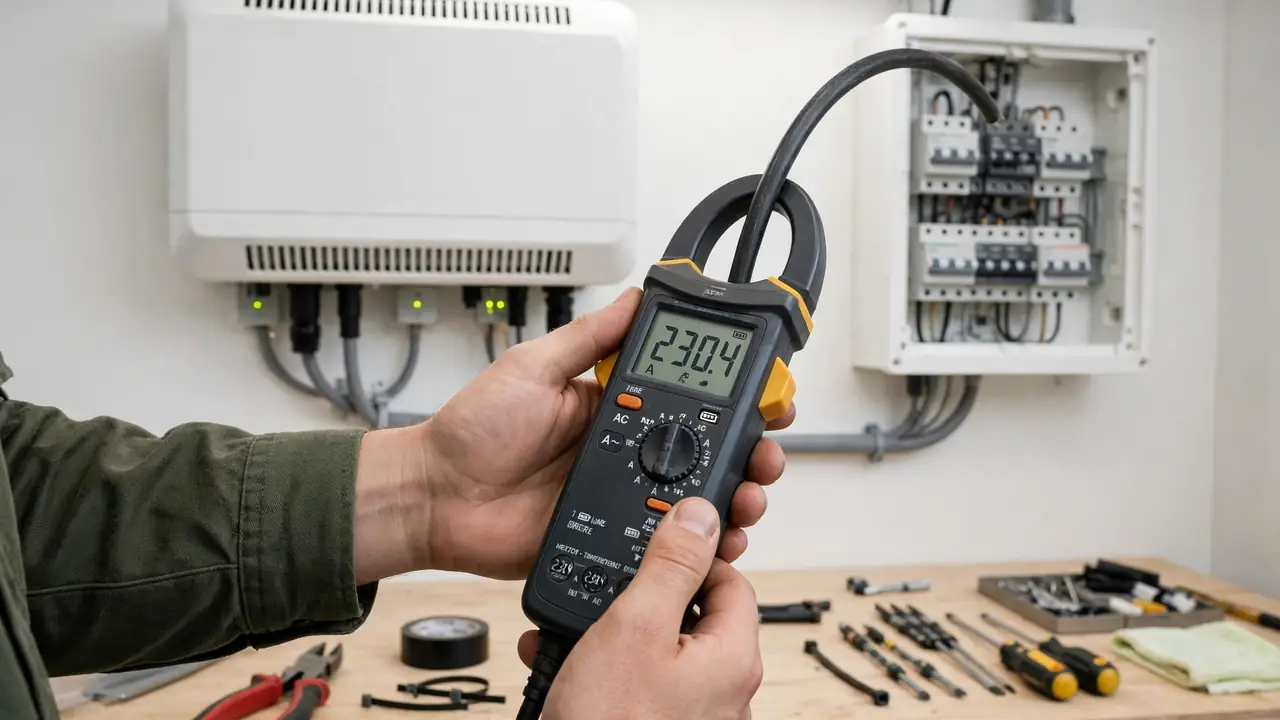
Surge power is the short burst of extra power a motor needs when it starts. A motor at rest needs a big push to start spinning. For a few seconds, it can draw 2 to 3 times its normal running watts. Then it settles back to its normal watts. That short burst is the surge, and it is the reason small inverters trip on the first hot evening.
The motors in a home are the fridge compressor, the water pump, and the air conditioner compressor. A fridge that runs at 150 watts can draw 300 to 450 watts for a few seconds when its compressor starts. A 1 HP water pump that runs at 750 watts can draw 1,500 to 2,250 watts at startup. An air conditioner compressor does the same, although an inverter air conditioner starts more gently than an old fixed-speed one, because its compressor ramps up slowly.
Here is the sum to use. Required surge equals total running watts plus the highest extra startup surge of any one motor. Take the worked example from the next section: total running watts are 1,416. The fridge is the biggest motor starting at once, and its extra surge is about 150 watts, because it draws 300 watts at startup against 150 watts running. So the required surge is 1,416 plus 150, which is 1,566 watts. Any inverter with a surge rating above 1,566 watts handles that start without a trip.
Now add a water pump to the same home. The pump runs at 750 watts and draws about 2,250 watts at startup, so its extra surge is 1,500 watts. The required surge jumps to about 2,916 watts. That is still fine for a 4 kW home inverter, because most 4 kW inverters list a surge rating near double their rated power for a few seconds. But it is not fine for a 2 kW inverter. That is why the pump is the appliance that trips small inverters most often in Pakistan.
Never start two big motors at the same second. Start the pump, wait a few seconds, then start the air conditioner. Always check the surge rating on the datasheet for the exact model, not just the kW on the box. Our best hybrid solar inverters guide explains the same surge check, and why it matters more than the headline kW figure.
How Do I Turn Watts Into kW and kVA?
By now you have two numbers in watts: your continuous watts with headroom, and your surge watts. The next step is to turn the continuous watts into kW and kVA, because inverters are sold in kW or kVA, not in watts.
The first sum is easy. Divide watts by 1,000 to get kW. So 1,699 watts divided by 1,000 is about 1.7 kW. A 3,000-watt load is 3 kW. A 6,200-watt load is 6.2 kW. That is all there is to it.
The second sum handles kVA. Required kVA equals kW divided by 0.8. So 1.7 kW divided by 0.8 is about 2.1 kVA. A 4 kW load needs about 5 kVA. A 6 kW load needs about 7.5 kVA. Use this sum whenever the inverter label shows kVA instead of kW. If you skip it, you will buy a smaller inverter than you think. A 5 kVA inverter gives about 4 kW of real power, not 5 kW. That one-watt gap has caused many evening trips.
One more rule ties the maths together. Keep your normal load under about 80 percent of the rated watts. An inverter that runs near its limit all evening gets hot, its fan runs loud, and its parts age faster. At 60 to 80 percent of its rating, it stays cooler, quieter, and lasts longer. That is why the 20 percent headroom step matters. It is not wasted money. It is the gap that keeps the machine cool.
So the full chain is simple. Add up the running watts. Multiply by 1.2 for headroom. Divide by 1,000 for kW. Divide by 0.8 for kVA. Check the surge sum too. Then pick the next standard size above your answer, not the size below it. The next standard sizes in Pakistan are usually 3 kW, 4 kW, 5 kW, 6 kW, and 10 kW. If your answer is 1.7 kW, a 3 kW inverter is the sensible minimum, and a 4 kW inverter is the comfortable pick with room to grow.
Which Size Fits Which Home?
Here is the worked example for a typical Pakistani home, using the typical watts from the list section. This is an evening load: fans, lights, TV, fridge, one inverter air conditioner, and the router, all running together.
| Appliance | How many | Running watts each (typical) | Total watts |
|---|---|---|---|
| LED bulbs | 8 | 12 W | 96 W |
| Ceiling fans | 4 | 70 W | 280 W |
| TV | 1 | 120 W | 120 W |
| Fridge | 1 | 150 W | 150 W |
| 1 HP inverter air conditioner | 1 | 750 W | 750 W |
| Wi-Fi router | 1 | 20 W | 20 W |
| Total evening load | 1,416 W |
Now run the sums from the earlier sections. Total running watts are 1,416. Multiply by 1.2 for headroom, and you get about 1,699 watts, or about 1.7 kW. Divide by 0.8 for kVA, and you get about 2,124 VA, or about 2.1 kVA. The surge check adds the fridge startup extra of about 150 watts, so the required surge is about 1,566 watts.
The answer for this home is clear. A 3 kW inverter covers the load with room to spare. A 4 kW inverter covers it with even more room, and leaves space to add a second air conditioner later. The Inverex Veyron II Premium 4KW guide describes exactly such a machine: 4,000 watts of continuous power from a 24-volt battery bank, with an MPPT range of 120 to 450 volts DC, a maximum PV input of 5,000 watts, and a 120-amp solar charge current. For this home, that size is the comfortable pick, not the minimum.
Now change the home a little. Add a second 1.5 HP air conditioner at about 1,100 watts, and a 1 HP water pump at 750 watts running. The total running watts jump past 3,000. With headroom, the continuous need is near 3,700 watts. With the pump startup surge, the required surge passes 5,000 watts. That home needs the 6 kW class. Three models in that class are the Fronus PV 7200, which gives 6,200 watts of output, the Inverex Veyron II 6KW, and the Solax Power 6kW 48V X1-HYB LV Hybrid Solar Inverter, a 6 kW single-phase hybrid with a 48-volt battery system. Our Fronus PV 7200 vs Veyron II 6KW guide compares the first two model by model, including their panel and battery matches, and it also warns that the Fronus 7,200 figure is a solar charge figure, not output watts. Output is 6,200 watts. Never buy on the model number alone.
As a rough map, a small home with fans, lights, a fridge, and a TV usually fits in 3 kW. A medium home with one air conditioner fits in 4 to 5 kW. A large home with two air conditioners and a water pump needs 6 kW or more. But these are only a map. Your own list is the real answer. If your list says 1.7 kW, do not buy 10 kW because a neighbour did. And if your list says 5 kW, do not buy 3 kW because it costs less. Both mistakes cost money: one wastes it, the other trips every evening.
What About Batteries and Solar Panels?

The inverter size is only one of three matches. The other two are the battery and the solar panels. Get the inverter right and the other two wrong, and the system still disappoints you.
First, the battery voltage must match the inverter. The Veyron II Premium 4KW uses a 24-volt battery bank. The 6 kW class models, such as the Fronus PV 7200, the Veyron II 6KW, and the Solax 6kW, use a 48-volt battery system. Check the battery voltage on the inverter label before you buy any battery. Our 48V lithium battery setup guide walks through that match in full, including the BMS current check and the charging settings.
Second, the battery size decides how long your backup lasts, not the inverter size. A bigger inverter does not give longer backup. A bigger battery does. To work out backup time, take the usable energy of the battery in watt-hours and divide it by your load in watts. A 5.1 kWh battery with about 4.6 kWh usable, running an 800-watt load, gives about five and three-quarter hours. If your backup feels too short, the answer is usually a bigger battery or a smaller load, not a bigger inverter. Our guide on why a UPS battery drains fast explains the other causes of short backup, such as age, heat, and weak charging.
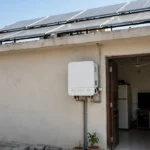
Third, the solar panels must fit the inverter MPPT range. MPPT is the circuit that pulls the best power from your panels as light changes. The Veyron II Premium 4KW accepts 120 to 450 volts DC from the panels, with a maximum PV input of 5,000 watts. Your installer must design the panel strings so their voltage sits inside that window, in full sun and in weak light. The Fronus PV 7200 takes a wider window, 90 to 450 volts DC, with up to 7,200 watts of solar charge. For any model, check the datasheet for the exact model before you plan panels. The Fronus PV 7200 vs Veyron II 6KW guide shows how the panel window differs between two 6 kW class models.
What Mistakes Make People Buy the Wrong Size?
The first mistake is counting everything you own instead of what runs together. A home that owns a washing machine, an iron, a microwave, and a water pump, but never runs them together, does not need an inverter for all of them at once. Count the evening peak, not the whole house inventory. That one change often drops the answer by a full size.
The second mistake is forgetting surge power. A buyer adds up running watts, sees 2,000 watts, and buys a 2 kW inverter. Then the water pump starts, draws 2,250 watts for a few seconds, and the inverter trips. The running watts were right. The surge watts were missing. Always add the highest extra startup surge before you choose.
The third mistake is copying a neighbour’s size. Your neighbour’s home, roof, and habits are different. A neighbour with one air conditioner and a small family may run well on 3 kW. Your home with two air conditioners and a water pump will not. Size from your own appliance list. The Inverex vs Fronus guide makes the same point for brands: compare models one by one, not by what someone else bought.
The fourth mistake is buying far too big. A 10 kW inverter for a 1.7 kW load wastes money that could have bought a bigger battery or more panels. It also runs at a tiny share of its rating all day, which is not efficient. Bigger is not always better. Right size is better.
The fifth mistake is trusting the model number. The Fronus PV 7200 gives 6,200 watts of output, not 7,200 watts. The 7,200 figure is its solar charge figure. A model number is a name, not a rating. Read the rated output on the label or the datasheet. If two sellers give different numbers for the same model, trust the label on the exact unit, and ask in writing.
The sixth mistake is forgetting growth, or planning for growth that never comes. If you will add an air conditioner next year, size for it now. Upgrading an inverter later costs far more than sizing right the first time. But do not size for a dream that has no date. A second air conditioner with no plan and no budget is not a load yet. Plan for the next year or two, not for ten years away.
When Should I Ask a Technician?
Most of this guide you can do yourself: list the load, add the watts, and pick the size. But some jobs belong to a technician, and knowing where that line sits saves money and keeps you safe.
Ask a technician when your inverter keeps tripping on overload even though your maths says it should fit. That usually means a hidden fault: a motor drawing more than its label says, a weak battery bank, or a fault inside the inverter. Our guide on why a solar inverter does not turn on walks through the outside checks first, and our Veyron II 6KW fault codes guide explains what overload looks like on the display.
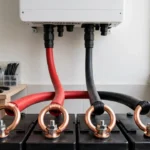
Ask a technician for any wiring work: the distribution board, the breakers, the earthing, and the battery cables. Ask a technician to design the panel strings and the battery bank size. Ask a technician when the same fault comes back twice, or when you smell burning, or when a part looks swollen. A repeat fault is never bad luck. Something else is causing it.
Note: Never open a live inverter case, and never work on live wiring yourself. Capacitors inside hold charge even after the inverter is switched off and unplugged, and mains wiring can give a dangerous shock. All wiring, earthing, and inside work must be done by a qualified electrician or a trained technician. If any step feels unsafe, stop and call one. A part costs little. Your safety costs everything.
SunTech Mall runs its own inverter and UPS repair service centre in Pakistan. Send your inverter there, or buy the part and get your own technician to fit it. Either way, count your load first, and bring the list with you. A technician with your load list can size your system in minutes. A technician without it must guess, and guessing is what this guide is here to stop.
Frequently Asked Questions
Is 3 kW enough for a normal Pakistani home?
For many homes, yes. A home with fans, lights, a fridge, a TV, and a router usually totals near 700 watts without an air conditioner, and near 1,500 watts with one small inverter air conditioner. With headroom, that fits inside 3 kW. But if you run a water pump and an air conditioner together, or two air conditioners, 3 kW is too small. Count your own evening load and check it against the worked example in this guide.
How many kW do I need for two air conditioners?
Two 1.5 HP air conditioners take about 1,100 watts each, so about 2,200 watts together. Add fans, lights, a fridge, and a TV, and the evening load passes 3,000 watts. With 20 percent headroom, the need is near 3,700 watts, and the motor surge pushes higher still. That home needs the 6 kW class: the Fronus PV 7200, the Veyron II 6KW, or the Solax 6kW. Check the live price on the website for the exact model before you decide.
Can I run a water pump on a 3 kW inverter?
It depends on the pump and on what else runs with it. A 1 HP water pump runs at about 750 to 1,000 watts, but draws 1,500 to 2,250 watts for a few seconds at startup. On a 3 kW inverter with only lights and fans running, the pump usually starts fine. On the same inverter with an air conditioner and a fridge already running, the pump startup can trip it. Never start the pump at the same second as another big motor. If the pump is your daily load, a 4 kW inverter gives far more comfort.
What is the difference between kW and kVA on an inverter?
kW is real power, the watts your home actually uses. kVA is apparent power, and for most home inverters the maker uses a power factor of 0.8 to convert between them. kW equals kVA times 0.8, so a 5 kVA inverter gives about 4 kW. Required kVA equals kW divided by 0.8, so a 4 kW load needs about 5 kVA. Always check which number the label shows before you compare two models.
Should I buy a bigger inverter than my load needs?
Buy one size above your answer, not three sizes above it. If your maths says 1.7 kW, a 3 kW inverter is the sensible minimum and a 4 kW inverter is the comfortable pick with room to grow. A 10 kW inverter for the same load wastes money that could have bought a bigger battery or more panels. Size for your real load plus one planned addition, such as a second air conditioner next year, and no more than that.
Where can I buy the right-size inverter in Pakistan?
SunTech Mall stocks the sizes in this guide. The Inverex Veyron II Premium 4KW guide covers the 4 kW home pick, the Inverex Nitrox 6KW On-Grid Solar Inverter and the Solax Power 6kW 48V X1-HYB LV Hybrid Solar Inverter cover the 6 kW class, and the Solar Inverters section lists the full range. Check the live price on the website for the exact model before you decide.
Final Thoughts
Sizing an inverter is not a guess. It is a count. List what runs together in the evening. Read the watts from the labels. Add them up. Add 20 percent headroom. Add the biggest motor startup surge. Then pick the next standard size above your answer. Ten minutes of counting saves you from the two most common regrets in solar: an inverter that trips every evening, and one far bigger than your home ever needed.
So my request is this. Before you buy, sit down with your load list and this guide. Do the sums on paper. If the answer is 1.7 kW, buy 3 or 4 kW, not 10 kW and not 2 kW. If the answer is near 4 kW, step up to the 6 kW class. And if the maths still feels unclear, ask a technician with your list in hand. The right size is the one that fits your home, not the one that fits someone else’s.
Ready to pick the right size? The Inverex Veyron II Premium 4KW suits a medium home with one air conditioner, the Inverex Nitrox 6KW and Solax Power 6kW suit a large home with two air conditioners and a water pump, and the Solar Inverters section at SunTech Mall lists the full range — check the live price on the website and pick the size your load list points to. Questions? Message SunTech Mall on WhatsApp at 0306-2244820 with your load list, and we will help you check the size before you buy.
Published on 15 November 2026. Updated on 15 November 2026.
Sources: EcoFlow: What Size Inverter Do I Need ; UTL: Solar Inverter Capacity Calculation Guide ; ElectromechCalc: Inverter Size ; Power Nexa: What Size Inverter Do I Need
Related Technical Guides
 Category:
General
Solar Inverter Repair Cost Guide 2026: What Each Fault Costs in Pakistan
Published on 17 November 2026. Updated on 17 November 2026. A small solar inverter repair in Pakistan usually costs roughly Rs 1,500…
 Category:
General
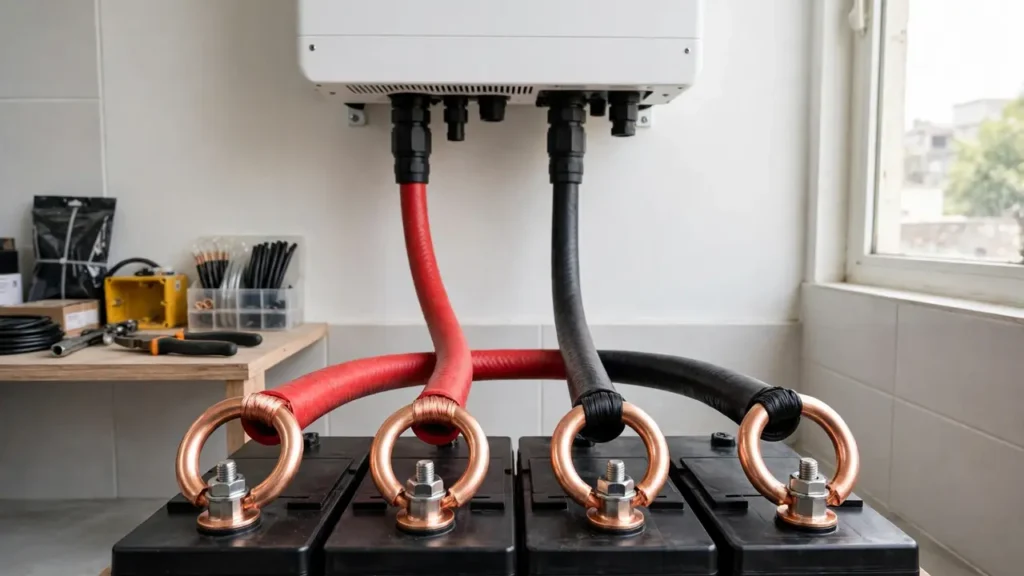
Battery Cables and Lugs 2026: Why a Thin Cable Trips Your Inverter
Published on 16 November 2026. Updated on 16 November 2026. A thin battery cable trips your inverter because it cannot carry the…
 Category:
General
SG3525 vs UC3845 PWM IC 2026: Which One Runs Your Inverter (and How to Pick the Right One)
Published on 14 November 2026. Updated on 14 November 2026. SG3525 is a voltage-mode PWM controller, and UC3845 is a current-mode PWM…
1 Comment
[…] How Many kW Inverter for Home 2026: The Easy Load Calculation MethodNovember 15, 2026 […]